


What is skin rejuvenation? A science-backed guide
TL;DR:
- True skin rejuvenation activates the skin’s natural repair processes at a cellular level.
- Treatments stimulate fibroblasts to rebuild collagen, elastin, and tissue over time.
- Combining clinical procedures with targeted at-home ingredients optimizes and maintains results.
Most people assume skin rejuvenation means a richer moisturizer or a fancier eye cream. The reality is far more interesting. True rejuvenation begins where no topical can reach: inside the skin’s structural layers, where collagen networks break down and cellular repair signals fade with age. If you’ve tried product after product without seeing the firmness, clarity, or texture you’re after, it’s likely because surface-level skincare was never designed to do what you’re asking of it. This guide breaks down what skin rejuvenation actually is, how the science behind it works, and how to build a strategy that delivers real, lasting change.
Table of Contents
- What skin rejuvenation really means
- How science-backed rejuvenation works at the cellular level
- Comparing popular skin rejuvenation options
- Personalizing rejuvenation: Safety, skin types, and maintenance
- Integrating rejuvenation into your everyday routine
- Our take: Evidence first, buzzwords last
- Upgrade your skin rejuvenation journey with Cellure
- Frequently asked questions
Key Takeaways
| Point | Details |
|---|---|
| Skin rejuvenation goes deeper | Lasting results come from treatments that repair and renew at the cellular level—not just the surface. |
| Science shapes the best methods | Techniques like laser resurfacing, RF, and microneedling are backed by clinical evidence for visible results. |
| Personalizing means safer outcomes | Choosing protocols suited to your skin type protects results and minimizes risks. |
| Maintenance is key after treatment | Daily skincare supports and extends the benefits of clinical rejuvenation procedures. |
What skin rejuvenation really means
Skin rejuvenation is one of those terms that gets stretched to cover everything from a hydrating face mask to a full laser resurfacing session. That vagueness does a disservice to anyone trying to make an informed decision. Skin rejuvenation refers to clinical procedures that improve skin quality at a structural or cellular level, not just the surface appearance.
That distinction matters enormously. When you apply a moisturizer, you’re largely working on the epidermis, the outermost layer. It can smooth texture temporarily, add a glow, and protect the barrier. But it doesn’t rebuild collagen, remodel the dermis, or reverse the cellular slowdown that causes skin to look older over time. Rejuvenation, in the truest sense, targets those deeper processes.
“Real skin rejuvenation isn’t about covering up signs of aging. It’s about activating the skin’s own repair systems to rebuild what time has diminished.”
The concerns that genuine rejuvenation addresses include:
- Loss of firmness and elasticity caused by collagen and elastin degradation
- Uneven skin tone and pigmentation from sun exposure and hormonal shifts
- Textural irregularities including enlarged pores, rough patches, and acne scarring
- Volume loss in the mid-face and under-eye areas
- Fine lines and deeper wrinkles from repeated muscle movement and structural thinning
What separates rejuvenation from basic skincare is the mechanism. Rejuvenation works by activating the skin’s natural regenerative processes, essentially telling your skin to behave more like it did a decade ago. You can learn more about how this works through cellular rejuvenation explained, which outlines the biological basis for this kind of renewal. The goal isn’t just to look better temporarily. It’s to restore the skin’s capacity to repair and renew itself over time.
How science-backed rejuvenation works at the cellular level
Understanding the biology behind rejuvenation helps you evaluate treatments with a clearer eye. The skin’s ability to repair itself depends on fibroblasts, the cells responsible for producing collagen, elastin, and hyaluronic acid. As we age, fibroblast activity slows. The skin produces less of what keeps it firm, plump, and resilient.
Effective rejuvenation treatments work by creating a controlled stimulus that wakes those fibroblasts back up. Primary mechanisms include controlled thermal injury or micro-injuries that trigger wound-healing responses, which in turn drive collagen induction and tissue remodeling. In other words, the treatment creates a precise, manageable stress signal, and the skin responds by rebuilding.
The stepwise process looks like this:
- A controlled stimulus is applied (heat, micro-injury, or energy)
- The skin’s wound-healing cascade activates
- Fibroblasts increase collagen and elastin production
- New tissue forms and remodels over weeks to months
- Visible improvements in firmness, tone, and texture emerge
| Treatment type | Primary mechanism | Timeline for results |
|---|---|---|
| Laser resurfacing | Thermal injury to dermis | 4 to 8 weeks |
| Radiofrequency (RF) | Deep tissue heating | 6 to 12 weeks |
| Microneedling | Micro-injuries to dermis | 4 to 8 weeks |
| Regenerative injections | Growth factor signaling | 6 to 16 weeks |
This is why regenerative science for firm skin has become such a credible area of focus. The science isn’t speculative. It follows well-established wound-healing biology. The treatments differ in how they deliver the stimulus, but the downstream regeneration process is consistent.
Pro Tip: Before choosing any treatment, consult a board-certified dermatologist or aesthetic physician. The right protocol depends on your skin type, concerns, and medical history. A personalized plan always outperforms a one-size-fits-all approach, and it reduces your risk of side effects significantly. You can also explore skin renewal solutions to understand which topical ingredients complement in-clinic work.
Comparing popular skin rejuvenation options
Not every treatment is right for every concern or every person. Here’s how the leading clinical options compare based on real-world efficacy data.
| Treatment | Best for | Patient satisfaction | Key side effects |
|---|---|---|---|
| Erbium YAG laser | Fine lines, texture, tone | Highest “excellent” responses at 20% | Redness, peeling, downtime |
| Radiofrequency (RF) | Laxity, deep tightening | Highest “good” responses at 39% | Mild swelling, temporary discomfort |
| IPL (intense pulsed light) | Pigmentation, redness, tone | Strong long-term outcomes | PIH risk in darker skin |
| Microneedling | Scarring, pores, texture | High patient satisfaction | Short-term redness, sensitivity |
| Exosome/regenerative | Overall renewal, recovery | Emerging, promising short-term gains | Minimal, still under study |
Empirical data from clinical studies confirms that IPL shows strong long-term outcomes for pigmentation, while microneedling with radiofrequency (MNRF) delivers measurable improvements in skin texture and firmness with high patient acceptance.
How to choose the right treatment for your skin:
- Identify your primary concern (tone, texture, laxity, or scarring)
- Assess your skin type and melanin level, as this affects device safety
- Research which treatments have the strongest evidence for your concern
- Consult a qualified practitioner who can assess your skin in person
- Ask about downtime, number of sessions needed, and maintenance requirements
Ingredient science matters here too. Understanding the benefits of peptides and other bioactives helps you build a post-treatment home routine that supports and extends your results. A regenerative ingredients guide can help you identify which actives are worth adding to your regimen.
Personalizing rejuvenation: Safety, skin types, and maintenance
One of the most overlooked aspects of skin rejuvenation is how dramatically skin type affects both treatment choice and outcome. This isn’t just about sensitivity. It’s about melanin levels and the risk of post-inflammatory hyperpigmentation (PIH), a darkening of the skin that can occur after any procedure that causes inflammation.
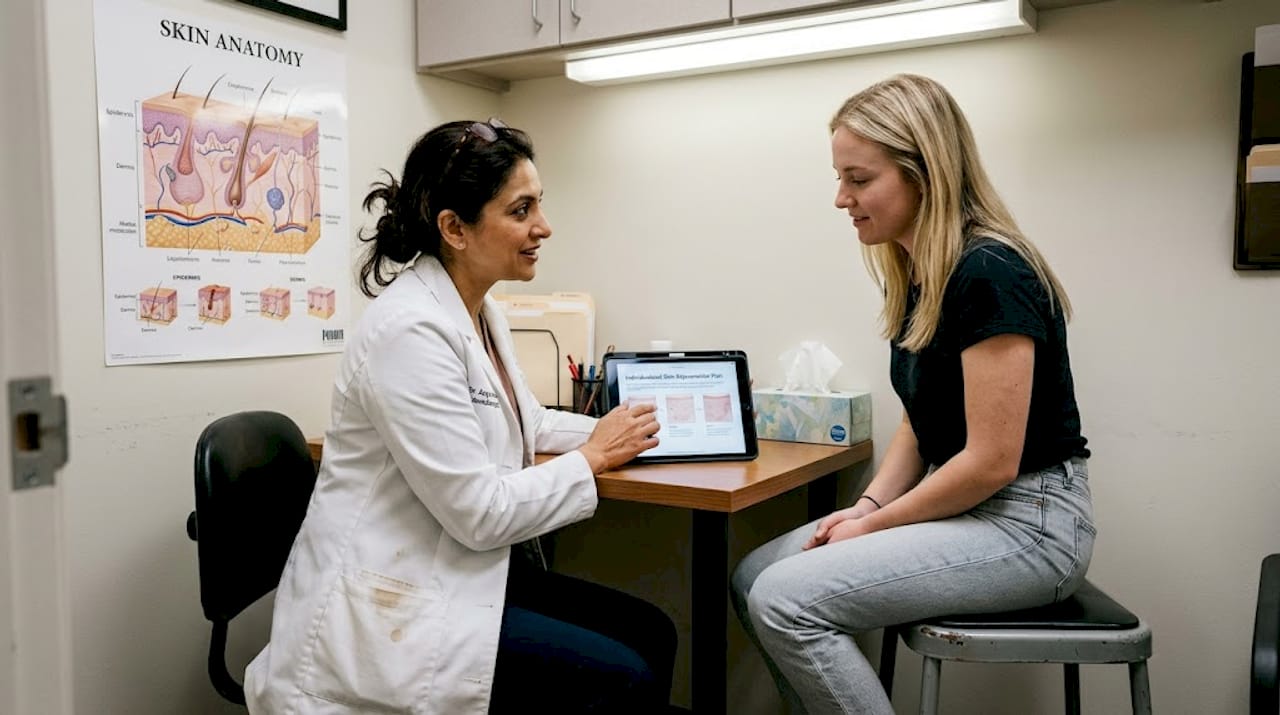
For people with darker skin tones (Fitzpatrick types IV through VI), the risk of PIH is significantly higher, and certain laser wavelengths that work well on lighter skin can cause lasting discoloration on melanin-rich complexions. This doesn’t mean rejuvenation is off-limits. It means the treatment selection and protocol must be adapted.
Transient adverse events are common across all skin types, with PIH being the primary risk that requires proactive prevention. Preferred options for darker skin tones include RF microneedling (which bypasses the epidermis), Nd:YAG lasers, and low-fluence treatments with extended cooling.
Key safety protocols that apply to everyone:
- Avoid sun exposure for at least two weeks before and after treatment
- Use broad-spectrum SPF 50 daily, especially during any active treatment phase
- Disclose all medications including retinoids and photosensitizing drugs before any procedure
- Follow aftercare instructions precisely, including barrier repair products recommended by your provider
- Avoid active ingredients like acids and retinols immediately post-treatment until the skin barrier is restored
Pro Tip: Maintenance between sessions is not optional. The results of any clinical treatment can fade faster without a consistent at-home routine. Explore science-backed skin ingredients to understand what to use between appointments, and review best practices for repair to keep your skin in optimal condition.
Integrating rejuvenation into your everyday routine
Clinical treatments do the heavy lifting, but your daily routine determines how long those results last. This is where at-home skincare earns its place in a real rejuvenation strategy.
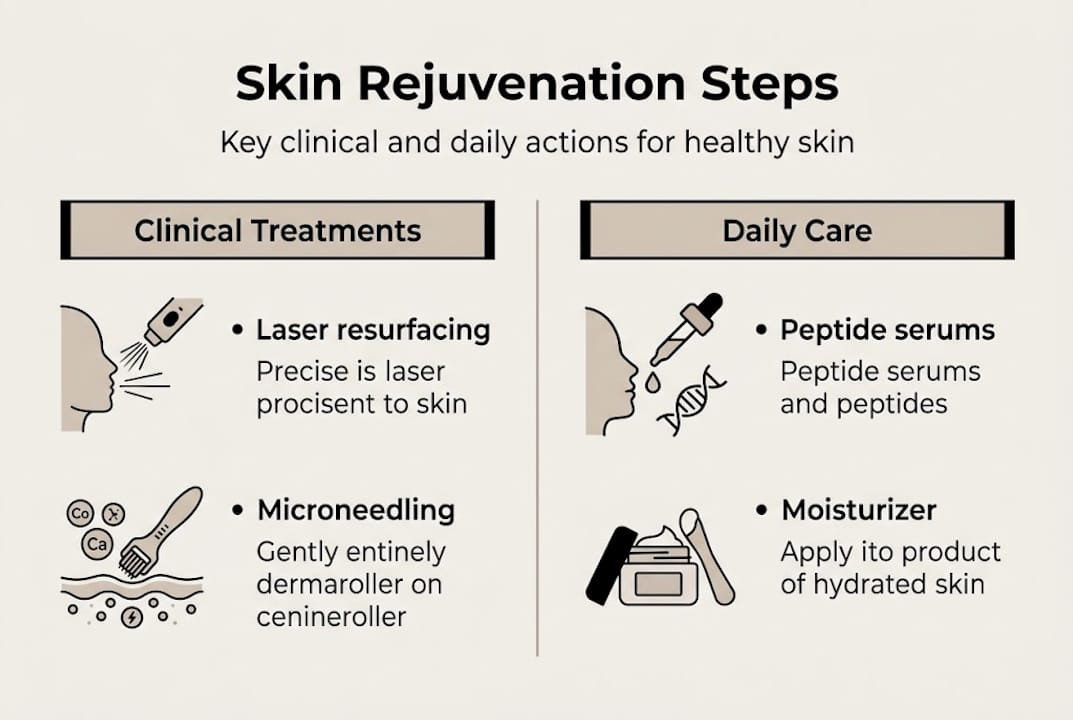
Procedures outperform topicals for deep structural rejuvenation, but topicals are essential for maintenance and prevention between sessions. Think of clinical treatments as the reset and your daily routine as the upkeep that preserves it.
Ingredients to prioritize for collagen support and cellular repair:
- Peptides that signal fibroblasts to produce more collagen and elastin
- Tranexamic acid for brightening and pigmentation control post-treatment
- Polynucleotides for deep hydration and cellular regeneration support
- Niacinamide to strengthen the barrier and reduce inflammation
- Antioxidants (vitamin C, resveratrol) to neutralize free radical damage
- Broad-spectrum SPF to protect new skin and prevent further photodamage
For scheduling, most clinical rejuvenation treatments are performed in a series of three to six sessions, spaced four to eight weeks apart. After completing a series, annual or biannual maintenance sessions help sustain results. Between appointments, your cellular repair workflow should include consistent use of active ingredients that support the skin’s regenerative capacity.
Knowing how to use regenerative skincare correctly makes a measurable difference. Application order, frequency, and layering all affect how well active ingredients penetrate and perform. And if your concerns evolve or your results plateau, that’s the signal to re-consult your provider and reassess your protocol. Skin changes over time, and your approach should too. Explore solutions for ongoing renewal to stay ahead of those changes.
Our take: Evidence first, buzzwords last
The skincare industry moves fast, and new “breakthrough” treatments appear constantly. Some deserve attention. Many don’t. Our position is straightforward: if a treatment doesn’t have peer-reviewed clinical data behind it, it shouldn’t be your first investment.
Highest clinical confidence belongs to laser resurfacing, radiofrequency, and microneedling, all supported by clinical trials and meta-analyses. Emerging regenerative approaches like exosomes and stem cell therapies show promising short-term gains, but the long-term data simply isn’t there yet.
That doesn’t mean you should dismiss innovation. It means you should ask the right questions. What studies support this treatment? How large were the trials? Were results measured objectively or self-reported? These aren’t cynical questions. They’re the ones that protect your skin and your wallet.
We also believe that evidence-based topicals deserve more credit than they typically get. They won’t replace a laser session, but the right serum, used consistently, can meaningfully extend results. Explore serum results by evidence to see what the data actually supports. Hype fades. Results don’t.
Upgrade your skin rejuvenation journey with Cellure
If this guide has clarified what real rejuvenation involves, the next step is putting that knowledge into practice with products built to support it. Cellure’s formulations are designed to work alongside clinical treatments, reinforcing the regenerative signals your skin needs to maintain results between sessions.
The Complete Skin Repair Kit brings together targeted actives for barrier repair, cellular renewal, and long-term firmness. For brightening and pigmentation control post-treatment, the Tranexamic Acid Peptide Serum delivers clinically supported ingredients in a gentle, daily-use formula. Whether you’re just starting a rejuvenation protocol or looking to sustain results from a recent procedure, Cellure advanced regeneration offers science-backed solutions formulated for exactly this purpose.
Frequently asked questions
What is the difference between skin rejuvenation and regular skincare?
Skin rejuvenation targets the skin’s deeper structural and cellular layers, while regular skincare primarily maintains surface appearance and barrier health. Rejuvenation uses clinical-grade stimuli to trigger regeneration, not just hydration or protection.
How long does it take to see results from skin rejuvenation?
Initial changes may appear within a few weeks, but full results typically take two to six months as collagen remodeling progresses. Gradual improvements in pigment and texture are well-documented across IPL, microneedling, and RF treatments.
Are there any risks or side effects to skin rejuvenation?
Most side effects are mild and temporary, including redness, swelling, and sensitivity. However, transient adverse events like PIH are a real risk, particularly in darker skin tones, and proper protocols significantly reduce that likelihood.
Is skin rejuvenation safe for people with dark skin?
Yes, with the right treatment selection. PIH risk is higher in melanin-rich skin, but options like RF microneedling and Nd:YAG lasers are well-suited and widely used safely in these skin types.
Do at-home products actually help with rejuvenation?
At-home products support maintenance and prevent regression, but they don’t replicate the structural depth of clinical procedures. Topicals are key for sustaining results, not for replacing the treatments that created them.