


What is skin renewal: a guide to youthful skin repair
You’ve probably noticed your skin doesn’t bounce back like it used to. Maybe fine lines linger longer, or that glow you once had feels harder to maintain. Here’s the truth: skin renewal slows naturally after age 30, and no cream can reverse time overnight. But understanding how your skin renews itself at the cellular level unlocks smarter, gentler strategies to support that process. This guide explains what skin renewal actually is, why it changes with age, and which clinically supported methods can help you restore firmness, radiance, and resilience without harsh ingredients or unrealistic promises.
Table of Contents
- Key takeaways
- Understanding skin renewal: the biological process
- How aging disrupts skin renewal and accelerates signs of aging
- Clinically supported strategies to support skin renewal safely
- Nuances and future directions in skin renewal science
- Support your skin renewal with Cellure’s advanced solutions
- Frequently asked questions
Key Takeaways
| Point | Details |
|---|---|
| Renewal timeline | Skin renewal normally completes in 40 to 56 days in healthy adults but slows to longer cycles with age. |
| Fibroblast aging | Aging reduces collagen and elastin production as fibroblasts become senescent, weakening the dermal matrix and renewal quality. |
| Clinically supported options | Clinically proven serums and treatments can improve skin density, hydration, and radiance when used consistently over weeks. |
| Topical and oral synergy | A strategic mix of topical and oral therapies can synergistically support skin rejuvenation without harsh ingredients. |
Understanding skin renewal: the biological process
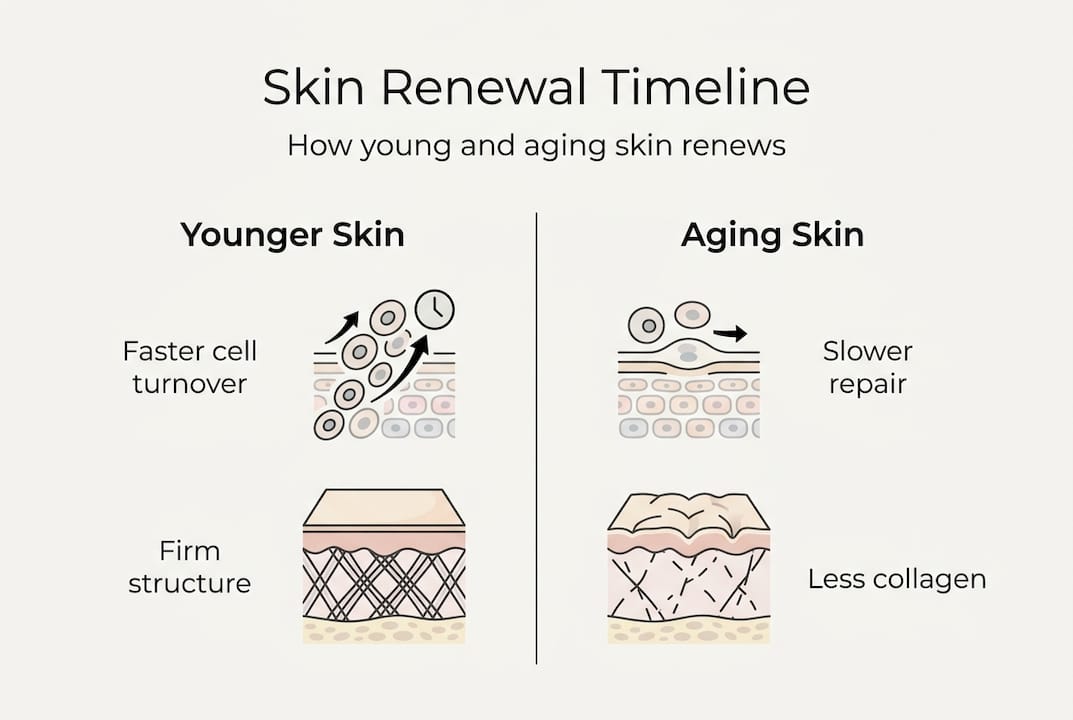
Skin renewal is the natural biological process of epidermal turnover and dermal matrix remodeling, with keratinocytes migrating from the basal layer to the stratum corneum in 40-56 days for adults, slowing with age. Think of your skin as a construction site that never closes. New cells form deep in the epidermis, push upward, flatten, die, and eventually shed as dead skin flakes. Meanwhile, deeper in the dermis, fibroblasts manufacture collagen and elastin, the structural proteins that keep your skin firm and elastic.
Keratinocytes are the workhorses of this process. They start as plump, living cells in the basal layer, then migrate upward over several weeks. As they travel, they flatten and lose their nuclei, transforming into corneocytes, the tough, dead cells that form your skin’s protective outer barrier. This journey takes about 40 to 56 days in healthy young adults. Once corneocytes reach the surface, they slough off naturally, making room for fresh cells below.
But renewal isn’t just about replacing surface cells. In the dermis, fibroblasts produce the extracellular matrix, a network of collagen, elastin, and other proteins that gives skin its structure and bounce. This matrix remodeling happens continuously, repairing micro-damage and maintaining skin integrity. When fibroblasts work efficiently, your skin stays thick, hydrated, and resilient. When they slow down, you see sagging, thinning, and wrinkles.
Aging throws a wrench in this machinery. After 30, cell turnover stretches beyond 60 days, sometimes reaching 80 to 90 days by your 50s. That means dead cells linger longer, making skin look dull and rough. Fibroblasts also produce less collagen and elastin, weakening the dermal scaffold. Understanding these timelines helps you set realistic expectations for skin cellular repair science.
Key cells and their functions:
- Keratinocytes: Epidermal cells that migrate upward, forming the protective barrier
- Corneocytes: Dead, flattened keratinocytes that shed from the skin surface
- Fibroblasts: Dermal cells that produce collagen, elastin, and extracellular matrix
- Melanocytes: Cells that produce pigment, influencing skin tone and evenness
| Age group | Average skin renewal cycle | Key changes |
|---|---|---|
| 20-30 years | 28-40 days | Optimal turnover, robust collagen production |
| 30-50 years | 40-60 days | Slower turnover, declining fibroblast activity |
| 50+ years | 60-90 days | Significantly delayed renewal, reduced matrix remodeling |
Pro Tip: If you start a new serum today, give it at least 8 to 12 weeks before judging results. That’s two full renewal cycles, the minimum time to see meaningful cellular changes reflected on your skin’s surface.
How aging disrupts skin renewal and accelerates signs of aging
In aging skin, renewal slows due to fibroblast senescence, reduced ECM production, oxidative stress, DNA damage, and SASP leading to inflammation and collagen degradation. Fibroblast senescence is the biggest culprit. As fibroblasts age, they stop dividing but don’t die. Instead, they enter a zombie-like state, lingering in your dermis and secreting inflammatory molecules that damage surrounding tissue. This phenomenon, called the senescence-associated secretory phenotype (SASP), creates a hostile environment for healthy cells.
The extracellular matrix (ECM) is the scaffolding that holds your skin together. It’s made mostly of collagen and elastin, proteins that provide firmness and elasticity. Young fibroblasts churn out fresh ECM constantly, repairing wear and tear. But senescent fibroblasts produce far less collagen and elastin, and they release enzymes called matrix metalloproteinases (MMPs) that break down existing ECM faster than it can be replaced. The result? Thinner skin, deeper wrinkles, and loss of volume.

Oxidative stress accelerates this decline. Every day, your skin faces ultraviolet radiation, pollution, and metabolic byproducts that generate free radicals. These unstable molecules damage DNA, proteins, and lipids in skin cells. Over decades, this cumulative damage overwhelms your skin’s natural antioxidant defenses, leading to mutations and cellular dysfunction. DNA damage triggers fibroblast senescence, feeding the cycle of inflammation and ECM breakdown.
SASP is particularly insidious because it doesn’t just affect the senescent cells themselves. The inflammatory cytokines and growth factors they secrete spread to neighboring cells, inducing senescence in previously healthy fibroblasts. This creates a domino effect, progressively weakening your skin’s ability to renew and repair itself. Understanding the importance of cellular repair helps you target these root causes instead of just masking symptoms.
Aging factors impacting skin renewal:
- Fibroblast senescence: Cells stop dividing, secrete inflammatory molecules
- Reduced ECM production: Less collagen and elastin manufactured
- Oxidative stress: Free radical damage accumulates over time
- DNA damage: Mutations trigger cellular dysfunction and senescence
- SASP: Inflammatory secretions spread senescence to healthy cells
- MMP activity: Enzymes break down existing collagen and elastin
“The aging dermis is characterized by a progressive decline in fibroblast function, leading to reduced collagen synthesis, increased matrix degradation, and chronic low-grade inflammation that perpetuates skin aging.”
Clinically supported strategies to support skin renewal safely
Clinical trials show stem cell serums improve radiance (90%) and hydration (86%); PDRN eye cream increased dermal density by 8.67%; microneedle RF reduces wrinkles and pigmentation effectively. These aren’t marketing claims. They’re measured outcomes from controlled studies, and they point to real solutions for supporting skin renewal without irritation or downtime.
Growth factor serums are among the most promising topical treatments. Derived from plant stem cells or bioengineered peptides, these serums deliver signaling molecules that stimulate fibroblast activity and collagen production. In clinical trials, participants using growth factor serums for 12 weeks showed significant improvements in skin radiance, hydration, and firmness. These products work by mimicking the natural signals young skin uses to maintain itself, making them ideal for sensitive skin that can’t tolerate retinoids.
Speaking of retinoids, traditional options like tretinoin are effective but often too harsh for adults with sensitive or aging skin. Enter bakuchiol, a natural alternative derived from the babchi plant. Bakuchiol delivers comparable anti-aging benefits, stimulating collagen synthesis and reducing fine lines, without the redness, peeling, or photosensitivity associated with retinoids. Studies confirm bakuchiol improves skin texture and tone while being gentle enough for daily use. For those exploring gentle anti-aging tips, this is a game changer.
| Treatment | Efficacy | Irritation risk | Best for |
|---|---|---|---|
| Retinoids (tretinoin) | High: proven collagen boost | High: redness, peeling, sensitivity | Resilient skin, supervised use |
| Bakuchiol | Moderate to high: comparable to retinol | Low: minimal irritation | Sensitive skin, daily use |
| Growth factor serums | High: clinical improvements in radiance, hydration | Very low: gentle formulation | All skin types, aging concerns |
Oral supplements also play a role. Collagen peptides, hyaluronic acid, and antioxidants like resveratrol taken orally can improve skin elasticity and reduce wrinkles from the inside out. A 12-week study found that participants taking collagen peptides daily experienced measurable increases in skin hydration and elasticity. These supplements work synergistically with topical treatments, addressing systemic factors like oxidative stress and nutrient deficiencies that topical products can’t reach.
Oral supplements that support skin renewal:
- Collagen peptides: Boost skin elasticity and hydration
- Hyaluronic acid: Enhances moisture retention and plumpness
- Resveratrol: Antioxidant that combats oxidative stress
- Vitamin C: Supports collagen synthesis and brightens tone
- Omega-3 fatty acids: Reduce inflammation and support barrier function
Energy-based devices like microneedle radiofrequency (RF) offer professional-grade results with minimal downtime. Microneedle RF delivers controlled heat deep into the dermis, stimulating fibroblast activity and collagen remodeling without damaging the skin surface. Clinical data shows significant reductions in wrinkles and pigmentation after just a few sessions. Unlike older ablative lasers, microneedle RF is safe for all skin tones and causes minimal discomfort. For a comprehensive approach, consider exploring top skin repair ingredients and how they integrate with professional treatments.
Pro Tip: Combining a topical growth factor serum with oral collagen peptides creates synergy. The serum targets surface renewal and dermal signaling, while the supplement addresses systemic inflammation and nutrient support. This layered approach amplifies results beyond what either treatment could achieve alone.
Nuances and future directions in skin renewal science
Senescence isn’t a binary state. Fibroblasts exist on a spectrum, from fully functional to deeply senescent, with many cells falling somewhere in between. This variability matters because different areas of your face age at different rates. The delicate skin around your eyes, for instance, shows senescence earlier than thicker cheek skin. Regional heterogeneity means a one-size-fits-all approach won’t optimize results. Targeted treatments addressing specific areas can deliver better outcomes.
Senolytics, drugs that selectively eliminate senescent cells, are generating excitement in anti-aging research. By clearing out zombie fibroblasts, senolytics could theoretically restore a more youthful cellular environment. Early studies in mice show promise, with treated animals exhibiting improved skin thickness and reduced wrinkles. However, senolytics carry risks. Senescent cells also play roles in wound healing and tissue repair, so indiscriminately clearing them could impair your skin’s ability to recover from injury. The balance between anti-aging benefits and preserving essential functions remains an open question.
Key nuances about fibroblast senescence and skin heterogeneity:
- Senescence exists on a spectrum, not as an all-or-nothing state
- Regional skin differences mean eyes, cheeks, and neck age at different rates
- Targeted treatments can address area-specific aging more effectively
- Fibroblast function varies even within the same skin region
Pros and cons of senolytic therapies:
- Pro: Clearing senescent cells may restore youthful cellular environment
- Pro: Early research shows improved skin thickness and reduced wrinkles
- Con: Senescent cells contribute to wound healing and tissue repair
- Con: Indiscriminate clearance could impair skin’s recovery capacity
- Con: Long-term safety data in humans is still limited
Topical versus oral approaches for targeting SASP offer different advantages. Topical senolytics or senomorphics (agents that suppress SASP without killing cells) can deliver high concentrations directly to the skin, minimizing systemic exposure. Oral treatments, on the other hand, address inflammation and oxidative stress throughout the body, potentially benefiting skin from within. Advances in senescence and anti-aging skin therapies suggest that combining both routes may yield the best results.
Natural senomorphics like resveratrol are emerging as safer alternatives to pharmaceutical senolytics. Resveratrol, found in grapes and berries, suppresses SASP signaling without killing senescent cells outright. This preserves their beneficial functions while reducing harmful inflammation. Early clinical trials show resveratrol improves skin elasticity and reduces oxidative damage, making it a promising ingredient for sensitive skin serum guide formulations.
Balancing anti-aging effects with preserving wound healing capacity is the frontier of skin renewal science. Future treatments will likely focus on selectively modulating senescence rather than eliminating it entirely. Understanding cellular repair concepts and effective anti-aging serums will help you navigate these emerging options as they become available.
Support your skin renewal with Cellure’s advanced solutions
Now that you understand how skin renewal works and what disrupts it, you can make informed choices about your skincare. Cellure specializes in scientifically formulated products that support cellular repair and rejuvenation without harsh ingredients. Our Complete Skin Repair Kit combines clinically supported bioactive ingredients like peptides, polynucleotides, and tranexamic acid to target aging at the cellular level.
Each product is designed for sensitive, aging skin, delivering measurable improvements in firmness, hydration, and radiance. Whether you’re looking for targeted serums or comprehensive kits, Cellure advanced regeneration offers solutions backed by science and real customer results. Explore our range and take the next step in your skin renewal journey.
Frequently asked questions
What is skin renewal?
Skin renewal is your body’s natural process of replacing old skin cells with new ones. In the epidermis, keratinocytes migrate from the basal layer to the surface over 40 to 56 days, then shed as dead cells. In the dermis, fibroblasts continuously produce collagen and elastin to maintain skin structure and firmness.
How does aging affect skin renewal?
Aging slows skin renewal significantly. Cell turnover stretches from 40 days in your 20s to 60 or even 90 days by your 50s. Fibroblasts also become senescent, producing less collagen and secreting inflammatory molecules that damage surrounding tissue, leading to wrinkles, thinning, and loss of elasticity.
Can skincare really support skin renewal?
Yes, when formulated with clinically supported ingredients. Growth factor serums, bakuchiol, and peptides stimulate fibroblast activity and collagen production. Clinical trials show measurable improvements in radiance, hydration, and dermal density. Gentle formulations work effectively without the irritation associated with traditional retinoids.
What’s the difference between topical and oral approaches?
Topical treatments deliver active ingredients directly to the skin, targeting surface renewal and dermal signaling. Oral supplements like collagen peptides and antioxidants address systemic factors such as oxidative stress and inflammation. Combining both creates synergy, amplifying results beyond what either approach achieves alone.
How long before I see results from skin renewal products?
Give new products at least 8 to 12 weeks. That’s two full skin renewal cycles, the minimum time for cellular changes to become visible on the surface. Patience is key because renewal happens gradually at the cellular level, not overnight.
Recommended
- What is cellular repair? A 2026 guide to youthful skin – Cellure
- Cellular Repair Works: Science Behind Youthful Skin – Cellure
- Why cellular repair matters for youthful skin in 2026 – Cellure
- What is skin barrier repair? A 2026 guide to healthier skin – Cellure
- Hautbild verbessern durch Ernährung: Natürliche Tipps 2025 - YourPowerFoods.com
Share