


What is skin barrier repair? A 2026 guide to healthier skin
Your skin barrier isn’t just a single protective layer. It’s a sophisticated, multilayered defense system working constantly to shield you from environmental damage, lock in moisture, and maintain youthful resilience. Yet most people don’t realize how this complex structure functions or why its repair becomes critical as skin ages. Understanding the science behind skin barrier function empowers you to make informed decisions about skincare that actually works. This guide breaks down what skin barrier repair means, which scientifically proven methods deliver real results, and how to evaluate products for aging skin with confidence.
Table of Contents
- Understanding The Skin Barrier: Structure And Protective Roles
- Science-Backed Approaches To Repairing The Skin Barrier
- Evaluating Supplements And Skincare Products For Skin Barrier Repair
- Practical Tips To Support Daily Skin Barrier Repair And Healthy Aging
- Enhance Your Skin Barrier Repair With Cellure
- What Is Skin Barrier Repair? Frequently Asked Questions
Key takeaways
| Point | Details |
|---|---|
| Multilayered protection | The epidermis provides physical, chemical, microbial, neuronal, and immune defense through five distinct functional layers. |
| Proven oral support | Sodium hyaluronate at 60-120 mg daily significantly improves hydration, elasticity, and reduces wrinkles based on clinical evidence. |
| Evidence matters | Collagen and flavanols show measurable photoaging benefits, while popular ingredients like carotenoids lack strong clinical support. |
| Combined approach works | Effective barrier repair integrates both topical peptide treatments and clinically studied oral supplements for optimal results. |
| Daily habits count | Gentle cleansing, consistent moisturizing, and sun protection form the foundation for preserving barrier integrity. |
Understanding the skin barrier: structure and protective roles
The epidermis operates as far more than a simple wrapper around your body. This living barrier consists of five functional levels: physical, chemical, microbial, neuronal, and immune, each performing specialized protective tasks simultaneously. The outermost stratum corneum acts like a brick wall, with corneocytes as bricks and lipids as mortar, creating a formidable physical shield. Beneath this, living keratinocytes produce antimicrobial peptides, enzymes, and signaling molecules that actively defend against pathogens and environmental toxins.
The skin provides selective protection between your internal organs and the outside world. It prevents excessive water loss that would otherwise dehydrate tissues, blocks harmful UV radiation, and filters out pollutants and allergens. Specialized immune cells patrol the epidermis, identifying threats and coordinating responses. Nerve endings detect temperature, pressure, and potential damage, triggering protective reflexes. This integrated system maintains homeostasis, keeping your skin healthy and resilient.
When this barrier weakens, consequences cascade rapidly. You might notice increased sensitivity, persistent dryness, or accelerated visible aging. Environmental aggressors penetrate more easily, triggering inflammation that breaks down collagen and elastin. Understanding these interconnected roles clarifies why comprehensive repair strategies must address multiple barrier functions simultaneously, not just surface hydration.

The complexity of barrier architecture explains why simple moisturizers alone often fail to reverse aging damage. Each layer requires specific support. Hyaluronic acid attracts water molecules to plump the skin, but deeper repair demands ingredients that stimulate cellular renewal and strengthen lipid structures. Recognizing this multilayered reality guides smarter product choices.
Key protective functions of the skin barrier:
- Limits transepidermal water loss to maintain optimal hydration levels
- Blocks entry of microorganisms, allergens, and environmental pollutants
- Produces antimicrobial peptides that actively fight pathogens
- Houses immune cells that detect and respond to threats
- Absorbs and reflects UV radiation to prevent DNA damage
- Regulates temperature through sweat production and blood flow
“The most important function of the skin is its role as a barrier, acting as the interface between the body and the external environment while maintaining internal homeostasis.”
This foundational understanding sets the stage for exploring scientifically validated repair methods that target these specific barrier functions.
Science-backed approaches to repairing the skin barrier
Clinical research has identified specific interventions that measurably restore barrier function and reduce aging signs. Oral sodium hyaluronate supplementation at 60-120 mg daily demonstrates significant improvements in skin hydration, elasticity, and thickness while reducing wrinkle depth. This molecular form of hyaluronic acid survives digestion, enters the bloodstream, and reaches dermal layers where it attracts moisture and supports extracellular matrix integrity. Studies tracking participants over 12 weeks show consistent, measurable benefits across multiple aging markers.
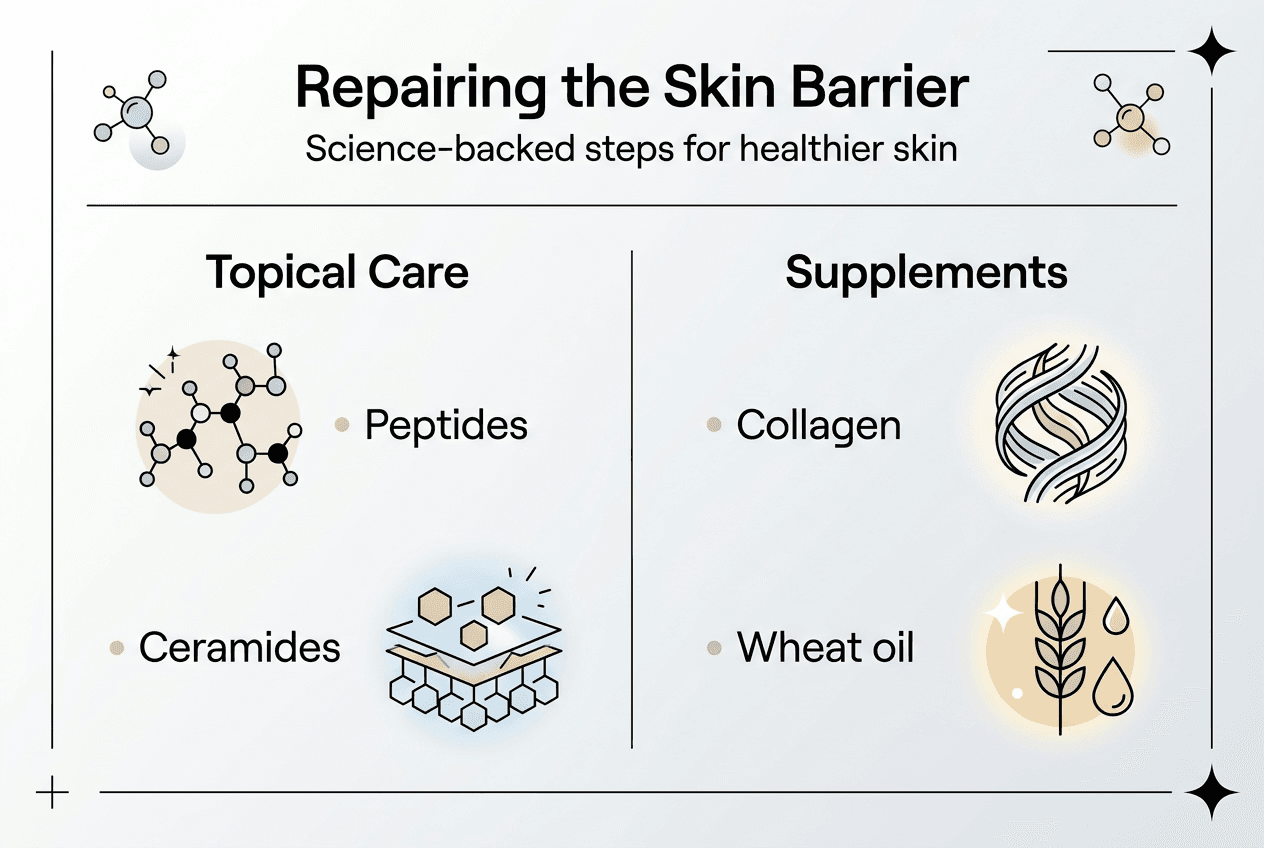
Combining ingredients amplifies results beyond single-component approaches. Research on wheat oil extract plus hyaluronic acid reveals clinically meaningful improvements in skin glow, texture, and wrinkle reduction within 8-12 weeks. The wheat oil provides ceramides and essential fatty acids that rebuild lipid barriers, while hyaluronic acid maintains hydration gradients. This synergy addresses both structural and moisture-related aspects of barrier health simultaneously.
Topical interventions complement oral supplementation by delivering active ingredients directly to target tissues. Peptide-based formulations penetrate the epidermis, signaling fibroblasts to increase collagen production and accelerate cellular turnover. Cellular repair mechanisms respond to these molecular signals, enhancing firmness and barrier resilience. Products combining multiple peptides with antioxidants create comprehensive repair environments at the cellular level.
Not all popular supplements deliver on their promises. While marketing emphasizes various exotic ingredients, clinical evidence separates effective interventions from wishful thinking. Choosing products backed by peer-reviewed research ensures you invest in solutions that actually work rather than following trends without scientific support.
Proven steps to implement barrier repair:
- Start with oral sodium hyaluronate at 60-120 mg daily, taken consistently for at least 8 weeks to see measurable hydration and elasticity improvements.
- Add a clinically studied combination supplement containing ceramides and additional hyaluronic acid for synergistic barrier strengthening.
- Apply peptide serums morning and evening to stimulate collagen production and accelerate cellular renewal at the dermal level.
- Layer a ceramide-rich moisturizer over active serums to seal in ingredients and reinforce lipid barrier structures.
- Track changes monthly using photos and notes about texture, hydration, and sensitivity to objectively assess progress.
Pro Tip: Consistency matters more than perfection. Missing occasional doses won’t derail progress, but irregular use prevents you from reaching the cumulative benefits documented in clinical trials.
The science clearly shows that combining oral and topical approaches produces superior results compared to either strategy alone, addressing barrier repair from multiple angles simultaneously.
Evaluating supplements and skincare products for skin barrier repair
Navigating the crowded supplement market requires understanding which ingredients have genuine clinical backing versus those riding popularity without proof. Systematic analysis of photoaging studies reveals that collagen, flavanols, and polyphenols demonstrate statistically significant benefits for reducing visible aging signs. These compounds protect against oxidative damage, stimulate collagen synthesis, and improve skin density through well-documented mechanisms.
Surprisingly, some heavily marketed ingredients show minimal evidence. Hyaluronic acid, lycopene, and carotenoids failed to demonstrate significant photoaging benefits in rigorous clinical trials, despite their theoretical antioxidant properties. This doesn’t mean they’re harmful, but it questions whether they justify premium pricing when more effective alternatives exist. Understanding these distinctions helps you allocate skincare budgets toward ingredients with proven performance.
Safety profiles matter as much as effectiveness. Clinical studies found oral supplements safe during typical study periods lasting up to 24 weeks, with minimal adverse effects reported across diverse populations. This reassuring safety record covers the timeframe needed to see measurable barrier repair benefits. However, longer-term data remains limited for some newer formulations, suggesting caution with untested mega-doses or exotic ingredient combinations.
Supplement comparison for skin barrier repair:
| Ingredient Type | Clinical Evidence | Typical Benefits | Safety Profile |
|---|---|---|---|
| Collagen peptides | Strong | Improved elasticity, reduced wrinkles | Excellent, well-tolerated |
| Flavanols | Strong | Antioxidant protection, skin density | Excellent, minimal side effects |
| Sodium hyaluronate | Strong | Enhanced hydration, barrier function | Excellent, safe up to 24 weeks |
| Polyphenols | Moderate to Strong | UV protection, anti-inflammatory | Good, generally safe |
| Carotenoids | Weak | Limited photoaging benefit | Good, but unproven efficacy |
| Lycopene | Weak | No significant clinical benefit | Good, but lacks effectiveness data |
When evaluating products, prioritize those citing specific clinical studies rather than vague “clinically tested” claims. Look for ingredient concentrations matching research protocols. A complete skin repair approach combines proven oral supplements with topical treatments containing peptides, antioxidants, and barrier-supporting lipids.
Red flags when choosing supplements:
- Proprietary blends hiding individual ingredient amounts
- Doses far exceeding or below clinically studied ranges
- Marketing emphasizing exotic sources over scientific evidence
- Absence of third-party testing or quality certifications
- Claims of overnight results or miracle transformations
Pro Tip: Before committing to expensive supplement regimens, search PubMed or Google Scholar for the specific ingredient plus “skin aging clinical trial” to verify whether peer-reviewed research supports the marketing claims.
Informed choices based on evidence rather than hype ensure your barrier repair investment delivers actual results. Understanding top repair ingredients and their mechanisms separates effective solutions from expensive placebos.
Practical tips to support daily skin barrier repair and healthy aging
Even the most advanced supplements and serums can’t overcome damaging daily habits. Protecting the barrier from water loss and environmental aggressors requires consistent, gentle skincare practices that support rather than strip natural protective mechanisms. Your morning and evening routines create the foundation for successful barrier repair.
Harsh cleansers represent one of the most common barrier-disrupting mistakes. Sulfate-based foaming products strip away protective lipids along with dirt, leaving skin vulnerable and dehydrated. Switch to cream or oil-based cleansers that remove impurities without compromising barrier integrity. Pat skin dry rather than rubbing aggressively, preserving the delicate stratum corneum structure.
Over-exfoliation damages the barrier faster than almost any other skincare error. While gentle exfoliation removes dead cells and improves product penetration, daily scrubbing or strong chemical peels thin the protective layers and trigger inflammation. Limit exfoliation to once or twice weekly, using mild enzymatic or low-concentration acid formulas. Let your skin maintain its natural renewal cycle rather than forcing premature cell turnover.
Sun protection isn’t optional for barrier health. UV radiation degrades collagen, generates free radicals, and impairs the skin’s natural repair mechanisms. Apply broad-spectrum SPF 30 or higher every morning, reapplying every two hours during extended sun exposure. This single habit prevents more barrier damage than any other intervention can repair.
Essential daily practices for barrier support:
- Use lukewarm water for cleansing, as hot water strips protective oils and disrupts barrier lipids
- Apply products to damp skin to lock in moisture and enhance ingredient penetration
- Layer lightweight serums under richer moisturizers, allowing each to absorb before adding the next
- Avoid products containing alcohol, fragrance, or essential oils that trigger inflammation and sensitivity
- Maintain consistent bedroom humidity between 40-60% to prevent overnight transepidermal water loss
Morning barrier repair routine:
- Cleanse with a gentle, pH-balanced cream cleanser that doesn’t foam excessively or leave skin feeling tight.
- Apply a peptide serum to damp skin, focusing on areas showing aging signs like fine lines or loss of firmness.
- Layer a hyaluronic acid serum over peptides to attract and bind moisture in deeper skin layers.
- Seal everything with a ceramide-rich moisturizer containing antioxidants like vitamin C or niacinamide for added protection.
- Finish with broad-spectrum sunscreen, allowing moisturizer to absorb fully before application.
Evening barrier repair routine:
- Remove makeup and sunscreen with an oil-based cleanser, massaging gently to dissolve products without harsh rubbing.
- Follow with a water-based cleanser if needed, using minimal product and brief contact time.
- Apply a retinoid or peptide treatment to clean, dry skin, waiting 20 minutes before adding other products.
- Layer a hydrating essence or hyaluronic acid serum to counteract any dryness from active ingredients.
- Lock in treatments with a richer night cream containing barrier-repairing lipids and antioxidants.
- Add a facial oil as the final step if your skin tends toward dryness or sensitivity.
Diet and hydration support barrier repair from within. Omega-3 fatty acids from fish or flaxseed strengthen lipid structures. Vitamin C-rich foods provide building blocks for collagen synthesis. Adequate water intake maintains the hydration gradient that plumps skin and facilitates nutrient transport. These internal factors work synergistically with topical and oral skincare interventions.
Cellular repair strategies integrate these daily practices with targeted treatments, creating comprehensive support for barrier function and healthy aging. Consistency over months, not perfection over days, produces the visible improvements you’re seeking.
Enhance your skin barrier repair with Cellure
Applying the scientific principles covered in this guide becomes simpler when you have access to formulations designed specifically for barrier repair and cellular rejuvenation. Cellure specializes in advanced skincare combining clinically supported bioactive ingredients like peptides, polynucleotides, and tranexamic acid to target aging at the cellular level. Each product focuses on measurable results, gentle efficacy, and comprehensive barrier support.
The formulations incorporate key ingredients proven to enhance hydration, elasticity, and barrier function based on the research discussed throughout this article. Whether you’re addressing loss of firmness, uneven tone, or compromised barrier integrity, targeted serums and treatment kits provide scientifically grounded solutions. Explore detailed ingredient information to understand exactly how each component supports your skin’s natural repair mechanisms. The complete skin repair kit offers an integrated approach, combining multiple active ingredients for comprehensive barrier restoration and visible anti-aging benefits.
What is skin barrier repair? Frequently asked questions
What causes skin barrier damage and how do you recognize it?
Barrier damage results from harsh cleansers, over-exfoliation, environmental pollution, UV exposure, and natural aging processes that deplete protective lipids and thin the stratum corneum. You’ll notice increased sensitivity, persistent dryness despite moisturizing, redness, rough texture, and accelerated appearance of fine lines. Skin may sting when applying products that previously caused no reaction.
How quickly can you expect skin barrier repair with proper care?
Measurable improvements in hydration and sensitivity typically appear within 2-4 weeks of consistent barrier-supportive care. Significant changes in elasticity, firmness, and wrinkle depth require 8-12 weeks as documented in clinical studies of oral supplements and topical treatments. Patience and consistency matter more than aggressive intervention.
Are oral supplements necessary or is topical skincare enough?
Topical products deliver active ingredients directly to skin but can’t always penetrate deeply enough to address systemic hydration and collagen production. Oral supplements like sodium hyaluronate work from within, improving barrier function throughout the body including areas difficult to treat topically. Combined approaches produce superior results compared to either method alone, as research consistently demonstrates.
Can a damaged skin barrier worsen visible aging signs?
Absolutely. A compromised barrier allows environmental aggressors to penetrate more easily, triggering chronic inflammation that breaks down collagen and elastin. Increased transepidermal water loss leads to dehydration that emphasizes fine lines and reduces skin plumpness. Repairing barrier integrity slows these aging processes and can partially reverse existing damage.
What lifestyle factors besides skincare impact the skin barrier?
Sleep quality affects cellular repair processes, with inadequate rest impairing barrier recovery. Chronic stress elevates cortisol, which degrades collagen and impairs immune function in skin. Diet provides building blocks for lipid synthesis and antioxidant protection. Smoking and excessive alcohol consumption generate free radicals and impair circulation, compromising nutrient delivery to skin cells.
Do all skin types need the same barrier repair approach?
Core principles apply universally, but product textures and specific ingredients should match your skin type. Oily skin benefits from lightweight, gel-based formulations with niacinamide and hyaluronic acid. Dry skin requires richer creams with ceramides and fatty acids. Sensitive skin needs fragrance-free, minimal-ingredient products. The underlying science of barrier repair remains consistent across skin types.