


What Is Hyaluronic Acid and Why Skin Needs It
Finding skincare that truly hydrates and restores can feel like searching for a needle in a haystack, especially as you notice your skin losing its natural bounce over the years. For women in North America seeking a non-invasive approach to aging, understanding why hyaluronic acid supports your skin’s cellular repair and hydration is key. This guide breaks down the science behind hyaluronic acid, how it works at different levels in your skin, and what to look for so your routine delivers visible, lasting results.
Table of Contents
Key Takeaways
| Point | Details |
| Importance of Hyaluronic Acid | Hyaluronic Acid (HA) is essential for skin hydration, elasticity, and repair, particularly as natural production decreases with age. |
| Benefits of Different Molecular Weights | Using HA serums with multiple molecular weights allows for deep hydration and surface protection, maximizing skin benefits. |
| Choosing Effective Products | Selecting HA products that combine several molecular weights and prioritize bacterial fermentation ensures better results with less risk of irritation. |
| Application Strategy | For optimal hydration, apply HA serums to damp skin and layer with moisturizers; consistent use is crucial for visible improvements. |
Defining Hyaluronic Acid and Its Key Role
Hyaluronic acid (HA) is a naturally occurring molecule your skin produces naturally, but in smaller amounts as you age. Think of it as your skin’s internal moisture manager—a substance that holds water and keeps tissue plump, flexible, and hydrated.
This polysaccharide lives in the extracellular matrix of connective tissues, the structural framework between your skin cells. It’s the same molecule found in joint fluid, eye tissue, and throughout your body’s soft tissues. Your skin contains this ingredient naturally, which explains why dermatologists have embraced it in professional treatments for decades.
What Makes Hyaluronic Acid Unique
Unlike many skincare ingredients, HA works at a fundamental level. Its key characteristics include:
-
Water-binding capacity — holds up to 1,000 times its weight in water molecules
-
Protective properties — shields skin from environmental damage and free radicals
-
Tissue support — maintains structural integrity and elasticity in the dermal layer
-
Cellular signaling — communicates with skin cells to support repair and regeneration
When HA levels decline in your 30s and beyond, your skin loses its natural hydration cushion. Fine lines deepen. Texture becomes uneven. Your complexion looks tired, even after sleep.
The Real Biology Behind the Hype
Your skin naturally produces less HA around your third decade. Sun exposure, pollution, and stress accelerate this decline. HA serves as a critical agent for maintaining hydration, elasticity, and wound healing in living tissue. This isn’t marketing—it’s documented biology.
When applied topically or incorporated into serums, HA penetrates the outer layers and draws moisture into the epidermis. This plumps skin from within, softening the appearance of fine lines and restoring that supple feel you remember from your younger years.
Why Your Skin Needs It at Your Stage of Life
At 30-50, your skin’s moisture retention drops significantly. Your natural HA production decreases roughly 6% annually after age 25. This compounds. By 50, you’re producing nearly half the HA your 25-year-old self generated.
The result? Dehydration at the cellular level, which accelerates visible aging. HA supplementation—whether through serums, repair kits, or treatments—replaces what your body stops making efficiently.
Your skin needs HA most during the years when your body produces it least. Supplementing with HA-rich formulations isn’t optional maintenance; it’s cellular-level restoration.
Pro tip: Look for HA serums with multiple molecular weights—low-molecular-weight HA penetrates deeper into dermal layers while high-molecular-weight HA creates a hydrating film on the surface. Layering both maximizes hydration at every skin level.
Types and Sources Used in Skincare
Not all hyaluronic acid is created equal. The version in your serum depends on its source, molecular weight, and how manufacturers process it. These differences directly impact how deeply HA penetrates your skin and what results you see.
Molecular Weight: The Size That Matters
Molecular weight determines everything about how HA performs on your skin. Think of it like water droplet sizes—some penetrate soil deeply, others sit on the surface. Different molecular sizes of HA affect absorption and function in distinct ways.
HA comes in three main weight categories:
-
Low molecular weight HA (under 10 kDa) — penetrates the deepest layers for intense hydration
-
Medium molecular weight HA (10-100 kDa) — works in mid-dermal layers for balanced hydration
-
High molecular weight HA (over 100 kDa) — stays on skin surface to lock in moisture and protect
Women in your age group benefit most from layered formulations combining multiple weights. Low-weight HA hydrates from within while high-weight HA seals everything in, creating a comprehensive moisture shield.
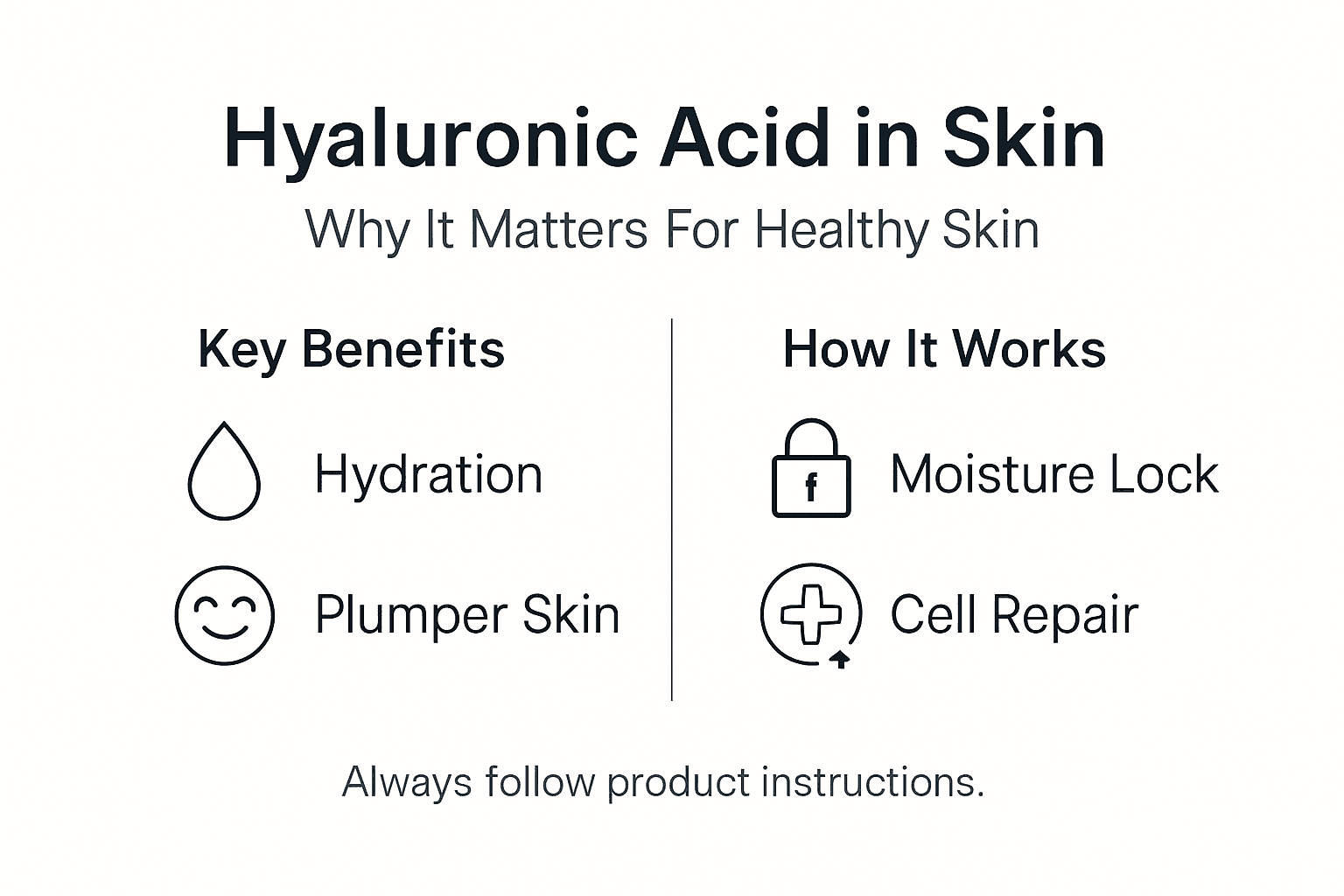
Here’s a look at how different molecular weights of hyaluronic acid influence skin benefits:
| Molecular Weight | Depth of Action | Main Impact on Skin |
| Low (under 10 kDa) | Deep dermal penetration | Intense, long-lasting hydration |
| Medium (10-100 kDa) | Mid-dermal layers | Balanced plumping and moisture |
| High (over 100 kDa) | Surface only | Forms protective hydration layer |
Where HA Actually Comes From
Bacterial fermentation is now the gold standard for skincare. This method produces pure, safe HA without the allergenic risks linked to animal sources like rooster combs or human umbilical cord tissue. Modern fermentation yields monodisperse, pure HA suitable for cosmetic applications, meaning consistent quality batch after batch.
Animal-derived HA still exists in some products, but fermentation-sourced HA dominates premium skincare because it’s:
-
Cleaner and more predictable
-
Less likely to trigger sensitivities
-
Easier to standardize for consistent results
-
More aligned with modern protein engineering standards
Why Your Skin Care Routine Needs Variety
A single HA weight can’t do everything your skin needs. Surface-level protection differs from cellular-level hydration. Professional skin repair approaches using serums often layer multiple HA concentrations to address different skin depths simultaneously.
At 30-50, your skin has multiple hydration challenges—some require deep penetration, others need surface protection. Combination formulations address both.
The most effective HA products contain multiple molecular weights working together—each targeting different skin layers for comprehensive cellular hydration and repair.
Pro tip: Apply low-molecular-weight HA serums to damp skin first, then follow with high-molecular-weight HA products to create layered hydration that penetrates deeply while sealing moisture at the surface.
How Hyaluronic Acid Restores and Protects Skin
HA doesn’t just sit on your skin looking pretty. It actively repairs damage, restores hydration, and shields your complexion from daily environmental assault. Understanding these mechanisms explains why dermatologists recommend it so consistently for women in your age group.
The Restoration Process
Cellular regeneration happens when HA reaches the deeper skin layers. HA maintains hydration while supporting cellular proliferation and promoting wound healing, which means it’s literally helping your skin rebuild itself at the cellular level.
When HA binds water molecules, it plumps skin tissue from within. Fine lines soften. Sagging areas regain volume. Your skin appears firmer because the structural framework beneath the surface is actually more hydrated and resilient.
HA also facilitates collagen synthesis—the protein that gives skin its bounce and firmness. By supporting this natural production, HA works alongside your body’s repair mechanisms rather than against them.
Protection Against Environmental Damage
Your skin faces constant assault from pollution, UV rays, and oxidative stress. HA creates a protective hydration shield that guards against these irritants while HA’s anti-inflammatory effects modulate immune response and protect skin integrity.
This dual action works like this:
-
Barrier strengthening — maintains moisture and blocks irritants from penetrating
-
Inflammation regulation — calms reactive skin and reduces visible redness
-
Oxidative defense — neutralizes free radicals that accelerate aging
-
Immune modulation — supports skin’s natural healing response
At 30-50, your skin’s natural defenses weaken. External protection becomes as important as internal hydration.
Why This Matters for Your Skin Right Now
Your skin is in a critical window. Collagen production has already declined significantly, elastin is weakening, and moisture retention is dropping. HA addresses all three simultaneously—it hydrates, promotes cellular repair, and protects against further damage.
Think of it as preventive maintenance. Every day you’re not using HA, your skin loses more moisture and faces unprotected damage. The longer you wait, the harder restoration becomes.
HA doesn’t just treat aging skin—it stops the cascade of damage that causes aging in the first place by restoring hydration, supporting collagen, and defending against environmental assault.
Pro tip: Use HA serums in the morning to lock in hydration before sun exposure and at night to support your skin’s natural repair cycle when collagen regeneration peaks.
Comparing Benefits, Risks, and Common Misconceptions
HA gets hyped, and that hype often overshadows reality. You’ll see marketing claims that stretch credibility, alongside genuine science. Understanding what HA actually does—and doesn’t—helps you make informed decisions about your skincare investment.
Real Benefits Worth Your Attention
Hydration and elasticity improvement are HA’s strongest credentials. Research confirms HA offers exceptional hydration, elasticity improvement, and wound healing support, making it genuinely effective for aging skin concerns.
Demonstrated benefits include:
-
Plumps fine lines by restoring moisture to skin layers
-
Improves skin texture and smoothness
-
Supports collagen synthesis and skin firmness
-
Reduces inflammation and calms reactive skin
-
Strengthens skin barrier function
These aren’t theoretical. Women in your age group report visible improvements in skin quality, especially when using layered HA formulations consistently.
Where the Real Risks Exist
Topical HA carries minimal risk. Injections are where complications arise. While HA is widely regarded as safe with low risk especially for topical applications, injectable forms may pose complications if improperly administered.
For serums and treatments you apply at home:
-
Allergic reactions are rare
-
Side effects are minimal
-
Compatibility with other ingredients is generally excellent
-
Sensitivity typically only occurs with additives, not HA itself
Injection risks include swelling, bruising, and infection if administered incorrectly. Stick with topical formulations to avoid these concerns entirely.
The Misconceptions Costing You Money
Here’s what marketing won’t tell you. All HA molecules don’t penetrate equally. A common misconception is that all HA molecules penetrate skin deeply; in reality, high molecular weight HA mainly affects the surface.
Other overblown claims:
-
HA is a “cure-all” for aging — it’s not. It’s one component of a comprehensive strategy.
-
All HA serums perform identically — source and molecular weight variation matter significantly.
-
One application creates lasting results — consistent use is required for sustained benefits.
-
High price guarantees better results — effective HA products exist at multiple price points.
HA works best as part of a cellular repair approach that includes complementary ingredients and consistent application.
HA is genuinely effective for hydration and anti-aging, but it works best when expectations are realistic and it’s used consistently alongside other skin repair strategies.
Pro tip: Pair HA serums with complementary ingredients like peptides or tranexamic acid to address multiple aging concerns simultaneously, rather than relying on HA alone to solve your skin challenges.
Choosing and Using Hyaluronic Acid Effectively
Not every HA product delivers the same results. Your choice of formulation, concentration, and application method determines whether you get transformative hydration or wasted money. Making the right selection requires understanding what to look for.
Selecting the Right HA Product for Your Skin
Molecular weight composition is your primary selection criterion. Effective HA use involves selecting appropriate molecular weight for desired benefits; low molecular weight penetrates deep while high molecular weight retains moisture on the surface.
When evaluating products, prioritize:
-
Multi-weight formulations — combine low, medium, and high molecular weights
-
Source quality — fermentation-derived HA is superior to animal sources
-
Purity standards — look for pharmaceutical-grade or cosmetic-grade certification
-
Concentration levels — products between 0.5% and 2% HA offer optimal efficacy
-
Supporting ingredients — peptides, antioxidants, and tranexamic acid enhance results
Skip products listing HA as the final ingredient—placement indicates concentration. Effective formulations place HA near the beginning of ingredient lists.
This table summarizes key factors to consider when choosing an effective hyaluronic acid serum:
| Factor | What to Look For | Why It Matters |
| Molecular Weights | Multiple sizes blended | Ensures deep and surface hydration |
| HA Source | Bacterial fermentation | Reduces risk of irritation |
| Concentration | 0.5% to 2% HA | Clinically proven for results |
| Ingredient Placement | Early in ingredient list | Higher concentration, more impact |
Application Strategy That Actually Works
Consistency beats perfection. Topical formulations need to balance concentration and molecular size for effective absorption, with usage guidelines recommending regular application for cumulative effects.
Your application routine should follow this sequence:
-
Cleanse skin thoroughly (damp skin absorbs better)
-
Apply low-molecular-weight HA serum to damp skin
-
Wait 1-2 minutes for absorption
-
Apply high-molecular-weight HA or moisturizer to seal
-
Use morning and night for optimal results
Damp skin is critical—HA bonds with water molecules, so applying to dry skin actually draws moisture from deeper layers. This single mistake undermines countless skincare investments.
Combining HA with Other Ingredients
HA works harder when paired strategically. Using HA alongside complementary ingredients like peptides or other skin repair actives enhances results by supporting barrier repair and reducing signs of aging.
Effective combinations include:
-
HA plus peptides — hydration plus firmness and collagen support
-
HA plus tranexamic acid — hydration plus brightening and even tone
-
HA plus antioxidants — hydration plus environmental protection
Avoid mixing HA with vitamin C or retinol in the same step—timing matters. Use HA in your morning routine, reserve actives for evening.
Timeline and Expectations
Results require patience. Your skin doesn’t transform overnight. Visible improvements typically emerge within 2-3 weeks of consistent use, with maximum benefits appearing around 6-8 weeks.
You’ll notice plumped fine lines first, then improved texture and firmness. Deeper hydration takes longer because it accumulates within skin layers.
The most effective HA strategy combines multiple molecular weights with consistent daily application and complementary ingredients—not a single product solution.
Pro tip: Purchase HA serums in darker bottles to protect the ingredient from light degradation, and store in a cool environment to maintain potency over time.
Restore Your Skin’s Vitality with Advanced Hyaluronic Acid Solutions
Aging skin struggles with declining natural hyaluronic acid levels leading to dryness, loss of firmness, and uneven texture. You deserve hydration that works at the cellular level to replenish moisture, support collagen, and protect against environmental damage. At Cellure, we understand these challenges and offer scientifically formulated serums and treatment kits that combine multiple molecular weights of hyaluronic acid with peptides and tranexamic acid for comprehensive skin repair.
Experience the power of regenerative skincare designed to restore your skin’s youthful plumpness and resilience. Visit Cellure today and start your personalized journey to visibly firmer, smoother, and more hydrated skin with our expert-selected targeted serums and comprehensive repair kits. Don’t wait until dehydration takes its toll. Act now to give your skin the hydration and protection it needs at every layer.
Frequently Asked Questions
What is hyaluronic acid and what role does it play in skin health?
Hyaluronic acid is a naturally occurring molecule that helps retain moisture and keeps skin plump, flexible, and hydrated. It plays a key role in skin health by binding water to skin cells, maintaining elasticity, and supporting overall skin structure.
How does hyaluronic acid benefit aging skin?
As we age, our natural production of hyaluronic acid declines, leading to dryness and increased fine lines. Supplementing with hyaluronic acid helps restore hydration, improves skin texture, and supports collagen synthesis, thus reducing the visible signs of aging.
What types of hyaluronic acid should I look for in skincare products?
Look for products containing multiple molecular weights of hyaluronic acid. Low molecular weight penetrates deeper for intense hydration, while high molecular weight forms a protective layer on the surface, locking in moisture and enhancing skin texture.
How do I properly apply hyaluronic acid for the best results?
For optimal results, apply a low molecular weight hyaluronic acid serum to damp skin and follow it with a high molecular weight product or moisturizer to seal in hydration. Consistent use, both morning and night, enhances its effectiveness.
Recommended
Share