


How to Use Peptides for Skin to Restore Firmness and Glow
Finding the right solution for tired, less resilient skin can feel challenging when you start to notice more visible texture or decreasing firmness. As skin shifts with age, choosing products that match your exact needs becomes even more important for professionals who rely on a polished appearance. Premium peptide-based formulas offer targeted options for restoring skin firmness and radiance, so this guide breaks down exactly how to identify your skin’s needs and select the peptide products that deliver deep, lasting results.
Table of Contents
- Step 1: Identify Skin Needs And Select Appropriate Peptide Products
- Step 2: Cleanse Skin And Prepare Proper Application Environment
- Step 3: Apply Peptide Serum And Layer According To Skin Protocol
- Step 4: Enhance Effectiveness With Complementary Ingredients
- Step 5: Verify Results And Adjust Usage For Optimal Outcome
Quick Summary
| Main Insight | Clarification |
|---|---|
| 1. Identify Your Skin Needs | Assess your specific concerns like aging or dryness to select the right peptides. |
| 2. Cleanse Before Application | Thoroughly cleanse your skin to ensure better absorption of peptide serums for best results. |
| 3. Layer Serums Wisely | Apply serums from thinnest to thickest consistency for optimal effectiveness and absorption. |
| 4. Combine with Complementary Ingredients | Pair peptides with ingredients like hyaluronic acid for enhanced hydration and rejuvenation. |
| 5. Track Progress and Adjust | Document your skin’s response to treatments and make necessary adjustments for ongoing improvement. |
Step 1: Identify skin needs and Select appropriate peptide products
Deciding which peptide products will best restore your skin’s firmness and glow starts with understanding your specific skin concerns and characteristics. Identifying the right approach requires careful assessment of your skin’s unique needs and targeted peptide selection.
Peptides play a crucial role in skin regeneration by encouraging collagen and elastin production. Specific skin repair strategies depend on understanding different peptide types and their functions. The main categories include:
- Signal peptides: Boost collagen production
- Carrier peptides: Deliver minerals for healing
- Enzyme-inhibitor peptides: Prevent collagen breakdown
- Neurotransmitter peptides: Help relax muscles
To determine the most suitable peptide approach, evaluate these key factors:
Here’s a quick comparison of peptide types and their targeted skin benefits:
| Peptide Type | Primary Function | Skin Concerns Addressed |
|---|---|---|
| Signal peptides | Stimulate new collagen | Loss of firmness, wrinkles |
| Carrier peptides | Transport essential minerals | Slow healing, dullness |
| Enzyme-inhibitor | Preserve existing collagen | Aging, sagging skin |
| Neurotransmitter | Relax facial muscles | Expression lines, tightness |
- Analyze your primary skin concerns (aging, texture, firmness)
- Consider your skin type (dry, oily, combination, sensitive)
- Review current skincare routine and potential interactions
- Assess desired outcomes (hydration, wrinkle reduction, skin repair)
Selecting peptides is about matching specific ingredients to your skin’s unique requirements, not a one-size-fits-all solution.
When choosing peptide products, prioritize formulations that remain on the skin for deep penetration, such as serums and targeted moisturizers. Research indicates that consistent, long-term use yields the most significant improvements in skin health and appearance.
Pro tip: Consult a dermatologist to perform a comprehensive skin assessment and receive personalized peptide product recommendations tailored to your specific skin profile.
Step 2: Cleanse skin and Prepare proper application environment
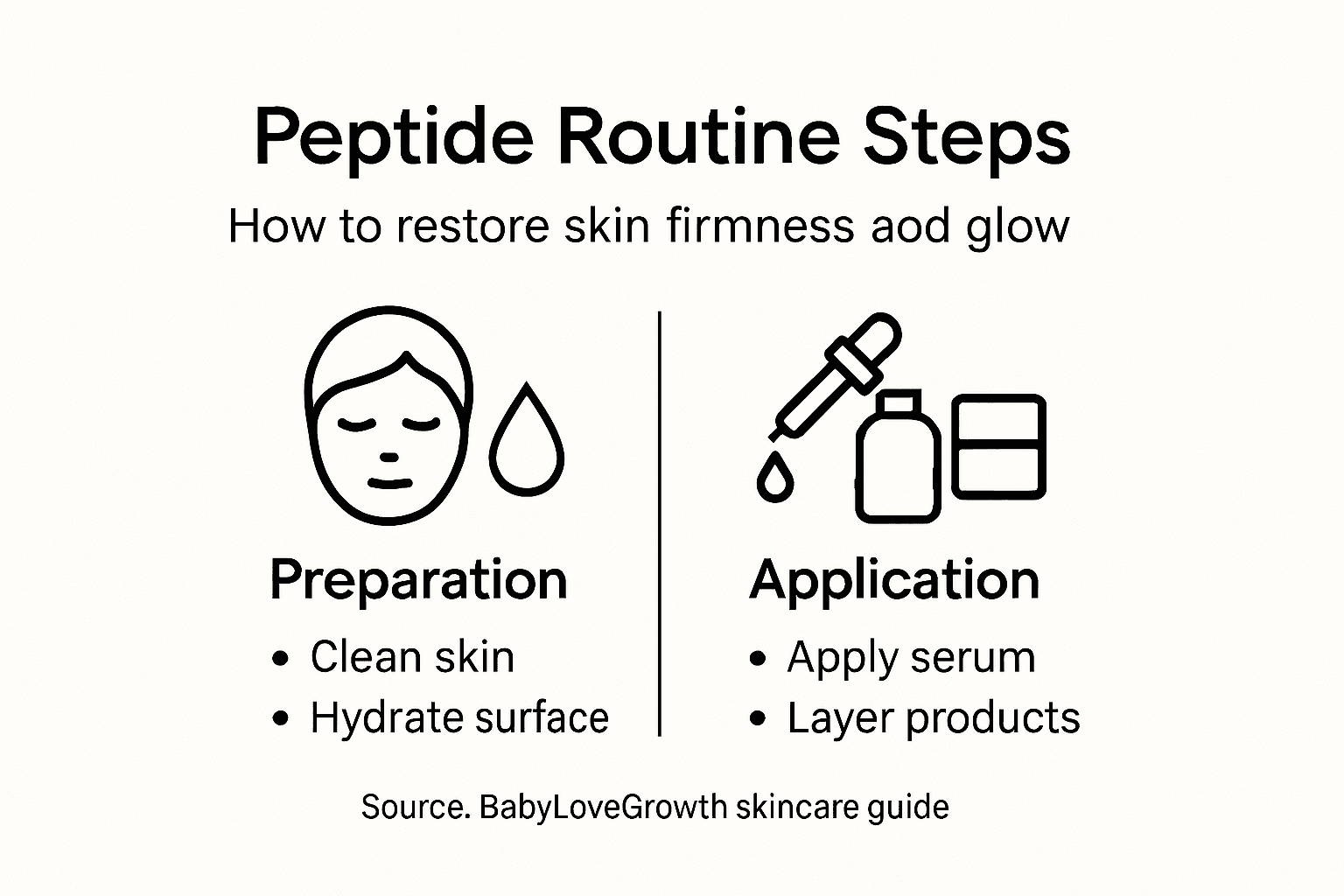
Preparing your skin for peptide serum application involves creating an optimal environment that maximizes ingredient absorption and effectiveness. The foundation of successful peptide treatment begins with thorough cleansing and strategic skin preparation.
Proper skin preparation techniques are critical for ensuring maximum peptide serum performance. Follow these essential steps to create the ideal canvas for your skincare routine:
- Remove all makeup completely
- Cleanse with a gentle, pH-balanced cleanser
- Pat skin dry, leaving it slightly damp
- Balance skin with an appropriate toner
Your cleansing routine should focus on these key elements:
- Gentle cleansing: Use lukewarm water and soft circular motions
- Thorough makeup removal: Ensure no residue remains on skin
- pH balancing: Use a toner to reset skin’s natural acid mantle
- Minimal friction: Avoid harsh scrubbing or aggressive towel drying
A clean, balanced skin surface allows peptide ingredients to penetrate more effectively and deliver optimal results.
The goal is to create a clean, slightly hydrated surface that allows maximum ingredient absorption. Applying peptide serums to damp skin helps enhance product glide and increases the potential for deeper penetration of active ingredients.

Pro tip: Use lukewarm water and soft microfiber towels to minimize skin irritation and preserve the delicate protective barrier during your cleansing process.
Step 3: Apply peptide serum and Layer according to skin protocol
Mastering the art of peptide serum application requires precision and understanding of how different products interact with your skin. Strategic serum layering techniques can significantly enhance your skincare routine’s effectiveness and boost overall skin rejuvenation.
To ensure optimal absorption and performance, follow these critical application guidelines:
- Start with the thinnest consistency serum
- Pat serums gently into skin
- Wait 30-60 seconds between layers
- Finish with moisturizer to seal active ingredients
Key principles of peptide serum application include:
- Immediate application: Apply while skin is still slightly damp
- Layering order: Thinnest to thickest consistency
- Gentle technique: Use light patting motions
- Consistent timing: Allow brief absorption between layers
Successful peptide serum application is about precision, patience, and understanding your skin’s unique absorption capacity.
When applying multiple peptide serums, focus on targeted ingredient delivery and avoid overwhelming your skin. The goal is to create a synergistic environment where each serum can work effectively without blocking or diluting other active ingredients.
Pro tip: Keep your serums at room temperature and use clean hands or a sanitized applicator to prevent contamination and maintain the integrity of your peptide treatments.
Step 4: Enhance effectiveness with complementary ingredients
Maximizing the potential of peptide serums requires strategic ingredient pairing that amplifies their skin-regenerative properties. Targeted ingredient combinations can dramatically improve your skincare outcomes by creating a synergistic environment for cellular renewal.
The most effective complementary ingredients for peptides include:
- Hydrating agents: Hyaluronic acid
- Antioxidants: Vitamin C, niacinamide
- Supporting compounds: Ceramides, growth factors
- Protective elements: Botanical extracts
Key guidelines for ingredient compatibility:
- Pair peptides with hydrating ingredients
- Layer antioxidants to boost protection
- Avoid direct mixing with strong acids
- Time retinoid application carefully
Strategic ingredient combinations can transform your skincare routine from basic maintenance to advanced cellular regeneration.
When combining peptides with other active ingredients, timing and sequence matter. Understanding which ingredients enhance versus potentially interfere with peptide function is crucial for maintaining your skin’s optimal health and appearance.
Pro tip: Introduce new ingredient combinations gradually, performing a patch test and allowing at least one week between adding different active skincare components to monitor your skin’s response.
Step 5: Verify results and Adjust usage for optimal outcome
Tracking your skin’s response to peptide treatments requires systematic observation and strategic adjustments. Peptide effectiveness monitoring demands patience and careful documentation to understand your skin’s unique regenerative process.
Establish a comprehensive result tracking system with these methods:
- Visual documentation: Take consistent progress photos
- Texture assessment: Track skin smoothness and firmness
- Hydration evaluation: Monitor skin moisture levels
- Detailed journaling: Record product usage and skin changes
Key timeline for peptide treatment results:
This summary outlines timelines and methods for evaluating peptide results:
| Tracking Method | Description | Typical Improvement Timeline |
|---|---|---|
| Progress photos | Document visual changes | 4-8 weeks |
| Skin texture log | Record smoothness and firmness | 3 months |
| Hydration checklist | Monitor skin moisture levels | 6-12 months |
| Journaling usage | Note product and skin reactions | Ongoing |
- Initial changes: 4-8 weeks
- Significant improvements: 3 months
- Long-term transformation: 6-12 months
Consistent tracking reveals subtle changes that indicate your peptide regimen’s effectiveness.
Adjustment indicators include changes in skin texture, hydration levels, and overall appearance. Understanding when to modify your approach ensures continuous skin improvement and prevents potential plateauing of results.
Pro tip: Create a digital or physical tracking spreadsheet with columns for date, product used, skin condition, and notable observations to scientifically monitor your peptide treatment progress.
Restore Firmness and Glow with Targeted Peptide Solutions
If you are seeking to reverse the visible signs of skin aging like loss of firmness and dullness the science-backed approach of peptides is your answer. This article highlights the importance of selecting the right peptide types and applying them correctly to boost collagen production and enhance skin regeneration. Do not let wrinkles and sagging skin hold you back from feeling confident and radiant every day Peptides can transform your skin from the cellular level when used with precision and care.
Explore our curated selection of advanced peptide serums and treatment kits in the Best Sellers 3 Cellure collection designed for lifting volumizing and brightening your skin. At Cellure you will find clinically supported bioactive formulas that target loss of volume and uneven tone with gentle yet powerful ingredients like peptides tranexamic acid and polynucleotides. Take control of your skincare routine today and experience visible results by incorporating premium regenerative skincare solutions tailored to your unique skin needs Visit our Homepage 3 Cellure to discover your next essential peptide product and start your journey toward firmer glowing skin now.
Frequently Asked Questions
How do I identify my skin needs for using peptides?
Analyze your primary skin concerns, such as aging or firmness, and consider your skin type, whether it’s dry, oily, or sensitive. Review your current skincare routine to identify potential product interactions and set clear desired outcomes. This will help you select the appropriate peptide products tailored to your unique skin profile.
What is the proper way to cleanse my skin before applying peptide serums?
Start by removing all makeup completely, then cleanse with a gentle, pH-balanced cleanser. Pat your skin dry but leave it slightly damp to enhance the absorption of peptide serums during application.
How should I layer my peptide serums for the best results?
Begin with the thinnest serum consistency and apply it gently by patting it into your skin. Allow 30-60 seconds between layers to ensure each serum is adequately absorbed before proceeding, and finish with a moisturizer to lock in the active ingredients.
What complementary ingredients should I use with my peptide serums?
Pair peptides with hydrating agents like hyaluronic acid and antioxidants such as Vitamin C. Avoid mixing peptides with strong acids directly, as these may interfere with their effectiveness. This strategic combination will amplify your overall skin rejuvenation results.
How long does it take to see results from using peptide serums?
Initial changes may be visible within 4-8 weeks, with more significant improvements typically occurring around 3 months. Maintain consistent usage and document your skin’s response to track progress, which can lead to long-term transformation in 6-12 months.
What should I do if I don’t see improvements in my skin after using peptides?
Track your skin’s response through visual documentation and notes on texture and hydration. If improvements plateau, consider adjusting your application routine or consulting a skincare professional for personalized advice.