


Cellular Repair Skincare 2026: 30% Firmer Skin Guide
You’ve tried countless anti-aging creams and serums, yet fine lines and sagging skin persist. Real skin rejuvenation requires repairing cells from within, not just surface treatments. This evidence-based guide teaches you a scientifically supported skincare regimen proven to deliver 20-35% improvement in skin elasticity and wrinkle depth within 3 months using cellular repair actives that actually work.
Table of Contents
- Prerequisites: Preparing Skin for Cellular Repair
- Step 1: Identify Your Skin Type and Specific Aging Concerns
- Step 2: Optimize Timing for Cellular Repair
- Step 3: Stimulate Cellular Turnover with Retinoids
- Step 4: Enhance Repair with Growth Factor Stimulation
- Step 5: Integrate Advanced Bioactives Like Exosomes
- Common Mistakes and Troubleshooting
- Expected Results and Timelines
- Explore Our Complete Cellular Repair Solutions
- Frequently Asked Questions
Key Takeaways
| Point | Details |
|---|---|
| Preparation is critical | Restore skin barrier with ceramides before starting cellular repair treatments to reduce irritation by 30%. |
| Timing matters | Apply repair actives at night when skin’s circadian repair peaks for up to 25% better results. |
| Retinoids are foundational | Advanced retinoids reduce wrinkle depth by 35% after 12 weeks when used correctly at night. |
| Avoid common mistakes | Over-exfoliation and mixing strong acids with retinoids early cause irritation in 40% of users. |
| Results take patience | Visible firmness and wrinkle reduction appear after 8-12 weeks with consistent use. |
Prerequisites: Preparing Skin for Cellular Repair
Before diving into powerful actives, your skin needs a solid foundation. Think of it like preparing soil before planting seeds. A compromised skin barrier makes cellular repair treatments irritating and ineffective.
Maintaining skin barrier integrity with ceramides reduces irritation risk by 30% and enhances active ingredient absorption. Use moisturizers rich in ceramides, cholesterol, and fatty acids twice daily for two weeks before introducing repair actives.
Hydration is equally crucial. Well-hydrated skin absorbs bioactive ingredients more efficiently. Drink adequate water and use a humidifier in dry climates to support skin moisture from inside and out.
Never start cellular repair treatments on inflamed, sunburned, or broken skin. Wait until visible irritation resolves. For those with sensitive skin, review best practices for sensitive skin before proceeding.
Key preparation steps:
- Apply ceramide-rich moisturizer morning and night for 14 days
- Ensure skin shows no active inflammation or irritation
- Use gentle, non-stripping cleansers only
- Support barrier function with adequate hydration
Pro Tip: Patch test new repair actives on your jawline for three nights before applying to your entire face. This simple step prevents widespread irritation and lets you assess tolerance safely.
Step 1: Identify Your Skin Type and Specific Aging Concerns
Personalizing your cellular repair regimen starts with accurate skin assessment. Cookie-cutter approaches fail because aging manifests differently across skin types.
Classify your skin type first. Oily skin produces excess sebum and appears shiny. Dry skin feels tight with visible flaking. Combination skin shows oiliness in the T-zone and dryness on cheeks. Sensitive skin reacts easily with redness or stinging.
Next, identify your primary aging concerns. Loss of firmness shows as sagging along the jawline and cheeks. Volume loss creates hollow temples and sunken under-eyes. Uneven tone appears as dark spots, redness, or dullness. Fine lines concentrate around eyes and mouth.
Documenting your baseline helps track progress objectively. Take close-up photos in consistent lighting before starting your regimen. Note specific concerns like crow’s feet depth or nasolabial fold prominence.
For precise analysis, consider professional skin assessment tools or dermatologist consultation. These identify issues you might miss, like early photoaging or barrier dysfunction.
Key assessment steps:
- Determine if your skin is oily, dry, combination, or sensitive
- List your top three aging concerns in order of priority
- Take baseline photos from multiple angles in natural light
- Consider professional analysis for comprehensive evaluation
Understanding your unique skin profile guides product selection and prevents wasting money on mismatched treatments. For uneven tone specifically, explore our guide to even skin tone for targeted strategies.
Step 2: Optimize Timing for Cellular Repair
Your skin operates on a circadian rhythm, with repair mechanisms peaking during sleep. Applying cellular repair actives when your skin is primed for regeneration dramatically amplifies results.
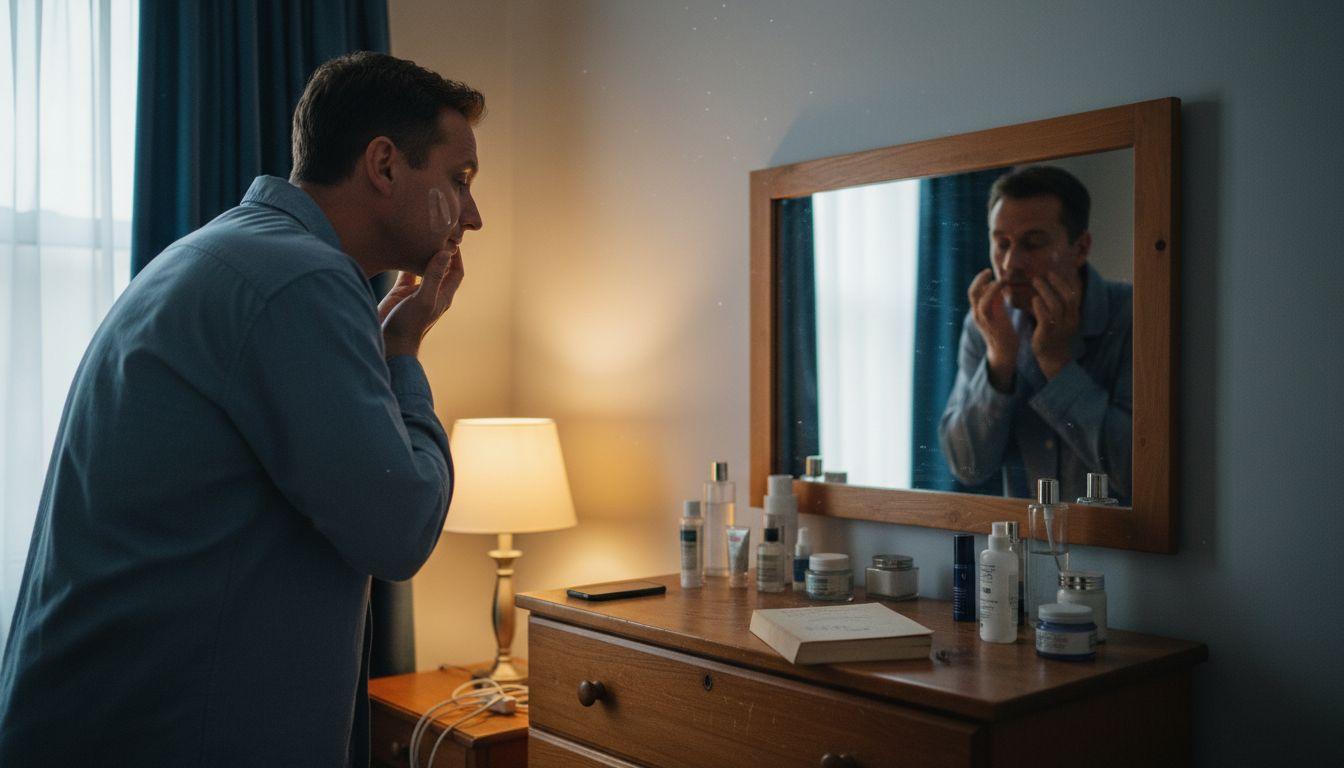
Skin repair markers improve by up to 25% when treatments are timed with skin’s circadian rhythm peaks. Between 10 PM and 2 AM, cell division rates triple, collagen synthesis accelerates, and DNA repair enzymes activate maximally.
Nighttime application of retinoids, peptides, and growth factors leverages this natural repair window. Your skin is also free from UV exposure and environmental stressors that interfere with regeneration during the day.
Daytime disrupts this rhythm. Applying repair actives in morning sunlight can trigger photosensitivity and oxidative stress, undermining the very repair you’re trying to achieve. Save antioxidants and sunscreen for morning protection.
Create an evening skincare ritual timed for optimal absorption. Cleanse thoroughly around 9 PM, apply actives by 10 PM, and get to bed by 11 PM to maximize the repair window. Consistency trains your skin’s circadian clock.
Pro Tip: Keep your bedroom cool (65-68°F) and completely dark. Lower temperatures enhance melatonin production, which supports skin repair processes throughout the night.
The science behind cellular repair explains how timing synchronizes with your body’s natural regeneration cycles. Respecting these biological rhythms transforms good products into exceptional results.
Step 3: Stimulate Cellular Turnover with Retinoids
Retinoids remain the gold standard for accelerating skin cell renewal and collagen production. They work by binding to retinoic acid receptors in skin cells, triggering increased turnover and matrix remodeling.
Advanced retinoids produce up to 35% wrinkle depth reduction after 12 weeks with improved tolerability. However, not all retinoids perform equally. Newer forms like hydroxypinacolone retinoate (HPR) and retinaldehyde offer superior tolerability without sacrificing efficacy.
Start with low concentrations to build tolerance. If you’re retinoid-naive, begin with 0.25% retinol or 0.01% tretinoin three nights per week. Gradually increase to nightly use over six weeks. Jumping to high strengths causes irritation that derails your entire regimen.
Apply retinoids only at night on completely dry skin. Wait 20 minutes after cleansing to ensure skin is fully dry. Use a pea-sized amount for your entire face, avoiding eyes and lips. Layer a ceramide moisturizer on top after another 20 minutes.
Never combine retinoids with strong exfoliants like AHAs or BHAs initially. This combination strips your barrier and causes inflammation. Wait at least three months of consistent retinoid use before cautiously introducing acids on alternate nights.
| Retinoid Type | Strength | Best For | Irritation Risk |
|---|---|---|---|
| Retinol | Moderate | Beginners | Low |
| Retinaldehyde | High | Intermediate users | Medium |
| HPR | High | Sensitive skin | Low |
| Tretinoin | Highest | Experienced users | High |
Key retinoid guidelines:
- Begin with 0.25% retinol three nights weekly
- Apply to completely dry skin, wait 20 minutes
- Use only at night, never during daytime
- Avoid mixing with AHAs/BHAs for first 3 months
- Layer ceramide moisturizer after another 20 minutes
Pro Tip: Store retinoid products in a cool, dark place. Light and heat degrade retinoids rapidly, reducing their effectiveness by up to 50% within weeks of improper storage.
Combining retinoids and peptides synergy creates complementary repair pathways. Learn more about top skin repair ingredients to build your complete regimen intelligently.
Step 4: Enhance Repair with Growth Factor Stimulation
Growth factors are signaling proteins that direct cellular behavior, including collagen production and tissue repair. Combining controlled micro-injuries with bioengineered growth factor serums accelerates regeneration beyond topical treatments alone.
Microchanneling combined with growth factor serums accelerates collagen remodeling 20-30% faster than PRP with less inflammation. Microchanneling uses fine needles to create thousands of microscopic channels in the skin, triggering wound healing cascades without significant trauma.
These micro-channels also dramatically improve absorption of topically applied growth factors. Serums containing EGF (epidermal growth factor), TGF-β (transforming growth factor beta), and PDGF (platelet-derived growth factor) penetrate deeply when applied immediately post-treatment.
Platelet-rich plasma (PRP) is an older approach that extracts growth factors from your own blood. However, PRP quality varies wildly based on preparation methods, and injection-based delivery causes more inflammation and downtime than microchanneling.
Professional microchanneling sessions every 4-6 weeks provide optimal stimulation. At-home derma-rollers (0.25-0.5mm) can maintain results between professional treatments but lack the precision and depth control of medical-grade devices.
| Method | Collagen Boost | Inflammation | Downtime | Cost per Session |
|---|---|---|---|---|
| Microchanneling | 20-30% increase | Low | 1-2 days | $300-500 |
| PRP injection | 15-25% increase | Moderate | 3-5 days | $600-1000 |
| At-home roller | 10-15% increase | Minimal | None | $30-100 (one-time) |
Implementation steps:
- Schedule professional microchanneling every 4-6 weeks
- Apply bioengineered growth factor serum immediately post-treatment
- Use at-home 0.25mm roller weekly between professional sessions
- Avoid retinoids for 48 hours before and after procedures
The mechanism behind growth factor stimulation involves triggering controlled wound healing that remodels aged tissue into rejuvenated skin. Understanding this process helps you maximize procedural benefits.
Step 5: Integrate Advanced Bioactives Like Exosomes
Exosomes represent the cutting edge of cellular communication-based skincare. These tiny vesicles (30-150nm) carry proteins, lipids, and RNA between cells, orchestrating complex regeneration processes.
Exosome serums can enhance dermal regeneration by delivering proteins and RNA signals but lack full FDA approval; quality varies widely. The promise is significant, but the regulatory landscape remains uncertain in 2026.
Exosomes work by delivering molecular instructions directly into skin cells. They bypass traditional receptor binding, instead fusing with cell membranes to deposit their cargo. This triggers anti-inflammatory responses, stimulates collagen genes, and promotes stem cell activation.
However, not all exosome products are created equal. Manufacturing quality varies dramatically. Some products contain minimal viable exosomes or lack proper characterization. Others are contaminated or degraded during processing.
If you choose to try exosome serums, verify third-party testing and clinical validation. Look for products with published studies showing actual exosome content and bioactivity. Avoid cheap products making extraordinary claims without evidence.
Integration guidelines:
- Choose exosome serums only from manufacturers providing third-party testing
- Apply after microchanneling for enhanced delivery
- Start with once-weekly application to assess tolerance
- Monitor skin response closely for any adverse reactions
- Stay updated on FDA regulatory developments regarding these products
Given the emerging nature of exosome therapy, approach cautiously. They’re not necessary for excellent results. The foundational steps (retinoids, microchanneling, growth factors) deliver proven benefits without regulatory uncertainty.
Learn more about advanced bioactives overview to understand where exosomes fit within the broader ingredient landscape.
Common Mistakes and Troubleshooting
Even well-intentioned skincare routines fail when common errors undermine cellular repair processes. Recognizing and avoiding these mistakes keeps your regimen on track.
Up to 40% of users report irritation or reduced effectiveness due to over-exfoliation, improper retinoid timing, and mixing actives incorrectly. Over-exfoliation is the most common culprit. Using acids daily, combining multiple exfoliants, or adding chemical peels while on retinoids strips your barrier and triggers inflammation.
Mixing strong acids with retinoids early leads to inflammation and reduced benefits in 25-35% of multi-active skincare users. Your skin cannot tolerate this assault. Choose one primary active and master it before layering additional treatments.
Improper retinoid application timing also sabotages results. Applying retinoids in the morning exposes them to UV degradation and causes photosensitivity. Always use retinoids exclusively at night with proper sun protection the following day.
Growth factor serums applied without microchanneling or professional treatments show minimal penetration. These large molecules cannot cross intact skin barriers. Pairing them with controlled micro-injury dramatically improves delivery and efficacy.
Exosome product selection requires scrutiny. Many products contain negligible active exosomes or lack quality validation. Choosing based solely on marketing claims wastes money and potentially exposes skin to contaminated or ineffective formulations.
Key mistakes to avoid:
- Over-exfoliating with daily acids or multiple exfoliants
- Applying retinoids during daytime or with morning routine
- Combining retinoids with AHAs/BHAs before building tolerance
- Using growth factor serums without microchanneling
- Selecting exosome products without third-party validation
Pro Tip: Keep a skincare journal noting products used, application times, and skin response. Patterns emerge quickly, helping you identify what works and what causes problems before significant damage occurs.
For proper product use, review correct use of repair kits to ensure you’re maximizing your investment and avoiding counterproductive combinations.
Expected Results and Timelines
Setting realistic expectations prevents discouragement and helps you commit to consistent application. Cellular repair is a marathon, not a sprint.
Visible firmness and wrinkle reduction typically occur after 8-12 weeks with 20-35% improvement in skin elasticity and collagen density. You won’t see dramatic changes overnight. Cellular turnover cycles take 28 days in young skin and 45-60 days in mature skin.
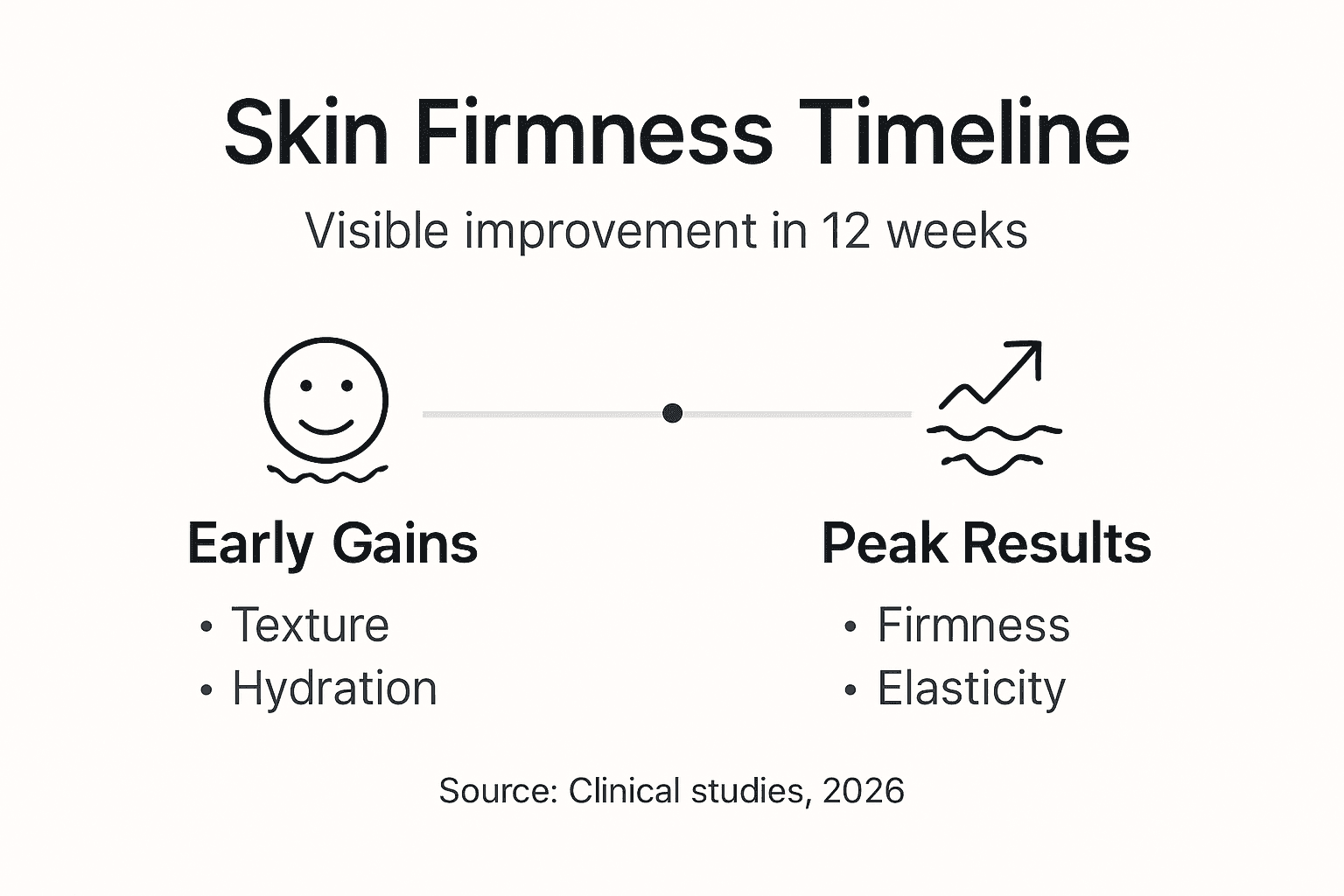
The first four weeks focus on barrier repair and tolerance building. You might notice subtle improvements in texture and hydration, but dramatic changes are unlikely. This phase establishes the foundation for deeper repair.
Weeks 5-8 bring visible improvements. Fine lines soften, skin feels firmer, and tone becomes more even. Collagen remodeling accelerates during this period as retinoids and growth factors take effect.
Weeks 9-12 show peak improvements. Wrinkle depth measurably reduces, jawline definition improves, and skin appears plumper. Clinical measurements confirm significant elasticity gains.
Sustained use beyond 12 weeks maintains and builds on these gains. Cellular repair is ongoing. Stopping your regimen causes regression as natural aging processes resume dominance.
| Timeline | Expected Improvements | Clinical Metrics |
|---|---|---|
| Weeks 1-4 | Improved texture, hydration | Minimal measurable change |
| Weeks 5-8 | Softer lines, firmer feel | 10-15% elasticity gain |
| Weeks 9-12 | Reduced wrinkle depth, better tone | 20-35% elasticity improvement |
| Beyond 12 weeks | Maintained improvements, continued gains | Sustained 25-35% improvement |
Track progress with monthly photos in identical lighting and angles. Subtle changes accumulate into significant transformation but appear gradual day-to-day. Objective documentation reveals progress your mirror might miss.
Learn about tracking cellular repair progress to understand the biological timeline of skin regeneration and set appropriate milestones.
Explore Our Complete Cellular Repair Solutions
Ready to transform your skin with scientifically formulated cellular repair products? Cellure’s Complete Skin Repair Kit combines pharmaceutical-grade peptides, barrier-restoring ceramides, and advanced bioactives in one comprehensive system. Each product is precisely formulated to work synergistically, eliminating guesswork and delivering professional results at home.
Our peptide serums harness clinically proven ingredients that improve skin firmness by up to 30%, targeting the exact cellular pathways discussed in this guide. You’ll find everything needed for a complete regimen, from barrier preparation through advanced repair.
Need guidance on implementation? Our how to use peptides effectively resource provides step-by-step protocols. Dive deeper into ingredient science with our top skin repair ingredients breakdown to understand exactly what you’re applying and why it works.
Frequently Asked Questions
What skin types benefit most from cellular repair skincare routines?
All skin types benefit from cellular repair, but mature skin (35+) with visible aging shows the most dramatic improvements. Dry and combination skin types often see faster results because they tolerate retinoids and actives better initially. Oily and sensitive skin types achieve excellent results with proper preparation and gradual introduction of actives.
How should I introduce retinoids if I have sensitive skin?
Start with the gentlest retinoid form, such as 0.25% retinol or hydroxypinacolone retinoate (HPR), applying just once weekly for two weeks. Gradually increase to twice weekly, then three times weekly over 8-10 weeks. Always buffer with a ceramide moisturizer and never rush the process, as pushing too fast causes inflammation that sets you back weeks.
Are exosome serums safe for long-term use?
The long-term safety profile of exosome serums remains unclear in 2026 due to limited longitudinal studies and lack of FDA approval. Short-term use (3-6 months) appears safe when products come from reputable manufacturers with third-party testing, but regulatory guidance continues evolving. Monitor updates from dermatology organizations and consider exosomes an optional advanced treatment rather than a foundational necessity.
How can I measure progress objectively during my regimen?
Take high-resolution photos monthly in identical lighting, angles, and facial expressions. Use a ring light or natural window light at the same time of day. Measure specific features like nasolabial fold depth, crow’s feet length, or jawline definition with a flexible ruler. Consider professional VISIA skin analysis every three months for quantitative elasticity and pigmentation metrics that track improvements invisible to the naked eye.