


Evidence-based regenerative serums for youthful skin
The regenerative serum market is flooded with bold promises, but most products lean harder on marketing than on molecular biology. If you’ve spent real money on serums that delivered nothing, you’re not alone. The challenge isn’t finding a serum with impressive packaging. It’s finding one where the active ingredients have actual clinical evidence behind them. This article breaks down the science of regenerative serums, profiles formulas with measurable results, compares them side by side, and gives you a clear framework for choosing the right one for your skin.
Table of Contents
- What makes a serum regenerative? Key criteria and science
- Evidence-backed regenerative serums: Examples and real-world results
- Comparison table: How leading regenerative serums stack up
- Choosing your serum: Expert tips for different skin needs
- Explore clinically proven regenerative skincare solutions
- Frequently asked questions
Key Takeaways
| Point | Details |
|---|---|
| Multi-pathway formulas outperform | Serums combining peptides, growth factors, and barrier support deliver stronger age-fighting benefits than single-ingredient formulas. |
| Clinical results are measurable | Evidence-backed serums show clear improvements in firmness, tone, hydration, and wrinkle reduction within weeks. |
| Expert guidance matters | Choosing serums based on scientific criteria and situational recommendations gives safer, more consistent outcomes. |
| Sensitive skin options exist | Many regenerative serums are proven safe and effective for sensitive or acne-prone skin, especially post-procedure. |
What makes a serum regenerative? Key criteria and science
A regenerative serum isn’t just a moisturizer with a fancy label. It’s a formula designed to communicate with your skin cells, prompting them to repair, rebuild, and function more like younger skin. The key ingredient categories include peptides, growth factors, exosomes, and stem cells (both human-derived and plant-derived). Each works through a different biological pathway, but the shared goal is the same: stimulate fibroblasts (the cells that produce collagen and elastin) to do more of what they naturally do less of as you age.
Regenerative serums use peptides and growth factors to signal fibroblasts for collagen and elastin synthesis, which is the core mechanism behind firming and tone improvement. Peptides are short chains of amino acids that act as messengers. Growth factors are proteins that bind to cell receptors and trigger repair responses. Exosomes are tiny vesicles that carry biological signals between cells. Stem cell extracts, whether human or plant-derived, release compounds that support cellular renewal.
When evaluating any regenerative serum, look for three things: clinical evidence (published studies, not just brand claims), a targeted benefit profile (firmness, tone, hydration, or barrier repair), and a safety record across skin types. Understanding regenerative skincare science helps you cut through the noise and focus on what actually moves the needle.
- Peptides: Proven collagen stimulators with strong safety profiles
- Growth factors: Potent but sourced variably; look for clinical backing
- Exosomes: Emerging and promising, but independent research is still catching up
- Plant stem cells: Antioxidant-rich and sustainable, but generally less potent for firming
- Niacinamide (combined): Supports barrier function and tone when paired with peptides
Pro Tip: Look for serums that target multiple pathways at once. A formula combining peptides with niacinamide or barrier-supporting ingredients doesn’t just address one problem. It creates a more complete repair environment for your skin.
Evidence-backed regenerative serums: Examples and real-world results
Having clarified what regenerative means, let’s examine real-world examples with measurable results.
The RGN-6 Serum is one of the more clinically documented multi-pathway formulas available. It targets six dimensions of skin regeneration simultaneously, including inflammation, barrier integrity, collagen production, and tone. In six dermatologist-documented cases, patients showed measurable improvements in redness, skin tone, and firmness. This kind of case-based clinical documentation is rare in the serum market and worth paying attention to.
The Tripeptide-29 serum takes a biomimetic approach, meaning it uses a peptide that closely mimics the structure of human collagen. In a four-week clinical study on aging skin, it delivered a 72.5% increase in hydration and a 93.7% reduction in dryness, along with improvements in transepidermal water loss (TEWL) and skin firmness. Those are not typical numbers. Most hydration serums don’t come close.
“A 93.7% reduction in dryness in four weeks isn’t a marketing claim. It’s a clinical outcome from a controlled study on aging skin.”
For exosome and conditioned media (EVs/CMs) formulas, a systematic review found that these ingredients improve elasticity by 27% and reduce wrinkles by more than 10%, with hydration gains exceeding 20%. The safety profile across the reviewed studies was consistently positive. That said, experts note that while the results are promising, more independent replication is needed before exosome serums can be considered as reliable as peptide-based options.
Here’s a quick breakdown of what to look for in each category:
- Peptide serums: Best for consistent, long-term collagen support. Explore best peptides for skin to understand which peptide types target which concerns.
- Biomimetic collagen peptides: Ideal for dehydration and barrier repair alongside firming
- Exosome/EV formulas: Potentially faster results, especially post-procedure, but verify sourcing and study quality
- Multi-pathway formulas: The most versatile option for adults targeting both tone and firmness
Pro Tip: If you’re new to regenerative serums, start with a well-studied peptide formula before adding exosome-based products. Peptides have decades of safety and efficacy data. Exosomes are exciting but still building their evidence base.
For a strong starting point, the Peptide Hydro Lift Serum combines hydration and firming peptides in a formula designed for aging skin concerns. It’s a practical entry point into effective anti-aging serums without the uncertainty of newer ingredient categories.

Comparison table: How leading regenerative serums stack up
To see these serums side by side, use this easy comparison table.
| Serum type | Key ingredients | Hydration gain | Firmness/elasticity | Wrinkle reduction | Best for |
|---|---|---|---|---|---|
| RGN-6 multi-pathway | Peptides, niacinamide, barrier actives | Moderate | Documented in 6 cases | Tone and redness improvement | Sensitive, acne-prone, post-procedure |
| Tripeptide-29 biomimetic | Collagen-mimicking peptide | +72.5% | Improved TEWL and firmness | Significant dryness reduction | Dehydrated, aging skin 30-55 |
| EVs/CMs exosome formula | Exosomes, conditioned media | >20% | +27% elasticity | >10% reduction | Post-procedure, rapid results |
Clinical benchmarks across regenerative serum studies show firmness improvements of 90 to 100%, wrinkle reductions ranging from 7 to 30%, and hydration gains between 20 and 70% over several weeks of consistent use. These ranges reflect the variation across ingredient types and study designs, so individual results will depend on your starting point and consistency.
A few practical notes on the table above:
- Sensitive or acne-prone skin: RGN-6 type formulas with anti-inflammatory pathways are the safest starting point
- Post-procedure recovery: Both exosome and multi-peptide formulas have shown effectiveness after laser treatments
- Adults 30 to 55 targeting tone and firmness: Multi-peptide formulas remain the most reliable choice
For a deeper look at the science behind firm, radiant skin and how serums fit into a complete routine, it helps to understand the role of serums in skin health before committing to a single product.
Choosing your serum: Expert tips for different skin needs
With the ingredients and comparisons in mind, here’s how to make your choice confidently.
- Identify your primary concern first. Loss of firmness, uneven tone, and chronic dehydration each respond best to different ingredient profiles. Don’t buy a serum that does everything moderately when you need one that does one thing exceptionally well.
- Match the formula to your skin’s tolerance. If your skin reacts easily, start with a peptide-only or peptide-plus-niacinamide formula. These have the strongest safety records across skin types.
- Consider your timeline. Peptide serums build results over 8 to 12 weeks. Exosome formulas may show faster visible changes, especially after a procedure, but require more scrutiny of the product’s sourcing and study quality.
- Think about sustainability and budget. Plant stem cell serums are a lower-cost, eco-conscious option. They deliver antioxidant benefits and some cellular support, but they’re generally less effective for structural concerns like firmness and deep tone correction.
- Layer strategically. A peptide serum works better when your barrier is intact. If your skin is compromised, add a barrier-repair step before or after your regenerative serum.
Multi-peptide formulas for ages 30 to 55 targeting tone and firmness loss are the most evidence-supported choice, especially when combined with barrier support ingredients. This isn’t a trend. It’s what the clinical data consistently points to.
“The best serum isn’t the most expensive or the most novel. It’s the one with the right ingredients for your specific concern, backed by real clinical data.”
Understanding peptide skin benefits in detail helps you read ingredient labels with confidence. And once you’ve chosen your serum, knowing the right technique for applying peptide serums makes a measurable difference in absorption and results.
Pro Tip: Apply your regenerative serum to slightly damp skin immediately after cleansing. Hydrated skin absorbs actives more efficiently, and peptides in particular penetrate better when the skin barrier isn’t in a dry, contracted state.
Explore clinically proven regenerative skincare solutions
Putting science-backed regenerative serums into practice is easier when the formulas are already built around clinical evidence. At Cellure, every product is formulated with bioactive ingredients that have documented mechanisms and measurable outcomes.
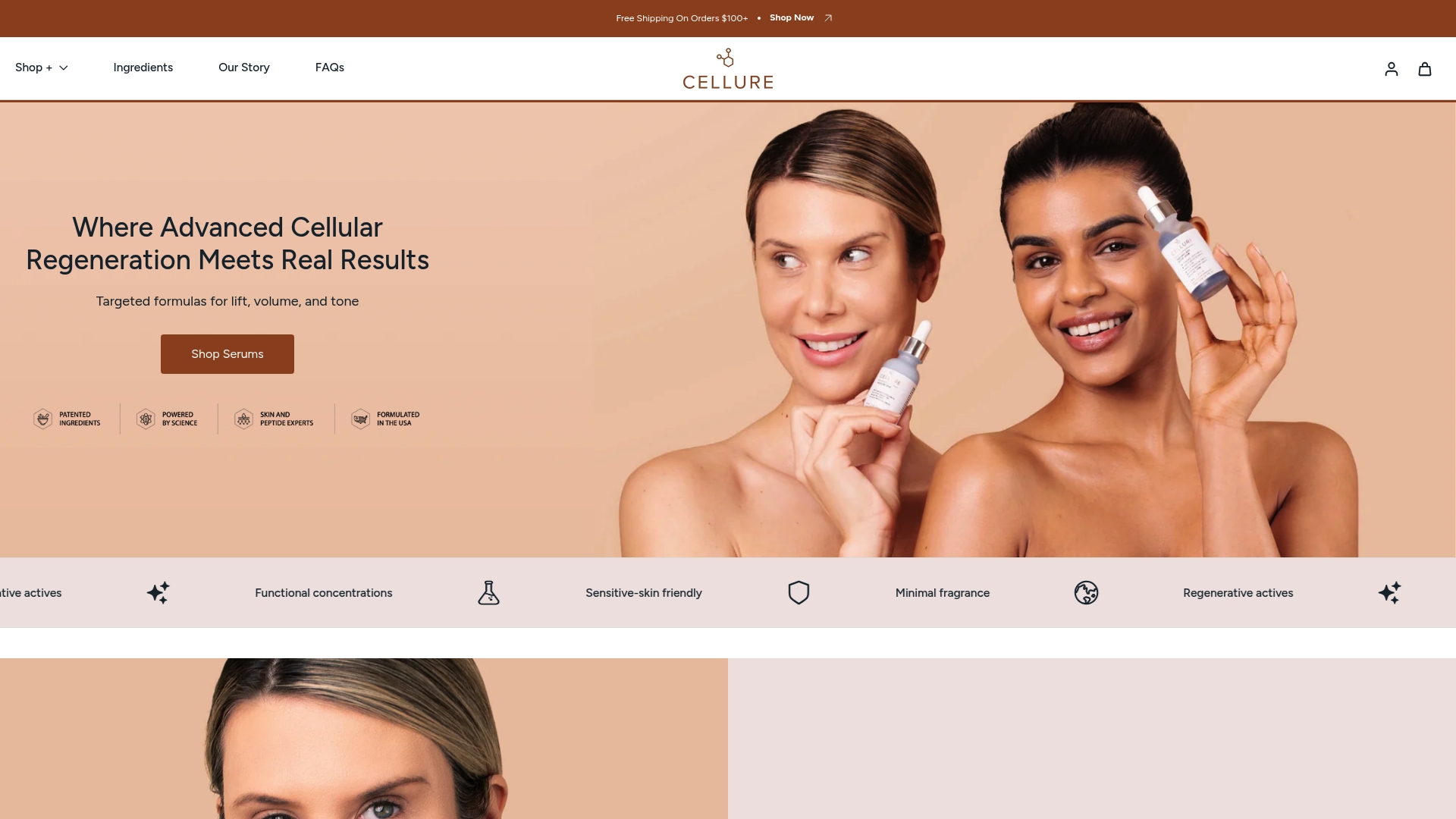
The Complete Skin Repair Kit brings together targeted actives for firmness, tone, and barrier repair in a single, structured routine. For brightening and tone correction alongside peptide firming, the Tranexamic Acid Peptide Serum addresses uneven pigmentation at the cellular level. Browse the full range of Cellure regeneration solutions to find the formula that matches your skin’s specific needs and concerns.
Frequently asked questions
What are the main ingredients in regenerative serums?
Peptides, growth factors, exosomes, and stem cells are the core categories. Each signals fibroblasts for repair, stimulating collagen and elastin production to improve firmness and skin quality over time.
How quickly do regenerative serums show results?
Most clinical studies report visible improvements within 4 to 12 weeks of consistent use. Firmness gains of 90 to 100%, wrinkle reductions of 7 to 30%, and hydration increases of 20 to 70% are the documented benchmarks across ingredient categories.
Are regenerative serums safe for sensitive or acne-prone skin?
Yes. Evidence-based formulas, particularly multi-pathway peptide serums, are well-tolerated by sensitive and acne-prone skin and have shown effectiveness even in post-procedure recovery contexts.
Which is more effective: peptide or exosome-based serums?
Peptide serums have decades of clinical backing and are the most reliable for consistent results. Exosome-based serums show strong early data but need more independent research before they can be considered equally established.
Can plant stem cell-based serums deliver results comparable to human-derived formulas?
Plant stem cell serums offer antioxidant support and are a sustainable option, but they are generally less potent than human-derived formulas when it comes to structural concerns like firming and tone correction.
Recommended
- What makes serums effective for anti-aging in 2026 – Cellure
- Unlock firm, radiant skin with regenerative science – Cellure
- Role of Serums in Skin Health: Science and Impact – Cellure
- Sensitive skin serum guide for gentle cellular repair – Cellure
- Collagen supplements for skin and joint health: 2026 guide – ElevateSupplements