


How to apply peptide serums for skin rejuvenation
Fine lines, dullness, and loss of firmness affect millions of adults seeking effective anti-aging solutions. Peptide serums offer a scientifically-backed approach to cellular skin repair and rejuvenation, but their effectiveness depends entirely on proper application technique. Understanding the correct method to apply these powerful bioactive ingredients maximizes absorption, enhances results, and helps you achieve visible improvements in skin texture and firmness. This guide walks you through everything you need to know about applying peptide serums correctly for optimal skin rejuvenation.
Table of Contents
- Key takeaways
- What you need before applying peptide serums
- Step-by-step guide to applying peptide serums
- Common mistakes and how to avoid them
- What results to expect and when
- Enhance your skincare with Cellure peptide serums
- Frequently asked questions
Key Takeaways
| Point | Details |
|---|---|
| Collagen and firmness | Peptide serums support collagen production and improve skin firmness when used correctly. |
| Preparation boosts absorption | Proper skin prep including gentle cleansing and leaving skin slightly damp enhances peptide absorption. |
| Application sequence matters | Following a precise order and avoiding incompatible products ensures peptides work effectively. |
| Consistency yields results | Regular use with correct technique leads to visible improvements over weeks. |
What you need before applying peptide serums
Preparing skin properly improves peptide serum absorption and results. Before you apply any peptide formulation, your skin needs to be in the ideal state to receive these bioactive ingredients. This preparation phase determines how effectively the peptides penetrate your skin barrier and begin their cellular repair work.
Start with thorough cleansing using a gentle, pH-balanced cleanser that removes impurities, makeup, and excess oil without stripping your skin’s natural moisture barrier. Harsh cleansers create micro-damage that can interfere with peptide absorption. Pat your face dry with a clean towel, leaving skin slightly damp rather than bone-dry. This residual moisture actually enhances serum penetration and helps peptides distribute evenly across your skin surface.
Weekly exfoliation supports better absorption, but avoid exfoliating on the same day you plan to apply peptides. Dead skin cell buildup blocks active ingredients from reaching living skin layers where they do their work. However, freshly exfoliated skin can be overly sensitive to bioactive compounds. Plan your exfoliation 1-2 days before intensive peptide application for best results.
Pro Tip: Apply peptide serums within 60 seconds of cleansing while skin retains slight dampness. This timing window maximizes absorption as your pores remain open and receptive.
Gather these essential items before starting your peptide serum routine:
- Your chosen peptide serum formulation
- Gentle, fragrance-free moisturizer for layering
- Broad-spectrum SPF 30+ sunscreen for daytime use
- Clean hands and a dry, lint-free towel
- Optional: hyaluronic acid serum for extra hydration boost
| Preparation step | Purpose | Timing |
|---|---|---|
| Gentle cleansing | Remove impurities without barrier damage | Every application |
| Pat skin damp | Enhance peptide penetration | Immediately after cleansing |
| Weekly exfoliation | Clear dead cells for better absorption | 1-2 days before intensive use |
| Clean environment | Prevent contamination and maximize efficacy | Every application |
Avoid pairing peptide serums with strong acids like glycolic acid, salicylic acid, or high-concentration vitamin C immediately before or after application. These ingredients can destabilize certain peptide formulations or cause unnecessary irritation. The benefits of peptides for skin work best when your routine supports rather than conflicts with their molecular structure. If you use acids or retinoids, apply them at opposite times of day from your peptide serum, or on alternating days.
Step-by-step guide to applying peptide serums
Applying peptide serums on slightly damp skin enhances penetration and efficacy. Follow this precise sequence to maximize your serum’s rejuvenating potential and ensure peptides reach the cellular layers where they stimulate collagen production and skin repair.
-
Cleanse thoroughly using your gentle cleanser, removing all traces of makeup, sunscreen, and daily buildup. Rinse with lukewarm water and pat your face until it’s damp but not dripping.
-
Dispense 2-3 drops of peptide serum onto your fingertips. This amount covers your entire face without overwhelming your skin’s absorption capacity. Using too much serum doesn’t improve results and can actually impede penetration as excess product sits on the surface.
-
Warm the serum briefly between your fingertips for 3-5 seconds. This slight temperature increase helps the formulation spread more evenly and absorb more readily into skin.
-
Gently pat and press the serum onto your face using light tapping motions with your fingertips. Start at your forehead, move to cheeks, then chin and neck. Avoid rubbing, pulling, or stretching skin, which causes mechanical stress and can damage the delicate dermal matrix you’re trying to repair.
-
Allow full absorption for 60-90 seconds before applying any additional products. You’ll notice the serum disappearing into your skin as peptides penetrate the epidermis. Rushing this step by immediately layering moisturizer dilutes the peptide concentration and reduces effectiveness.
-
Apply moisturizer once the serum feels completely absorbed. Choose a lightweight, non-comedogenic formula that seals in the peptides without blocking pores or interfering with their cellular activity.
-
Finish with sunscreen during daytime application. UV exposure degrades peptides and accelerates the aging process you’re working to reverse. Broad-spectrum SPF 30+ protection is non-negotiable for maintaining peptide serum benefits.
Pro Tip: Apply peptide serums in upward, outward motions following your skin’s natural contours. This technique supports lymphatic drainage and prevents the downward pulling that contributes to sagging over time.
“The patting technique for serum application minimizes skin trauma while maximizing ingredient delivery to target layers. Rubbing creates friction that damages collagen fibers and reduces the very firmness peptides aim to restore.”
Use your step-by-step peptide serum guide once or twice daily depending on your specific product’s recommendations and your skin’s response. Morning application provides antioxidant protection throughout the day, while evening application supports overnight cellular repair when skin regeneration naturally peaks. Many people find twice-daily use delivers faster visible improvements, but sensitive skin types may prefer once-daily application to avoid potential irritation.
The key to effective anti-aging serums lies not just in their formulation but in consistent, correct application technique. Master these steps and you create the optimal environment for peptides to work their cellular magic.

Common mistakes and how to avoid them
Even with quality peptide serums, application errors can reduce effectiveness by up to 40%. Understanding these common pitfalls helps you maximize your investment in premium skincare and achieve the skin rejuvenation results you’re seeking.
Applying serum to dirty or oily skin creates a barrier that blocks peptide penetration. Oil, sebum, and environmental pollutants form a film on your skin surface that prevents water-based serums from reaching the cellular layers where peptides stimulate collagen synthesis. Always cleanse first, no exceptions. If you’re reapplying serum during the day, at minimum rinse your face with water and pat dry before application.
Using too many products simultaneously causes ingredient clashes that neutralize peptide activity. Layering multiple serums, acids, retinoids, and treatments creates a chemical soup where ingredients compete for absorption or chemically interact in ways that reduce individual efficacy. Incorrect application routines cause up to 40% reduction in peptide serum efficacy. Simplify your routine to cleanser, peptide serum, moisturizer, and sunscreen for optimal results.
“Less is genuinely more in skincare. A streamlined routine with properly applied, scientifically-backed ingredients outperforms complicated multi-step regimens every time. Focus on technique and consistency rather than product quantity.”
Rubbing serum aggressively into skin damages your moisture barrier and creates micro-tears in the delicate facial tissue. This mechanical stress accelerates aging rather than reversing it. The patting and pressing technique delivers ingredients effectively without trauma. Your skin doesn’t need vigorous massage to absorb serums. Gentle application respects skin structure while ensuring proper penetration.
Skipping sunscreen after peptide application undermines all your anti-aging efforts. UV radiation breaks down peptides, degrades newly synthesized collagen, and accelerates photoaging. Without daily SPF protection, you’re essentially working against yourself. Sunscreen isn’t optional, it’s the final essential step that protects your peptide investment and prevents further damage.
Common application errors to avoid:
- Applying too much product thinking more equals better results
- Using peptides on top of heavy oils or occlusives that block absorption
- Mixing peptides with copper-based products that can cause instability
- Expecting overnight results and abandoning routine prematurely
- Storing serums in hot, sunny bathrooms that degrade active ingredients
Impatience represents perhaps the most common mistake. Peptides work at the cellular level, triggering biological processes that take time to produce visible surface changes. Expecting dramatic overnight transformation leads to disappointment and inconsistent use. The adults who see the best results commit to 8-12 weeks of daily application before evaluating effectiveness.
For those with reactive skin, review sensitive skin serum tips to minimize irritation risk while still benefiting from peptide technology. Patch testing new formulations and introducing them gradually prevents adverse reactions that derail your skincare progress.
What results to expect and when
Setting realistic expectations about peptide serum results prevents disappointment and supports the consistency needed for visible improvements. Understanding the typical timeline helps you evaluate product effectiveness accurately and maintain motivation through the initial weeks when changes occur at the cellular level before becoming visible.
Initial hydration and softer skin texture often appear within 1-2 weeks of starting peptide serum use. These early changes reflect improved moisture retention and surface smoothing rather than deep structural repair. Your skin may feel more supple and look more radiant as peptides enhance the moisture barrier function and support surface cell turnover.
Visible skin firmness and texture improvements typically emerge after 4-8 weeks of consistent peptide serum use. This timeline aligns with your skin’s natural collagen synthesis cycle. Peptides signal fibroblast cells to increase collagen and elastin production, but these structural proteins take time to accumulate in sufficient quantities to create noticeable lifting and firming effects.
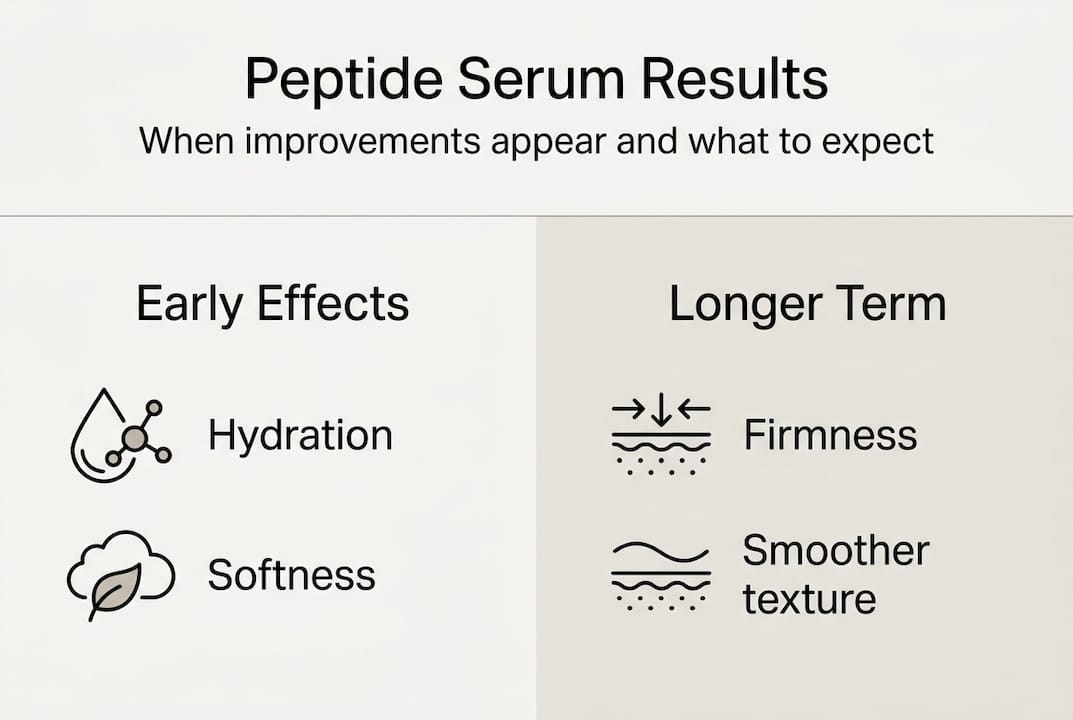
| Timeline | Expected improvements | What’s happening |
|---|---|---|
| Week 1-2 | Enhanced hydration, softer texture | Surface moisture barrier strengthening |
| Week 4-6 | Reduced fine lines, subtle firming | Early collagen synthesis beginning |
| Week 8-12 | Visible firmness, improved elasticity | Cumulative collagen buildup in dermis |
| Week 12+ | Continued enhancement with maintenance | Sustained cellular repair and renewal |
Consistent application is absolutely crucial for maintaining and enhancing results. Peptide benefits accumulate over time, but they also diminish if you stop using the serum. Think of peptide serums as ongoing cellular support rather than a one-time fix. Regular application maintains the signaling that keeps fibroblasts producing collagen at elevated rates.
Factors that influence your results timeline:
- Starting skin condition and degree of aging damage
- Peptide concentration and formulation quality
- Application frequency and technique consistency
- Complementary skincare habits like sun protection
- Overall health factors including nutrition, hydration, and sleep
- Genetic factors affecting collagen production capacity
Combining peptide serums with healthy lifestyle choices optimizes skin rejuvenation outcomes. Adequate protein intake provides amino acid building blocks for collagen synthesis. Proper hydration supports cellular function and nutrient delivery. Quality sleep allows peak overnight repair processes. These factors work synergistically with topical peptides to maximize visible improvements.
Adjust your usage frequency based on skin response and product guidance. Some formulations are designed for twice-daily use, while others work best once daily. If you experience any irritation, scale back to every other day until your skin adapts, then gradually increase frequency. The top skin repair serums provide clear usage instructions based on their specific peptide concentrations and complementary ingredients.
Most users notice their most dramatic improvements between weeks 8-12, with continued gradual enhancement beyond that point. After reaching your desired results, ongoing maintenance application preserves benefits and prevents regression. Peptide serums become part of your long-term skin health strategy rather than a temporary treatment.
Enhance your skincare with Cellure peptide serums
Now that you understand proper peptide serum application technique, choosing the right formulation becomes your next step toward visible skin rejuvenation. Cellure specializes in scientifically-formulated peptide serums designed for targeted cellular repair, combining clinically-supported bioactive ingredients with gentle, results-driven formulations suitable for all skin types.
The Complete Skin Repair Kit provides everything you need for a comprehensive peptide-based rejuvenation routine, eliminating guesswork about product compatibility and sequencing. For targeted brightening alongside firming benefits, the tranexamic acid peptide serum addresses both texture and tone concerns through advanced cellular regeneration technology.
Explore Cellure advanced cellular regeneration solutions that pair premium peptide formulations with the application knowledge you’ve gained here. Using scientifically-backed products with proper technique creates the optimal environment for visible, lasting skin rejuvenation results.
Frequently asked questions
How often should I apply peptide serums?
Most peptide serums are designed for once or twice daily application depending on the specific product formulation and concentration. Check your serum’s instructions, as some intensive formulations work best with once-daily use while lighter formulations support twice-daily application. Consistency over time matters more than frequency, so choose a schedule you can maintain long-term for best results.
Can I use peptide serums with other anti-aging products?
Yes, but timing and product selection matter significantly. Avoid applying strong acids like glycolic acid or high-concentration retinoids immediately before or after peptides, as these can cause irritation or destabilize certain peptide formulations. Layer peptide serums with gentle moisturizers and always follow with broad-spectrum sunscreen during daytime use. Space conflicting active ingredients by using them at opposite times of day or on alternating days.
How long does it take to see results from peptide serums?
Noticeable improvements in skin firmness and texture typically appear after 4-8 weeks of consistent daily application, aligning with your skin’s natural collagen synthesis cycle. You may notice immediate hydration benefits and softer texture within the first 1-2 weeks. The most dramatic visible changes usually emerge between weeks 8-12 as cumulative collagen production creates structural improvements in the dermal layer.
Is it safe to use peptide serums on sensitive skin?
Many peptide serums are specifically formulated for gentle use on sensitive and reactive skin types, as peptides themselves are generally well-tolerated bioactive ingredients. However, individual responses vary based on the complete formulation and any additional active ingredients. Perform a patch test on your inner arm before full facial application, and consider starting with every-other-day use to allow your skin to adapt. For specialized guidance, review serums for sensitive skin recommendations tailored to reactive skin types.