


Advanced skincare science: 80% better hydration results
TL;DR:
- Regenerative skincare targets internal cellular repair rather than superficial anti-aging treatments.
- Consistent application of science-backed actives like peptides and growth factors leads to visible skin improvements over time.
- Combining topicals with professional procedures enhances results, but patience and routine are essential.
Most skincare products promise younger-looking skin by filling in lines or adding temporary moisture. That’s not the same as changing what’s actually happening inside your skin. Regenerative skincare focuses on regeneration and cellular repair rather than superficial changes, and that distinction matters enormously once you’re past 30. Your skin’s repair systems slow down, its ability to signal healthy cell turnover weakens, and the surface treatments you’ve relied on start delivering diminishing returns. This guide breaks down exactly how advanced skincare science works at the cellular level, which ingredients and technologies actually have clinical backing, and what realistic results look like when you commit to the right approach.
Table of Contents
- Defining advanced skincare science: Beyond anti-aging
- Core components and technologies powering cellular rejuvenation
- How cellular-focused approaches impact aging skin: The evidence
- Nuances, limitations, and integration: Expert insights for real-world results
- The real promise (and challenge) of advanced skincare science: A fresh perspective
- Next steps: Experience advanced skincare with proven solutions
- Frequently asked questions
Key Takeaways
| Point | Details |
|---|---|
| Cellular repair focus | Advanced skincare science works by restoring youthful repair and signaling at the cellular level for lasting results. |
| Proven technologies | Biotech peptides, growth factors, and advanced delivery systems are most effective for mature skin over 30. |
| Clinically-backed improvements | Studies show increased hydration, elasticity, and perceived age reduction within weeks of starting regenerative regimens. |
| Combine for best results | Smartly pairing topicals with professional treatments and mindful habits maximizes longevity and skin health. |
Defining advanced skincare science: Beyond anti-aging
The word “anti-aging” has been on product labels for decades, yet skin aging has continued. That’s not a coincidence. Classic anti-aging focused on masking symptoms: smoothing a line here, adding moisture there. Advanced skincare science operates on a fundamentally different premise. It asks why cells stop repairing themselves efficiently and then works to restore that capacity.
You’ve seen why surface-level solutions aren’t enough. Now let’s define how advanced science takes skincare deeper.
“Advanced skincare leverages regenerative science, using matrikines and cellular signaling to rebuild skin from within, not just treat what’s visible on the surface.”
This is the core distinction. Regenerative skincare uses matrikines, peptides, and biological signals to communicate with your cells directly, prompting them to behave more like younger, healthier cells. Our cellular repair guide explains the full process in detail. The science also targets cellular senescence, which is when cells stop dividing and begin releasing inflammatory signals that accelerate aging in surrounding tissue.
Here’s what separates regenerative approaches from older formulas:
- Cellular signaling: Ingredients that activate repair pathways inside the cell, not just on top of it
- Senescence targeting: Addressing the “zombie cells” that slow healthy skin renewal
- Longevity science: Supporting skin’s natural lifespan, not just temporarily plumping it
- Barrier reinforcement: Strengthening the structural proteins your skin actually builds itself
Understanding the cellular repair importance is especially relevant after 30, when the skin’s natural renewal cycle slows measurably. Collagen production drops roughly 1% per year after 25. By 40, you’re working with significantly reduced baseline repair capacity. Advanced science isn’t about reversing time. It’s about giving your existing biology the right signals to do more of what it already knows how to do.
Core components and technologies powering cellular rejuvenation
With the foundation in mind, let’s explore which scientific advances actually transform your skin and how they work in practice.
Biotech peptides, growth factors, exosomes, PDRN, and advanced delivery systems are the technologies currently driving the most meaningful results in regenerative skincare. Each one works through a different mechanism, and understanding them helps you make smarter ingredient choices.
| Ingredient | Primary mechanism | Best for |
|---|---|---|
| Peptides | Cell signaling, collagen synthesis | Firmness, texture |
| Growth factors | Tissue regeneration signals | Volume loss, elasticity |
| Exosomes | Cell-to-cell communication | Overall renewal |
| PDRN | DNA repair support | Healing, tone |
| Nanoencapsulated actives | Deep dermal delivery | All of the above |
Topically applied peptides outperform oral supplements for direct skin repair because they work precisely where you apply them. Delivery matters just as much as the ingredient itself. Nanotechnology allows actives to penetrate past the outer skin barrier, reaching deeper layers where cellular repair actually occurs. Without it, even the best ingredients stay mostly on the surface.
Here’s a practical order for building a regenerative routine:
- Cleanse gently to preserve barrier integrity before applying actives
- Apply peptide or growth factor serum to clean, slightly damp skin for best absorption
- Layer PDRN or exosome treatment if using, waiting 60 seconds between steps
- Seal with a barrier-supporting moisturizer to reduce transepidermal water loss
- Use SPF daily because UV damage directly accelerates cellular senescence
Pro Tip: Pairing a peptide-based serum with a PDRN formula creates a synergistic effect. Peptides signal collagen production while PDRN supports the DNA-level repair that makes that production sustainable.
For a deeper look at which actives have the strongest evidence behind them, this overview of recent biotech skincare advances is worth reading. You can also explore key repair ingredients to see how specific formulas are constructed for cellular impact.
How cellular-focused approaches impact aging skin: The evidence
Understanding the science is key, but does it deliver visible change? Let’s look at the hard evidence.
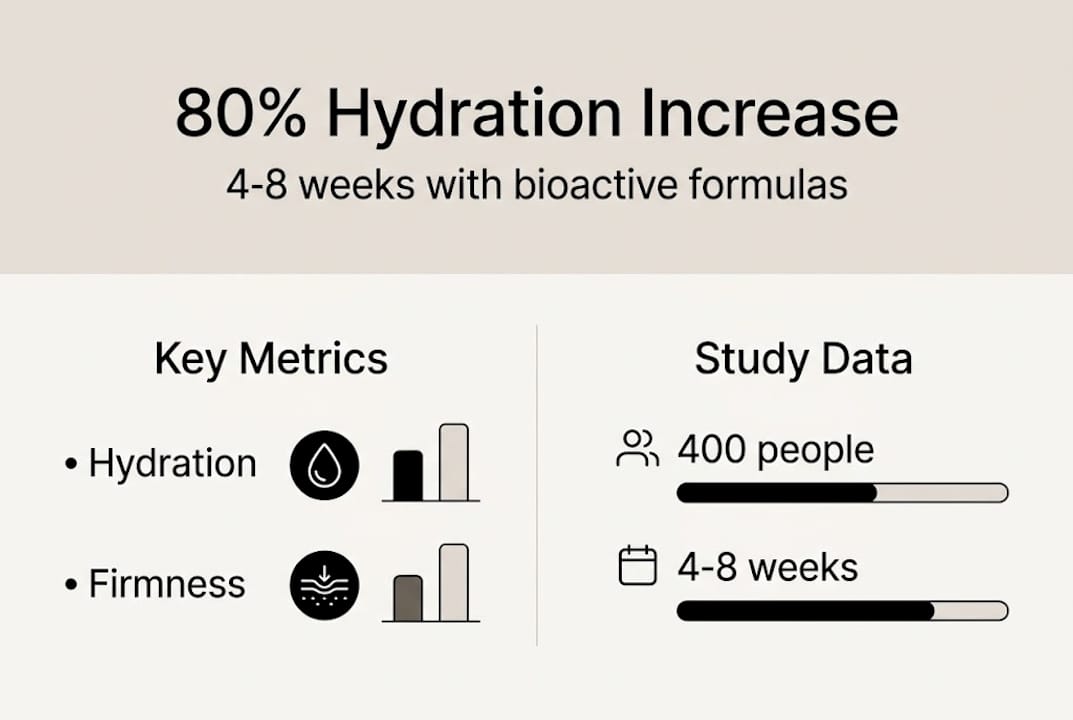
A 400-person clinical trial using a regimen with sirtuin-targeting ingredients showed meaningful improvements in key skin health metrics within weeks. Sirtuins are proteins that regulate cellular aging, and activating them topically produced results measurable both by instruments and by independent graders assessing perceived age.
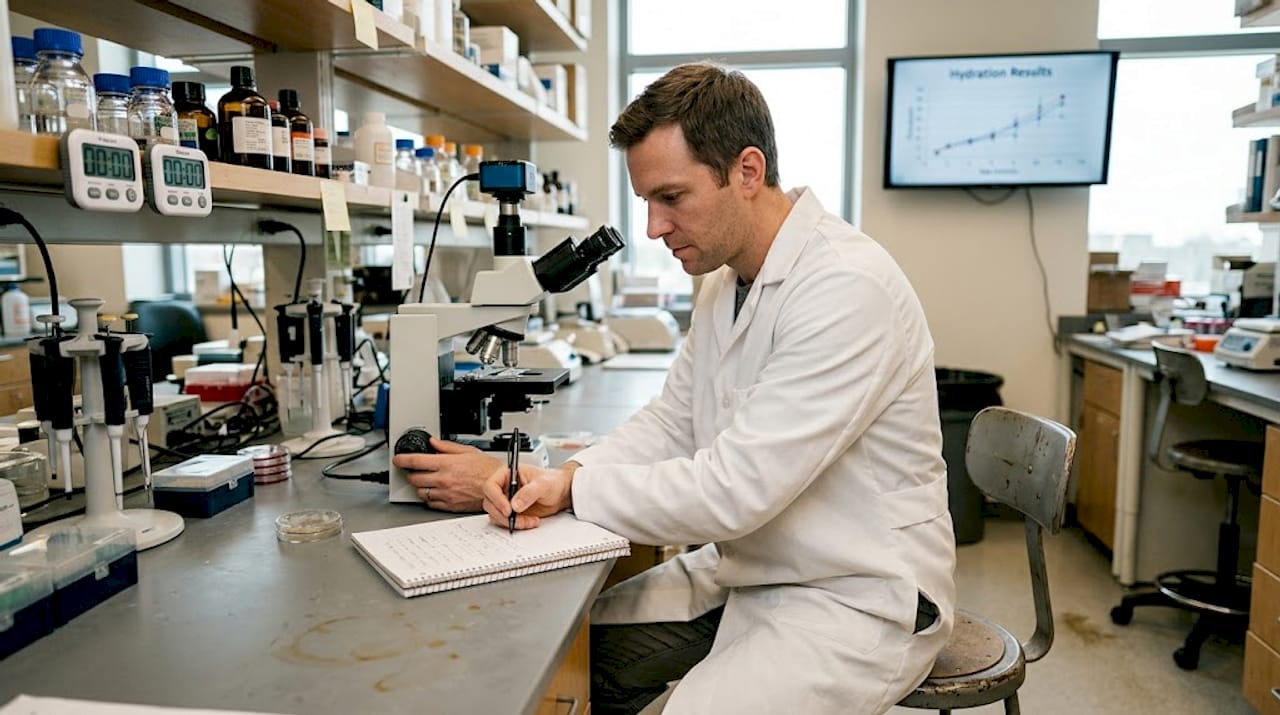
The numbers from clinical work on cellular repair are striking:
| Metric | Improvement | Timeframe |
|---|---|---|
| Skin hydration | Up to 80% | 4 to 8 weeks |
| Transepidermal water loss | Down 40% | 4 to 8 weeks |
| Perceived younger age | Measurable reduction | 8 to 12 weeks |
| Skin thickness and elasticity | Visible increase | 12 weeks |
For people over 30, these results translate directly to the concerns you actually notice: skin that feels dry even after moisturizing, a loss of the subtle plumpness that makes skin look healthy, and lines that appear from volume loss rather than just surface damage.
What this means in practice:
- Weeks 1 to 4: Hydration and texture improve first, since surface-level barrier function responds quickly
- Weeks 4 to 8: Tone and radiance begin to shift as cellular turnover normalizes
- Weeks 8 to 12: Elasticity and firmness changes become measurable and visible
- Beyond 12 weeks: Deeper structural changes to collagen and skin thickness continue to evolve
The firmer skin evidence makes clear that the most dramatic results build over time, not overnight. Additional recent skincare results from 2025 research show cellular-level changes occurring even in short intervention windows, which supports early commitment to a science-backed routine. For a plain-language breakdown of how the process works mechanically, the cellular repair explained resource is helpful.
Nuances, limitations, and integration: Expert insights for real-world results
While the data is impressive, successful application means knowing context, risks, and the right strategies for each individual.
Topicals have real limits. Even with advanced delivery systems, penetration and potency are lower than injectables or in-office procedures. A serum cannot replicate what a microneedling session or laser treatment does mechanically. That doesn’t make topicals less valuable. It means they serve a different and complementary function.
“The smartest approach combines proven topical actives with professional procedures when appropriate, using each for what it does best.”
For readers considering combining modalities, a laser-skincare study showed that using a cellular repair regimen before and after laser treatment significantly improved outcomes. The topicals enhanced and extended the procedure’s effect. This is the synergy model worth understanding.
Important individual considerations:
- Fish allergies: PDRN is typically salmon-derived. If you have a fish allergy, check formulas carefully and consider alternatives
- Sensitive skin: Start with one new active at a time, introducing it every other day before building to daily use
- Retinol interactions: Some advanced actives can amplify sensitivity when used alongside retinoids; layer them on alternate nights initially
- Allergy patch testing: Any new biotech formula warrants a 48-hour patch test before full application
The promise of scientists reversing skin cell aging by 30 years generates headlines, but real-world topical skincare works within more modest and still meaningful parameters. Spotting hype versus innovation comes down to one test: is there peer-reviewed clinical data, or just marketing language? Following best repair practices keeps your routine grounded in what’s actually proven.
Pro Tip: When evaluating a new product’s claims, search for the ingredient name plus “randomized controlled trial” in your browser. If genuine studies exist, you’ll find them quickly. If you only find brand press releases, treat those claims with skepticism.
The real promise (and challenge) of advanced skincare science: A fresh perspective
With the technical facts in hand, here’s an honest look at what truly matters for your results.
The most common mistake people make with advanced skincare science isn’t choosing the wrong ingredient. It’s expecting that any single product, no matter how sophisticated, will do the heavy lifting alone. We’ve seen this pattern repeatedly: someone invests in genuinely excellent formulas, uses them inconsistently for a month, and concludes that “nothing works.”
Cellular repair is a biological process, not an event. Your skin didn’t lose its youthful qualities overnight, and restoring them requires sustained signaling over time. The science is real. The results are real. But they accumulate through daily, consistent application rather than through any dramatic single-product breakthrough.
Contrarian truth: more products do not equal more results. A focused cellular repair workflow using three to four science-backed actives applied consistently will outperform a 12-step routine of trendy but poorly evidenced formulas every time. Simplicity plus evidence plus patience is the actual formula. Advanced skincare science gives you powerful tools. Your job is to use them steadily.
Next steps: Experience advanced skincare with proven solutions
Ready to put advanced skincare science to work for you? Here’s how to take the next step.
Everything in this guide points toward one practical truth: cellular rejuvenation requires the right ingredients, applied consistently, in formulas built to actually reach the skin layers where change happens.
At Cellure’s advanced skincare, our formulations are built around the exact bioactive ingredients the clinical evidence supports. The Complete Skin Repair Kit gives you a complete protocol designed around cellular regeneration, combining peptides, polynucleotides, and barrier-supporting actives in a system that works together. If uneven tone is your priority alongside repair, the Tranexamic Acid Peptide Serum pairs brightening with cellular-level renewal in a single, elegant formula. Start with what your skin needs most and build from there.
Frequently asked questions
What makes advanced skincare science different from regular anti-aging skincare?
Advanced skincare science targets root cellular processes like regeneration and repair, while traditional anti-aging mainly addresses surface symptoms. Rather than masking what you see, it works at the cellular signaling level to restore how your skin actually functions.
Which ingredients should I look for in truly advanced skincare products?
Look for biotech peptides, growth factors, exosomes, PDRN, and formulas using nanotechnology for targeted delivery. The strongest evidence supports peptides and delivery systems that reach deeper skin layers rather than remaining on the surface.
How soon can I see results from regenerative, science-backed skincare?
Hydration and surface texture typically improve within four weeks, with elasticity and firmness changes becoming measurable around 12 weeks. A 400-person sirtuin trial confirmed significant perceived age reduction within that window.
Are there any risks or side effects to using advanced cellular repair products?
Most formulations are well tolerated, but people with fish allergies should check PDRN sourcing, and sensitive skin types should introduce new actives gradually. Gradual introduction and patch testing are standard best practices before full use.