


Decode advanced skincare terms for smarter anti-aging
If you’ve ever stared at a serum label and felt like you needed a biology degree to understand it, you’re not alone. Terms like SASP, ECM, and transepidermal water loss get thrown around in product descriptions and clinical studies alike, leaving most people guessing. The frustrating part is that these concepts aren’t actually that complex once you strip away the jargon. Understanding them gives you a real edge: you can spot genuinely effective formulas, avoid overpriced hype, and build a routine that targets aging at its source. This guide breaks down the most important advanced skincare terms so you can make evidence-based decisions with confidence.
Table of Contents
- Why advanced skincare terms matter for aging skin
- Essential advanced terms decoded: The building blocks of visible results
- Active ingredients: What’s proven, what’s hopeful, and what’s hype
- How to use advanced skincare terms when choosing products
- Beyond ingredients: What’s next in cellular skincare innovation?
- Most people miss the real advantage of mastering skincare language
- Take your next step with advanced cellular skincare solutions
- Frequently asked questions
Key Takeaways
| Point | Details |
|---|---|
| Master the language | Understanding advanced terms empowers smarter anti-aging skincare choices. |
| Prioritize proven actives | Retinoids and vitamin C remain the most evidence-backed ingredients for aging skin. |
| Watch for buzzwords | Not all complex ingredient names signal effectiveness—always check the science. |
| Monitor emerging science | Senolytics and senotherapeutics show promise but are not yet routine or risk-free. |
Why advanced skincare terms matter for aging skin
Skin aging isn’t just about surface-level dryness or a few fine lines. At the cellular level, a process called cellular senescence is one of the primary drivers of visible aging. Senescent cells are damaged cells that stop dividing but refuse to die. Instead, they linger in the skin and release a cocktail of inflammatory signals that degrade the surrounding tissue. Cellular senescence in dermatology leads directly to wrinkles and skin laxity, which is why understanding this term isn’t just academic. It’s the foundation of why cellular repair matters for anyone serious about age management.
The problem is that the skincare industry uses technical language inconsistently. Some brands use terms like “ECM support” or “TEWL reduction” accurately, while others borrow the vocabulary to dress up ordinary moisturizers. Knowing the difference protects your wallet and your skin.
Here’s a quick look at the terms that actually connect to real results:
- SASP (senescence-associated secretory phenotype): the inflammatory signals released by senescent cells that accelerate tissue breakdown
- ECM (extracellular matrix): the structural scaffold of collagen and elastin that keeps skin firm
- TEWL (transepidermal water loss): the rate at which water evaporates through the skin barrier
- DEJ (dermal-epidermal junction): the interface between the dermis and epidermis, which weakens with age
When a product claims to address any of these, you now have a framework to evaluate whether the ingredients actually support that claim. That’s the real power of cellular rejuvenation literacy.
Essential advanced terms decoded: The building blocks of visible results
Understanding the need for these terms, here’s what they actually mean and why you should care.
The table below gives you a practical reference for the most important concepts in advanced skincare:
| Term | Plain English | How it affects aging skin |
|---|---|---|
| Cellular senescence | Cells that stop working but stay put | Drives inflammation, collagen loss, wrinkles |
| ECM (extracellular matrix) | Skin’s structural scaffolding | Breaks down with age, causing sagging |
| DEJ (dermal-epidermal junction) | The skin layer boundary | Flattens over time, reducing firmness |
| TEWL | Water escaping through the skin | Higher TEWL means drier, more fragile skin |
| SASP | Inflammatory signals from senescent cells | Accelerates tissue damage and visible aging |
Research on skin longevity research confirms that effective cellular repair skincare targets ECM remodeling, DEJ integrity, barrier restoration, and senescent cell reduction, with measurable improvements seen in clinical trials. That’s a lot of ground for one routine to cover, which is why ingredient selection matters so much.
Here’s what to look for when reading advanced product labels:
- An ingredient that targets senescent cell activity (such as senolytics or senomorphics)
- A collagen-stimulating active (retinoids, peptides, or growth factors)
- A barrier-supporting compound (ceramides, niacinamide, or fatty acids)
- An antioxidant to neutralize free radical damage (vitamin C, resveratrol)
- A hydration-locking ingredient to reduce TEWL (hyaluronic acid, polyglutamic acid)
Pro Tip: Don’t get distracted by brand buzzwords like “bio-renewal complex” or “youth matrix.” Use this table and list as your cheat sheet. If a product can’t point to at least two of these five categories with real actives, it’s probably more marketing than science.
Active ingredients: What’s proven, what’s hopeful, and what’s hype
Now that the terminology is clear, let’s look at what the top ingredients actually achieve and what’s still experimental.
| Ingredient | Mechanism | Clinical outcomes |
|---|---|---|
| Retinoids | Bind nuclear receptors, boost collagen, accelerate cell turnover | Strongest evidence for wrinkle reduction and skin thickness |
| Peptides | Signal fibroblasts to produce collagen | Modest but consistent improvements in firmness |
| Vitamin C | Antioxidant, collagen cofactor | Brightening and photoprotection with good evidence |
| Niacinamide | Strengthens barrier, reduces inflammation | Well-supported for tone and barrier function |
| AHAs | Exfoliate dead cells, improve texture | Strong evidence for surface renewal |
| Senolytics | Target and clear senescent cells | Promising but still experimental in topical form |
Retinoids bind nuclear receptors to boost collagen, accelerate turnover, and reduce wrinkles, making them the gold standard against which peptides and vitamin C are measured. That doesn’t mean other ingredients are useless. It means retinoids have the longest and most robust track record.
Niacinamide and AHAs strengthen the skin barrier and reduce inflammation, while peptides can signal collagen production with more modest but still meaningful evidence. The key is knowing which ingredient to lead with and which to use in support.
When prioritizing actives for visible aging, consider this:
- Start with a retinoid as your primary anti-aging driver
- Add a peptide serum for collagen signaling and to buffer retinoid irritation
- Use vitamin C in the morning for antioxidant defense
- Include niacinamide to reinforce the barrier and calm sensitivity
A word of caution on senolytics: they’re exciting in theory, but topical formulations are still being studied. Off-target effects are a real concern, and the evidence base is not yet strong enough to justify replacing proven actives.
How to use advanced skincare terms when choosing products
Equipped with this foundation, here’s how you can translate terminology knowledge into practical buying power.
The ingredient list is the most honest part of any product label. Ingredients are listed in descending order of concentration, so if a key active appears near the bottom, it’s likely present in amounts too small to make a real difference. Look for your primary actives within the first five to eight ingredients.
Clinical claims deserve scrutiny too. Phrases like “clinically tested” can mean almost anything. What you want to see is a reference to a specific outcome: improved hydration by a measured percentage, reduced TEWL after a set number of weeks, or increased collagen density confirmed by imaging. Vague language like “visibly younger-looking skin” is not the same as clinical evidence.
Here’s a practical step-by-step for smarter product selection:
- Identify the primary aging concern you want to address (firmness, tone, hydration, texture)
- Match that concern to the relevant term (ECM for firmness, TEWL for hydration, DEJ for texture)
- Check the ingredient list for actives known to target that mechanism
- Look for peer-reviewed references or clinical outcome data in the brand’s materials
- Cross-reference with independent sources before committing
For those aged 30 to 55, prioritizing retinoids for cellular repair and turnover, vitamin C and niacinamide for antioxidant and barrier support, and pairing retinoids with peptides to reduce irritation is a well-supported strategy. The best practices for cellular repair follow this same logic.
“The most effective routines aren’t the most complex ones. They’re the ones where every ingredient has a clear, evidence-backed job to do.”
Pro Tip: Pay attention to ingredient synergy claims. A formula combining retinoids with peptides isn’t just a marketing move. Peptides can genuinely reduce the barrier disruption that retinoids sometimes cause, making the combination both more tolerable and more effective for sensitive skin types. You can explore more in this guide to cellular repair.
Beyond ingredients: What’s next in cellular skincare innovation?
With your toolkit for today’s products, let’s look ahead at where advanced skincare may be heading.
Senotherapeutics is the umbrella term for approaches that target senescent cells. It breaks down into two categories. Senolytics clear senescent cells entirely. Senomorphics suppress the harmful SASP signals those cells release without eliminating the cells themselves. Both approaches are being studied for topical application, but neither is ready for mainstream use.
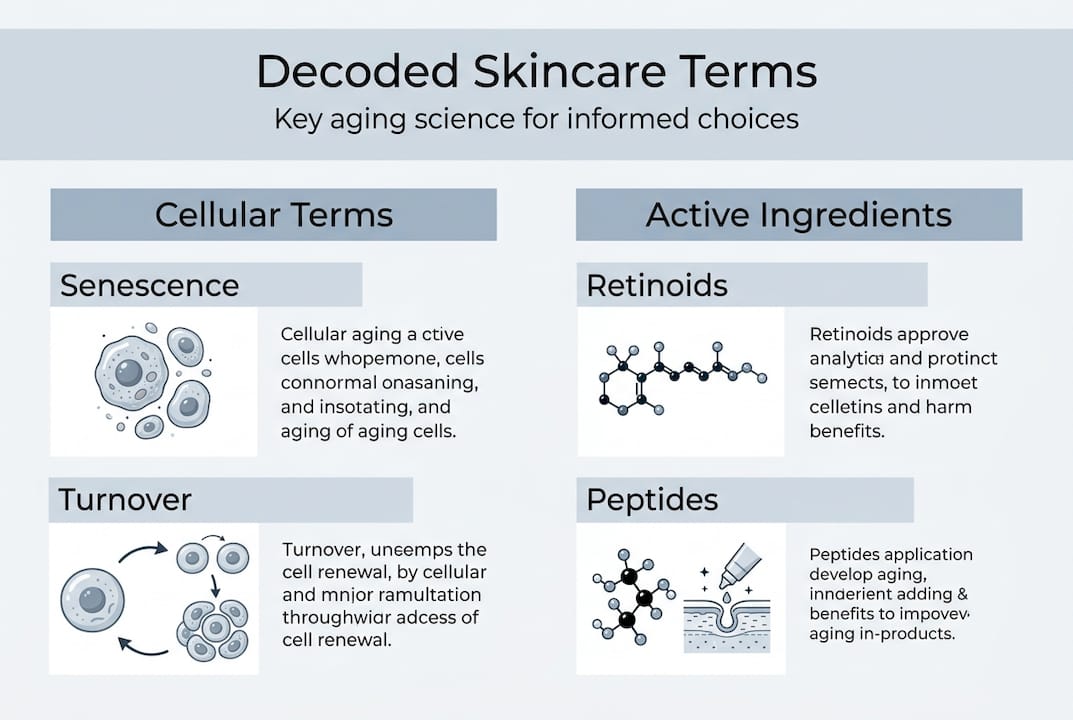
The topical exosome research shows that topical HPE (hydrolyzed platelet exosomes) can reduce senescent cells in skin, though more research is needed before this becomes a reliable clinical tool. Exosomes are essentially tiny messaging packets released by cells, and they carry signals that can influence how neighboring cells behave. The idea of using them topically to reset cellular behavior is genuinely exciting.
Here’s where the frontier currently stands:
- Topical senolytics: Early studies show promise for clearing senescent cells, but off-target risks remain a concern
- Exosome-based treatments: Platelet-derived exosomes show measurable reductions in senescent cell markers in early trials
- Epigenetic reprogramming: Experimental approaches that attempt to reset gene expression patterns associated with aging
- Microbiome-targeted formulas: Growing evidence that skin microbiome balance influences barrier function and inflammation
The honest take is that most of these are 3 to 10 years away from having the evidence base that retinoids and peptides already have. Knowing how cellular repair works helps you evaluate these emerging claims with appropriate skepticism rather than either dismissing them or overpaying for unproven technology.
Most people miss the real advantage of mastering skincare language
Here’s the part most skincare guides skip: understanding terminology isn’t just about sounding informed. It’s about financial and biological self-defense. The cosmetic industry is built, in part, on consumer confusion. Complex language creates the impression of sophistication, which justifies premium pricing regardless of whether the formula delivers.
When you can read an ingredient list and recognize that a “cellular renewal complex” is just retinyl palmitate at 0.01%, you stop paying for the story and start paying for the science. That shift saves money and accelerates results because you’re choosing products based on mechanism, not marketing.
There’s also a forward-looking advantage. When genuinely new science emerges, like early exosome research or validated senolytic compounds, you’ll be able to assess it critically rather than waiting for a brand to tell you what to think. Your cellular repair workflow becomes something you own and refine, not something you outsource to whoever has the best packaging.
Take your next step with advanced cellular skincare solutions
You now have the vocabulary to evaluate what’s actually inside a formula and why it matters for aging skin. That knowledge is only useful if it connects to products that actually deliver on the science.
At Cellure, every formula is built around clinically supported bioactive ingredients targeting the exact mechanisms you’ve just learned about: ECM remodeling, barrier restoration, and cellular renewal. The complete skin repair kit brings together a full protocol designed around these principles, while the tranexamic acid peptide serum addresses tone and cellular signaling with ingredients that have real evidence behind them. Use your new literacy to explore what’s inside each formula and decide for yourself.
Frequently asked questions
What does cellular senescence mean for my skin?
Cellular senescence is when stressed skin cells stop dividing but remain in the tissue, triggering inflammation and collagen breakdown that causes visible wrinkles and laxity. It’s one of the primary biological drivers of aging skin.
Which advanced ingredient has the strongest clinical evidence?
Retinoids are the gold standard for aging skin, with decades of peer-reviewed research confirming their ability to boost collagen, accelerate cell turnover, and reduce wrinkles more effectively than any other topical ingredient.
Are senolytics safe to use in skincare now?
Senolytic and senomorphic ingredients show genuine promise, but off-target effects remain a concern in current research, and the evidence base for topical use is still too early-stage to recommend them as primary actives.
How do I tell if a product label is using real science or just buzzwords?
Look for evidence-based ingredient choices listed high on the ingredient list, specific clinical outcome data rather than vague claims, and clear explanations of the mechanism rather than proprietary complex names with no scientific backing.
Recommended
- Unlock firm, radiant skin with regenerative science – Cellure
- Cellular Skincare: Science-Backed Rejuvenation for Aging Skin – Cellure
- How peptides work in skincare: science-backed guide – Cellure
- What makes serums effective for anti-aging in 2026 – Cellure
- 7 Effective Examples of Anti-Aging Treatments Explained