


Cellular Skincare: Science-Backed Rejuvenation for Aging Skin
You’ve tried retinol, vitamin C, and every hydrating serum on the market, yet your skin still shows signs of fatigue and lost firmness. The problem isn’t your dedication, it’s that most anti-aging products only work on the surface. Cellular skincare targets aging signs by acting at the skin cell level, revitalizing aging skin where traditional topicals plateau. This guide demystifies how cellular skincare works, who benefits most, and how to build a routine that delivers real, lasting results.
Table of Contents
- What is cellular skincare?
- How cellular skincare works: Key mechanisms
- Cellular skincare vs traditional skincare: A side-by-side comparison
- Is cellular skincare right for you? Safety, sensitivity, and what to expect
- How to choose the best cellular skincare routine
- Next steps: Upgrade your routine with cellular innovation
- Frequently asked questions
Key Takeaways
| Point | Details |
|---|---|
| Targets aging cells | Cellular skincare addresses aging at the source for noticeable improvements in firmness and tone. |
| Clinically proven results | Studies show up to 37 percent more collagen and 80 percent hydration boost over traditional skincare. |
| Best for 30 plus adults | Adults noticing early aging see the biggest benefits, but products must be used consistently for 8 to 12 weeks. |
| Choose biocompatible formulas | Cell-derived ingredients have better safety and effectiveness than synthetic anti-aging ingredients. |
What is cellular skincare?
Cellular skincare represents a fundamental shift from surface treatments to deep cellular intervention. Unlike traditional products that hydrate the outermost layer, cellular skincare enhances cell communication, regeneration, and combats cell fatigue for firmer, rejuvenated skin. This approach targets actual skin cells in both the epidermis and dermis, focusing on cell communication, rejuvenation, and slowing cellular aging known as senescence.
For adults over 30, this matters because natural cell renewal decelerates significantly. Your skin produces less collagen, cell turnover slows, and communication between cells weakens. Cellular skincare addresses these root causes rather than masking symptoms. The technology behind this category has advanced rapidly, supported by peer-reviewed research and clinical trials showing measurable improvements in firmness, tone, and overall skin quality.
The results speak for themselves. Clinical studies demonstrate up to 37% collagen boost with cellular approaches compared to just 8% with traditional routines. This isn’t marketing hype, it’s quantifiable change at the cellular level. Understanding why cellular repair matters helps you see beyond surface promises to what actually transforms aging skin.
Key benefits for adults 30 and above:
- Improved skin firmness through enhanced collagen production
- More even tone by addressing pigmentation at the cellular level
- Reduced appearance of fine lines through accelerated cell turnover
- Better moisture retention as cell barriers strengthen
- Overall rejuvenation from restored cell communication
The cellular health trend reflects growing consumer awareness that aging happens inside cells, not just on the surface. As science advances, we can now target those internal processes with topical formulations that penetrate deeper and work smarter. This cellular repair guide provides additional context on the mechanisms driving these improvements.
How cellular skincare works: Key mechanisms
The science behind cellular skincare centers on bioactive ingredients that interact directly with skin cells. Compounds like exosomes, peptides, growth factors, and NAD+ don’t just sit on your skin, they penetrate to the dermis where fibroblasts live. These fibroblasts are your skin’s collagen factories, and cellular skincare ingredients stimulate them to produce more collagen and elastin.
Here’s what happens when you apply a cellular skincare product:
- Active ingredients penetrate the skin barrier and reach target cells in the dermis and epidermis
- Cell signaling pathways activate, telling fibroblasts to increase collagen synthesis
- Natural cell turnover accelerates, replacing damaged cells with healthy ones faster
- Cell communication improves, allowing coordinated repair and regeneration
- Senescent cells receive signals to either rejuvenate or clear, preventing inflammation
Empirical studies show cellular skincare increases skin regeneration rate by 42%, decreases water loss by 20 to 40%, and boosts hydration by 80%. These aren’t incremental improvements, they represent fundamental changes in how your skin functions. The difference between cellular and traditional approaches lies in addressing root causes rather than symptoms.
“Cellular skincare works where aging actually happens, inside your cells. By supporting natural repair mechanisms and preventing cellular fatigue, these formulations deliver improvements that compound over time rather than plateau.”
Understanding cellular repair how it works reveals why this approach succeeds where others fail. Traditional products can’t stimulate fibroblast activity or prevent senescence. They moisturize and protect, which matters, but they don’t reverse the cellular decline that causes visible aging. Regenerative science firm skin approaches tackle the problem at its source.
Pro Tip: Look for products that list specific bioactive ingredients with published research. Generic “cellular” claims without evidence are marketing, not science.
Cellular skincare vs traditional skincare: A side-by-side comparison
Understanding the practical differences between cellular and traditional approaches helps you make informed choices. Traditional anti-aging products like retinol and vitamin C have their place, but they work differently and deliver different outcomes.
| Factor | Traditional Skincare | Cellular Skincare |
|---|---|---|
| Primary Action | Surface hydration and antioxidant protection | Deep cellular regeneration and repair |
| Target Depth | Epidermis (outer layer) | Dermis and epidermis (multiple layers) |
| Collagen Impact | 8% increase over 12 weeks | 37% increase over 12 weeks |
| Cell Turnover | Gradual improvement | 42% acceleration in regeneration rate |
| Hydration Boost | 15 to 25% improvement | 80% improvement |
| Age Effectiveness | Plateaus after 40 | Sustained results through 50s and beyond |
| Mechanism | Antioxidant and exfoliation | Fibroblast stimulation and senescence prevention |
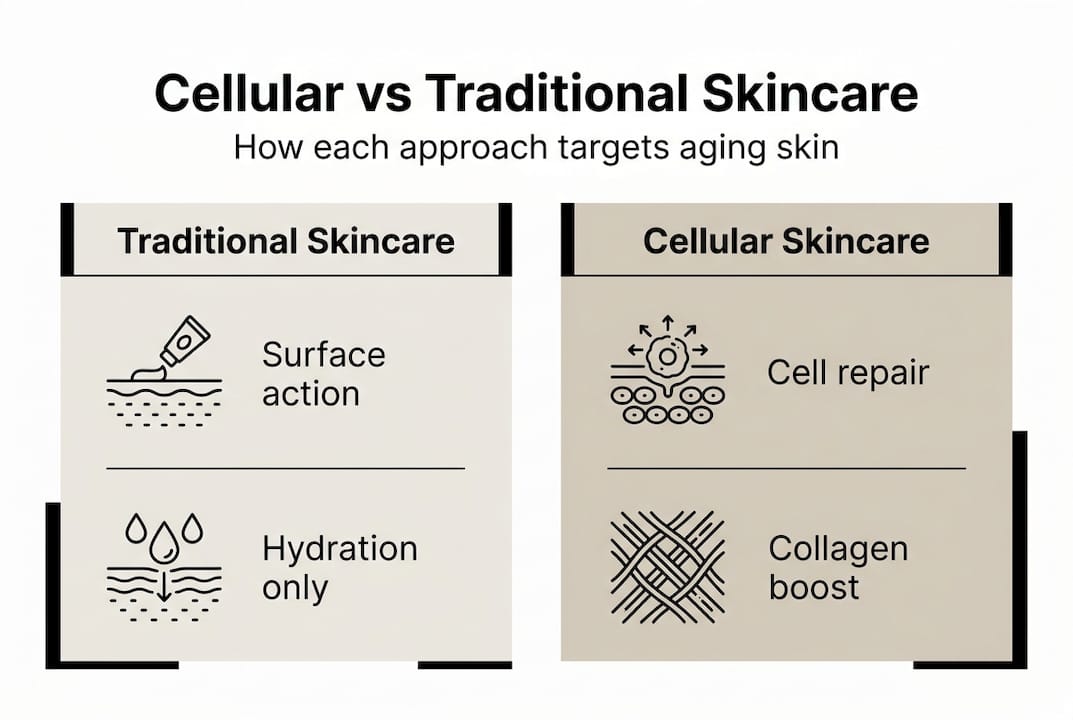
Cellular approaches penetrate deeper and provide more sustained improvements than vitamin C or retinol topicals. This doesn’t mean abandoning traditional ingredients entirely. Retinol still accelerates cell turnover, and vitamin C still protects against oxidative stress. But cellular skincare adds a layer of intervention that traditional products can’t match.
Major dermatological societies and peer-reviewed journals now recognize cellular skincare as a distinct category with clinical backing. The data shows consistent improvements across multiple markers: collagen density, skin thickness, moisture retention, and firmness. These aren’t subjective assessments, they’re measured with imaging technology and biopsies.
Exploring skin regeneration methods and how peptides work provides deeper insight into specific mechanisms. The skin longevity research published in dermatology journals confirms what clinical trials demonstrate: cellular approaches deliver superior outcomes for aging skin.
Pro Tip: Combine cellular skincare with antioxidants for maximum effect. Use vitamin C in the morning for protection, cellular serums at night for repair. This layered approach addresses both prevention and regeneration.
Is cellular skincare right for you? Safety, sensitivity, and what to expect
Cellular skincare delivers the most significant benefits for adults over 30, especially those noticing firmness decline, uneven tone, or loss of volume. If traditional products have stopped delivering results, or if you’re seeing accelerated aging signs, cellular approaches offer a scientifically supported alternative.
Most cellular skincare formulations are safe for all skin types, including sensitive skin. The bioactive ingredients used, peptides, growth factors, exosomes, are typically well tolerated because they mimic compounds your body already produces. However, starting slowly makes sense if you have reactive skin. Introduce one new product at a time and monitor for any irritation.
Who benefits most from cellular skincare:
- Adults 30 and above experiencing visible aging signs
- Those with loss of firmness or elasticity
- People noticing uneven tone or texture changes
- Anyone whose current routine has plateaued
- Individuals seeking science-backed, results-driven solutions
Some ingredients like growth factors and exosomes may cause mild reactions in rare cases. Cellular skincare is most effective for adults 30 and above; firming and tone benefits start in 8 to 12 weeks, but sensitivity to growth factors may vary. If you experience persistent redness or irritation, discontinue use and consult a dermatologist.
Consistent use matters more than anything else. Visible improvements typically appear after 8 to 12 weeks of daily application. This timeline reflects how long it takes for new collagen to form and for cell turnover to complete multiple cycles. Patience pays off, cellular changes happen gradually but compound over time.
What most people miss: not all products labeled “cellular” are equal. Some brands use the term loosely without clinical evidence. Check for published studies, specific ingredient concentrations, and third-party testing. Gentle cellular repair for sensitive skin and cellular repair best practices offer guidance on choosing trustworthy formulations.
Pro Tip: Take progress photos every two weeks in the same lighting. Cellular changes are gradual, and photos help you see improvements you might miss in the mirror.
How to choose the best cellular skincare routine
Building an effective cellular skincare routine requires understanding which ingredients deliver proven results and how to introduce them safely. Follow this framework to get started:
- Start with a gentle cleanser and SPF base. Cellular skincare works best when your skin barrier is healthy and protected from UV damage.
- Choose one cellular serum with published research. Look for products listing specific bioactives like peptides, exosomes, or NAD+ with concentration percentages.
- Introduce gradually over two weeks. Apply every other night initially, then increase to nightly as your skin adjusts.
- Layer with complementary actives. Combine cellular serums with antioxidants like vitamin C or niacinamide for comprehensive protection and repair.
- Track progress with photos and notes. Document changes in firmness, tone, and texture every two weeks to assess effectiveness.
Clinical trials emphasize biocompatible, cell-derived actives over synthetics for safer, better results in aging skin. This means prioritizing ingredients that work with your body’s natural processes rather than forcing change through harsh exfoliation or irritation.
| Ingredient | Primary Benefit | Clinical Evidence | Best For |
|---|---|---|---|
| Peptides | Collagen synthesis stimulation | 37% collagen increase in 12 weeks | Firmness and elasticity |
| Exosomes | Cell communication enhancement | 42% regeneration rate boost | Overall rejuvenation |
| NAD+ | Cellular energy and repair | 80% hydration improvement | Dull, fatigued skin |
| Growth Factors | Fibroblast activation | 20 to 40% reduction in water loss | Barrier repair and moisture |
| Polynucleotides | DNA repair and regeneration | Improved skin thickness and density | Deep wrinkles and texture |
Avoid ingredient overload. More isn’t better when it comes to bioactive compounds. Using too many potent ingredients simultaneously can overwhelm your skin and cause irritation. Stick to one or two cellular products and build around them with basics like moisturizer and sunscreen.
Best practices for tracking progress include taking photos in consistent lighting, measuring specific concerns like firmness in targeted areas, and keeping notes on texture changes. Cellular improvements are gradual, and documentation helps you see the cumulative effect over months. The cellular repair 30 firmer skin guide provides additional strategies for maximizing results.
Next steps: Upgrade your routine with cellular innovation
Now that you understand how cellular skincare works and what sets it apart, the next step is choosing products that align with the latest research. Cellure’s formulations are built on the same scientific principles covered in this guide, using clinically validated ingredients like peptides, tranexamic acid, and polynucleotides to target aging at the cellular level.
Our complete skin repair kit combines multiple cellular actives in a coordinated system designed for adults experiencing firmness and tone decline.
Each product in the kit works synergistically to stimulate collagen production, enhance cell communication, and accelerate natural repair processes. For targeted intervention, the tranexamic acid peptide serum addresses uneven tone while supporting cellular regeneration. These aren’t generic anti-aging products, they’re precision formulations backed by the same research you’ve just learned about. Use your newfound knowledge to evaluate ingredients, check for clinical evidence, and choose products that deliver measurable results.
Frequently asked questions
How is cellular skincare different from traditional anti-aging cream?
Cellular skincare works directly at the skin cell level to boost collagen and rejuvenate deeper skin layers, while traditional creams mostly hydrate the surface. Cellular solutions go deeper, supporting cell regeneration and anti-senescence, compared with surface hydration.
When should I start using cellular skincare?
Cellular skincare is recommended for adults over 30, when natural cell renewal slows and aging signs appear. Most benefits are seen in 30 and above adults experiencing firmness and tone changes.
How long until I see results with cellular skincare?
Visible results like improved firmness and tone typically appear after 8 to 12 weeks of consistent use. Studies confirm efficacy begins at 8 to 12 weeks with regular use.
Is cellular skincare safe for sensitive skin?
Most cellular skincare is safe but individuals with sensitive skin should introduce products gradually and check ingredient lists for potential irritants. Growing consensus shows cell-derived actives are well tolerated but growth factors and exosomes can trigger reactions in rare cases.
Can cellular skincare be combined with retinol or vitamin C?
Yes, but avoid overloading your routine. Combine with basics like SPF and introduce actives one at a time. Layering strategies are most effective, but ingredient overload can irritate.
Recommended
- Cellular Repair Works: Science Behind Youthful Skin – Cellure
- Best practices for cellular repair to rejuvenate aging skin – Cellure
- Cellular Repair Skincare 2026: 30% Firmer Skin Guide – Cellure
- Why cellular repair matters for youthful skin in 2026 – Cellure
- Sculptra Injections Austin & San Antonio | Collagen Restore