


How skin regeneration works: clinically proven methods
Most people assume that taking care of aging skin means filling in wrinkles or boosting hydration. But true skin regeneration goes much deeper than that. It targets the biological machinery inside your skin, the stem cells, the extracellular matrix, the collagen networks, to restore how your skin actually functions. As skin regeneration is defined in regenerative medicine, it means repairing or replacing damaged tissue to restore normal anatomy, physiology, and function. That is a very different goal from masking surface signs of aging, and understanding the difference changes everything about how you approach your skincare routine.
Table of Contents
- What is skin regeneration? The science explained
- Why does skin regeneration slow with age?
- How regenerative skincare works: Ingredients and cutting-edge therapies
- Personalizing your skin renewal routine
- Limits and caveats: What skin regeneration can and can’t do
- Bring skin regeneration science home: Advanced solutions from Cellure
- Frequently asked questions
Key Takeaways
| Point | Details |
|---|---|
| Regeneration vs. repair | Skin regeneration means restoring normal tissue, not just fixing surface damage. |
| Aging slows renewal | Collagen loss, reduced stem cells, and stressors hinder youthful skin regeneration from age 30 onward. |
| Science-based solutions work | Evidence supports retinoids, antioxidants, collagen peptides, and exosome therapies as effective and non-invasive. |
| Personalized routines matter | Combining topical, oral, and micro-therapies works best for sustained results. |
| Set realistic expectations | Skin regeneration can dramatically improve appearance, but it can’t restore scarless, fetal-like skin in adults. |
What is skin regeneration? The science explained
Skin regeneration and skin repair sound interchangeable, but biologically they are not. Repair is what your body defaults to after injury: it closes the wound quickly, often leaving scar tissue behind. Regeneration, by contrast, restores normal anatomy and function without the fibrotic scarring that repair produces. Think of repair as a patch job and regeneration as rebuilding the original structure.
What makes regeneration possible at the cellular level comes down to two key players: stem cells and the extracellular matrix (ECM). Stem cells are the skin’s internal renewal crew. They divide and differentiate into new skin cells, replacing damaged ones. The ECM is the structural scaffold surrounding those cells, made up of collagen, elastin, and hyaluronic acid. When both are functioning well, your skin renews itself efficiently.
Here is the honest part: true scarless regeneration is rare in adult humans. It is the goal of advanced therapies, not something that happens automatically. That is why understanding the science matters before choosing products or treatments.
| Feature | Skin repair | Skin regeneration |
|---|---|---|
| Outcome | Scar tissue formed | Normal tissue restored |
| Speed | Fast | Slower, more complex |
| Stem cell involvement | Minimal | Central |
| ECM quality | Disrupted | Preserved or rebuilt |
| Goal of advanced skincare | No | Yes |
“Regeneration restores the original tissue architecture. Repair simply closes the gap.” This distinction is what separates surface-level skincare from true cellular renewal.
If you want to understand how skin repair kits explained translate this science into practical routines, that resource breaks it down clearly.
Why does skin regeneration slow with age?
Once you understand what regeneration is, the next question is obvious: why does it get harder as we get older? The answer involves several overlapping biological shifts that begin as early as your mid-30s.
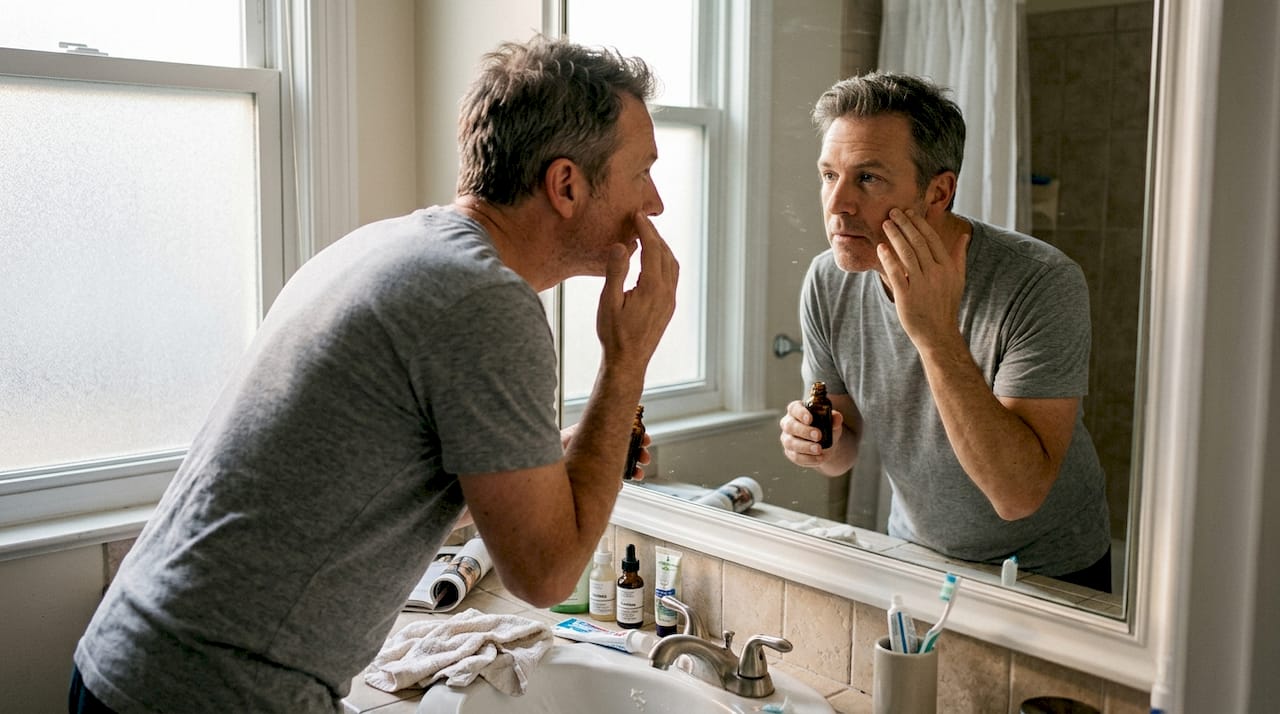
Stem cell activity decreases with age, meaning fewer new skin cells are produced to replace damaged ones. At the same time, collagen declines by 1% annually and oxidative stress accelerates cellular aging. The result is skin that is thinner, less firm, and slower to bounce back from daily damage.
Here are the main factors that slow skin regeneration over time:
- Reduced stem cell output: Fewer active stem cells means slower tissue turnover and less efficient repair.
- ECM breakdown: Collagen and elastin fibers fragment, leading to sagging and fine lines.
- Oxidative stress: Free radicals from UV exposure and pollution damage DNA and mitochondria inside skin cells.
- Hormonal shifts: Estrogen decline after 40 accelerates collagen loss and reduces skin thickness.
- Chronic low-grade inflammation: Sometimes called “inflammaging,” this quietly degrades skin structure over years.
Surface treatments like moisturizers and makeup address how skin looks. Regenerative approaches address why it changed in the first place.
Understanding cellular repair and aging gives you a clearer picture of why some products produce lasting results while others only offer temporary improvements. You can also explore how skin renewal changes with age and review cellular repair strategies that are grounded in current evidence.
How regenerative skincare works: Ingredients and cutting-edge therapies
Now that the biology is clear, let’s look at what actually moves the needle. Not all ingredients marketed as “regenerative” have the clinical evidence to back that claim. Here is what the research supports.
Topical retinoids, antioxidants, microneedling with exosomes, and oral collagen all support measurable improvements in skin structure and function. These are not fringe treatments. They are the most studied tools available outside of a clinical setting.
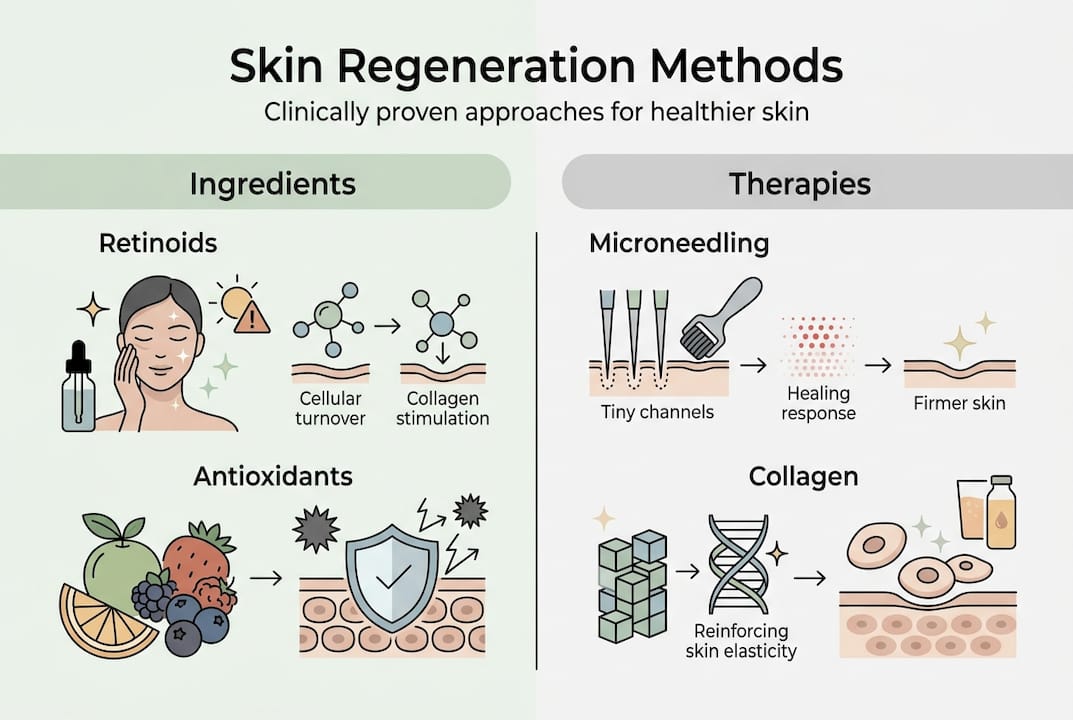
| Ingredient or therapy | Mechanism | Timeline for results | Best for |
|---|---|---|---|
| Retinoids | Stimulate cell turnover and collagen | 12-16 weeks | Lines, texture, tone |
| Antioxidants (Vitamin C, E) | Neutralize free radicals | 8-12 weeks | Brightness, protection |
| Collagen peptides (oral) | Provide amino acid building blocks | 8-12 weeks | Elasticity, hydration |
| Microneedling | Triggers wound healing and ECM repair | 4-6 sessions | Firmness, scars |
| Exosomes (topical) | Deliver growth factors to cells | Emerging data | Repair, inflammation |
| Peptides (topical) | Signal collagen and elastin production | 8-12 weeks | Firmness, volume |
Collagen peptides at 2.5 to 10g per day improved hydration and elasticity in clinical trials over 8 to 12 weeks in adults aged 30 to 65. That is a meaningful result from a supplement with a strong safety profile.
Key principles for choosing regenerative ingredients:
- Prioritize ingredients with peer-reviewed clinical data, not just marketing claims.
- Look for formulations that combine multiple actives targeting different pathways.
- Non-invasive options are appropriate for daily use; invasive tools like microneedling require professional guidance.
Pro Tip: Layering a topical peptide serum with an oral collagen supplement and a weekly antioxidant mask creates a multi-pathway approach that addresses regeneration from the inside and outside simultaneously.
For a deeper look at the science behind these choices, explore regenerative skincare science, the benefits of regenerative skincare, and a curated guide to science-backed peptides.
Personalizing your skin renewal routine
Knowing which ingredients work is only half the equation. How you use them, and in what order, determines whether you get results or irritation. Here is a practical framework built around clinical evidence.
Personalized routines combining topicals, orals, and minimally invasive tools achieve sustained results without surgery. The key is sequencing and consistency.
Daily routine (morning):
- Gentle cleanser to remove overnight buildup without stripping the skin barrier.
- Antioxidant serum (Vitamin C or niacinamide) applied to damp skin for better absorption.
- Peptide serum to signal collagen production throughout the day.
- Broad-spectrum SPF 30 or higher. UV exposure is the single biggest driver of accelerated skin aging.
Daily routine (evening):
- Double cleanse if you wear SPF or makeup.
- Retinoid or retinol applied to dry skin to minimize irritation.
- Hydrating moisturizer with ceramides to support the skin barrier overnight.
Weekly additions:
- Exfoliation once or twice per week to clear dead cells and improve active ingredient penetration.
- A hydrating mask or sheet mask to replenish moisture after exfoliation.
Monthly check-in:
- Assess changes in firmness, hydration, and tone. Adjust actives based on how your skin is responding.
For adults aged 30 to 45, the focus is prevention and early intervention: antioxidants, SPF, and light retinol. For adults aged 45 to 60, the priority shifts to repair and volume: stronger retinoids, collagen peptides, and targeted serums for firmness.
Pro Tip: Track your skin’s hydration, elasticity, and texture every 8 weeks using photos taken in the same lighting. This gives you objective data to evaluate what is working, rather than relying on daily impressions that are easy to misread.
The cellular repair skincare guide offers a structured approach to building this kind of routine with specific product recommendations.
Limits and caveats: What skin regeneration can and can’t do
It would be misleading to present regenerative skincare as a complete solution for every aging concern. The science is genuinely exciting, but it has real boundaries.
No non-invasive therapy currently available can restore the scarless, fetal-like regeneration that happens in early development. Results vary significantly based on your age, genetics, baseline skin health, and how consistently you apply your routine. Some advanced therapies also face reproducibility issues, meaning results seen in controlled trials do not always translate perfectly to real-world use.
Things to watch for as you build your regenerative routine:
- Over-treating: Using too many actives at once, especially retinoids, acids, and vitamin C together, can compromise the skin barrier and cause more damage than benefit.
- Unrealistic timelines: Visible improvement takes weeks to months. Anyone promising dramatic results in days is overstating the science.
- Ignoring genetics: Some people respond strongly to collagen peptides or retinoids; others see modest changes. Genetics play a real role.
- Skipping professional input: If you have significant laxity, deep scarring, or pigmentation disorders, a dermatologist can offer interventions that topicals alone cannot match.
Regenerative skincare is a long game. Consistency over 8 to 12 week cycles, not intensity in a single week, is what produces lasting change.
For a structured approach to managing this process, the cellular repair workflow resource walks through how to sequence and monitor your routine over time.
Bring skin regeneration science home: Advanced solutions from Cellure
If you have read this far, you understand that real skin renewal requires more than a single product. It requires a strategy built on clinically supported ingredients, consistent application, and the right combination of topical and systemic support.
Cellure formulates its products around exactly this kind of multi-pathway thinking. The Complete Skin Repair Kit brings together bioactive ingredients designed to work at the cellular level, targeting firmness, tone, and hydration in one coordinated regimen. If brightening and barrier support are your priorities, the tranexamic acid peptide serum delivers clinically supported actives in a gentle, layerable formula. Every product at Cellure is built around the same principle: regeneration, not just coverage. Explore the full range and find the regimen that fits where your skin is right now.
Frequently asked questions
Can you really reverse visible skin aging through regeneration?
You can visibly improve aging signs like wrinkles and sagging by reactivating skin regeneration, but complete reversal is unlikely without advanced medical interventions. Reduced stem cell activity and collagen loss set real biological limits on how far topical approaches can go.
How long does it take to see results from regenerative therapies?
Most people see noticeable changes in hydration and elasticity after 8 to 12 weeks of consistent use. Collagen peptides and topical creams showed measurable improvements within this window in clinical trials.
Are regenerative treatments safe for sensitive or mature skin?
Most topical and oral regenerative products are safe for mature skin, but always patch test new actives and consult a specialist if you have known sensitivities. Non-invasive solutions like retinoids, antioxidants, and collagen supplements are suitable for a wide range of adults when introduced gradually.
What’s the difference between regenerative skincare and cosmetic procedures?
Regenerative approaches target cellular repair for lasting structural change, while cosmetic procedures like Botox or fillers address surface symptoms without changing the underlying biology. Regenerative strategies reduce inflammation and cellular aging in ways that many cosmetic treatments do not.