


Skin repair kits explained: restore firm, even skin in 2026
You might assume all skincare kits deliver similar results, but the truth is far more nuanced. Premium skin repair kits harness advanced cellular science to target aging at its root, restoring firmness and evening tone in ways standard products cannot match. If you’re seeking genuine anti-aging solutions backed by clinical research, understanding how these kits work, what ingredients matter, and how to use them effectively can transform your skincare routine. This article breaks down the science, ingredients, and practical strategies to help you choose and apply skin repair kits that deliver visible, lasting improvements.
Table of Contents
- Understanding How Skin Repair Kits Work
- Key Active Ingredients In Skin Repair Kits And Their Roles
- Choosing And Using Skin Repair Kits Effectively
- Comparing Popular Skin Repair Kit Options In 2026
- Explore Advanced Skin Repair Solutions With Cellure
- Frequently Asked Questions
Key takeaways
| Point | Details |
|---|---|
| Cellular repair science | Kits target cellular regeneration to enhance skin firmness and tone effectively |
| Powerful active ingredients | Peptides, tranexamic acid, and antioxidants drive visible anti-aging benefits |
| Ingredient selection matters | Choosing kits with proven actives maximizes results and minimizes wasted effort |
| Consistency drives results | Proper application and routine adherence are essential for noticeable improvements |
| Long-term skin transformation | Premium kits improve texture and reduce discoloration with sustained use |
Understanding how skin repair kits work
Skin aging is not just about surface wrinkles. It begins deep within your skin cells, where regeneration slows and structural proteins like collagen and elastin decline. This cellular slowdown causes sagging, loss of volume, and uneven pigmentation that no surface treatment can fully address. Advanced skin repair kits work differently by supporting cellular regeneration at the source, delivering bioactive ingredients that stimulate your skin’s natural repair mechanisms.
These kits combine targeted serums and treatments formulated to boost collagen synthesis, strengthen elastin networks, and accelerate cell turnover. The result is improved skin texture, reduced fine lines, and a brighter, more uniform complexion. Clinical studies demonstrate that consistent use of cellular repair skincare can achieve up to 30% firmer skin, a measurable improvement that reflects genuine structural change rather than temporary plumping.
The key benefits extend beyond firmness. You’ll notice smoother texture as dead cells shed more efficiently, revealing fresh skin underneath. Discoloration fades as melanin production normalizes. Wrinkles soften as collagen fills in gaps. These changes accumulate over weeks and months, building a foundation of healthier, more resilient skin.
Pro Tip: Pair your skin repair kit with gentle daily cleansing to remove barriers like excess oil and debris, ensuring active ingredients penetrate deeply and work efficiently.
“Skin repair is not about quick fixes. It’s about restoring the cellular environment where youthful skin thrives.”
Understanding [why cellular repair matters](https://cellure.co/blogs/nieuws/why cellular repair matters youthful skin 2026) helps you appreciate the science behind these kits. When you support your skin’s natural renewal processes, you’re not masking aging, you’re reversing its visible effects at the cellular level.
Key active ingredients in skin repair kits and their roles
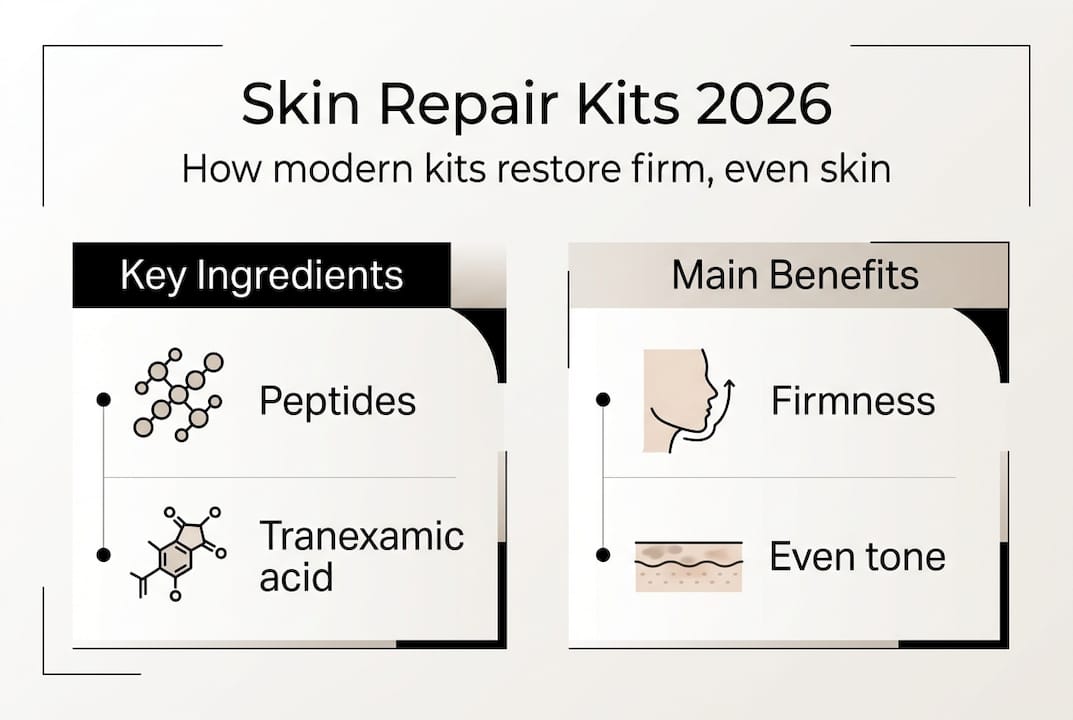
Not all ingredients are created equal. Premium skin repair kits rely on scientifically validated actives that deliver measurable results. Three ingredients stand out for their proven ability to restore firmness and even tone: peptides, tranexamic acid, and antioxidants.
Peptides are short chains of amino acids that signal your skin to produce more collagen and elastin. Think of them as messengers that wake up dormant repair pathways. When applied topically, peptides penetrate the skin barrier and trigger fibroblasts to ramp up structural protein production, leading to firmer, more lifted skin over time. Clinical trials show peptides can reduce fine lines by up to 25% within 12 weeks.
Transexamic acid is a powerhouse for evening skin tone. It works by inhibiting melanin synthesis, the process that creates dark spots and hyperpigmentation. Unlike harsh exfoliants, tranexamic acid gently reduces discoloration without irritation, making it ideal for sensitive skin. Studies confirm it can lighten age spots and melasma by up to 40% with consistent use.
Antioxidants like vitamin C, niacinamide, and resveratrol protect skin cells from oxidative stress caused by UV exposure and pollution. They neutralize free radicals that damage DNA and accelerate aging, while also supporting cellular repair by creating a healthier environment for regeneration. Antioxidants brighten skin, reduce inflammation, and enhance the effectiveness of other actives.
| Ingredient | Primary Function | Key Benefits | Typical Concentration |
|---|---|---|---|
| Peptides | Stimulate collagen production | Firmer skin, reduced wrinkles | 2-5% |
| Tranexamic Acid | Inhibit melanin synthesis | Even tone, reduced dark spots | 2-3% |
| Antioxidants | Neutralize free radicals | Brighter skin, cellular protection | 5-20% |
Pro Tip: Look for kits that combine multiple actives in synergistic formulas. Peptides, tranexamic acid, and antioxidants work together to amplify anti-aging effects, delivering faster, more comprehensive results than single-ingredient products.
When evaluating kits, check ingredient lists for these proven actives at effective concentrations. Transparency matters. Brands that disclose exact percentages and explain each ingredient’s role demonstrate confidence in their formulations. Cellure’s complete skin repair kit exemplifies this approach, offering full ingredient breakdowns and clinical backing for every component.
Choosing and using skin repair kits effectively
Selecting the right skin repair kit requires more than reading marketing claims. You need to evaluate ingredient transparency, clinical support, kit completeness, and compatibility with your skin type. Start by verifying that the kit contains proven actives at effective concentrations, not just trace amounts added for label appeal.
Look for kits backed by clinical studies or dermatologist testing. This ensures the formulation has been validated for safety and efficacy, not just assembled based on trends. Complete kits should include complementary products like cleansers, serums, and moisturizers designed to work together, maximizing absorption and results.
Skin type compatibility is crucial. If you have sensitive skin, choose kits with gentle, non-irritating actives like peptides and niacinamide. Oily skin benefits from lightweight serums, while dry skin needs richer formulations with added hydration. Proper selection ensures you avoid reactions and achieve optimal outcomes.
Once you’ve chosen a kit, follow this step-by-step routine for best results:
- Cleanse your face thoroughly with a gentle, pH-balanced cleanser to remove impurities and prep skin for active absorption.
- Apply the repair serum to damp skin, focusing on areas with firmness loss or discoloration, using upward motions to support lifting.
- Follow with a moisturizer to lock in actives and provide a protective barrier against environmental stressors.
- Use sunscreen every morning to prevent UV damage that undermines repair efforts and causes new pigmentation.
Patch test new products on a small area before full application. This simple step prevents widespread irritation if your skin reacts unexpectedly. Start with every other night application, gradually increasing to nightly use as your skin builds tolerance.
Common mistakes to avoid include skipping steps, expecting instant results, and neglecting lifestyle factors. Skin repair is cumulative, not immediate. You’ll see subtle improvements within 2-4 weeks, with significant changes emerging after 8-12 weeks. Pair your kit with healthy habits like staying hydrated, eating antioxidant-rich foods, and protecting your skin from sun exposure.
Understanding the cellular repair workflow helps you appreciate why consistency matters. Each application supports ongoing cellular processes, building on previous progress. Skipping days disrupts this momentum, delaying visible outcomes.
Comparing popular skin repair kit options in 2026
Navigating the skin repair market in 2026 means evaluating kits based on ingredient potency, formulation technology, and real-world results. Here’s a comparison of leading options to help you choose the best fit for your needs.
| Kit Name | Key Ingredients | Primary Benefits | Price Range | Best For |
|---|---|---|---|---|
| Cellure Complete Repair | Peptides, tranexamic acid, antioxidants | Firmness, tone, texture | Premium | All skin types, comprehensive aging |
| Advanced Lift Kit | High-dose peptides, hyaluronic acid | Lifting, hydration | Mid-range | Dry skin, sagging concerns |
| Brightening Renewal Kit | Tranexamic acid, vitamin C | Even tone, dark spots | Mid-range | Hyperpigmentation, dullness |
| Sensitive Repair Kit | Gentle peptides, niacinamide | Firmness, calming | Budget-friendly | Sensitive, reactive skin |
Cellure’s kit stands out for its comprehensive formulation combining multiple proven actives at clinical concentrations. The inclusion of both peptides and tranexamic acid addresses firmness and tone simultaneously, while antioxidants provide protective benefits. Users report visible improvements in skin texture and radiance within 6-8 weeks, with continued enhancement over months.
Advanced Lift Kit excels for those prioritizing sagging and volume loss. Its high peptide concentration delivers noticeable lifting effects, though it lacks the tone-evening benefits of tranexamic acid. It’s ideal for dry skin that needs both firming and intense hydration.
Brightening Renewal Kit targets discoloration aggressively with tranexamic acid and vitamin C. It’s less focused on structural firmness but delivers impressive results for age spots and uneven tone. Best suited for those whose primary concern is pigmentation rather than sagging.
Sensitive Repair Kit offers gentler actives at lower concentrations, minimizing irritation risk while still supporting cellular repair. It’s budget-friendly but requires longer timelines for visible results, typically 10-12 weeks.
Pros and cons breakdown:
- Cellure Complete Repair: Comprehensive actives, clinical backing, premium price, excellent for multi-concern aging
- Advanced Lift Kit: Strong lifting effects, good hydration, lacks tone-evening ingredients, mid-range value
- Brightening Renewal Kit: Powerful for pigmentation, fast brightening results, limited firming benefits, mid-range price
- Sensitive Repair Kit: Gentle, affordable, suitable for reactive skin, slower results, lower active concentrations
Budget considerations matter, but remember that premium kits often deliver faster, more comprehensive results, potentially saving money long-term by reducing the need for additional products. Top skin repair serums in 2026 demonstrate that investing in quality formulations pays off in visible skin transformation.
Expect gradual improvements with any kit. Budget options may take 12-16 weeks for noticeable change, while premium formulations often show results within 6-10 weeks. Consistency matters more than price, but potent actives accelerate progress.
Explore advanced skin repair solutions with Cellure
Ready to experience the cellular repair science discussed throughout this article? Cellure offers premium skin repair kits formulated with the exact actives we’ve covered: peptides, tranexamic acid, and powerful antioxidants.
Their complete skin repair kit is designed to boost cellular regeneration, restore firmness, and even tone through clinically backed formulations. Every product features transparent ingredient lists with proven concentrations, so you know exactly what you’re applying to your skin.
Explore specialized treatments like the tranexamic acid peptide serum for targeted tone correction and lifting. Visit their ingredients page to learn the science behind each component and how it contributes to youthful, radiant skin. Cellure combines regenerative skincare innovation with accessible education, empowering you to make informed choices for your aging skin concerns.
Frequently asked questions
What exactly are skin repair kits?
Skin repair kits are curated collections of skincare products formulated with bioactive ingredients that target cellular regeneration. They typically include serums, moisturizers, and sometimes cleansers designed to work together to restore firmness, even tone, and improve texture. Unlike generic skincare sets, repair kits focus on scientifically validated actives like peptides and tranexamic acid that address aging at the cellular level.
How long does it take to see results from skin repair kits?
Most users notice subtle improvements in texture and radiance within 2-4 weeks of consistent use. Significant changes in firmness and tone typically emerge after 8-12 weeks as cellular regeneration accelerates and structural proteins rebuild. Premium kits with higher active concentrations may deliver visible results slightly faster, while gentler formulations for sensitive skin may require 12-16 weeks. Patience and consistency are essential for lasting transformation.
Are skin repair kits safe for all skin types?
Yes, when chosen carefully. Most premium kits are formulated to suit all skin types, including sensitive skin. Look for products labeled non-comedogenic for oily or acne-prone skin, and choose richer formulations if you have dry skin. Always patch test new products and start with lower frequency application to assess tolerance. Brands like Cellure design gentle, effective formulations suitable for diverse skin needs.
Can I use skin repair kits with other skincare products?
Absolutely. Skin repair kits integrate well with existing routines, especially when layered correctly. Apply lighter serums before heavier creams, and always finish with sunscreen in the morning. Avoid combining multiple strong actives like retinol and high-dose acids in the same routine to prevent irritation. If you use prescription treatments, consult your dermatologist to ensure compatibility and avoid ingredient conflicts.
What makes skin repair kits different from regular anti-aging creams?
Skin repair kits deliver targeted, multi-step treatments with complementary products designed to work synergistically. They contain higher concentrations of proven actives and address aging through cellular repair rather than surface-level hydration. Regular anti-aging creams often focus on moisturization and temporary plumping, while repair kits stimulate collagen production, inhibit pigmentation, and protect against oxidative damage for structural, lasting improvements.