


Achieve Younger-Looking Skin with a Cellular Renewal Workflow
TL;DR:
- Cellular renewal targets deep skin processes involving fibroblasts and senescent cells to combat aging.
- Consistent use of retinoids, barrier repair, and UV protection is essential for lasting skin improvements.
- Most “cellular renewal” products rely on marketing claims without proven biological efficacy.
If you’ve followed a consistent anti-aging routine for years and still feel like your skin isn’t responding the way it should, you’re not imagining things. Most standard skincare approaches work at the surface level, treating symptoms rather than the underlying biology that drives visible aging. Unlike surface-focused routines, cellular renewal addresses root causes by influencing regeneration at the skin’s deepest layers. This guide gives you a practical, research-backed workflow to finally move beyond plateaued results.
Table of Contents
- What cellular skin renewal really means
- Essential preparation: What you need for success
- Step-by-step: The cellular renewal workflow
- Verifying progress and avoiding common pitfalls
- Why most “cellular renewal” routines fall short
- Take the next step: science-backed cellular renewal solutions
- Frequently asked questions
Key Takeaways
| Point | Details |
|---|---|
| Science matters | Workflows rooted in proven biology outperform hype-driven routines for lasting results. |
| Layer your defense | Prevention and repair working together deliver the best chance of maintaining youthful skin. |
| Actives need commitment | Consistent and tolerable use of key ingredients is essential for cellular renewal to succeed. |
| Monitor and adapt | Your routine should evolve as your skin responds and as research uncovers new insights. |
What cellular skin renewal really means
Understanding what skin renewal means at the biological level changes how you approach every product you apply. The term “cellular renewal” isn’t a vague marketing phrase. It refers to specific, measurable processes happening inside your skin every day, and when those processes slow down or become disrupted, aging becomes visible in the mirror.
Your skin’s youthful appearance depends largely on cells called fibroblasts. These are the workhorse cells of the dermis, the deeper skin layer beneath the surface. Fibroblasts produce collagen, elastin, and hyaluronic acid, which are the structural proteins and moisture-binding molecules that keep skin plump, firm, and smooth. The problem is that fibroblasts don’t behave the same way as we age. Research shows that fibroblast matrix differences between papillary (upper) and reticular (deeper) layers directly affect how the epidermis differentiates and how well the skin barrier functions.
There’s a second process that matters enormously: cellular senescence. Senescent cells are cells that have stopped dividing but haven’t been cleared from the tissue. They accumulate with age, and studies confirm that cellular senescence disrupts regenerative signaling and actively contributes to visible skin aging. Think of them like retired workers who aren’t doing their jobs but are still taking up space and interfering with the newer workforce.
Here’s a quick reference for the key terms you’ll encounter throughout this guide:
| Term | What it means | Why it matters |
|---|---|---|
| Fibroblast | Collagen-producing cell in the dermis | Declines in activity with age |
| Cellular senescence | Aged cells that stop dividing but remain active | Disrupts renewal signals |
| TEWL | Transepidermal water loss | Measures barrier integrity |
| Ceramides | Lipid molecules in the skin barrier | Hold moisture and block irritants |
| Epidermal turnover | Rate at which new skin cells surface | Slows with age, causing dullness |
Understanding why cellular repair matters helps you recognize that skincare isn’t just about what sits on top of your skin. It’s about what’s happening several layers below. When you grasp that, the workflow below starts to make complete sense.
Essential preparation: What you need for success
Now that you understand cellular renewal, let’s make sure you have everything you need to begin safely and effectively. Before applying a single active ingredient, your preparation will determine how well your skin responds.
The right mindset comes first. Cellular renewal is gradual by design because your skin’s biology operates on weeks and months, not days. Expecting fast, dramatic shifts will lead you to overload your skin with too many actives at once, which is one of the most common mistakes. A comprehensive renewal workflow requires reducing ongoing damage, supporting barrier function, and accounting for aging biology beyond surface exfoliation. That three-part principle is your guiding framework.
Core product categories you need:
- Broad-spectrum SPF (minimum SPF 30): UV damage is the single largest driver of accelerated skin aging. No renewal workflow functions well without daily UV protection.
- Retinoid or retinol formula: These are the most studied topical actives for influencing epidermal turnover and stimulating fibroblast activity.
- Barrier-repair agents: Ceramides, niacinamide, and peptide-based moisturizers reinforce the skin barrier and reduce TEWL.
- Targeted active serums: Ingredients like tranexamic acid, polynucleotides, and peptides address tone, firmness, and regenerative signaling.
- Gentle, pH-appropriate cleanser: Harsh cleansers strip the acid mantle and compromise barrier integrity before you’ve even started.
Here’s how to separate the essentials from the optional upgrades:
| Category | Essential | Optional upgrade |
|---|---|---|
| UV protection | SPF 30 broad-spectrum | SPF 50 with antioxidants |
| Cellular actives | Retinol or low-strength retinoid | Prescription retinoid (dermatologist-guided) |
| Barrier support | Ceramide moisturizer | Peptide-enriched barrier serum |
| Targeted treatment | Niacinamide or peptide serum | Polynucleotide or tranexamic acid serum |
| Cleansing | Gentle, pH-balanced cleanser | Enzyme or micellar-based cleanser |
Explore science-backed renewal steps and key active ingredients to understand exactly how each product category earns its place in your routine.
Pro Tip: Introduce one new active ingredient at a time, spaced two to three weeks apart. This makes it easy to identify the cause if irritation occurs, and gives your barrier time to adapt without becoming overwhelmed.
Step-by-step: The cellular renewal workflow
You’ve gathered your tools and mindset. Now let’s walk through the workflow step by step.
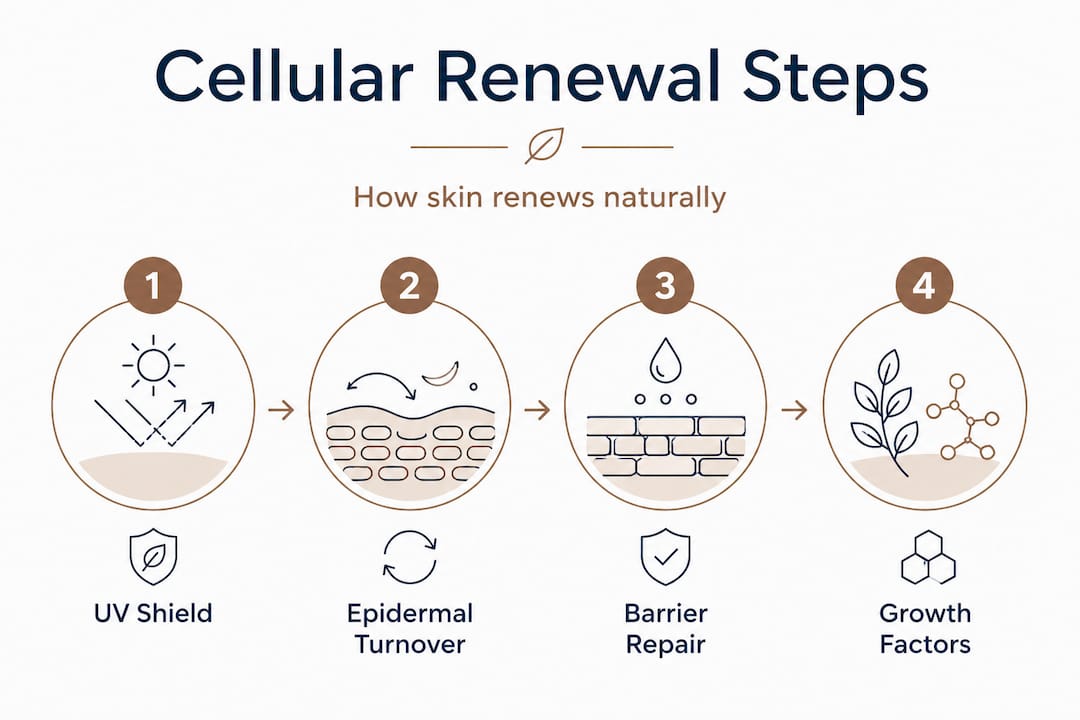
Step 1: Shield from ongoing damage (morning)
The most important step in a cellular renewal workflow isn’t a serum. It’s your morning SPF. UV radiation triggers the formation of free radicals, degrades collagen, and activates enzymes that break down your skin’s structural matrix. All the fibroblast support and barrier repair you do in the evening will be undermined if you skip daily UV protection.
Apply a broad-spectrum SPF every morning, even on overcast days or when you work primarily indoors. Windows do not block UVA rays, which penetrate deeply and accelerate the very cellular aging we’re trying to reverse.
Step 2: Support epidermal turnover (evening)
This is where retinoids and key renewal actives come in. Topical retinoids demonstrably influence epidermal turnover and clinical aging markers, but they require consistent, tolerable use to deliver results. Start with a low concentration (0.025% to 0.05% retinol) two to three nights per week. After four to six weeks without significant irritation, increase frequency gradually.
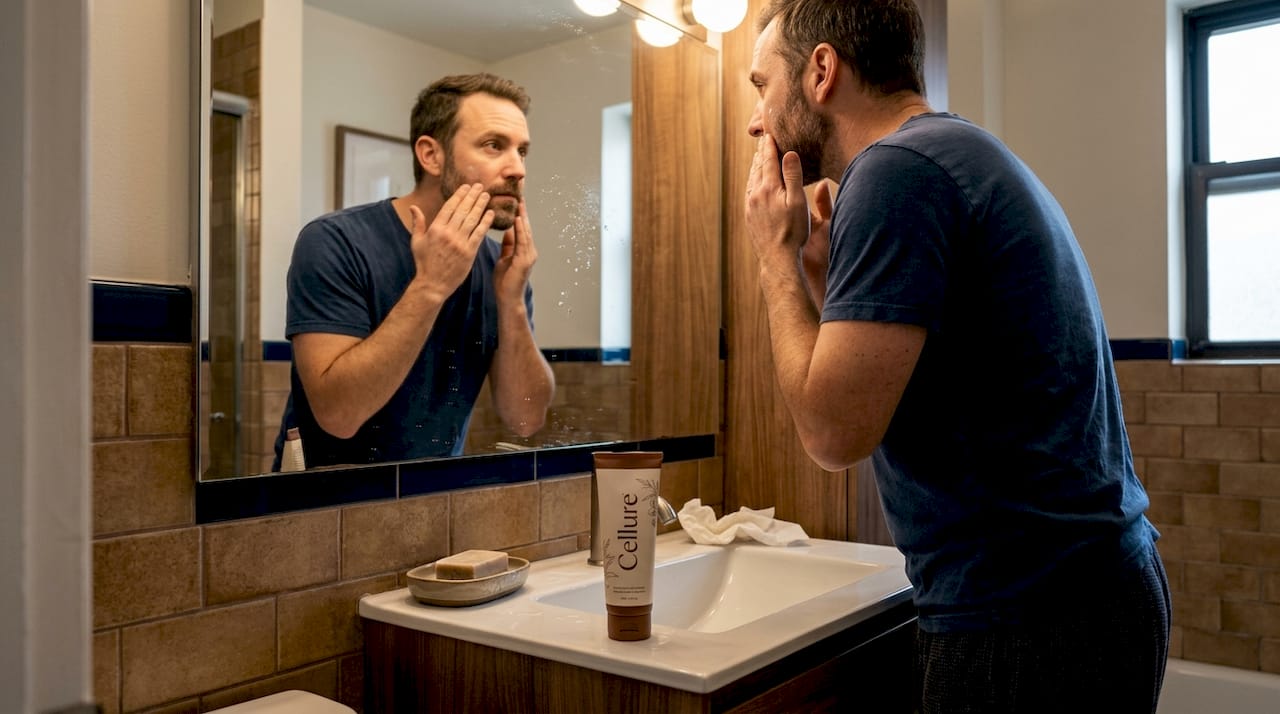
Retinoids work by signaling skin cells to turn over faster, bringing fresher cells to the surface and prompting deeper fibroblast activity. The mistake most people make is starting at too high a strength and experiencing redness, peeling, and sensitivity, which causes them to stop entirely. Stopping reverses the gains. Consistency at a tolerable level beats aggressive use every time.
Step 3: Repair and rebuild the barrier (morning and evening)
Barrier-repair steps are not optional extras. They are the scaffolding that makes every other active ingredient work. A compromised barrier means increased TEWL, heightened sensitivity, and reduced absorption of beneficial ingredients.
After your retinoid on evenings when you apply it, layer a ceramide-based moisturizer to seal in hydration and calm the skin. On mornings and non-retinoid nights, apply a peptide serum or niacinamide treatment before your moisturizer. Understanding how cellular repair works at the ingredient level helps you choose products that genuinely rebuild rather than just temporarily soothe.
Timing and layering are critical. Apply water-based serums before oil-based products and finish with your most occlusive product to prevent moisture escape.
Stat to remember: Research modeling preventive vs. reparative topical workflows confirms that applying actives in a pre- and post-damage sequence and tracking biomarker changes yields measurable skin improvements. Sequence matters as much as ingredient choice.
Pro Tip: Avoid harsh physical scrubs or high-concentration acid exfoliants while establishing a retinoid routine. The skin is already accelerating its turnover. Aggressive manual exfoliation strips the barrier and creates inflammation that counteracts cellular renewal.
Verifying progress and avoiding common pitfalls
Once you begin the workflow, it’s important to monitor your skin’s response and avoid the missteps that hold back results.
Signs that your cellular renewal workflow is working:
- Skin texture becomes smoother and more even within 6 to 10 weeks
- A natural glow replaces the flat, dull appearance common in aging skin
- Fine lines appear softer, especially in areas where retinoids are absorbed well
- Skin feels more resilient and bounces back faster after environmental stressors
- Tone becomes more consistent and radiant over time
These changes are gradual. You will likely notice texture improvements before you see changes in firmness or line depth. Take monthly photos in consistent lighting to objectively track progress. This removes the distortion of day-to-day perception.
Warning signs that require action:
- Persistent redness that doesn’t resolve within two to three days after applying a new active
- Visible scaling or raw patches beyond normal retinoid adjustment
- Burning sensation that doesn’t fade within minutes of application
- Breakouts that worsen significantly and don’t resolve as your skin adapts
Here’s a clear comparison to help you distinguish a normal adjustment response from a genuine adverse reaction:
| Response | Normal | Adverse |
|---|---|---|
| Slight dryness or tightness | Yes | No |
| Mild flaking in the first few weeks | Yes | No |
| Persistent raw or burning patches | No | Yes |
| Brief redness after application | Yes | No |
| Redness lasting more than 72 hours | No | Yes |
| Skin feeling slightly sensitive to touch | Yes (early weeks) | No |
| New deep cysts or infection signs | No | Yes |
Knowing the difference means you can stay the course when adjustment happens rather than abandoning a routine that would have worked. The effectiveness of peptide repair depends entirely on sustained use over weeks and months.
A critical point: stopping retinoids reverses epidermal improvements, and consistency is what separates people who see lasting change from those who cycle through products without result. If irritation appears, reduce frequency rather than stopping completely.
“The biggest mistake we see isn’t choosing the wrong product. It’s abandoning the right one too soon. Consistency and patience are your most powerful allies in cellular renewal.”
Why most “cellular renewal” routines fall short
Here’s the uncomfortable truth most skincare content won’t tell you: the majority of products labeled “cellular renewal” or “regenerative” have no connection to the biological markers that researchers actually measure.
In clinical research, the meaningful endpoints for skin renewal are things like TEWL rates, ceramide molecular organization, fibroblast activity, and senescence biomarkers. These are objective, measurable, and directly tied to how the skin functions. But there’s a clear mismatch in marketing claims about stem cells and exosomes, which are rarely connected to any of these clinically measured endpoints.
This matters because consumers are often paying premium prices for ingredients that generate impressive-sounding claims but have never been tested against the actual biology of skin renewal. The word “stem cell” on a label, for example, rarely means the product contains viable stem cells. It typically refers to plant-derived extracts that may have antioxidant properties but aren’t doing what the name implies at a cellular level.
Real progress in cellular skin renewal comes from a combination of three evidence-based elements working together: protecting against ongoing UV and oxidative damage, actively supporting epidermal turnover with clinically tested actives like retinoids and peptides, and rebuilding barrier integrity so the skin can sustain those gains. No single hero ingredient replaces this system.
What we’ve built at Cellure is deliberately grounded in this principle. Ingredients like polynucleotides, tranexamic acid, and signaling peptides are selected because they interact with documented biological pathways, not because they photograph well in marketing materials. Explore science-backed rejuvenation resources to understand exactly what separates ingredient-level evidence from label-level noise.
Expect gradual, stable improvements from a correctly executed workflow, not instant transformation. When results do come, they last because the biology supporting them has genuinely shifted.
Take the next step: science-backed cellular renewal solutions
If the workflow in this guide resonates with you, the natural next step is finding formulations that match its biological rigor. The gap between knowing what works and having the right products to do it is exactly what Cellure is designed to close.
Our serums and repair kits are formulated with peptides, polynucleotides, and tranexamic acid, ingredients selected for their measurable interactions with skin renewal pathways. Each product is developed with the same three-part logic described in this workflow: protect, activate, and rebuild. Whether you’re targeting loss of firmness, uneven tone, or general skin resilience, you’ll find targeted options with full ingredient transparency and clinical backing. Browse Cellure’s cellular renewal solutions to find the formulation that fits where you are in your renewal journey.
Frequently asked questions
How long does it take to see results from a cellular skin renewal workflow?
Noticeable improvements typically emerge after 6 to 12 weeks of consistent use, with clinical improvements from retinoids appearing over several weeks to months of correct application.
Should I use a preventive or reparative approach for best results?
Both have real value. Prevention focuses on blocking ongoing UV and oxidative damage, while repair helps restore after damage has accumulated. Research confirms that both topical workflows benefit skin health depending on timing and individual skin needs.
What are signs my skin’s renewal workflow needs adjustment?
Ongoing irritation, delayed healing, or no visible change after several months signals a need to revisit product choice or routine frequency, since tolerability and consistency are essential and stopping actives reverses the gains you’ve built.
Why don’t all products labeled “cellular renewal” deliver real results?
Most rely on marketing language rather than biologically tested ingredients. Marketing claims about stem cells and exosomes often lack any connection to clinically measured renewal endpoints like TEWL or ceramide organization.
Recommended
- Cellular skin renewal guide: science-backed steps for youthful skin – Cellure
- Cellular Repair Skincare 2026: 30% Firmer Skin Guide – Cellure
- The science of skin renewal: 3 actives for youthful skin – Cellure
- Cellular rejuvenation: real solutions for skin renewal – Cellure
- 7 tipuri de tratamente non-invazive pentru ten radiant – aBeauty Clinique ®