


Cellular skin renewal guide: science-backed steps for youthful skin
TL;DR:
- Cellular skin renewal targets underlying processes like senescence and inflammation for durable aging benefits.
- Key actives include retinoids, peptides, vitamin C, and barrier protectants, applied consistently over time.
- Lifestyle habits like sleep and sun protection are essential for maximizing skincare results and skin health.
Most anti-aging products work on the surface. They smooth, plump, and temporarily brighten, but they rarely address why your skin is changing in the first place. The real driver of aging, dullness, and loss of firmness is happening at the cellular level, where senescence and inflammation quietly degrade the very structures that keep skin looking youthful. This guide cuts through the noise and gives you a clear, science-based roadmap for cellular skin renewal, covering what it is, what you need, how to execute it, and how to know it’s working.
Table of Contents
- Understanding cellular skin renewal and aging
- What you need: Tools, actives, and preparation
- How to execute a cellular renewal routine: Step-by-step
- Maximizing and troubleshooting your results
- Our perspective: Why real transformation requires more than products
- Ready for next-level cellular renewal?
- Frequently asked questions
Key Takeaways
| Point | Details |
|---|---|
| Target root causes | Cellular renewal tackles the underlying drivers of aging like senescence and ECM decline, not just surface signs. |
| Science-backed ingredients work | Retinoids and other actives offer clinically proven improvements in wrinkles, firmness, and even tone. |
| Personalization matters | Adapt routines to your skin type, phototype, and response for better results and fewer side effects. |
| Track and adjust routines | Monitor changes, avoid mistakes, and iterate for continuous improvement during your renewal journey. |
Understanding cellular skin renewal and aging
To take full advantage of this science, you need to know what cellular aging actually looks like beneath the surface.
Cellular skin renewal is the ongoing process by which your skin replaces old, damaged cells with healthy new ones, maintains the extracellular matrix (ECM), and keeps inflammation in check. Think of the ECM as the scaffolding beneath your skin. It holds collagen, elastin, and hydration in place. When that scaffolding degrades, skin loses its structure. When cell turnover slows, the surface becomes dull and rough. When inflammation rises unchecked, tone becomes uneven and sensitivity increases.
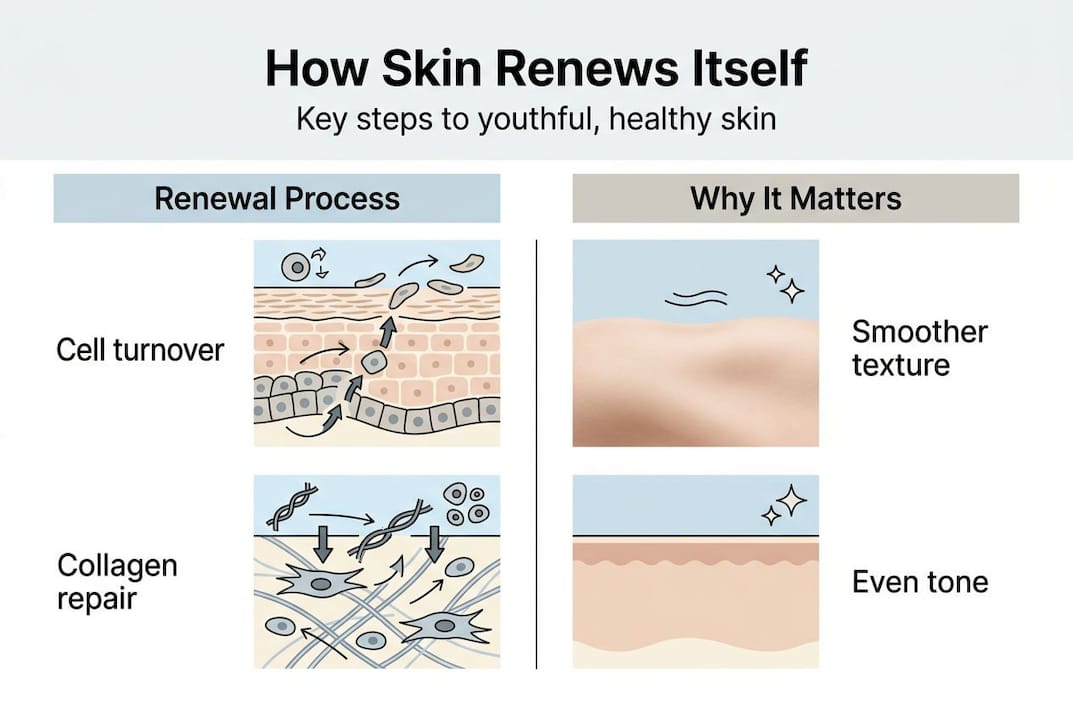
Aging disrupts all three of these processes at once. The biggest culprit is cellular senescence, a state where cells stop dividing but refuse to die. These “zombie cells” release a cocktail of inflammatory signals called the senescence-associated secretory phenotype (SASP). SASP drives ECM breakdown, accelerates collagen loss, and contributes directly to uneven skin tone, as explained in science-backed rejuvenation research.
Here’s what senescent cells increase over time:
- SASP-driven chronic inflammation
- Matrix metalloproteinases (MMPs) that break down collagen and elastin
- Transepidermal water loss (TEWL), weakening the skin barrier
- Uneven pigmentation from disrupted melanocyte signaling
| Cellular process | What it does when healthy | What happens when it fails |
|---|---|---|
| Cell turnover | Renews surface texture | Dullness, rough patches |
| ECM maintenance | Supports firmness and elasticity | Sagging, wrinkles |
| Inflammation control | Keeps tone even | Redness, hyperpigmentation |
| Barrier function | Retains moisture | Sensitivity, dryness |
When renewal is properly activated, the results are measurable. Studies show an 83% improvement in the dermal-epidermal junction (DEJ) and a 20 to 40% drop in TEWL. These aren’t cosmetic illusions. They reflect genuine structural repair. Understanding what is cellular repair at this level is the foundation for everything that follows.
What you need: Tools, actives, and preparation
With the science understood, the next step is gathering the right tools and products to target cellular renewal effectively.
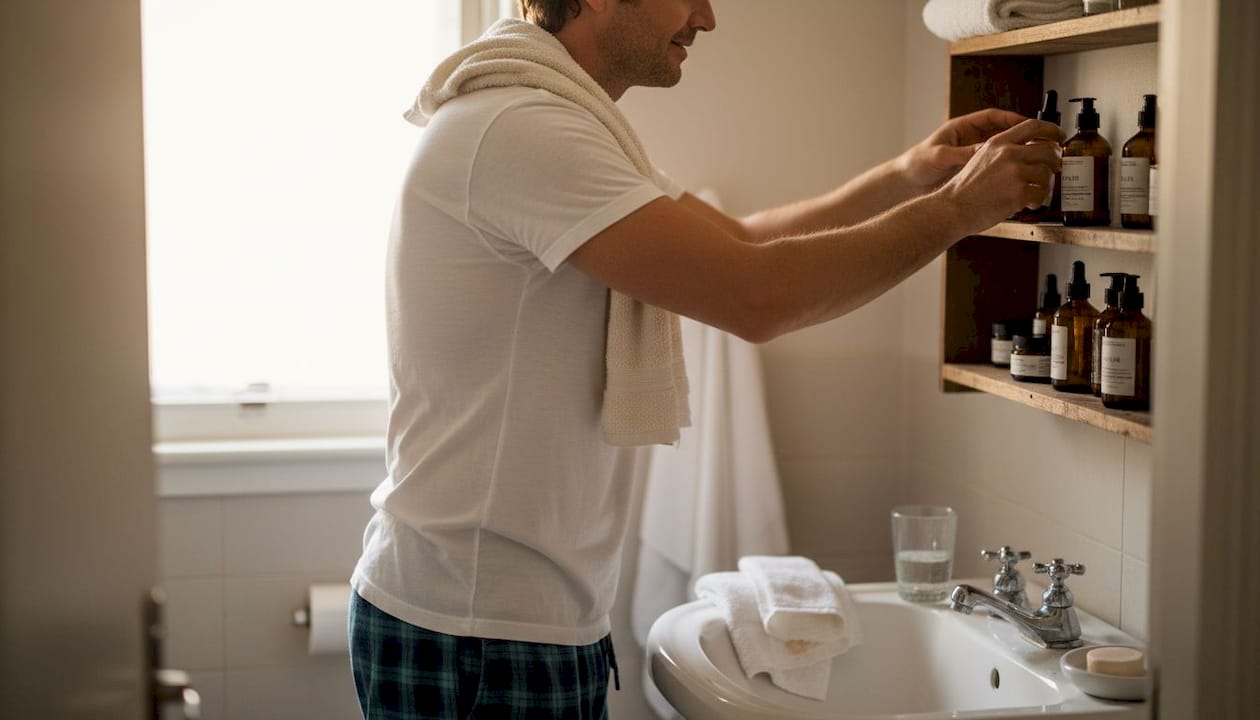
Not every active ingredient earns its place in a cellular renewal routine. The ones that do have clinical evidence behind them, and each targets a specific mechanism of aging.
Core actives for cellular renewal:
- Retinoids (retinol, tretinoin): Accelerate cell turnover, stimulate collagen, and suppress MMPs. After 12 weeks, retinoids produce 13 to 20% fewer wrinkles and measurably better elasticity.
- Peptides: Signal fibroblasts to produce more collagen and elastin. Gentler than retinoids and suitable for sensitive skin.
- Vitamin C (ascorbic acid): Neutralizes oxidative stress, brightens uneven tone, and stabilizes collagen synthesis.
- Hydration agents (hyaluronic acid, ceramides): Restore barrier integrity and reduce TEWL.
- Broad-spectrum SPF: Non-negotiable. UV exposure is the single largest driver of senescence and ECM damage.
| Active | Best for | Key side effect | Suitable for sensitive skin? |
|---|---|---|---|
| Tretinoin (Rx) | Fast turnover, deep wrinkles | Peeling, redness | Start very low |
| Retinol (OTC) | Gradual renewal, texture | Mild irritation | Yes, with buffer |
| Vitamin C | Brightening, antioxidant defense | Oxidation instability | Generally yes |
| Peptides | Firmness, collagen support | Rare | Yes |
| Hyaluronic acid | Hydration, barrier repair | None typical | Yes |
Explore the full breakdown of skin renewal actives to match each ingredient to your specific concerns.
Preparation matters as much as the products themselves. Before adding any potent active, spend two weeks using only a gentle cleanser, a basic moisturizer, and SPF. This stabilizes your barrier and gives you a clear baseline. For darker phototypes (Fitzpatrick IV to VI), this step is especially important. Retinoids and exfoliants can trigger post-inflammatory hyperpigmentation if introduced to a compromised barrier. Reviewing cellular repair best practices before you start will help you avoid the most common early mistakes.
Pro Tip: If you’re new to retinoids, apply your moisturizer first, then the retinoid on top. This “buffering” method slows absorption just enough to cut irritation without sacrificing efficacy.
How to execute a cellular renewal routine: Step-by-step
Now that you’re prepared, follow these clear steps to maximize cellular renewal for visible results.
Consistency and sequencing are what separate a routine that transforms skin from one that just maintains it. Here’s how to structure your days:
Morning routine:
- Cleanse gently with a pH-balanced cleanser.
- Apply vitamin C serum to damp skin for antioxidant protection.
- Follow with a hydrating serum (hyaluronic acid or peptides).
- Seal with a moisturizer that contains ceramides.
- Finish with broad-spectrum SPF 30 or higher. Always.
Evening routine:
- Double cleanse if you wear SPF or makeup.
- Apply your retinoid (start 2 nights per week, increase gradually).
- Wait 10 to 15 minutes, then apply a barrier-supportive moisturizer.
- Once per week, use a gentle chemical exfoliant (AHA or PHA) in place of the retinoid.
Layering actives strategically is what drives the ECM remodeling and DEJ strengthening that leads to an 80% hydration rise and measurable thickness gains over time. Retinoids work best at night because UV light degrades them and increases photosensitivity. Antioxidants like vitamin C are most effective in the morning when your skin faces environmental stressors.
“Skin that is properly supported at the cellular level doesn’t just look better. It behaves differently: it recovers faster, holds hydration longer, and resists environmental damage more effectively.”
For darker phototypes, monitor your skin closely in the first four weeks. Any sign of darkening around the application area means you need to reduce frequency or switch to a gentler retinoid alternative. The full cellular repair workflow walks you through how to adapt the routine safely.
Pro Tip: Keep a simple weekly photo log in consistent lighting. Subtle changes in texture and tone are easy to miss day to day but become obvious when you compare week 1 to week 12. The 30% firmer skin guide shows exactly what those milestones can look like.
Maximizing and troubleshooting your results
Once you have a routine going, ongoing success depends on observation and periodic adjustments.
The 12-week mark is your first real checkpoint. By then, you should notice measurable changes in at least two of these areas: wrinkle depth, skin texture, overall firmness, and tone evenness. If you’re not seeing progress, the issue is usually one of three things: inconsistency, overuse causing barrier damage, or skipping SPF.
Common mistakes that stall results:
- Using retinoids every night from week one, triggering rebound sensitivity
- Layering too many actives at once, causing irritation and inflammation
- Skipping SPF, which undoes cellular repair by reintroducing UV-driven senescence
- Expecting visible change in under six weeks
| Concern | Likely cause | Adjustment |
|---|---|---|
| Redness and peeling | Retinoid overuse | Reduce frequency, add buffer |
| Stalled improvement | Inconsistent routine | Set a fixed schedule |
| New dark spots | Phototype sensitivity | Lower retinoid strength, add niacinamide |
| Increased dryness | Barrier disruption | Pause exfoliants, increase ceramides |
Emerging research on senolytics and senomorphics is worth watching. These compounds target and clear senescent fibroblasts, improving cell proliferation in ways that current topicals can’t fully replicate. Early studies using ND-ZnO/NAC combinations show real promise for reducing senescent cell burden in skin tissue. They’re not ready for routine home use yet, but they represent the next frontier of cellular renewal.
Lifestyle factors matter more than most people expect. Sleep is when your skin runs its primary repair cycle. Chronic sleep deprivation measurably increases cortisol, which accelerates collagen breakdown. Reviewing cellular repair best practices and cellular repair science together gives you the full picture of how topical and lifestyle inputs interact.
Pro Tip: If your skin suddenly becomes reactive after months of tolerance, check whether you’ve changed your diet, sleep, or stress levels before adjusting your skincare. Internal shifts often show up on the surface first.
Our perspective: Why real transformation requires more than products
With the core science and practical execution covered, let’s step back for an honest look at what actually drives sustained improvement.
The skincare industry has a vested interest in making you believe that the right serum is the answer. And while the right actives genuinely matter, the uncomfortable truth is that topicals alone are a partial solution at best. We see this pattern consistently: people who follow a rigorous product routine but sleep poorly, skip sun protection, or experience chronic stress plateau faster and see less durable results than those who pair good products with foundational lifestyle habits.
Personalization is the other piece that gets underestimated. Your skin tone, your environment, your hormonal status, and even your stress load all change how your skin responds to the same ingredient. A retinoid that transforms one person’s skin can trigger months of hyperpigmentation in another. This is why cellular renewal best practices always emphasize starting slow and observing carefully.
Real transformation happens when you stop treating skin renewal as a product problem and start treating it as a practice. Consistent routines, adequate sleep, daily SPF, and smart ingredient choices compound over months and years. That’s what builds genuinely different skin.
Ready for next-level cellular renewal?
If you’re ready to put cellular renewal into practice with products that truly align to this proven science, here’s where to start.
Cellure’s formulations are built around the same bioactive principles covered in this guide: peptides for collagen signaling, targeted brightening actives, and barrier-supportive ingredients that work together rather than against each other.
The Complete Skin Repair Kit brings these essentials into one streamlined system, so you’re not guessing which products to layer or whether your actives are compatible. It’s designed for exactly the kind of consistent, science-backed routine that produces measurable results at the 12-week mark and beyond. Explore the full range of Cellure advanced cellular solutions to find the right starting point for your skin.
Frequently asked questions
How soon can I expect to see results from a cellular renewal routine?
Clinical evidence shows 13 to 20% wrinkle reduction and better elasticity after 12 weeks of consistent retinoid use. Hydration and texture improvements often appear earlier, around weeks four to six.
What’s the difference between traditional anti-aging and cellular skin renewal?
Traditional anti-aging targets surface appearance, while cellular renewal addresses senescence, SASP, and ECM degradation to rebuild skin quality from within, producing more durable and structural results.
Do I need to use all the recommended actives or can I start slow?
Start with one active at a time and increase gradually. Personalized skincare strategies consistently show better tolerance and outcomes when new ingredients are introduced one by one.
Are there specific considerations for darker skin phototypes?
Yes. Darker phototypes carry a higher risk of post-inflammatory hyperpigmentation, so phototype-specific caution with retinoids and exfoliants is essential. Start at the lowest concentration and monitor closely for the first four to six weeks.
Are senolytics safe and ready for routine skincare?
Senolytics remain preclinical and show early promise in reducing senescent fibroblasts, but they are not yet proven or widely available for at-home use.