


Peptide technology in skincare: Science-backed repair
TL;DR:
- Peptides are amino acid chains that directly signal skin repair and aging mechanisms.
- Formulation and delivery methods critically impact peptide effectiveness on the skin.
- Peptides work best when combined with other anti-aging ingredients and realistic expectations.
If you’ve ever stared at a shelf of anti-aging serums wondering what’s real and what’s marketing, you’re not alone. Most products promise transformation but deliver little. Peptide technology is different. Topical peptides use specific amino acid chains to support skin repair with measurable clinical outcomes, which means the science behind them is testable, repeatable, and increasingly hard to ignore. This guide breaks down exactly how peptides work, which types matter for aging skin, and how to use them so you actually see results.
Table of Contents
- Understanding peptide technology: The science behind the buzz
- How peptide technology repairs and rejuvenates aging skin
- Delivery methods: Making peptides work for your skin
- Effectiveness, limitations, and real-world results
- Expert perspective: Peptides as part of real-world anti-aging strategies
- Discover science-driven peptide solutions for your skin
- Frequently asked questions
Key Takeaways
| Point | Details |
|---|---|
| Peptide technology defined | Peptide technology uses short amino acid chains to signal and repair aging skin at the cellular level. |
| Real clinical results | Oral and topical peptides provide measurable improvements in wrinkles, hydration, and brightness when used consistently. |
| Efficacy depends on delivery | How peptides are delivered—topical, oral, or with microneedling—greatly impacts their results. |
| Not a miracle cure | Peptides offer safe, incremental benefits and work best alongside daily sunscreen and retinoids. |
| Choose evidence-based peptides | Look for clinically studied peptides and products with transparent, science-backed formulations. |
Understanding peptide technology: The science behind the buzz
Peptides are short chains of amino acids, typically between 2 and 50 units long. Think of them as molecular text messages. Your skin cells send and receive signals constantly, and peptides are one of the main communication tools your body uses to regulate repair, structure, and tone. Unlike large protein molecules that cannot penetrate the skin surface, peptides are small enough to interact directly with receptors in the deeper layers of the dermis.
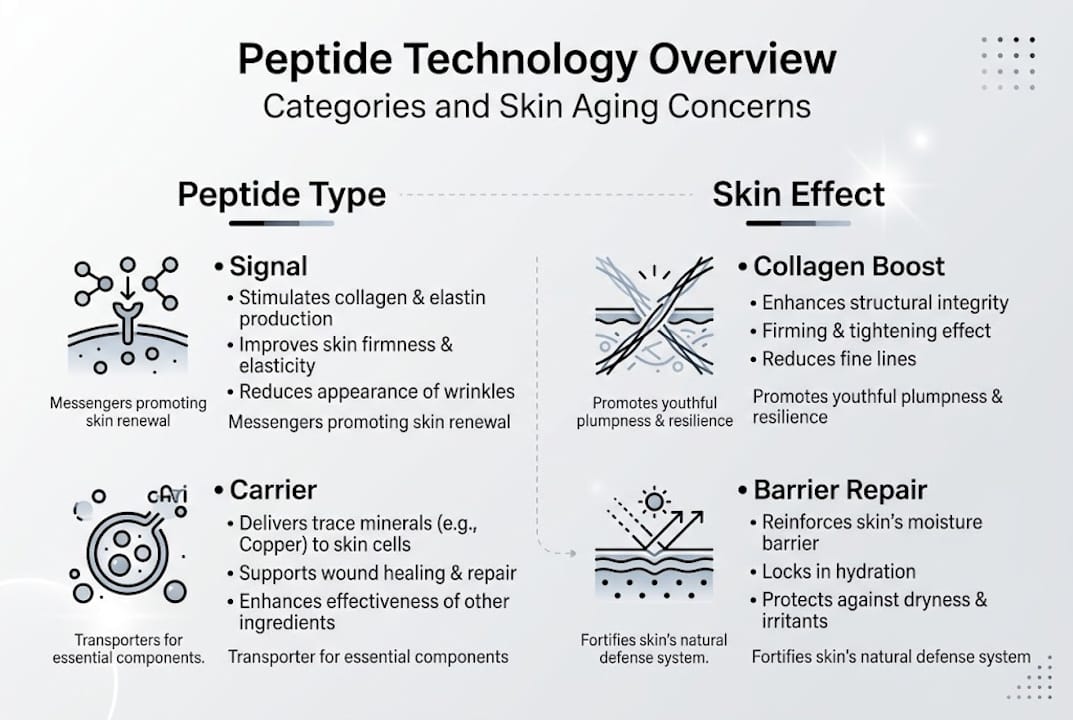
What makes peptide technology genuinely exciting is the specificity. Different peptides do different jobs, and how peptides work in a skincare context comes down to four major categories:
- Signal peptides: Trigger fibroblast activity to produce more collagen and elastin
- Carrier peptides: Deliver trace minerals like copper directly to repair sites
- Neurotransmitter-inhibitor peptides: Relax facial muscle movement to soften expression lines
- Enzyme-inhibitor peptides: Block the enzymes that break down existing collagen
Each category targets a distinct mechanism of skin aging. That’s why combining peptide types in a formulation is often more effective than relying on just one.
The numbers behind this category are striking. Over 120 peptides are currently in active cosmetic use, out of more than 300 listed for skincare applications. And cosmetic peptide demand is growing fast, driven by consumers who want results they can see, not just ingredient lists they can’t pronounce.
| Peptide category | Primary action | Aging concern addressed |
|---|---|---|
| Signal peptides | Stimulate collagen synthesis | Wrinkles, loss of firmness |
| Carrier peptides | Deliver copper for tissue repair | Damaged skin, dull tone |
| Neurotransmitter inhibitors | Reduce muscle contraction | Expression lines |
| Enzyme inhibitors | Block collagen-degrading enzymes | Progressive skin thinning |
Peptides are increasingly well-researched as peptide ingredients in cosmetics gain attention from dermatology researchers, which means you now have access to formulations that didn’t exist five years ago. The science-backed peptide benefits go well beyond surface-level hydration.
How peptide technology repairs and rejuvenates aging skin
Now that peptides’ science is clear, let’s see how they actually impact aging skin. The most studied signal peptide is Matrixyl (palmitoyl pentapeptide-4). Signal peptides like Matrixyl stimulate fibroblasts to ramp up collagen production, while carrier peptides like GHK-Cu actively facilitate cellular repair at sites of damage. These are not surface-level effects. They represent actual changes in cellular behavior.
Here is the stepwise process of what happens when these peptides meet your skin:
- Peptide molecules penetrate the stratum corneum and reach dermal receptors
- Signal peptides bind to fibroblast receptors, triggering collagen and elastin gene expression
- Copper carrier peptides escort copper ions to repair sites, activating tissue remodeling enzymes
- Neurotransmitter inhibitors block acetylcholine release at the neuromuscular junction, softening dynamic lines
- Enzyme inhibitors neutralize matrix metalloproteinases, slowing the breakdown of existing collagen
| Peptide | Mechanism | Result |
|---|---|---|
| Matrixyl (Pal-KTTKS) | Collagen gene expression | Fewer deep wrinkles |
| GHK-Cu | Copper-mediated tissue repair | Improved skin density |
| Argireline | Acetylcholine inhibition | Reduced expression lines |
| Leuphasyl | MMP inhibition | Preserved collagen matrix |
Clinical data backs this up. Meta-analysis of RCTs shows that peptide-based formulas produce significant improvements in wrinkle depth, skin hydration, and overall tone, with wrinkle reductions ranging from 15 to 45% over 12 weeks in some Matrixyl trials.
“The most effective results come from pairing the right peptide type with the right skin concern, not just adding any peptide to a formula.”
Pro Tip: If your primary concern is deep wrinkles and sagging, look for signal peptides high on the ingredient list. If your skin looks dull and damaged, prioritize GHK-Cu. Knowing which mechanism addresses your concern is the fastest route to proven anti-aging peptides that actually work for your situation.
Understanding peptide roles in repair and pairing that knowledge with your actual skin goals puts you miles ahead of randomly buying whatever is trending. The best peptides for skin are the ones matched to your specific aging concern.
Delivery methods: Making peptides work for your skin
But not all peptides reach your skin the same way, and that’s what determines if you’ll see results. A peptide that never penetrates past the outer layer of your skin is just an expensive moisturizer. How a peptide is formulated and delivered is as important as which peptide is used.
There are three main methods of creating cosmetic peptides:
- Chemical synthesis: Precise control over sequence, most common in topical serums
- Enzymatic hydrolysis: Breaking proteins into peptide fragments, common in oral collagen products
- Biotechnology: Fermentation-derived peptides with high purity and bioactivity
For topical products, the biggest challenge is the skin’s natural barrier. Peptides are water-soluble, which makes it hard for them to pass through the lipid-rich outer skin layers. This is where advanced delivery systems change everything.
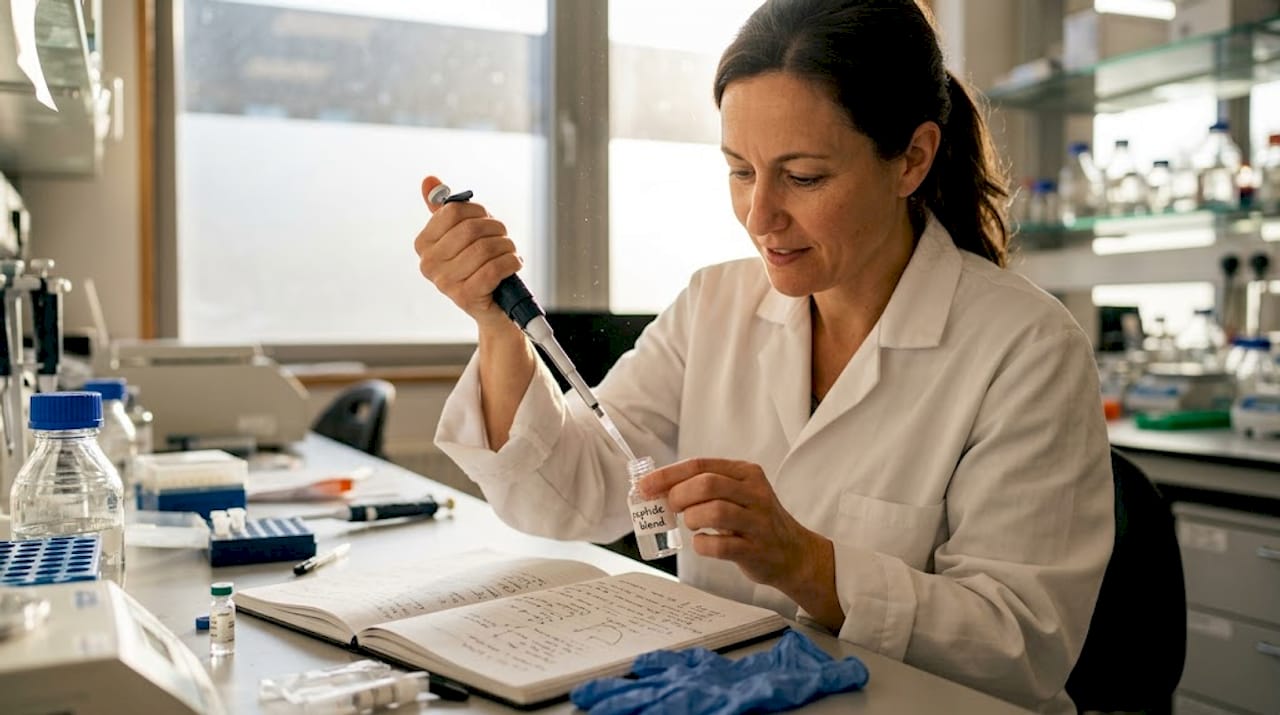
Liposomes, tiny fat-soluble spheres, encapsulate peptides and ferry them through the barrier. Propylene glycol improves solubility and skin absorption. Microneedling creates temporary micro-channels that allow much deeper delivery. Liposomes and microneedling can boost topical peptide delivery by up to 22 times compared to standard creams. That is not a trivial difference.
Oral peptides work through a completely different route. Oral hydrolyzed collagen shows the most robust meta-analysis evidence for overall skin improvement, including elasticity and hydration, because the peptides are absorbed through the gut and travel systemically to the skin.
Pro Tip: When using peptides for skin improvement, look for products that specify their delivery system. Liposomal or encapsulated peptides outperform basic formulations every time. And if you are applying peptide serums at home, layering them under occlusives can increase absorption without professional tools.
The delivery question is why science-backed serums always disclose their formulation approach. If a brand cannot tell you how their peptide gets into your skin, that is a red flag worth paying attention to.
Effectiveness, limitations, and real-world results
So, how much change can you truly expect, and what are the limitations everyone should know? Peptides work. That part is established. But they are not a replacement for medical procedures, and the gap between in-vitro lab results and real-world skin is something every informed consumer should understand.
In controlled clinical trials, large meta-analyses find an average improvement of 5 to 10% in skin elasticity, hydration, and wrinkle depth from peptide-based formulas. That is statistically significant and perceptible in the mirror, but it is not the dramatic transformation some brands imply.
The most common pitfalls:
- Trusting in-vitro results as if they translate directly to skin
- Buying products with peptides listed last on the label (too low a concentration)
- Expecting overnight results instead of gradual, cumulative improvement
- Using peptides in isolation without complementary actives
“Peptides are effective adjuncts but not anti-aging miracles.”
Physical barriers and peptidase breakdown mean many topical peptides degrade before reaching their target, which makes formulation quality the deciding factor between a product that works and one that does nothing. This is why the top peptide benefits are only realized through well-formulated products.
The most impactful practices for getting real results:
- Choose formulas with clinical evidence, not just trending ingredient names
- Pair peptides with retinoids and vitamin C for synergistic anti-aging effects
- Always use broad-spectrum sunscreen, since UV damage outpaces what any peptide can repair
- Set a 12-week evaluation window, because real cellular change takes time
- Rotate products seasonally based on your skin’s changing needs
Understanding what makes serums effective for anti-aging will help you separate the genuinely useful from the well-marketed.
Expert perspective: Peptides as part of real-world anti-aging strategies
Here is something most peptide guides won’t say directly: the conversation around peptides has been distorted by marketing. Brands position them as standalone solutions, and that framing quietly sets consumers up for disappointment.
The real value of peptides is relational. They work best as one layer in a stack, not as the whole stack. When you use signal peptides alongside retinoids, which accelerate cellular turnover, and broad-spectrum sunscreen, which prevents the damage peptides are trying to repair, the cumulative effect is meaningful. When you use peptides alone and expect transformation, you will feel let down by a product that actually works.
Expert consensus on science-backed peptide repair insights consistently supports this position: peptides are validated adjuncts, not replacements for a complete routine. The anti-aging strategy that works is not the one built around a single ingredient. It is built around consistency, smart ingredient pairing, and realistic expectations grounded in what the clinical evidence actually says.
Discover science-driven peptide solutions for your skin
Ready to put this knowledge to work for your skin? At Cellure, every formula starts with the clinical evidence, not the trend cycle. If you are looking for a structured starting point, the complete skin repair kit is designed to address firmness, tone, and cellular repair in one cohesive routine.
For targeted brightening and barrier support, the peptide serum for brighter skin combines tranexamic acid with active peptides for visible improvement in skin tone and radiance. Everything at science-driven skincare by Cellure is formulated with the delivery methods and ingredient concentrations that actually move the needle for aging skin. This is where science meets your skincare routine.
Frequently asked questions
Are peptides safe for all skin types?
Peptides are well-tolerated across all skin types, with minimal adverse events reported in published clinical trials, making them one of the safer active ingredient categories in anti-aging skincare.
How quickly will I see results from peptide skincare?
Visible improvements can appear as early as 4 weeks, but 15 to 45% wrinkle reduction in Matrixyl studies is typically measured at the 12-week mark, so patience and consistency are essential.
Which peptide is best for wrinkles?
Signal and carrier peptides have the strongest clinical support for anti-wrinkle effects, with Matrixyl and GHK-Cu consistently outperforming other peptide types in head-to-head studies.
Can topical peptides replace retinoids or sunscreen?
No. Stacking peptides with sunscreen and retinoids produces far better anti-aging outcomes than any single ingredient used alone, because each addresses a different mechanism of skin aging.
Do oral collagen peptides work better than creams?
Oral hydrolyzed collagen has the largest meta-analysis evidence base for overall skin improvement, particularly in hydration and elasticity, outperforming most topical-only approaches in current research.