


Science-backed serums: proven role in anti-aging skin
TL;DR:
- Serums deliver active ingredients deep into the skin, effectively targeting aging mechanisms.
- A combination of ingredients like hyaluronic acid, peptides, and growth factors yields best results.
- Consistent, layered routines over months are essential for visible skin rejuvenation.
If you’ve been relying on moisturizer alone to fight aging, you’re solving only part of the problem. Creams are designed to seal in hydration and protect the surface, but they rarely carry enough active ingredients to reach the deeper layers where collagen breaks down, cell turnover slows, and oxidative stress accumulates. Advanced serums change that equation entirely. With concentrated bioactives like peptides, retinoids, hyaluronic acid, and growth factors, they work at a cellular level to reverse visible signs of aging. This article breaks down exactly why serums are essential, which ingredients are worth your investment, and how to build a routine that delivers real results.
Table of Contents
- Why serums are essential in the fight against aging
- Decoding the actives: What ingredients actually work?
- Personalizing your anti-aging serum routine
- What to expect: Results and timelines from science-backed serums
- The real key: Why multi-ingredient, consistent serum routines outperform trends
- Ready to elevate your anti-aging regimen?
- Frequently asked questions
Key Takeaways
| Point | Details |
|---|---|
| Potent actives matter | Serums with high concentrations of proven ingredients outperform creams for tackling aging mechanisms. |
| Personalized routines work best | Matching serum actives to your unique skin needs and sensitivities yields superior and safer results. |
| Expect gradual transformation | Most people see hydration and plumping improve in 4 weeks and firmer, younger-looking skin in 2–3 months. |
| Consistency beats trends | Long-term, regular use of multiple evidence-based serums is more effective than switching for the latest ingredient. |
Why serums are essential in the fight against aging
Most people reach for a moisturizer first. It makes sense. Moisturizers feel good, they’re familiar, and they do serve a purpose. But if your goal is to reduce fine lines, restore firmness, and improve skin texture, a moisturizer alone simply won’t get you there. The molecular size of most cream formulations is too large to penetrate past the outer skin barrier. That means the actives, if they’re even present in meaningful amounts, stay on the surface.
Serums are built differently. Their lightweight, water-based structure allows them to absorb quickly and carry high-potency actives into the deeper layers of the skin where aging actually begins. As serum science explained shows, this delivery mechanism is what makes serums so effective. Serums deliver high concentrations of active ingredients like retinoids, vitamin C, hyaluronic acid, peptides, and growth factors directly into the skin to target aging mechanisms.
Here’s what serums can address that creams typically can’t:
- Collagen degradation: Peptides and growth factors signal fibroblasts to produce new collagen
- Dehydration at the cellular level: Hyaluronic acid binds water deep within the dermis
- Oxidative stress: Vitamin C and antioxidant serums neutralize free radical damage
- Slowed cell turnover: Retinoids accelerate the renewal cycle, bringing fresher cells to the surface
- Loss of elasticity: EGF (epidermal growth factor) and exosome serums stimulate structural repair
“The most effective anti-aging routines treat skin from the inside out. A serum is not a luxury add-on. It is the active treatment step.”
Pro Tip: Apply your serum to slightly damp skin right after cleansing. This improves absorption and helps actives penetrate more efficiently before you layer on a moisturizer.
Think of your moisturizer as the protective finish coat and your serum as the actual repair work happening underneath. Both matter, but only one is doing the heavy lifting when it comes to cellular rejuvenation. If you’re serious about turning back visible signs of aging, serums need to be the core of your regimen, not an afterthought.
Decoding the actives: What ingredients actually work?
Not all serums are created equal, and the ingredient list is where the real story lives. Let’s break down the heavy hitters and what the clinical data actually says about each one.
Hyaluronic acid (HA) is the most widely used hydrating active in anti-aging serums. It works by attracting and holding up to 1,000 times its weight in water, plumping the skin and smoothing fine lines almost immediately. Studies show up to 72.5% increase in hydration and a 93.7% reduction in dryness after just 4 weeks of consistent use. You can read more about hyaluronic acid benefits and why molecular weight matters for penetration depth.
Peptides are short chains of amino acids that act as messengers, telling your skin to produce more collagen and elastin. They’re particularly effective for improving density and firmness over time. For a detailed breakdown, explore the best peptide picks 2026 currently backed by clinical data.
Epidermal growth factor (EGF) is one of the most powerful regenerative actives available. Clinical data shows up to 70% decrease in fine lines and an 82% increase in skin density after 3 months of EGF serum use. These numbers are hard to ignore.
Retinoids remain the gold standard for accelerating cell turnover and reducing hyperpigmentation. They work by binding to retinoic acid receptors in skin cells, triggering faster renewal and increased collagen synthesis.
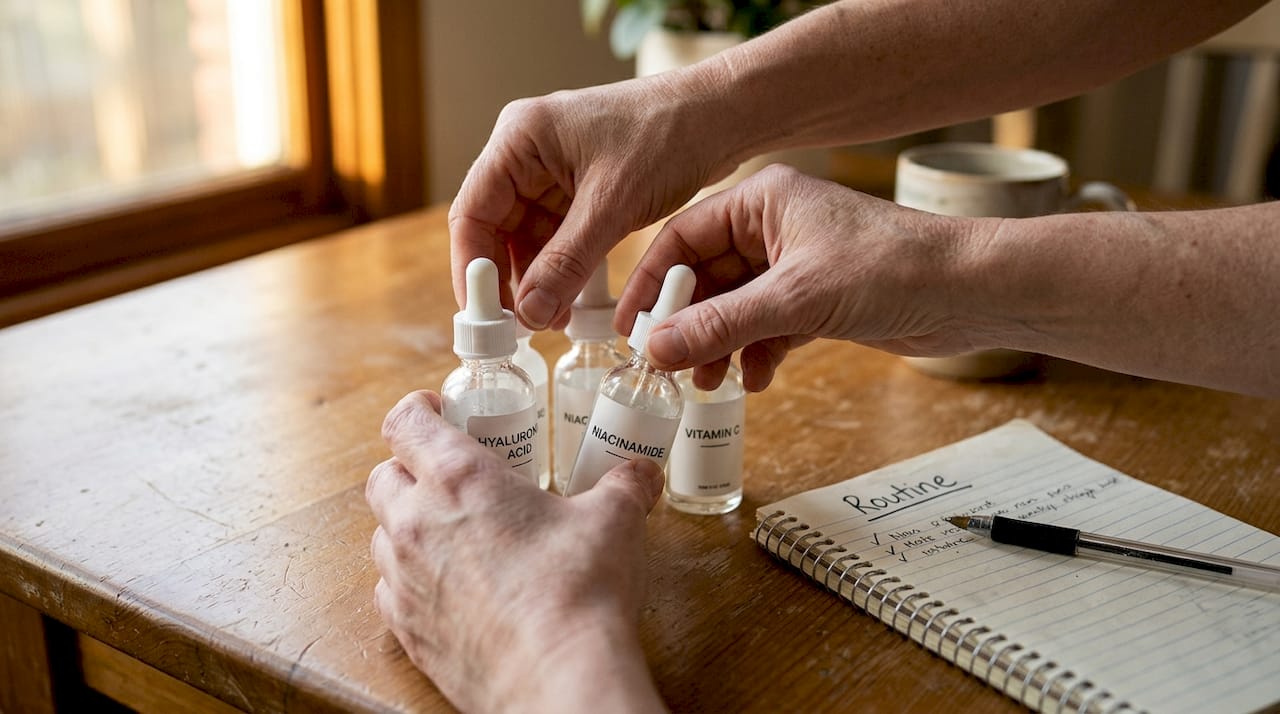
Exosomes are the newest frontier. These nano-sized vesicles carry growth signals between cells, making them exceptional for deep regeneration. The regenerative serums evidence is growing, though more large-scale trials are still needed.
| Ingredient | Primary benefit | Visible results timeline |
|---|---|---|
| Hyaluronic acid | Hydration, plumping | 2 to 4 weeks |
| Peptides | Firmness, density | 6 to 12 weeks |
| EGF (growth factors) | Collagen renewal, texture | 8 to 12 weeks |
| Retinoids | Cell turnover, tone | 4 to 12 weeks |
| Exosomes | Deep repair, elasticity | 4 to 8 weeks (early data) |
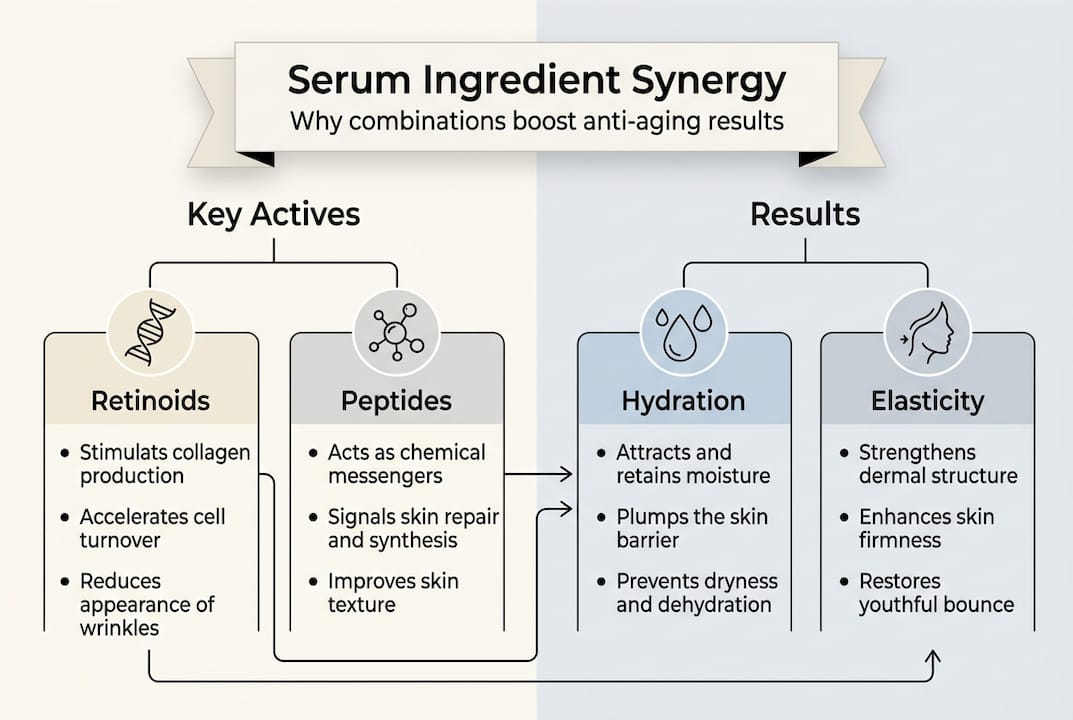
The key takeaway here is that no single ingredient handles everything. A well-formulated serum or a strategic combination of serums is always going to outperform a one-ingredient product. Multimodal approaches are where the science points, and that’s exactly where your routine should go.
Personalizing your anti-aging serum routine
Knowing which ingredients work is only half the equation. The other half is matching those ingredients to your specific skin type, age, and concerns. What works beautifully for one person can cause irritation or underwhelming results for another.
Here’s a practical framework for matching actives to your needs:
- Dehydrated or dull skin: Start with a high-quality hyaluronic acid serum. Add a peptide serum for layered support
- Loss of firmness or volume: Prioritize peptides and growth factors, which stimulate structural collagen renewal
- Sensitive or reactive skin: Avoid retinoids initially. Growth factor and peptide serums promote collagen production and cell renewal while being non-irritating for sensitive skin
- Resilient skin seeking maximum turnover: Retinoids are your strongest tool, ideally introduced gradually
- Post-procedure or compromised barrier: Exosome and growth factor serums support accelerated repair without stress
For those with reactive skin, the sensitive skin serum picks guide offers a curated starting point, and the gentle anti-aging tips resource walks through building a regimen without triggering flares.
Pro Tip: If you want to use both a retinoid and a growth factor serum, alternate them by night. Use growth factors on Monday, Wednesday, and Friday, and retinoids on Tuesday, Thursday, and Saturday. This prevents overload and lets each active do its job fully.
Layering order also matters. Apply serums from thinnest to thickest consistency. Hyaluronic acid first, then peptide or growth factor serums, then any occlusive moisturizer to lock everything in. Always finish your morning routine with SPF 30 or higher. UV exposure degrades collagen and undermines the work your actives are doing.
| Skin concern | Recommended actives | Approach |
|---|---|---|
| Dehydration | Hyaluronic acid | Daily, AM and PM |
| Firmness loss | Peptides, EGF | Daily, PM focus |
| Sensitivity | Growth factors, exosomes | Daily, gentle layering |
| Uneven tone | Retinoids, vitamin C | Alternate nights |
For more on how to get the most from peptide formulations, the peptide use tips resource is worth bookmarking.
What to expect: Results and timelines from science-backed serums
One of the biggest mistakes people make with serums is giving up too soon. Skin renewal is a biological process, not an instant fix. Understanding realistic timelines keeps you consistent and helps you evaluate whether a product is actually working.
Here’s what the clinical data and real-world use tell us about what to expect:
- Weeks 1 to 2: Improved hydration and a slight softening of texture. Hyaluronic acid serums deliver the fastest visible feedback here
- Weeks 3 to 4: Noticeable plumping, reduced surface dryness, and a more even skin tone beginning to emerge
- Weeks 6 to 8: Peptide and growth factor serums begin showing measurable improvements in firmness and density
- Months 2 to 3: Significant reduction in fine lines, improved elasticity, and visible collagen renewal for those using EGF or retinoid-based serums
“The most transformative results come not from any single product but from sustained, evidence-based routines applied with patience.”
For exosome-based serums, short-term improvements in hydration, elasticity, and wrinkle depth are already showing promise in early clinical reviews, though larger randomized controlled trials are still underway. The serum efficacy data resource covers what current research confirms and where the science is heading.
Consistency is the non-negotiable factor. Missing applications, switching products too frequently, or skipping SPF all slow your results. Think of your serum routine the way you’d think about physical training: the compound effect of daily effort is what creates lasting change, not one intense session.
Also worth noting: subtle initial changes are normal and expected. If your skin feels more hydrated and looks slightly more luminous after two weeks, that’s the process working. Don’t mistake early subtlety for ineffectiveness.
The real key: Why multi-ingredient, consistent serum routines outperform trends
Here’s something the skincare industry rarely says out loud: the hero ingredient model is mostly a marketing construct. Every few years, a new compound gets positioned as the breakthrough that changes everything. Exosomes today. Bakuchiol before that. Retinol before that. The cycle repeats.
What actually drives results, according to the research, is synergy and routine. No single serum suffices. The most consistent clinical outcomes come from evidence-based layering of multiple proven actives, applied regularly over months, not days.
Aging is a multifactorial process. Collagen loss, dehydration, oxidative damage, and reduced cellular signaling all happen simultaneously. No single molecule addresses all of those pathways at once. A peptide serum builds structure. A hyaluronic acid serum maintains hydration. A growth factor serum drives renewal. Together, they cover the full spectrum of what aging skin needs.
The discipline of showing up daily with your routine, protecting your skin with SPF, and resisting the urge to chase the next trending ingredient is what separates people who see real change from those who cycle endlessly through products without results. Trust the science. Trust the process.
Ready to elevate your anti-aging regimen?
You now have a clear picture of what serums can do and how to use them strategically. The next step is putting that knowledge into practice with formulations you can actually trust.
At Cellure, every product is built around clinically validated bioactives, including peptides, growth factors, and regenerative compounds that work together to address aging at the cellular level. The Complete Skin Repair Kit is designed for those ready to commit to a full, multi-ingredient regimen, while the Tranexamic Acid Peptide Serum targets uneven tone and firmness with precision. Both are formulated for real results, not just feel-good textures. Explore Cellure’s science-backed solutions and find the right starting point for your skin.
Frequently asked questions
How soon can I expect to see results from using anti-aging serums?
Most users notice improved hydration and plumpness within 4 weeks, with 72.5% hydration gains documented for hyaluronic acid serums. Firmness and fine line reduction from EGF serums typically become visible over up to 3 months of consistent use.
Which serum ingredient is best for sensitive, aging skin?
Growth factor and peptide serums are typically non-irritating and clinically shown to promote collagen production and cell renewal, making them the top choice for sensitive skin types.
Can I use more than one serum in my anti-aging routine?
Yes, layering or alternating serums that target different aging processes is ideal. No single serum suffices for the full spectrum of aging concerns, and multimodal approaches consistently outperform single-ingredient routines.
Are newer exosome serums as effective as retinoids or peptides?
Exosomes show early promise for hydration and elasticity improvements, but established actives like retinoids, hyaluronic acid, and peptides still carry more clinical evidence and longer safety records at this stage.
Recommended
Share