


Top peptides in skincare: proven anti-aging picks 2026
TL;DR:
- Not all peptides are equally validated; choose those with strong clinical evidence like Matrixyl 3000 and GHK-Cu.
- Topical peptides target specific areas, while oral collagen improves overall skin hydration and elasticity.
- Building a routine with multiple well-formulated peptides and consistent use yields the best anti-aging results.
Walk into any skincare aisle or scroll through a product page and you’ll find peptide claims everywhere. The problem? The peptide ingredient list has grown so fast that even informed shoppers struggle to separate what’s clinically validated from what’s just clever marketing. Not all peptides are created equal, and choosing the wrong ones means spending real money on minimal results. This article breaks down exactly which peptides have genuine clinical backing, how each one works, and how to build a personalized routine that addresses your specific aging concerns, whether that’s deep wrinkles, sagging, or uneven tone.
Table of Contents
- How to evaluate peptides in skincare
- The definitive peptides in skincare list: Ingredient profiles and clinical effects
- Comparing peptide types: Topical vs oral and mechanism breakdown
- Tailoring your peptide routine: Situational picks and combining for best effect
- The reality behind peptide hype: What actually matters for real results
- Clinically proven peptide solutions with Cellure
- Frequently asked questions
Key Takeaways
| Point | Details |
|---|---|
| Clinically proven peptides | Matrixyl 3000, GHK-Cu, and Argireline show the strongest data for visible wrinkle reduction and firmness. |
| Topical vs oral formats | Oral peptides improve hydration and elasticity more systemically, while topical peptides target local concerns. |
| Combining for synergy | Mixing different peptide types and using them with retinoids and sunscreen provides the best anti-aging results. |
| Evidence-based selection | Always choose peptides with clinical trial support, clear labeling, and appropriate concentrations. |
How to evaluate peptides in skincare
Before you can choose the right peptide, you need to understand what you’re actually looking at on a label. Peptides fall into four main functional categories, and each one works differently in your skin.
Signal peptides tell your skin cells to produce more collagen, elastin, or other structural proteins. They’re the most studied category for anti-aging. Carrier peptides deliver trace minerals like copper directly into skin tissue, supporting repair and regeneration. Neurotransmitter inhibitor peptides work similarly to Botox by relaxing facial muscles to soften expression lines. Enzyme inhibitor peptides slow down the breakdown of collagen and elastin by blocking the enzymes that degrade them.
Understanding how peptides work in skincare is the foundation for making smart choices. According to topical peptides explained, the delivery vehicle matters as much as the peptide itself. A poorly formulated product can render even the most effective peptide useless before it reaches the dermis.
When scanning an ingredient list, look for these signals of a quality formula:
- The peptide appears in the top half of the ingredient list (not buried near preservatives)
- The formula includes penetration enhancers like niacinamide or hyaluronic acid
- The product avoids high concentrations of alcohol, which can destabilize peptides
- Multiple peptide types are combined to target different aging mechanisms
Clinical data consistently shows that signal peptides are most effective for wrinkle reduction among all peptide categories. If you’re in the 30 to 55 age range and focused on visible improvement, signal peptides should be your starting point. The peptide benefits for skin extend beyond wrinkles too, including firmness, hydration, and barrier support.

Pro Tip: Prioritize signal peptides like Matrixyl 3000 and GHK-Cu when building your routine. They have the strongest clinical track record for anti-aging in your age group.
One more warning: watch for products that list a peptide on the front label but bury it at the bottom of the ingredient list. This signals an under-dosed formula designed to ride the peptide trend without delivering real results.
The definitive peptides in skincare list: Ingredient profiles and clinical effects
With the evaluation criteria clear, here’s a breakdown of the most clinically validated peptides you’ll encounter, what they do, and who they’re best suited for. Clinical studies on peptides confirm that ingredients like Matrixyl, GHK-Cu, Argireline, and SNAP-8 each bring distinct, measurable benefits.
| Peptide | Category | Key clinical result | Best for |
|---|---|---|---|
| Palmitoyl Pentapeptide-4 (Matrixyl) | Signal | Boosts collagen I and III synthesis | General firmness, fine lines |
| Matrixyl 3000 | Signal | 45% wrinkle volume reduction in 2 months | Deep wrinkles, volume loss |
| GHK-Cu | Carrier | 70% collagen increase in treated skin | Repair, thinning skin, dullness |
| Argireline (Acetyl Hexapeptide-3) | Neurotransmitter inhibitor | 30% wrinkle reduction in expression areas | Forehead, crow’s feet |
| SNAP-8 | Neurotransmitter inhibitor | Up to 63% reduction in wrinkle depth | Dynamic expression lines |
| Matrixyl Synthe’6 | Signal | Targets 6 structural skin proteins | Sagging, structural loss |
| Syn-Ake | Neurotransmitter inhibitor | Reduces muscle contraction intensity | Frown lines, perioral area |
| OS-01 | Signal/repair | Activates longevity pathways in skin cells | Cellular aging, texture |
“Matrixyl 3000 reduced wrinkle volume by 45% in just 2 months of use, making it one of the most well-documented signal peptides in cosmetic science.”
Here’s a quick reference for matching peptides to your primary concern:
- Deep static wrinkles: Matrixyl 3000, Matrixyl Synthe’6
- Expression lines: Argireline, SNAP-8, Syn-Ake
- Skin repair and thinning: GHK-Cu
- Overall cellular aging: OS-01, GHK-Cu
- Firmness and structure: Palmitoyl Pentapeptide-4, Matrixyl Synthe’6
Explore best skin peptides for a deeper look at how these ingredients perform in real-world formulations. The top skin repair peptides like GHK-Cu are especially worth noting for anyone dealing with skin that looks tired or structurally compromised. You can also read more about peptides in skin repair to understand the biological mechanisms behind each ingredient’s action. For those curious about oral options, oral collagen peptide studies add another layer of evidence to the overall picture.
Comparing peptide types: Topical vs oral and mechanism breakdown
Not all peptides are applied to the skin. Oral collagen peptides have gained significant traction, and the clinical evidence now gives us a clearer picture of when each format wins.
| Factor | Topical peptides | Oral peptides |
|---|---|---|
| Mechanism | Directly signal skin cells or block enzymes at the surface | Absorbed systemically, stimulate fibroblasts indirectly |
| Hydration improvement | Moderate, localized | Strong, whole-face and body |
| Wrinkle reduction | Targeted, area-specific | Diffuse, gradual |
| Best use case | Specific zones (eyes, forehead, nasolabial) | Overall skin quality, elasticity |
| Limitations | Penetration depth, formulation dependent | Slower onset, less targeted |
| Safety | Excellent, minimal irritation | Excellent, well-tolerated |
A 2026 PMC review found that oral peptides outperform topical for systemic hydration improvement, while topical remains the better choice for targeted application in specific zones. Neither format is universally superior. They address different needs.
Here’s a simple decision pathway to help you choose:
- Start with a topical peptide serum targeting your primary concern (wrinkles, firmness, or repair)
- Assess results after 8 to 12 weeks of consistent use
- If you want broader skin quality improvement across your entire face and body, add an oral collagen peptide supplement
- Monitor changes in hydration, elasticity, and texture separately for each format
- Adjust based on results, not marketing claims
Formulation matters enormously for topical products. Research on topical peptide signal decay shows that peptides can lose efficacy when combined with certain preservatives or when pH is mismatched. This is why choosing well-formulated products matters more than just checking for a peptide name on the label. Learn more about using peptides for firmness and the practical details of applying peptide serums correctly.
Pro Tip: Combining a topical peptide serum with an oral collagen supplement creates synergistic effects. Topical targets specific zones while oral supports the broader skin matrix from within.
Tailoring your peptide routine: Situational picks and combining for best effect
Knowing which peptides exist is one thing. Building a routine that actually works for your specific concerns is another. Combining peptides can address multiple aging mechanisms simultaneously and may enhance synergy for users aged 30 to 55, making combination approaches more effective than single-ingredient products.
Here’s how to match your routine to your concerns:
- Deep wrinkles and volume loss: Lead with Matrixyl 3000 or Matrixyl Synthe’6 as your primary serum, applied morning and evening. Add GHK-Cu for repair support.
- Expression lines around eyes and forehead: Use Argireline or SNAP-8 concentrated serums in those zones. Apply before moisturizer for best absorption.
- Dryness and barrier damage: GHK-Cu combined with hyaluronic acid and ceramides addresses both structural repair and surface hydration.
- Dullness and uneven tone: OS-01 or GHK-Cu paired with a brightening active like tranexamic acid targets cellular aging and pigmentation together.
- General anti-aging maintenance (30s): Palmitoyl Pentapeptide-4 in a daily moisturizer is a low-commitment, effective starting point.
Peptides work best when they’re part of a complete routine, not isolated heroes. They enhance the effects of retinoids and protect the gains made by sunscreen. Think of them as the precision layer in your routine, working alongside your proven basics rather than replacing them. Supporting cellular repair with peptides at the right stage of your routine amplifies every other active you’re using.
When trialing a new peptide product, introduce it one at a time over two weeks. This lets you identify any sensitivity and accurately attribute any improvement. Patience is non-negotiable. Most signal peptides require 8 to 12 weeks of consistent use before measurable changes appear in clinical settings.
Pro Tip: Pair peptides with retinoids at night and sunscreen every morning. Peptides boost collagen production while retinoids accelerate cell turnover and sunscreen prevents new damage. Together they cover all three pillars of anti-aging.
The reality behind peptide hype: What actually matters for real results
Here’s something most peptide content won’t tell you: the clinical data is real, but the numbers come from controlled studies with precise concentrations and delivery systems. Real-world results are typically more modest. Topical improvement ranges from 15 to 45%, oral is more consistent but indirect, and the best outcomes come from comprehensive routines, not a single miracle ingredient.
The peptide market is flooded with products that name-drop Matrixyl or GHK-Cu while under-dosing them to the point of irrelevance. The brands that actually deliver results are the ones that formulate with clinical concentrations, pair peptides intelligently, and don’t promise overnight transformation.
What we’ve seen consistently is that users who treat peptides as a long-term skin investment rather than a quick fix are the ones who report genuine, sustained improvement. Gradual collagen rebuilding doesn’t photograph dramatically at week two. But at month three or four, the difference in firmness and texture becomes undeniable. Explore science-backed peptide picks to focus your investment on ingredients with real evidence behind them.
Skip the newest peptide with one small study. Stick to the ones with years of replicated data.
Clinically proven peptide solutions with Cellure
If you’re ready to move from research to results, Cellure formulates with the exact peptides this article covers, at concentrations that match the clinical evidence. Every product is designed for the 30 to 55 age group, with gentle, bioactive blends that work with your skin’s repair systems rather than overwhelming them.
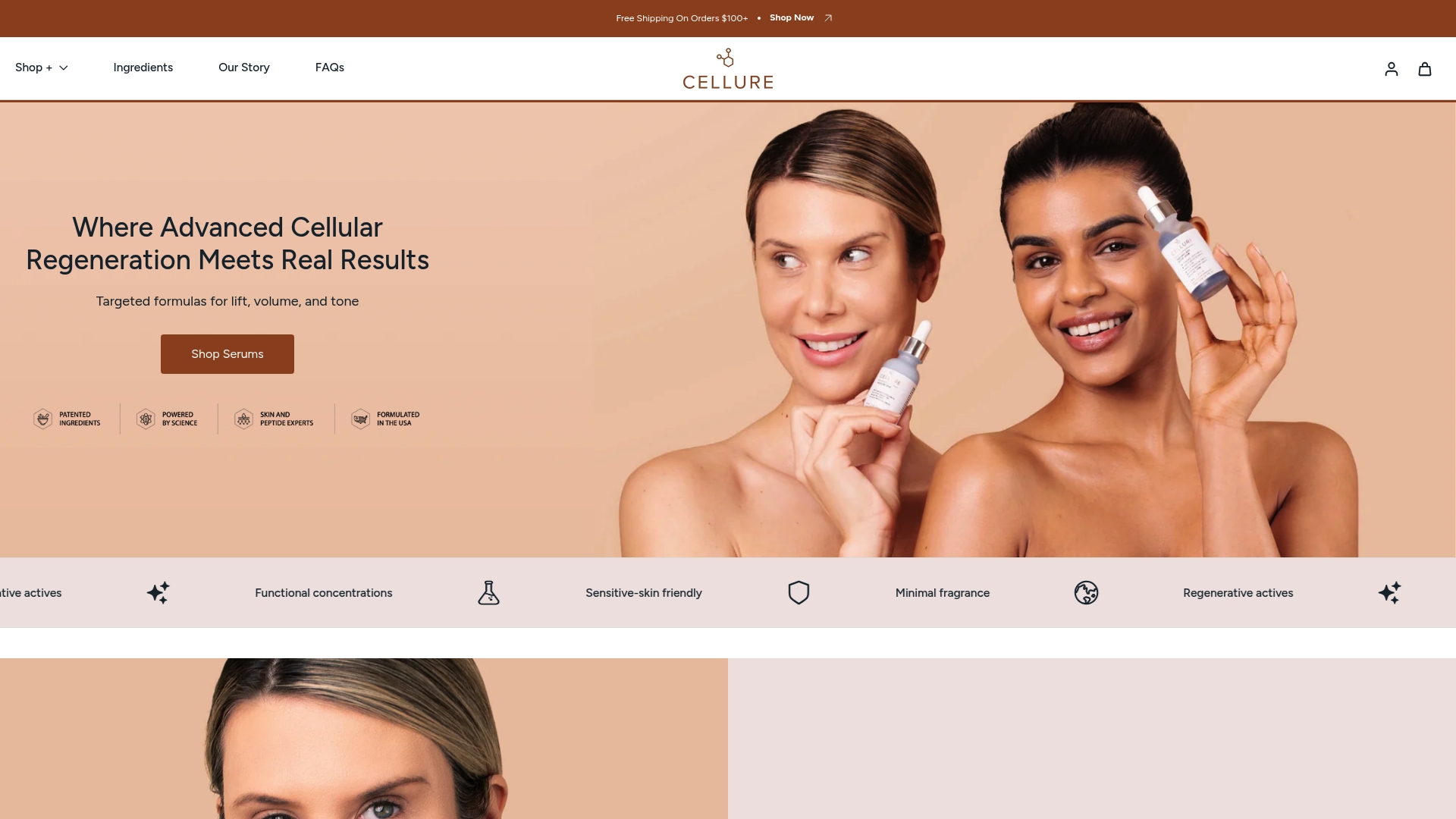
The Complete Skin Repair Kit combines signal and carrier peptides in a targeted protocol for firmness and repair. For brightening and tone correction alongside peptide action, the Tranexamic Acid Peptide Serum addresses dullness and uneven color at the cellular level. Browse the full range of advanced peptide skincare at Cellure and find the formulation that fits your specific aging concerns.
Frequently asked questions
What are the best peptides for reducing wrinkles?
Matrixyl 3000, GHK-Cu, and Argireline are the most clinically proven options, with wrinkle volume reductions of 45%, 70% collagen increase, and 30% wrinkle reduction respectively in clinical trials.
Are oral collagen peptides better than topical peptides?
Neither is universally better. Oral peptides outperform topical for whole-face hydration and elasticity, while topical peptides deliver more targeted results in specific zones like the eyes or forehead.
How can I combine peptides for the best results?
Pair Matrixyl 3000 with Argireline or GHK-Cu to target multiple aging pathways simultaneously, and always include daily sunscreen and a retinoid for a complete anti-aging routine.
Are peptides in skincare safe for daily use?
Yes. Both topical and oral peptides are well-tolerated with minimal side effects, as confirmed by clinical safety reviews across multiple studies.