


How to boost skin firmness: proven steps for youthful skin
TL;DR:
- Loss of skin firmness results from collagen and elastin decline due to aging and environmental damage. Effective strategies include using retinol, peptides, oral hyaluronic acid, and professional treatments like microneedle radiofrequency for visible improvements. Consistent, evidence-based routines targeting multiple layers of skin biology are essential for reversing or slowing skin laxity.
You notice it first in the mirror on a Tuesday morning. The jawline looks softer than it used to. The skin along your cheekbones feels less resilient when you press it. This isn’t your imagination, and it isn’t vanity. Loss of skin firmness is a measurable biological process that accelerates through your 30s, 40s, and 50s, and the good news is that research now points to specific, layered strategies that genuinely reverse it. This article walks you through exactly what’s happening under the surface, which ingredients and treatments have real evidence behind them, and how to build a routine that produces visible results.
Table of Contents
- Understand what causes loss of skin firmness
- Gather what you need: Key ingredients, supplements, and treatments
- How to boost skin firmness: Proven step-by-step routine
- Check your progress and avoid common mistakes
- Why ‘one-size-fits-all’ doesn’t work for boosting skin firmness
- Discover advanced solutions for skin firmness
- Frequently asked questions
Key Takeaways
| Point | Details |
|---|---|
| Target cellular changes | Boosting skin firmness means supporting collagen and elastin while reducing damage and cellular aging. |
| Prioritize proven ingredients | Use hyaluronic acid, retinol, and peptides as research-backed building blocks in your daily routine. |
| Combine daily care and treatments | Blending a smart home routine with periodic clinical treatments produces the best results. |
| Track progress every 12 weeks | Tangible improvements usually show in about three months as documented by clinical research. |
Understand what causes loss of skin firmness
Before you can fix something, you need to know what broke it. Skin firmness depends primarily on two structural proteins: collagen, which provides the scaffolding, and elastin, which gives skin its snap-back quality. Both are produced by fibroblasts, specialized cells that live in the dermis. After 30, fibroblast activity gradually slows, and the body produces roughly 1% less collagen per year. By your mid-40s, that cumulative deficit becomes visible as sagging, hollowing, and the kind of skin texture that no longer bounces back with a pinch.
Understanding skin firmness science reveals that the decline isn’t purely genetic. External factors accelerate the process significantly:
- UV radiation is the single biggest environmental driver. It degrades collagen fibers directly and triggers enzymes called matrix metalloproteinases that break down the extracellular matrix.
- Chronic pollution exposure introduces oxidative stress that damages fibroblasts and shortens their functional lifespan.
- Poor sleep disrupts the cortisol cycle, and elevated cortisol breaks down collagen.
- Smoking reduces blood flow to the skin and dramatically increases free radical damage.
- Repetitive facial movement and gravity both contribute to structural displacement over decades.
There’s also a deeper cellular mechanism at play. Fibroblasts don’t just slow down. Some become “senescent,” meaning they enter a dysfunctional state where they stop producing collagen but actively secrete inflammatory compounds that damage neighboring cells. This is called the senescence-associated secretory phenotype, or SASP, and it accelerates visible aging beyond what simple protein loss explains. Microneedle radiofrequency reduces senescent fibroblasts and increases collagen and elastin production more effectively than standard microneedling alone, making it one of the most scientifically significant developments in advanced skin laxity treatment.
The takeaway here is that skin firmness loss is multifactorial. Addressing only one cause, whether that’s dryness or UV damage, leaves the others unchecked. Effective strategies work on multiple layers simultaneously.
Gather what you need: Key ingredients, supplements, and treatments
To act on skin aging, you need to assemble the right tools. Not everything marketed as “firming” has data behind it. Here’s what the research actually supports.
Topical ingredients with strong evidence
The most evidence-backed topical ingredients for firmness are retinol, peptides, and vitamin C. Retinol (a form of vitamin A) is arguably the gold standard. It upregulates collagen gene expression, speeds cellular turnover, and repairs photoaged skin structure at the dermal level. Across multiple randomized controlled trials, retinol is robust for restoring firmness in a way that few other topical ingredients match. Peptides, particularly signal peptides like palmitoyl pentapeptide-4, communicate directly with fibroblasts and instruct them to produce more collagen. Learning which best peptides for skin have the strongest clinical support helps you prioritize your routine.
Oral supplements worth considering
Oral hyaluronic acid at 120 to 150mg per day improves dermal density, elasticity, and hydration in just 12 weeks, according to a randomized controlled trial. This is notable because hyaluronic acid isn’t just a moisturizer. When taken orally, it reaches the dermis and improves the structural environment around fibroblasts. Understanding about hyaluronic acid as both a topical and an internal tool opens up a more complete approach to skin hydration and firmness.

| Ingredient | Form | Evidence level | Primary benefit |
|---|---|---|---|
| Retinol | Topical | Very strong | Collagen synthesis, cellular renewal |
| Peptides | Topical | Strong | Fibroblast signaling, firmness |
| Hyaluronic acid | Oral supplement | Strong (RCT) | Elasticity, hydration, dermal density |
| Vitamin C | Topical | Strong | Collagen crosslinking, antioxidant |
| Collagen peptides | Oral supplement | Moderate | Elasticity (varies by study quality) |
| Microneedle RF | Professional | Very strong | Senescent cell reduction, collagen boost |
Clinical and professional treatments
For moderate to advanced laxity, topical routines alone often aren’t enough. Microneedle radiofrequency combines the micro-injury stimulus of needling with thermal energy that penetrates deep into the dermis and subcutis. The thermal energy specifically targets and reduces senescent fibroblasts while triggering significant new collagen and elastin formation. The result is firmer, denser skin with measurably improved elasticity. It outperforms standard microneedling, laser toning, and many injectable treatments for structural firmness improvement.
Collagen supplements are popular but their evidence is more complicated. A meta-analysis found a statistically significant effect on elasticity (standardized mean difference of 0.61), but when researchers filtered for high-quality and independent studies, the effect dropped to near zero. This doesn’t mean collagen supplements are useless, but it does mean you shouldn’t rely on them as your primary strategy. Reading the full picture of skin rejuvenation ingredients helps you build a routine based on evidence rather than marketing.
Pro Tip: When choosing a retinol product, start at 0.25% to 0.3% if you’re new to it, or have sensitive skin. Jumping straight to 1% causes irritation that interrupts your routine far more than a slower titration would.
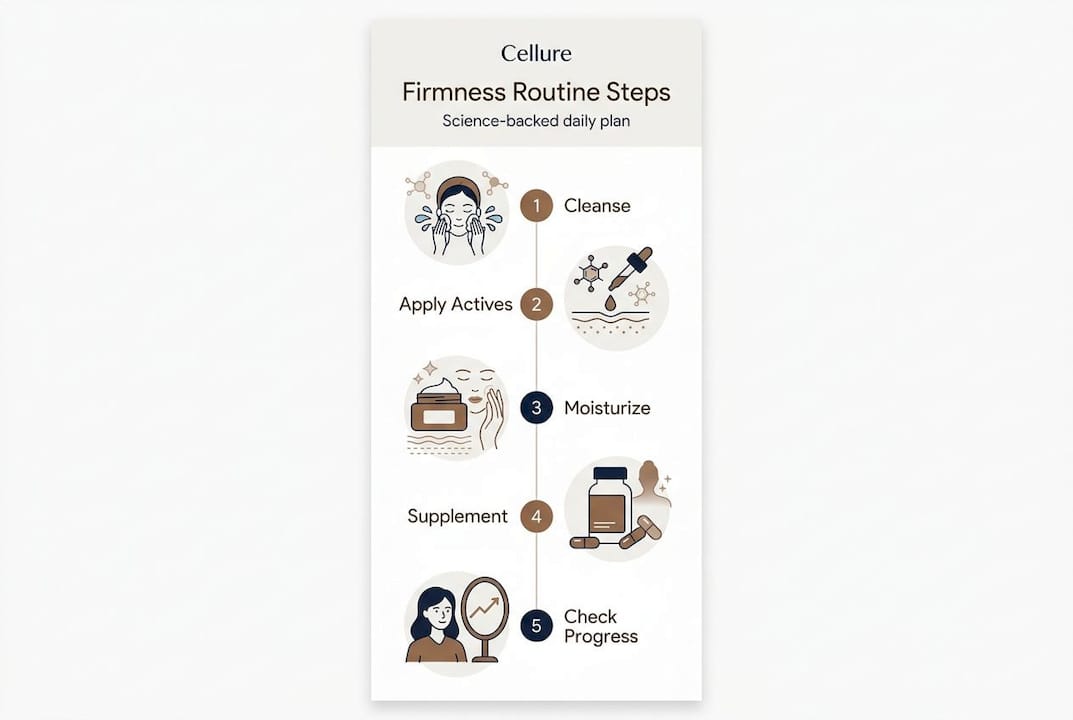
How to boost skin firmness: Proven step-by-step routine
With your ingredients and treatments lined up, it’s time to follow a structured routine proven to deliver results. Consistency and correct layering matter as much as ingredient selection.
Morning routine
- Cleanse gently. Use a low-pH, non-stripping cleanser. Morning cleansing removes overnight product residue and prepares the skin barrier.
- Apply a vitamin C serum. Use an L-ascorbic acid formula at 10 to 20%. Apply to damp skin and allow 60 seconds to absorb. Vitamin C is most effective in the morning because it neutralizes UV-induced free radicals in real time.
- Follow with a peptide serum. Layer peptides on top. Signal peptides and carrier peptides work best in leave-on formulas where they can interact with fibroblast receptors. Following good guidance on using peptides for firmness prevents common layering mistakes.
- Moisturize. Lock in actives with a ceramide-based moisturizer that supports barrier integrity. A compromised barrier accelerates water loss and reduces the effectiveness of everything underneath.
- SPF 30 to 50, broad spectrum. Non-negotiable. UV damage is the leading cause of premature collagen degradation. No firming routine works in parallel with daily UV exposure.
Evening routine
- Double cleanse if you wear SPF or makeup. Start with an oil or balm cleanser, follow with your low-pH cleanser.
- Apply retinol. Use 2 to 3 nights per week when starting, building to 4 to 5 nights over several months. Apply to dry skin to slow absorption and reduce irritation risk. Retinol is your most powerful nighttime collagen rebuilder.
- Follow with a hydrating peptide layer. Peptides and retinol work well together, as peptides help offset some of the initial skin sensitivity that retinol causes during the adjustment period.
- Seal with a nourishing night moisturizer. Ingredients like niacinamide, squalane, and shea butter support overnight repair.
Daily supplement
Take 120 to 150mg of oral hyaluronic acid with your morning meal. Oral hyaluronic acid improves dermal density and elasticity within 12 weeks, based on a randomized placebo-controlled trial. This is one of the most straightforward, evidence-backed additions to any firming routine. Many people are already aware of topical hyaluronic acid but overlook the systemic benefits of the oral form.
Periodic professional treatments
Schedule microneedle radiofrequency treatments every 3 to 4 months for moderate laxity, or as advised by your dermatologist for more advanced cases. These sessions dramatically amplify the collagen-building signals your daily routine creates, and they address the senescent fibroblast problem that topical products cannot reach on their own.
Understanding science-backed skin firmness steps and how actives work together helps you adjust your routine intelligently as your skin responds over time. The goal is a layered system where each component addresses a different piece of the firmness puzzle. To understand how each ingredient functions at the cellular level, reviewing top skin repair ingredients gives you a useful framework for decision-making.
| Routine level | Time investment | Expected outcome (12 weeks) |
|---|---|---|
| Topicals only (retinol + peptides + vitamin C) | 5 to 10 minutes daily | Mild to moderate firmness improvement |
| Topicals + oral hyaluronic acid | 5 to 10 min daily + supplement | Moderate firmness and elasticity gains |
| Full protocol (topicals + supplement + RF) | Daily routine + quarterly treatment | Significant visible firmness improvement |
Pro Tip: Never layer retinol with a high-percentage vitamin C (over 15%) in the same application. The pH difference reduces the effectiveness of both. Morning for vitamin C, evening for retinol. This simple separation makes both ingredients work harder.
Check your progress and avoid common mistakes
Setting a routine is only half the battle. Measurement and adjustment ensure you don’t plateau or backslide.
How to track changes over 12 weeks
- Baseline photos: Take consistent photos every 4 weeks under the same lighting. Use a neutral background and hold your phone at the same distance. Subtle changes in skin texture and jawline definition are far easier to spot in side-by-side comparisons than in real-time mirror assessments.
- Pinch test: Gently pinch the skin on the back of your hand or cheekbone area and release. Skin that returns faster is more elastic. Not scientifically precise, but useful as a qualitative daily marker.
- Texture feel: Run your fingertips along your cheekbones and jawline each morning before applying products. Over weeks, firmer skin feels denser and more resistant under gentle pressure.
Most people using oral hyaluronic acid, retinol, and peptides see measurable elasticity changes at 12 weeks versus placebo. The key is not giving up at week 6 when changes are subtle.
Common mistakes that stall progress
- Skipping daily SPF. This is the single biggest mistake. Every UV exposure undoes collagen rebuilding in real time.
- Inconsistent use of retinol. Using retinol twice a week instead of consistently 4 to 5 nights significantly reduces its long-term collagen-building impact.
- Over-layering actives. Adding too many acids, exfoliants, and strong actives at once creates barrier damage that actually worsens firmness and sensitivity.
- Expecting overnight results. Skin structural changes happen at the fibroblast level and take weeks to months to reflect at the surface.
Following a reliable cellular repair skincare guide reduces guesswork significantly. If you’ve been consistent for 16 weeks and see no measurable change, consult a board-certified dermatologist. Persistent laxity sometimes has hormonal or metabolic factors that a home routine cannot fully address. Working with clinically supported skincare approaches ensures your professional consultations are also grounded in evidence.
Pro Tip: Set a calendar reminder at your 12-week mark to review your baseline photos. Many people stop a routine just before it would have shown results simply because they weren’t tracking progress systematically.
Why ‘one-size-fits-all’ doesn’t work for boosting skin firmness
Here’s the view that most skincare content skips over. Ingredient lists and step-by-step routines are valuable, but they become a trap if you follow them rigidly without accounting for how your specific skin biology responds. Skin aging isn’t uniform. Hormonal shifts, melanin levels, baseline collagen density, and even microbiome composition affect how quickly your skin responds to retinol, peptides, or radiofrequency treatments.
The collagen supplement example is instructive here. Collagen supplements show a significant overall effect in meta-analyses, with a standardized mean difference of 0.61 for elasticity. But when you strip out industry-funded studies and keep only independent, high-quality trials, the effect disappears. Does that mean collagen supplements definitely don’t work? Not necessarily. It may mean the effect is real but smaller than marketed, or that certain populations respond while others don’t. The honest answer is: we don’t yet know who responds. Retinol, by contrast, shows consistent results across independent, industry, and high-quality trials. That’s a meaningful difference in confidence level.
The broader principle is that you should treat a skin firmness routine like a clinical experiment. Start with the highest-confidence interventions first: retinol, peptides, SPF, and oral hyaluronic acid. Add others incrementally. Track results objectively. Adjust when something isn’t working, rather than stacking more products hoping one will land. Following the evidence on proven anti-aging peptides keeps you anchored to what’s actually been demonstrated rather than what’s currently trending.
Generic routines get generic results. Precision matters, and precision starts with understanding the evidence behind each ingredient rather than trusting marketing claims at face value.
Discover advanced solutions for skin firmness
The strategies in this article, from peptide layering to oral hyaluronic acid supplementation and microneedle radiofrequency, work because they address the actual biology of aging skin. If you’re ready to move from strategy to action with targeted formulations built around this exact science, Cellure has developed products for exactly this purpose.
Cellure’s complete skin repair kit brings together clinically supported bioactive ingredients including peptides, polynucleotides, and tranexamic acid into a targeted system designed to restore elasticity and firmness at the cellular level. Every formulation behind advanced cellular regeneration at Cellure is grounded in the same regenerative science this article covers, designed for real results across all skin types. To understand the ethos driving every product decision, learn more about Cellure and the science behind the brand’s approach to skin renewal.
Frequently asked questions
How long does it take to see results from skin firming routines?
Most science-backed routines, including oral hyaluronic acid supplementation, show measurable firmness improvements at 12 weeks in randomized controlled trial settings. Retinol-based routines typically show visible texture changes starting around weeks 8 to 10.
Do collagen supplements really work for firmer skin?
Meta-analyses report a statistically significant benefit, but collagen supplements show null effects in independent, high-quality trials, making retinol a more consistently reliable option for firmness.
What professional treatments give the best results for advanced skin laxity?
Microneedle radiofrequency outperforms standard microneedling by simultaneously reducing senescent fibroblasts and triggering significantly greater collagen and elastin production in the dermis.
Which ingredients are best for a topical skin-firming routine?
Retinol is robust across trials for boosting skin firmness, and peptides provide strong complementary support through fibroblast signaling. Oral hyaluronic acid improves elasticity and dermal density, rounding out both topical and internal layers of a complete routine.