


Restore Skin Firmness: Science-Backed Steps for Results
TL;DR:
- Skin firmness declines after 30 due to collagen and elastin loss. Consistent sun protection, active ingredients, and procedures can restore firmness. Long-term results rely on layered habits and targeted treatments.
After 30, most people notice it gradually. The jawline softens, the cheeks look a little less lifted, and the skin around the neck stops snapping back the way it used to. This is not a cosmetic illusion. Collagen and elastin decline is a biological process that accelerates with UV exposure, hormonal shifts, and lifestyle habits. The good news is that this process is not irreversible. With the right combination of daily protection, active repair ingredients, and targeted treatments, you can visibly strengthen and restore your skin’s firmness. Here is a step-by-step breakdown of what science actually supports.
Table of Contents
- Understanding why skin loses firmness after 30
- Essential daily habits: Protection and prevention
- Active repair: Science-backed topical and oral treatments
- Advanced in-office procedures for firming results
- Supporting your routine: Peptides, hydrators, and lifestyle
- Our take: The right mix for real skin firmness
- Restore your skin with science-backed solutions
- Frequently asked questions
Key Takeaways
| Point | Details |
|---|---|
| Collagen and elastin decline | Skin firmness drops after 30 mainly from lower collagen and elastin levels, especially during menopause. |
| SPF and lifestyle matter | Daily broad-spectrum SPF and targeted lifestyle changes protect and preserve skin structure for the long term. |
| Topicals and peptides | Retinoids, peptides, vitamin C, and niacinamide all help restore skin firmness over weeks to months. |
| Advanced treatments deliver results | In-office firming procedures can amplify results for those needing a more dramatic boost. |
| Consistency is key | Maintaining firm skin is about layering proven habits and sticking with them for lasting change. |
Understanding why skin loses firmness after 30
Your skin’s firmness depends almost entirely on two structural proteins: collagen and elastin. Collagen forms a dense scaffolding beneath the skin’s surface, while elastin gives skin its ability to rebound after movement. Together, they keep skin taut, lifted, and resilient. After your 30s, both begin to falter.
The numbers are sobering. Elastin production stops after early adulthood, and menopause can reduce collagen by up to 30%. You are essentially working with a fixed supply of elastin for the rest of your life, which makes preservation critical. Collagen production also slows by roughly 1% per year after 30, so the losses compound over time.
Beyond biology, several external factors accelerate the process:
- UV radiation breaks down collagen fibers and generates free radicals that damage the dermis
- Excess sugar triggers glycation, a process that makes collagen rigid and less functional
- Smoking restricts blood flow, cutting off oxygen and nutrients that skin cells need
- Poor sleep and chronic stress elevate cortisol, which actively degrades collagen
| Factor | Effect on skin firmness | Reversibility |
|---|---|---|
| UV damage | Breaks collagen and elastin fibers | Partially, with sunscreen and actives |
| Menopause | Up to 30% collagen loss | Manageable with targeted treatment |
| Glycation from sugar | Stiffens and cross-links collagen | Slow, reducible with diet changes |
| Smoking | Restricts collagen-supporting blood flow | Improves after quitting |
Understanding these drivers is what separates a random skincare routine from a targeted one. Learning more about cellular repair and firmness and reviewing ingredients for skin rejuvenation will help you build a plan that addresses the actual biology at play.
Essential daily habits: Protection and prevention
With the causes understood, let’s examine what everyday actions you can take to prevent further loss.
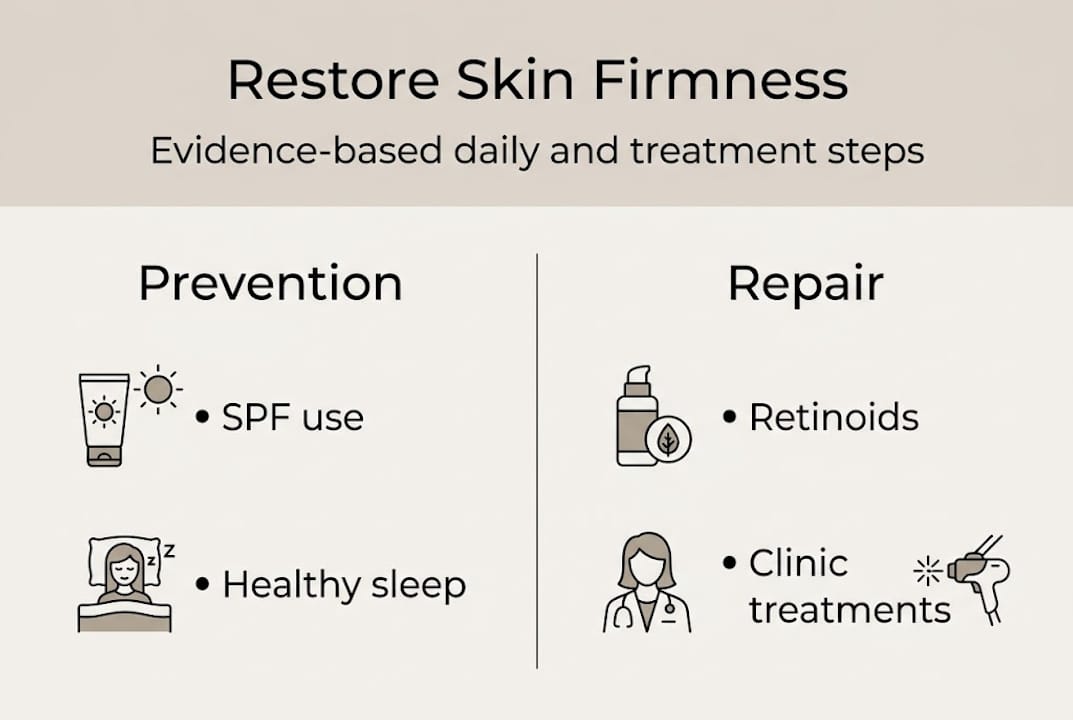
No serum or treatment works well if you are actively destroying collagen faster than you can rebuild it. That makes sun protection the single most important daily habit for preserving firmness. Daily SPF 30+ prevents 24% more collagen degradation, and this holds true even when you are indoors, since UVA rays penetrate windows easily. A mineral SPF in the morning is non-negotiable.
Beyond sunscreen, these habits make a measurable difference:
- Apply SPF 30 or higher every morning, rain or shine
- Eat a protein-rich diet that provides amino acids for collagen synthesis
- Cut back on refined sugar to reduce glycation
- Sleep 7 to 9 hours per night to support skin cell repair cycles
- Manage stress actively through movement, sleep, or breathwork
- Stay well hydrated to support the skin’s barrier and plumpness
The impact of UV damage on collagen is cumulative and largely invisible until it becomes obvious. Preventing loss is always faster and cheaper than repairing it. For a practical roadmap that connects these habits to a real repair strategy, check out these repair aging skin steps.
Pro Tip: Place your sunscreen right next to your keys or phone charger. Physical proximity to daily objects is one of the most reliable ways to build a habit you will actually stick with.
Active repair: Science-backed topical and oral treatments
After safeguarding your skin, it is time to take action with proven treatments, both topical and oral.
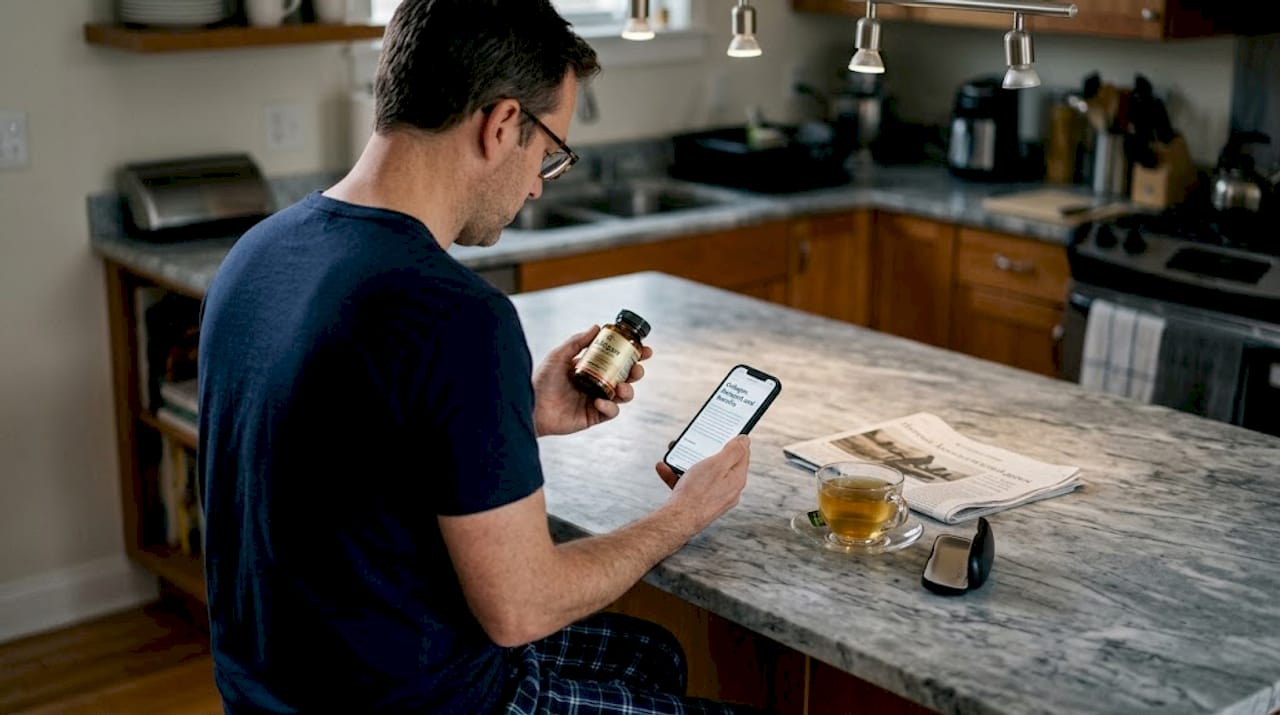
Topical ingredients are where the research is strongest. Retinoids increase skin firmness by 20 to 30% in 12 weeks by stimulating fibroblast activity and accelerating cell turnover. This is one of the most replicated findings in dermatology. Start with a low-concentration retinol two nights per week and build gradually.
Topical vitamin C and niacinamide at concentrations of 10 to 20% boost collagen synthesis and deliver measurable firmness improvements within 6 to 12 months. They also address uneven tone, making them excellent pairings with retinoids. Here are the actives worth prioritizing:
- Retinoids (retinol or prescription tretinoin): strongest evidence for collagen stimulation
- Vitamin C: antioxidant protection plus collagen synthesis support
- Niacinamide: barrier support, anti-inflammatory, and firmness-boosting
- Peptides: signal proteins that encourage collagen production at the cellular level
| Active | Mechanism | Evidence strength |
|---|---|---|
| Retinoids | Fibroblast stimulation, cell turnover | Very strong (multiple RCTs) |
| Vitamin C | Antioxidant, collagen cofactor | Strong |
| Niacinamide | Anti-inflammatory, barrier repair | Strong |
| Peptides | Collagen signaling | Moderate to strong |
On the oral side, oral collagen peptides show mixed evidence. Some randomized controlled trials report a 6 to 9% increase in elasticity, while others find no significant effect. More promising is oral hyaluronate, which improved hydration and elasticity in a well-designed RCT. View supplements as a possible support, not a substitute for topicals. For help choosing the right products, explore top skin firming serums and dig into the science behind skin repair ingredients.
Pro Tip: Introduce one new active at a time, waiting two to three weeks before adding another. This way, if irritation occurs, you know exactly what caused it.
Advanced in-office procedures for firming results
For those seeking more dramatic change, in-office procedures can deliver results beyond topical treatments.
When home care plateaus or when sagging is more pronounced, professional procedures shift the dial significantly. These are not just cosmetic upgrades. They trigger real biological changes deep within the dermis. Microneedling, radiofrequency, and ultrasound stimulate collagen production by up to 400%. Biostimulators like Sculptra produce 84% improvement in firmness at 6 months.
Here is what the most common procedures look like in practice:
- Microneedling: Creates controlled micro-injuries that trigger collagen repair. Typically 3 to 6 sessions, minimal downtime, moderate cost
- Radiofrequency (RF): Heats the dermis to stimulate collagen contraction and new production. 1 to 3 sessions, little to no downtime
- Focused ultrasound (HIFU): Targets deeper tissue layers for lifting. Usually 1 to 2 sessions per year, mild redness afterward
- Biostimulators (e.g. Sculptra, Radiesse): Injectable treatments that trigger the body to produce its own collagen over months
Safety note: Always choose a board-certified dermatologist or plastic surgeon for in-office procedures. Credentials matter as much as the technology. An experienced provider reduces risk and optimizes outcomes significantly.
These
Supporting your routine: Peptides, hydrators, and lifestyle
With advanced interventions covered, let us focus on supporting results for the long term.
Peptides, hyaluronic acid, and ceramides work together to reinforce what your active treatments start. Lab studies show peptides and hydrators deliver 24 to 39% firmness gains in just 4 weeks. These are not dramatic transformation ingredients. They are maintenance workhorses that keep your skin barrier strong and your collagen-signaling pathways active between bigger interventions.
A sample weekly routine might look like this:
- Every morning: Cleanser, vitamin C serum, moisturizer with peptides and ceramides, SPF 30+
- Every evening (weeknights): Gentle cleanser, peptide serum, retinoid (every other night to start), barrier moisturizer
- Two to three times per week: Resistance exercise targeting large muscle groups
- Weekly: LED light therapy at home (red light, 630 to 850nm range)
Exercise plays a bigger role in skin firmness than most people realize. Physical movement increases collagen via mechanotransduction, a process where mechanical stress on tissues signals cells to produce more structural proteins. A 30-minute resistance session several times per week supports collagen synthesis from the inside out.
For guidance on making the most of these ingredients, explore using peptides for firmness, browse science-backed peptide options, or read about the benefits of peptides in skincare to understand why they deserve a central role in your routine.
Pro Tip: Pair your topical peptide serum with a resistance exercise session. Some research suggests that post-exercise blood flow enhances the absorption and effectiveness of topical actives applied within an hour of working out.
Our take: The right mix for real skin firmness
Here is something the skincare industry does not love to say: there is no single product that will restore your skin firmness on its own. Not a serum, not an injectable, not an oral supplement. What actually moves the needle is layering evidence-based habits over time, consistently, with the patience to measure real change.
We see this play out constantly. People invest in expensive procedures but skip daily SPF. Or they use retinoids for three weeks, get frustrated, and quit before the 12-week mark where the science shows results emerge. Real gains come from targeting cellular repair with the right ingredients at the right dose, applied consistently over months, not days.
Not every trending supplement deserves your money. The research is clearest on topicals and procedures. Oral supplements can support, but they rarely lead. Personalize your approach by starting with one or two proven actives, measuring your skin’s response over 8 to 12 weeks, and layering from there. That is not a marketing strategy. That is how skin biology actually works.
Restore your skin with science-backed solutions
Putting all of this into practice is easier when you have formulations designed around the science covered here. At Cellure, every product is built around clinically validated bioactive ingredients that address firmness loss at the cellular level, not just the surface.
The Complete Skin Repair Kit brings together the key actives your skin needs for visible repair, layered in the right sequence for maximum results. If brightening and firmness are your priorities, the Tranexamic Acid Peptide Serum delivers both in one targeted formula. Explore the full range of advanced cellular regeneration solutions and find the routine that fits your skin’s current needs.
Frequently asked questions
How long does it take to see firmer skin with retinoids?
Research shows retinoids increase firmness by 20 to 30% in approximately 12 weeks with consistent nightly use. Stopping before that window means you will not see the full benefit.
Can firming creams really restore skin elasticity?
Creams containing peptides, hyaluronic acid, and ceramides can boost firmness by up to 39% in 4 weeks according to lab testing. Results depend on formulation quality and consistent application.
Are oral collagen or hyaluronate supplements effective?
Oral hyaluronate improved elasticity in randomized controlled trials, while oral collagen peptides show mixed results, with some studies reporting 6 to 9% elasticity increases and others finding no significant effect.
Do I need in-office procedures to see real results?
Not necessarily, but biostimulators and microneedling can deliver up to 84% improvement in firmness by 6 months, making them worth considering when topical treatments alone are not enough for more advanced sagging.