


Why skin loses firmness: science-backed causes and solutions
TL;DR:
- Collagen and elastin decline starting in the late 20s, accelerating after age 40, leading to visible skin sagging. Protecting skin from external factors like UV radiation and using science-backed treatments can slow and potentially reverse firmness loss. An integrated approach combining sun protection, topical actives, supplements, and lifestyle changes offers the best chance for lasting skin firmness improvement.
Collagen production declines roughly 1% per year starting in your late 20s, which means by the time most people notice visible sagging or reduced bounce in their skin, the underlying structural loss has been building for over a decade. What surprises many adults past 40 is how suddenly the process seems to accelerate, when in reality, the biology has been quietly shifting for years. Understanding exactly what is happening inside your dermis, and why it speeds up at certain life stages, gives you far more power to slow it down and reverse some of the damage.
Table of Contents
- The science behind skin firmness: Collagen, elastin, and aging
- Why does skin lose firmness? The real drivers revealed
- What works: Science-backed solutions to restore firmness
- How to personalize your approach: Factors to consider
- Our perspective: The single most overlooked truth about restoring skin firmness
- Find solutions backed by science and designed for real results
- Frequently asked questions
Key Takeaways
| Point | Details |
|---|---|
| Collagen and elastin decline | Your skin’s firmness naturally decreases as collagen and elastin break down, starting in your 30s. |
| Menopause speeds up loss | Women may lose up to 30% of skin collagen in the five years after menopause. |
| Prevention beats cure | Sun avoidance and a healthy lifestyle do more to preserve firmness than any single product. |
| Multiple interventions work best | Combining topical retinoids, peptides, supplements, and habits gives the proven edge. |
| Personalization is key | Your age, hormones, and habits all influence the right approach for restoring skin firmness. |
The science behind skin firmness: Collagen, elastin, and aging
Now that we’ve set the stage for why skin firmness changes are so worrisome, let’s reveal what’s happening beneath the surface.
Your skin’s firmness depends almost entirely on two structural proteins found in the dermis: collagen and elastin. Collagen is the dense scaffolding that gives skin its volume and resistance to gravity. Elastin is the spring-like fiber network that allows skin to snap back after being stretched or compressed. When both are plentiful and intact, skin feels taut, resilient, and smooth.
The decline of collagen and elastin in the dermis is the primary driver of firmness loss, and it follows a measurable, decade-by-decade pattern. Collagen loss accelerates significantly starting in your 30s (about 10% cumulative loss), then sharply accelerates around age 44, with a 30% reduction in total skin thickness by the 50s and 60s. By your 80s, type I procollagen drops by an astonishing 68%, and fibroblast activity (the cells that build collagen) falls by roughly 30%.
Elastin tells a similarly grim story. Elastin fibers degrade through the activity of enzymes called elastases, matrix metalloproteinases (MMPs), reactive oxygen species (ROS), and a process called glycation, where sugar molecules attach to proteins and stiffen them. After 40, elastin fibers become shorter, thicker, more curved, and increasingly fragmented, breaking down the web-like network responsible for skin’s recoil and bounce.
There are two distinct pathways driving this decline: intrinsic aging and extrinsic aging. Intrinsic aging is genetically programmed and tied to hormonal shifts, reduced fibroblast activity, and normal cellular metabolism. Extrinsic aging is driven by external forces you encounter every day, including UV radiation, air pollution, cigarette smoke, and a high-sugar diet. Both pathways activate the same destructive enzymes (MMPs) that eat away at your collagen and elastin matrix.
“Skin aging is not a single process but the cumulative result of overlapping biological clocks running at different speeds, influenced by both your genes and your environment.”
Decade-by-decade collagen and elastin decline:
| Decade | Cumulative collagen loss | Elastin condition | Visible skin effects |
|---|---|---|---|
| 20s | ~5% | Intact, flexible | Minimal change |
| 30s | ~10% | Early fragmentation | Fine lines beginning |
| 40s | ~20%, accelerating at 44 | Shorter, thicker fibers | Loss of bounce, early sagging |
| 50s | ~25 to 30% | Significant fragmentation | Visible sagging, deeper wrinkles |
| 60s and beyond | 30%+ skin thickness loss | Network connectivity reduced | Pronounced laxity, thinning |
Visible consequences of this double decline include wrinkles, hollow cheeks, drooping jawlines, under-eye hollows, and skin that no longer rebounds quickly when pinched. These aren’t cosmetic inconveniences. They reflect genuine structural changes in your dermis that require targeted, science-backed skin firmness strategies to address effectively.
Key signs of declining collagen and elastin:
- Skin takes longer to spring back after a gentle pinch (reduced elasticity)
- Nasolabial folds deepening or becoming more fixed in appearance
- Jawline definition softening or shifting downward
- Increased skin translucency and paper-thin texture
- Persistent “sleep creases” that stay visible well into the day
Why does skin lose firmness? The real drivers revealed
Understanding the what is essential, but the why offers crucial leverage for prevention and repair.
Several overlapping forces accelerate firmness loss, and knowing which ones apply to your life stage helps you prioritize where to focus your energy. The main drivers include genetic programming, hormonal shifts, UV radiation, oxidative stress from pollution and smoking, glycation from dietary sugar, and reduced fibroblast signaling. Each one degrades the dermis through slightly different mechanisms, but the end result is always the same: less collagen, weaker elastin, thinner skin.
Hormones deserve special attention. Estrogen plays a critical role in maintaining collagen production, and its decline during perimenopause triggers what researchers now call the “collagen cliff.” Studies show 30% collagen loss in just 5 years after menopause, followed by roughly 2% loss every year after that. For men, the decline is more gradual but still significant: epidermal thinning progresses at approximately 7.2% per decade starting in their 40s.
UV radiation is the most impactful extrinsic factor. Even brief, repeated sun exposure activates MMP-1, MMP-3, and MMP-9, enzymes that specifically break down the extracellular matrix (the scaffold your collagen fibers are embedded in). Years of cumulative UV exposure can effectively double the rate of visible aging compared to genetically similar individuals who practiced rigorous sun protection.

Intrinsic vs. extrinsic aging compared:
| Factor | Intrinsic aging | Extrinsic aging |
|---|---|---|
| Cause | Genetics, hormones, cellular metabolism | UV, pollution, smoking, glycation |
| Timeline | Gradual, lifelong | Accumulates faster with exposure |
| Visible effects | Fine lines, thinning, mild laxity | Deep wrinkles, leathering, uneven tone |
| Modifiable? | Partially (hormones, nutrition) | Highly modifiable |
| Primary mechanism | Fibroblast slowdown, MMP activation | MMP surge, ROS damage, AGE formation |
The main causes of skin firmness loss, ranked by impact:
- Declining estrogen or androgens (hormonal aging)
- Cumulative UV radiation exposure
- Reduced fibroblast activity and genetic programming
- Glycation from high sugar intake (forming advanced glycation end-products, AGEs)
- Oxidative stress from pollution, smoking, and poor diet
- Chronic sleep deprivation and elevated cortisol
Pro Tip: Addressing extrinsic drivers early, especially UV exposure, is the single most cost-effective move you can make for long-term firmness. A broad-spectrum SPF 30 or higher applied daily reduces cumulative MMP activation far more than any topical treatment can correct after the fact. Think of sun protection not as prevention but as your most active anti-aging treatment.
Understanding why prioritize skin firmness from both a hormonal and environmental lens helps you see that the losses aren’t inevitable at the rate most people experience them.
What works: Science-backed solutions to restore firmness
Once you know what drives firmness loss, you can zero in on science-backed solutions tailored to your needs.
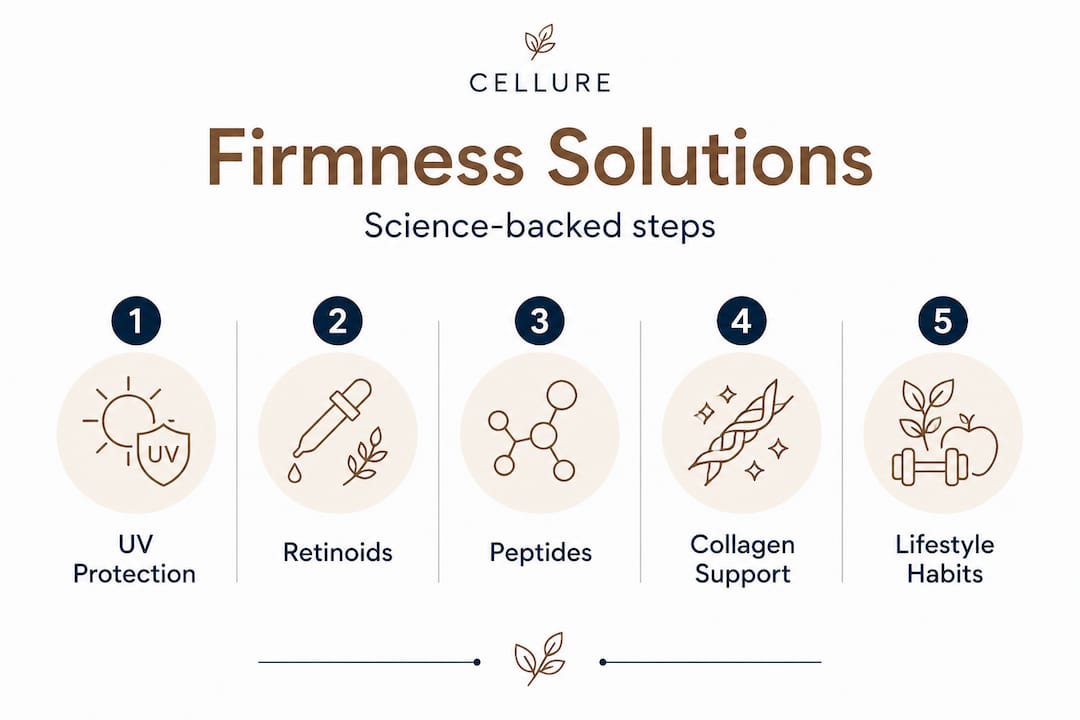
There are three main categories of interventions with meaningful clinical evidence: oral supplements, topical actives, and lifestyle modifications. None of them work in isolation. The strongest outcomes in both clinical trials and real-world practice come from combining all three.
Evidence-based firmness restoration options:
- Hydrolyzed collagen supplements (2.5 to 10g per day, 8 to 12 weeks): Meta-analyses show significant improvement in skin elasticity (standardized mean difference of 1.93 for elasticity measure R2 vs. placebo). Hydration and wrinkle depth also improve. Results are more modest in industry-independent trials, so view supplements as supportive rather than curative.
- Topical retinoids (retinol 0.25 to 1%): Retinoids stimulate collagen synthesis and reduce wrinkle depth and texture irregularities. Clinical data consistently positions retinoids above peptides and vitamin C for outright skin rejuvenation. They remain the gold standard for collagen-boosting topical therapy.
- Biomimetic peptides and niacinamide: Tripeptide-29 at 0.1% combined with niacinamide in a serum formulation showed a statistically significant 18% increase in skin firmness over a 4-week trial. Peptides signal repair pathways in fibroblasts, boosting tolerability and synergizing with retinoids without the irritation. Learn more about the peptides in skincare research supporting these results.
- UV avoidance and broad-spectrum SPF: Daily SPF use is the single most evidence-supported lifestyle intervention. UV avoidance is critical because MMP-1, MMP-3, and MMP-9 enzymes directly degrade the extracellular collagen matrix with every unprotected exposure.
- Hormone replacement therapy (HRT): For women in perimenopause or menopause, HRT may offer consistent collagen preservation benefits, though it requires individual medical evaluation.
18% firmness improvement was observed in a 4-week clinical trial using a serum combining Tripeptide-29 at 0.1% concentration with niacinamide, demonstrating that well-formulated topical actives can produce measurable, rapid improvements.
Pro Tip: Stack your interventions strategically. Use retinoids at night (start with 0.25% to build tolerance), apply peptide serums in the morning when skin isn’t sensitized by retinoid activity, take collagen supplements with vitamin C (which is required for collagen synthesis), and never skip SPF. This stack covers synthesis, signaling, structural support, and protection simultaneously. Review science-backed steps for firmness to build your routine with evidence behind every step.
Understanding how peptides work at a mechanistic level also helps you evaluate products more critically and avoid spending money on underdosed formulations.
How to personalize your approach: Factors to consider
While interventions exist, personalization ensures optimal results and minimizes wasted effort.
Not every solution is right for every person, and the most common reason people abandon effective regimens is that they chose the wrong starting point for their specific biology and lifestyle. A 35-year-old with a desk job and high sun exposure needs a completely different strategy than a 55-year-old woman six years post-menopause who already uses SPF daily.
Build your custom firmness regimen in four steps:
- Assess your baseline. Identify your biggest risk factors: Are you post-menopausal? Do you spend significant time outdoors? Do you smoke or have a history of smoking? Has your collagen decline been visibly rapid? Honest self-assessment here prevents over-investing in the wrong areas.
- Protect first. Before adding any active ingredient to your routine, lock in daily broad-spectrum SPF (minimum SPF 30). No topical active can compensate for ongoing UV-driven MMP activation. This step alone can dramatically shift your long-term trajectory.
- Treat systematically. Layer in actives based on your priorities. Start with the ingredient with the strongest evidence (retinoids), then add complementary peptide serums, and consider oral collagen if you’re not getting adequate protein from diet. Read about using peptides for skin to understand dosing, timing, and combinations that maximize effect.
- Monitor and adjust. Track your results monthly with a simple method: photograph your skin in identical lighting conditions, or perform the skin snap test (gently pinch the back of your hand and release, counting how long it takes to flatten). If you have access to a dermatology clinic, Cutometer measurements provide objective elasticity data.
Gender matters significantly in this process. Women approaching or past menopause should consider whether HRT is appropriate for them, as the hormonal component of collagen loss is substantial and not fully addressable through topicals alone. Men tend to lose collagen more linearly, which means earlier lifestyle intervention pays larger dividends over time.
Meta-analyses support collagen supplementation, but the most rigorous, industry-independent trials show more modest benefits, which reinforces why supplementation works best as one layer in a broader strategy rather than the centerpiece of your approach.
Pro Tip: Take monthly photos in identical natural lighting for 90 days after starting a new regimen. Skin changes are often gradual enough that you won’t notice them day to day, but side-by-side comparisons over three months reveal real progress and help you stay consistent when results feel slow.
Our perspective: The single most overlooked truth about restoring skin firmness
We see a pattern repeated constantly in skincare: someone discovers that collagen is declining, becomes understandably alarmed, and immediately reaches for a collagen supplement or a single serum marketed as the solution. This magic-bullet approach is understandable, but it’s the biggest obstacle to real results.
The uncomfortable truth is that no supplement outperforms prevention. Not the best-formulated collagen peptide drink. Not a retinol at 1%. Not even a monthly in-office procedure. The skin you protect today through UV defense and diet is skin that won’t need as much correction later. Every unit of UV damage you accumulate activates MMP cascades that dismantle the collagen you’re simultaneously trying to rebuild with expensive serums. You can’t outrun that math with topicals alone.
What we advocate for, based on both the research and the practical realities of skin aging, is an integrated mindset rather than a product-first one. That means combining rigorous daily SPF, a diet low in advanced glycation end-products (AGEs) from excessive sugar and ultra-processed foods, quality sleep that supports nocturnal cellular repair, evidence-based topical actives applied consistently, and supplementation as a complement rather than a cornerstone. The restore skin firmness guide we’ve built reflects this layered philosophy throughout.
The readers who see the most dramatic and lasting improvements aren’t always the ones using the most advanced ingredients. They’re the ones who started earlier, protected consistently, and treated their skin as a long-term project rather than an emergency to fix. If you’re reading this past 40, that’s not discouraging news. It’s simply the clearest argument for starting the integrated approach today rather than waiting for a better serum to come along.
Find solutions backed by science and designed for real results
If this article has brought clarity about what’s driving your skin’s changing firmness, the natural next step is putting that understanding into action with formulations that reflect the same level of scientific rigor.
At Cellure, every product in our lineup is built around bioactive ingredients with clinical support, including biomimetic peptides, polynucleotides, and targeted repair actives, formulated to work at the cellular level where firmness loss actually begins. Our skin repair kit brings together the key actives covered in this article into a single, structured regimen designed for adults who want measurable results. If you want to understand the thinking behind our formulations, the story behind Cellure explains our commitment to regenerative science. Explore the full range of advanced cellular regeneration solutions and find what fits your skin’s specific stage and needs.
Frequently asked questions
At what age does skin firmness typically start to decline?
Skin firmness begins declining earlier than most people expect. Collagen production slows ~1% per year starting in your late 20s to early 30s, meaning measurable structural loss is already underway long before visible signs appear.
Is it possible to reverse skin firmness loss after menopause?
Meaningful improvement is achievable with the right approach. Interventions like HRT, retinoids, and UV protection can restore some firmness, but the earlier you begin a protective and restorative routine, the greater the gains you’ll preserve over time.
Are collagen supplements proven to restore skin firmness?
Meta-analyses show a strong effect size for collagen supplements on elasticity, but results are more modest in rigorous, industry-independent trials. They work best as one layer in a broader strategy that includes topical actives and lifestyle measures.
Which ingredient is the gold standard for boosting skin firmness?
Retinoids hold the strongest clinical evidence. Topical retinoids are superior to other topical actives, including peptides and vitamin C, for driving collagen synthesis and reducing visible signs of firmness loss, making them the foundation of any evidence-based regimen.
Does sun exposure really accelerate skin firmness loss?
Significantly. Even routine, unprotected UV exposure activates MMP-1, MMP-3, and MMP-9, enzymes that directly break down the collagen and elastin network, effectively doubling the pace of structural skin aging compared to consistently sun-protected skin.
Recommended
- Restore Skin Firmness: Science-Backed Steps for Results – Cellure
- Why Prioritize Skin Firmness? Science-Backed Benefits – Cellure
- Why Skin Renewal Matters: Restore Youthful, Resilient Skin – Cellure
- Top skin renewal tips for 2026: Science-backed rejuvenation – Cellure
- Essential skincare tips for radiant, natural beauty
- 7 tipuri de tratamente non-invazive pentru ten radiant – aBeauty Clinique ®