


Why Prioritize Skin Firmness? Science-Backed Benefits
TL;DR:
- Skin firmness depends on the integrity of collagen and elastin in the extracellular matrix.
- Hydration offers temporary surface plumpness but does not rebuild structural support.
- Ingredients like peptides, retinol, and vitamin C are scientifically proven to improve skin firmness long-term.
Most people spend their skincare budgets on hydrating serums and moisturizers, believing that plump, dewy skin is the ultimate marker of youth. But hydration only works at the surface. Firmness operates at a completely different level, targeting the deep structural scaffolding that keeps skin lifted, resilient, and smooth. Research confirms that structural ECM integrity prevents wrinkles and sagging more effectively than hydration alone. This guide breaks down exactly why firmness deserves the top spot in your anti-aging strategy and gives you the science-backed tools to act on it.
Table of Contents
- Understanding skin firmness: What really changes as we age
- Skin firmness vs. hydration: Which matters more for youthful skin?
- Proven ingredients and treatments to restore skin firmness
- Strategies for maintaining and boosting skin firmness over time
- What most anti-aging routines miss about skin firmness
- Find science-backed solutions for firmer skin
- Frequently asked questions
Key Takeaways
| Point | Details |
|---|---|
| Firmness matters most | Supporting skin firmness prevents wrinkles and sagging better than hydration alone. |
| Treat the foundation | Focusing on collagen, elastin, and ECM health creates lasting skin resilience. |
| Use proven solutions | Choose science-backed ingredients like peptides and retinol for visible firming results. |
| Consistency counts | Long-term, regular care is key to maintaining firm, youthful-looking skin. |
Understanding skin firmness: What really changes as we age
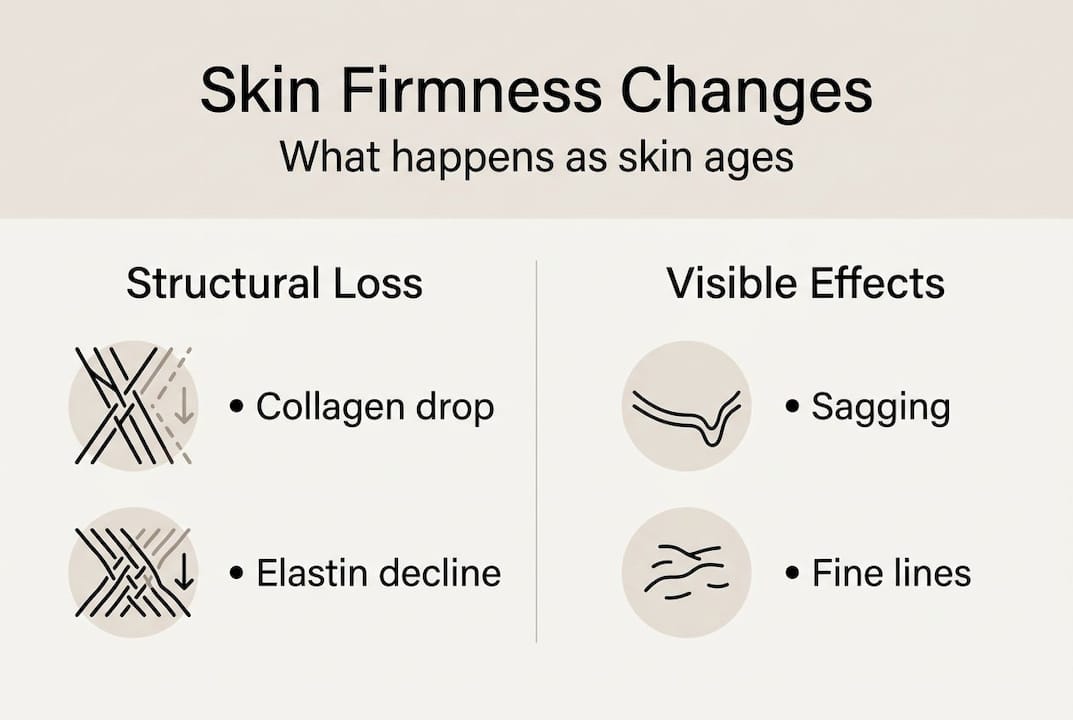
Skin firmness is not just about how tight or bouncy your skin feels when you press it. It reflects the structural integrity of the tissue layers beneath the surface, particularly the extracellular matrix, or ECM. Think of the ECM as a densely woven net of proteins that holds your skin’s architecture together. The two most important proteins in that net are collagen and elastin.
Collagen provides tensile strength, the resistance that keeps skin from drooping. Elastin gives skin its snap-back quality, the ability to return to its original shape after being stretched or compressed. When both are abundant and well-organized, skin looks firm, lifted, and even. When they degrade, you see the results in the mirror.
As part of understanding aging skin changes, it helps to know that collagen production drops by roughly 1% per year after your mid-twenties. By your 40s, the ECM has lost significant density, and by your 50s, elastin fibers become fragmented and disorganized.
| Structural component | In your 30s | In your 40s | In your 50s |
|---|---|---|---|
| Collagen density | Mildly reduced | Moderately reduced | Significantly reduced |
| Elastin quality | Slight fragmentation | Moderate fragmentation | Severe fragmentation |
| ECM integrity | Early decline | Noticeable thinning | Marked degradation |
| Skin bounce | Mostly intact | Reduced | Greatly diminished |
The visible signs of this structural loss are hard to miss once you know what to look for:
- Jowls forming along the lower jaw
- Deepening nasolabial folds (the lines running from nose to mouth)
- A general flatness where there used to be volume
- Skin that feels less elastic when pinched
- Fine lines that persist even when skin is well moisturized
Here is the key distinction: hydration can temporarily plump the outermost skin layer, softening the look of fine lines for hours. But it does not rebuild collagen, restore elastin, or reinforce the ECM. Superficial fixes have their place, but they cannot substitute for structural support.
Pro Tip: Starting a firmness-focused routine in your early 30s, before significant structural loss occurs, is far more effective than trying to reverse it in your 50s. Think of it as maintaining a foundation rather than renovating one.
Skin firmness vs. hydration: Which matters more for youthful skin?
Hydration is genuinely valuable. Well-hydrated skin looks smoother, reflects light more evenly, and feels comfortable. Ingredients like hyaluronic acid draw water into the skin, creating a temporary plumping effect that softens fine lines within hours. That is real, and it is worth maintaining.
But hydration is short-term. The moment you stop applying it, the effect fades. Firmness-targeted strategies, on the other hand, build cumulative structural benefits over months. They address structural ECM integrity, which is what actually prevents the progression of sagging and deep wrinkles.
| Factor | Hydration | Firmness-targeted routine |
|---|---|---|
| Primary effect | Surface plumpness | Deep structural support |
| Duration of results | Hours to days | Months to years |
| Wrinkle prevention | Minimal | Significant |
| Sagging prevention | None | Strong |
| Best used for | Comfort, glow | Long-term anti-aging |
To understand the difference between hydration versus firmness approaches, consider the analogy of filling cracks in a wall with paint versus reinforcing the wall’s internal structure. The paint makes it look better immediately. The structural repair keeps it standing.
“Targeting the extracellular matrix is the most defensible long-term strategy in anti-aging skincare because it addresses root causes rather than cosmetic symptoms.”
Here is how to build a routine that balances both, with firmness as the foundation:
- Start with a peptide or growth factor serum to signal collagen synthesis at the cellular level.
- Apply a hydrating layer (hyaluronic acid, ceramides) on top to maintain surface comfort.
- Seal with a moisturizer that includes protective antioxidants.
- Add SPF every morning, since UV exposure directly degrades collagen.
- Reassess every 8 to 12 weeks to track structural improvements, not just surface glow.
Summary: hydration is a helpful supporting player, but firming strategies are the lead. Skipping or minimizing firmness work in favor of hydration alone is a trade-off you will feel in five to ten years.
Proven ingredients and treatments to restore skin firmness
Not all ingredients that claim to firm skin actually do it at a structural level. The following have meaningful scientific evidence behind them.
Science-backed peptides are short amino acid chains that signal skin cells to produce more collagen and elastin. They mimic the body’s own repair signals, making them one of the most targeted tools available for firmness.
- Peptides: Stimulate collagen and elastin production, reinforce the ECM directly
- Retinol: Accelerates cell turnover, boosts collagen synthesis, reduces matrix-degrading enzymes
- Vitamin C: A required cofactor in collagen assembly; also neutralizes free radicals that degrade the ECM
- Growth factors: Communicate with fibroblasts (the cells that make collagen) to maintain production rates
- Polynucleotides: Support cellular repair and hydration at a deeper tissue level, gaining attention for their regenerative effects
You can explore the full range of top rejuvenating ingredients to understand how each one works at a molecular level.
For clinical treatments, radiofrequency (RF) therapy and microneedling both have strong evidence for stimulating collagen remodeling. RF heats the deeper skin layers to trigger repair responses. Microneedling creates controlled micro-injuries that prompt fibroblasts to produce fresh collagen. Both deliver results that are measurable in terms of skin density and elasticity.
At home, consistency with evidence-based skin repair ingredients matters more than product quantity. A well-formulated peptide serum used daily beats an expensive collection of mismatched actives.
Pro Tip: Avoid stacking retinol with acids on the same night, especially when starting out. Introduce one active at a time and give your skin 4 to 6 weeks to adjust before layering. Overloading your routine can compromise the skin barrier, working directly against firmness goals.
For those considering targeted formulas, reviewing the best skin repair serums in 2026 is a practical starting point.
Strategies for maintaining and boosting skin firmness over time
Knowing the ingredients is only half the picture. Sustained firmness requires a consistent routine, smart habits, and adjustments as your skin changes decade by decade.
Daily and weekly routine for firmness:
- Morning: Cleanse, apply peptide or growth factor serum, layer vitamin C, finish with moisturizer and SPF 30 or higher.
- Evening: Cleanse, apply retinol (3 to 4 nights per week), follow with a repairing serum on off-nights.
- Weekly: Use a gentle exfoliant once per week to improve ingredient absorption and cell turnover.
- Monthly: Assess your skin’s texture and elasticity to track whether your routine is working.
A thorough cellular repair guide can help you structure these steps for your specific skin type.
Lifestyle factors that protect skin firmness:
- Eating adequate protein and vitamin C to support collagen synthesis
- Sleeping 7 to 9 hours nightly, when cellular repair peaks
- Wearing SPF daily, since UV radiation is the single largest external driver of collagen breakdown
- Managing chronic stress, which elevates cortisol and accelerates collagen degradation
- Avoiding smoking, which directly impairs oxygen delivery to skin tissue
Learn more about using peptides for firmness as part of a daily routine that compounds over time.
Your routine should also evolve with age. In your 30s, focus on prevention: antioxidants, SPF, and a light peptide serum. In your 40s, add retinol and consider a firming treatment kit. In your 50s, prioritize regenerative ingredients like polynucleotides and growth factors, and evaluate whether clinical treatments like RF therapy are right for you.
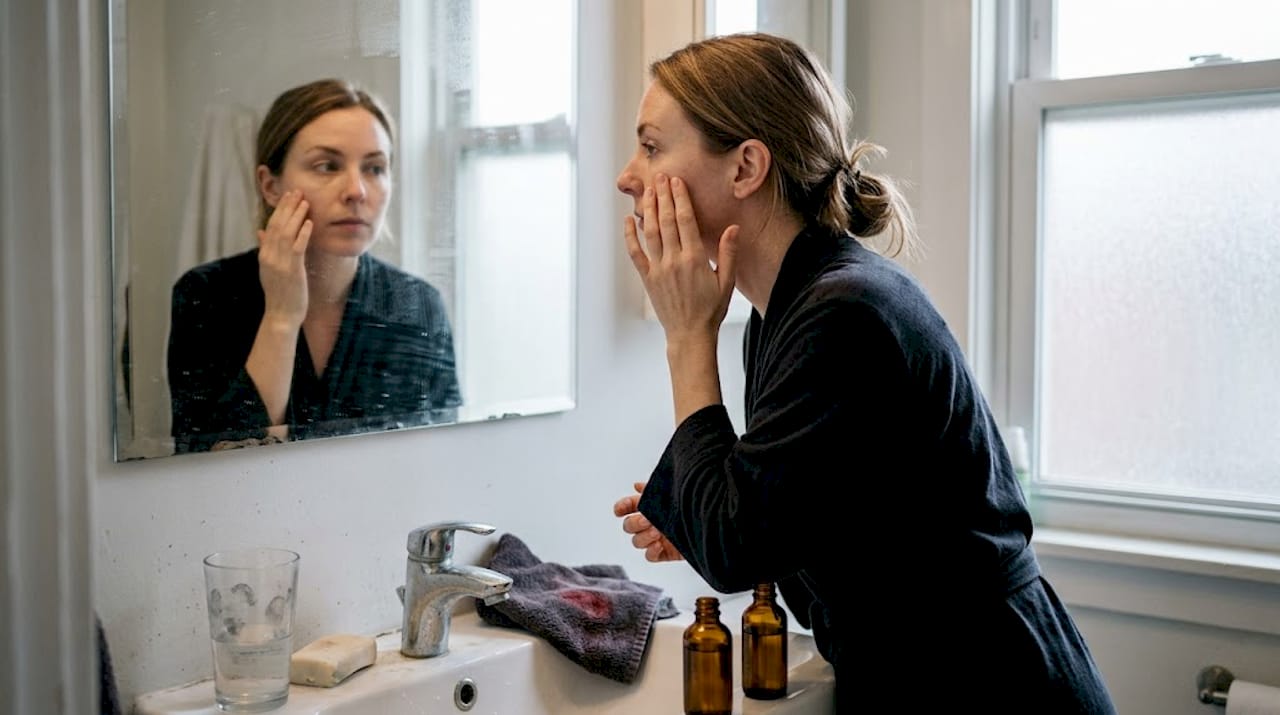
Exploring skin repair kits designed for each stage can simplify the decision. And the principles behind regenerative skincare explain why this layered, long-term approach outperforms any single product.
What most anti-aging routines miss about skin firmness
Here is an uncomfortable observation: most anti-aging routines are built around what feels good immediately rather than what works structurally over years. The beauty industry profits from visible, fast results. That bias shapes product formulas, marketing claims, and even the advice given by well-meaning influencers.
The truth is that cellular repair is slow by definition. Collagen remodeling takes 8 to 12 weeks minimum. ECM reinforcement is a process measured in months. When you start a firming routine at 35 instead of 45, the difference at 55 is dramatic, but you will not see it in a week.
Results-oriented consumers need to reframe how they measure outcomes. Plumpness after one application is not a result. Measurably improved elasticity after three months of consistent use is. The structural ECM integrity research backs this clearly.
“The real secret to youthful skin isn’t what you put on top — it’s how you rebuild beneath the surface.”
Patience, combined with consistent use of evidence-based actives, is the actual strategy. Anything else is cosmetic noise.
Find science-backed solutions for firmer skin
If this guide has shifted how you think about your skincare routine, the next step is finding products that match the science. At Cellure, every formula is built around clinically supported bioactive ingredients that target firmness at the cellular level, not just the surface.
From peptide-rich lifting serums to regenerative treatment kits, the focus is always on what actually rebuilds the ECM and restores structural resilience. Explore the full breakdown of Cellure firming ingredients to see exactly what powers each formula and why it works. When you’re ready to experience the difference that evidence-based formulation makes, Cellure science-backed skincare offers a complete range of solutions designed for every stage of your skin’s journey.
Frequently asked questions
Why does skin lose firmness as we age?
Aging leads to loss of structural proteins like collagen and elastin, weakening the skin’s extracellular matrix and resulting in sagging and wrinkles. Production of these proteins slows steadily from your mid-twenties onward.
Is hydration enough to prevent skin sagging?
Hydration improves surface plumpness but does not address the deeper loss of firmness from structural aging. Only ingredients that stimulate collagen and ECM repair can do that.
What is the most effective ingredient to improve skin firmness?
Peptides, retinol, and vitamin C have the strongest scientific backing for boosting collagen and improving firmness, with polynucleotides gaining traction as a regenerative addition.
Is it too late to improve skin firmness in your 40s or 50s?
It is never too late. Consistent use of firming ingredients and treatments can lead to noticeable structural improvements at any age, though earlier intervention compounds the results.