


9 science-based skin regeneration tips for smoother skin
TL;DR:
- Effective skin regeneration requires barrier support, proven actives, and realistic timelines.
- Retinoids, niacinamide, and peptides are key ingredients backed by scientific evidence.
- Patience and consistent routines are essential for visible improvements in mature or sensitive skin.
The skincare market is flooded with promises, and separating real science from clever marketing is exhausting, especially when your skin is mature or reactive. If you’ve spent money on products that did little, you’re not alone. The good news: research has advanced significantly, and there’s a clear hierarchy of what actually works. This guide cuts through the noise and ranks the most effective, evidence-backed strategies for skin regeneration, with special attention to sensitive skin. Expect measurable, realistic improvements and a smarter way to build your routine.
Table of Contents
- How to evaluate skin regeneration solutions
- Topical actives: Retinoids, niacinamide, and peptides
- Hydration and barrier support: Hyaluronic acid, ceramides, and SPF
- Oral collagen peptides and advanced regeneration strategies
- Skin regeneration: Options side-by-side
- What most people get wrong about skin regeneration
- Gentle, science-backed solutions for better skin
- Frequently asked questions
Key Takeaways
| Point | Details |
|---|---|
| Barrier care first | Prioritize gentle cleansers, ceramides, and daily SPF before introducing actives for best results. |
| Use proven actives | Retinoids, niacinamide, and peptides deliver the biggest impact on wrinkles and texture when used consistently. |
| Hydration is critical | Hyaluronic acid and well-formulated moisturizers keep skin plump and help other ingredients perform better. |
| Oral collagen works | Daily collagen peptides can further boost elasticity, density, and reduce wrinkles after three months. |
| Consistency beats speed | Gentle, long-term use of evidence-based tips leads to firmer, more youthful skin with minimal irritation. |
How to evaluate skin regeneration solutions
Before you invest in any new product or treatment, you need a framework for deciding whether it’s worth your time and money. Not all actives are created equal, and what works for oily 25-year-old skin can genuinely backfire on mature, thinner skin.
Here are the four criteria that matter most:
- Effectiveness: Does the ingredient or treatment show measurable reductions in wrinkles, improvements in texture, or increases in firmness? Look for peer-reviewed studies, not just before-and-after photos.
- Safety for sensitive skin: Some proven actives cause significant irritation. A method that’s effective but leaves your skin raw and inflamed is not actually helping you regenerate.
- Long-term evidence: Trends appear and disappear fast. Prioritize solutions with at least five years of consistent clinical data behind them.
- Realistic timelines: Skin regeneration is a biological process. Most evidence-backed approaches need 8 to 16 weeks before you see meaningful change. If a product promises results in 48 hours, be skeptical.
One often-overlooked principle is that oral and topical strategies work better together than either does alone. Think of your routine as layered: foundational barrier care at the base, actives in the middle, and professional or supplemental strategies on top.
Pro Tip: Before adding any new active to your routine, confirm your barrier is healthy. Daily SPF 30+ prevents 80% of visible aging and barrier repair should always come first. A damaged barrier makes every other step less effective.
Topical actives: Retinoids, niacinamide, and peptides
Once you know your criteria, it’s time to explore the star ingredients that actually regenerate skin. These three categories have the strongest clinical backing and, when used correctly, work well even for sensitive or mature skin.
Retinoids remain the gold standard for wrinkle reduction and texture improvement. They work by increasing cell turnover and stimulating collagen production at the dermal level. Studies show that retinoids reduce wrinkles by 20 to 60% and improve texture within 6 to 12 weeks. The catch: they can irritate reactive skin. Starting at 0.1 to 0.3% concentration and applying every other night dramatically reduces the risk. Retinaldehyde and bakuchiol are gentler alternatives worth exploring if full retinol is too strong.
Niacinamide is consistently underestimated. It boosts collagen synthesis, strengthens the skin barrier, fades uneven pigmentation, and is well-tolerated by virtually all skin types, including highly reactive ones. At 5 to 10% concentration, it acts as both a treatment and a buffer when layered with more aggressive actives.
Top peptides for skin regeneration represent the third major category. Signal peptides like Matrixyl (palmitoyl pentapeptide-4) and copper tripeptides communicate directly with fibroblasts, the cells responsible for collagen and elastin production, encouraging them to produce more structural protein. Unlike retinoids, peptides cause virtually no irritation, making them an ideal choice for sensitive skin or as a complement to retinoid therapy.
“Combining gentle actives for best results without compromising your skin barrier is the most clinically sound approach for mature skin.”
Pro Tip: Buffer your retinoid by applying niacinamide or a hyaluronic acid serum first. This slows absorption and cuts irritation significantly without reducing effectiveness. You can also learn how peptides help repair skin at the cellular level to understand why stacking these ingredients makes sense.
Hydration and barrier support: Hyaluronic acid, ceramides, and SPF
Even the best actives can’t help unless your skin’s defense system is strong. The skin barrier is your first line of protection against environmental damage, moisture loss, and inflammation. When it’s compromised, actives penetrate unevenly, cause more irritation, and trigger a cycle of inflammation that actually accelerates visible aging.
Top barrier-supporting ingredients include:
- Ceramides: Lipids that literally hold skin cells together and prevent transepidermal water loss
- Hyaluronic acid: Draws moisture into the skin; improves hydration and elasticity measurably within weeks
- Squalane: A lightweight, non-comedogenic oil that mimics the skin’s natural sebum
- Mineral SPF (zinc oxide or titanium dioxide): Gentler than chemical filters and non-irritating for reactive skin
SPF is the single most protective step in any anti-aging routine, full stop. There’s no serum, no device, and no treatment that prevents as much cumulative damage as consistent daily sun protection.
“Over-exfoliation delays regeneration, especially for mature skin. Less is more when your goal is barrier integrity.”
Understanding why hyaluronic acid matters goes beyond simple hydration. It also creates the plump, supple environment your skin needs to carry out repair processes efficiently. Without adequate moisture, cellular turnover slows, and the benefits of your actives are blunted.
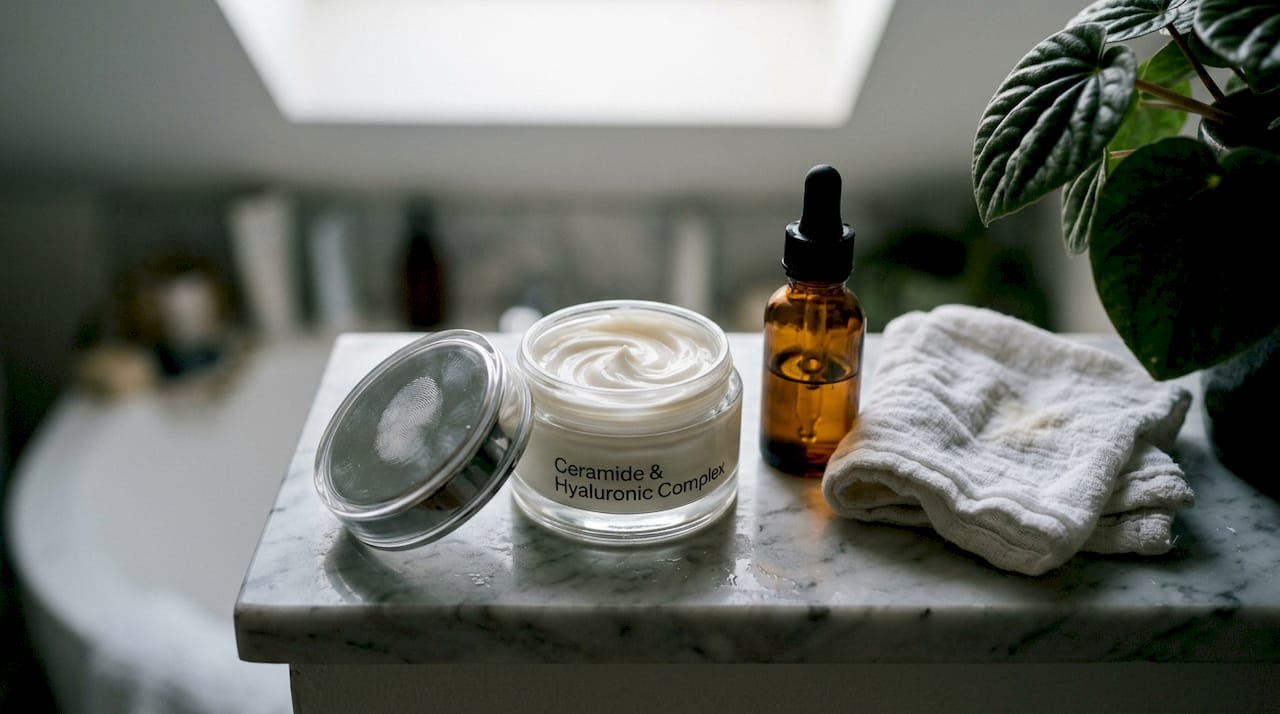
A moisturizer that includes both ceramides and hyaluronic acid, applied morning and night, is a non-negotiable baseline. Everything else builds on top of it.
Oral collagen peptides and advanced regeneration strategies
For those seeking dramatic change, there are deeper solutions worth considering. Topical ingredients work from the outside in, but skin regeneration also responds to what you put inside your body.
Oral collagen peptides at doses of 2.5 to 10g per day show consistent results across multiple trials. Specifically, collagen peptide studies show enhanced dermal density and wrinkle reduction of 20 to 28% after 12 weeks of daily use. Hydrolyzed peptides are broken into small fragments that the gut absorbs efficiently, after which they stimulate fibroblast activity in the dermis.
For those interested in professional-grade acceleration, here’s how to integrate advanced strategies safely:
- Establish your baseline routine (barrier repair, SPF, topical actives) for at least 8 weeks before adding professional treatments.
- Add oral collagen at a minimum of 2.5g per day, ideally with vitamin C to support synthesis.
- Consult a dermatologist to discuss whether microneedling, laser resurfacing, or radiofrequency treatments are appropriate for your skin type and goals.
- Space professional treatments at least 4 to 6 weeks apart to allow full recovery and regeneration between sessions.
- Reassess your routine after each professional session, since treated skin may require gentler topical care temporarily.
Perimenopausal women often see accelerated collagen loss and may benefit from personalized protocols that combine topical retinoids, oral collagen, and hormonal considerations discussed with their physician. Cellular repair strategies are evolving rapidly in this space.
Pro Tip: Always consult a dermatologist before committing to microneedling, laser, or radiofrequency. These are powerful tools, but the wrong device or technique for your skin type can cause lasting damage.
Skin regeneration: Options side-by-side
Seeing all your options side-by-side makes it much easier to select what fits your needs. Here’s a quick comparison of the main strategies, ranked by evidence strength:
| Strategy | Key benefit | Wrinkle reduction | Sensitive skin safe? | Main risk |
|---|---|---|---|---|
| Retinoids (topical) | Cell turnover, collagen boost | 20–60% | With buffering | Irritation, peeling |
| Niacinamide (topical) | Barrier repair, pigment correction | 10–20% | Yes | Rare flushing at high doses |
| Peptides (topical) | Collagen signaling | 15–30% | Yes | Minimal |
| Hyaluronic acid + ceramides | Hydration, barrier | Indirect | Yes | None typically |
| Oral collagen peptides | Dermal density, elasticity | 20–28% | Yes | Rare GI sensitivity |
| Microneedling / laser | Deep collagen remodeling | 30–50%+ | With caution | Downtime, risk of damage |
Most users see significant improvements in 8 to 16 weeks when they layer barrier support with proven actives. The ingredient comparison research makes clear that different solutions carry unique benefits, risks, and ideal use cases for mature and sensitive skin.
If you’re new to actives, start with niacinamide and peptides. Both are effective, both are gentle, and both build a strong foundation for adding retinoids later. If you’re already comfortable with a retinoid, oral collagen is the highest-value addition you can make. Explore proven peptide solutions to understand which formulations deliver the strongest signal peptide activity.
What most people get wrong about skin regeneration
With all the options and data in view, a pattern emerges: most people fail not because they chose the wrong products, but because they skipped the foundation.
The barrier-first philosophy is consistently overlooked. People reach for the strongest retinoid they can find, apply it nightly, and then wonder why their skin looks worse after two months. The answer is almost always a compromised barrier. Actives can only perform when your skin is resilient enough to handle them.
There’s also a cultural obsession with speed. Skin regeneration is not a two-week project. It’s a biological process that requires patience. The people who get the best long-term results are those who commit to steady, consistent routines rather than cycling through trends every few weeks.
The real insight is this: the ‘secret’ ingredient isn’t any single product. It’s the combination of barrier care, evidence-backed actives, and realistic expectations. As we see from science-backed peptide benefits, even well-supported ingredients take time to show their full potential.
“Regeneration is a marathon, not a sprint. Your skin didn’t age overnight, and it won’t reverse overnight either.”
Be wary of routines built around novelty. Build yours around biology.
Gentle, science-backed solutions for better skin
Ready to start your own science-backed routine or upgrade your current one?
At Cellure, we’ve formulated every product around the same principles covered in this guide: barrier support first, proven actives second, and gentle delivery for sensitive and mature skin. The Complete Skin Repair Kit brings together barrier-repairing, active-powered, and regeneration-focused formulas in one ready-to-use system.
If you prefer to build your routine piece by piece, our ingredients list gives you full transparency on every bioactive compound we use and why. Whether you’re just starting out or looking to add a clinically supported next step, Cellure advanced regeneration solutions are designed to deliver real results without guesswork.
Frequently asked questions
What is the fastest way to regenerate aging skin safely?
The fastest safe results come from layering barrier repair (ceramides, hyaluronic acid, SPF) with proven actives like retinoids and peptides, plus oral collagen peptides for synergy. Barrier-first approaches and evidence-backed actives deliver results in as little as 6 to 12 weeks.
Can sensitive skin use retinoids or potent actives?
Yes, start with lower strengths (0.1 to 0.3%) and buffer with niacinamide or hyaluronic acid to minimize irritation. Gentle forms and buffering make actives safer for sensitive skin; retinaldehyde and bakuchiol are excellent alternatives.
How long until I see visible improvements?
Most users notice smoother, firmer skin and fewer wrinkles within 8 to 16 weeks using science-backed actives and proper barrier support. Visible improvements occur in as little as 6 to 12 weeks with consistent use.
Are oral collagen supplements effective for skin?
Yes, clinical studies show 2.5 to 10g per day can improve hydration, firmness, and reduce wrinkles after 12 weeks. Oral collagen improves hydration, elasticity, and reduces visible wrinkles measurably.
Recommended
Share