


How to use regenerative skincare for firmness and radiance
TL;DR:
- Regenerative skincare targets the skin’s deeper structures like the extracellular matrix for lasting rejuvenation.
- Using a combination of peptides, exosomes, and growth factors with proper tools enhances results.
- Consistent, methodical routines and patience yield significant improvements in skin firmness, texture, and tone.
You follow your routine faithfully. Cleanser, moisturizer, SPF. Yet fine lines deepen, skin loses its spring, and your tone stays uneven. The frustration is real, and so is the science explaining why most conventional products fall short. Traditional moisturizers work on the surface, but they rarely reach the extracellular matrix (ECM), the structural scaffold that gives skin its firmness and bounce. Regenerative skincare changes that equation by working at a cellular level, using actives like peptides, exosomes, and growth factors that address firmness loss and sensitivity. This guide walks you through what works, what you need, and how to do it right.
Table of Contents
- Understanding regenerative skincare: What it is and how it works
- What you need: Requirements and tools for the regenerative method
- Step-by-step: How to apply the regenerative skincare method
- Troubleshooting and common mistakes with regenerative methods
- What results to expect and how to monitor progress
- Our perspective: What most guides get wrong about regenerative skincare
- Take the next step toward young, resilient skin
- Frequently asked questions
Key Takeaways
| Point | Details |
|---|---|
| Science-backed regeneration | Methods like peptides, exosomes, and microneedling target underlying aging and deliver visible improvements in firmness and tone. |
| Combine topicals with procedures | Using regenerative creams and in-clinic treatments together amplifies results and supports faster, more profound skin renewal. |
| Safety matters | Always patch test new products and consider professional guidance, especially for sensitive skin or strong medicalized actives. |
| Track your progress | Improvements happen gradually, so regular photos and notes help you monitor skin changes over weeks and months. |
Understanding regenerative skincare: What it is and how it works
Regenerative skincare is not about covering up aging signs. It is about triggering your skin’s own repair systems to rebuild what time has broken down. At the center of this approach is the ECM, a network of collagen, elastin, and other proteins that keep skin plump and firm. As you age, the ECM degrades faster than it is replaced. Regenerative actives step in to reverse that imbalance.
The regenerative science overview behind this approach focuses on three major categories of ingredients:
- Peptides (like TriHex technology): These signal molecules clear damaged proteins and stimulate new collagen/elastin production, essentially making room for fresh structural tissue.
- Exosomes: Nano-sized vesicles that carry growth signals between cells. They target the skin ECM at a molecular level, influencing how the skin rebuilds after damage or aging.
- PRF/PRP (platelet-rich fibrin and plasma): Concentrate your own growth factors to support healing and collagen stimulation.
Where basic moisturizers hydrate the surface, peptides for skin go deeper. They interact with fibroblasts, the cells responsible for producing collagen, to kickstart structural renewal. The difference is not just cosmetic. It is biological.
Key improvements regenerative actives deliver:
- Increased skin plumping and volume restoration
- Improved hydration retention at the dermal level
- Better elasticity and resilience to environmental stress
- More even skin tone through reduced melanin accumulation
- Reduced sensitivity by strengthening the skin barrier
| Active | Primary function | Best suited for |
|---|---|---|
| TriHex peptides | ECM clearing and collagen/elastin rebuild | Firmness, texture, recovery |
| Exosomes | Cell communication and tissue repair | Overall renewal, tone, sensitivity |
| PRF/PRP | Growth factor delivery, healing support | Post-procedure recovery, volume |
Understanding these regenerative skincare ingredients helps you choose products with purpose, not just packaging.
What you need: Requirements and tools for the regenerative method
Getting results from regenerative skincare depends heavily on using the right tools in the right combinations. This is not a one-product fix. Think of it as a system.
Core products and tools to have:
- Topical serums or creams containing TriHex peptides, exosome complexes, or PRF-inspired growth factors
- A device like a microneedling pen or radiofrequency (RF) device for at-home procedural support
- A gentle, pH-balanced cleanser to prep the skin barrier
- Broad-spectrum SPF 30+ to protect rebuilt collagen from UV breakdown
Topical peptide products, exosome creams, and PRF serums are the backbone of the method. Devices amplify their effectiveness, but they are optional at the start.
| Tool | Efficacy level | Best use case |
|---|---|---|
| TriHex peptide topical | High (clinically studied) | Daily renewal, firmness |
| Exosome serum | High (standardized) | Tone, barrier repair |
| PRF serum/cream | Moderate to high | Recovery, volume |
| Home microneedling | Moderate | Absorption enhancement |
| RF device | Moderate to high | Tightening, collagen induction |
Safety note: Medicalized actives including exosome serums and PRF products carry a higher risk for sensitive skin types. Introducing them without preparation can trigger redness, burning, or barrier disruption.
For anyone dealing with sensitive skin and actives, the prep phase is not optional. It is essential.

Pro Tip: Before applying any new regenerative serum or cream across your face, apply a small amount to your inner wrist or behind your ear. Wait 24 hours. No reaction means you are likely clear to proceed. This single step prevents the most common setback in any new routine.
Also explore resources on gentle anti-aging for sensitive skin to understand how to layer actives without overwhelming your barrier.
Step-by-step: How to apply the regenerative skincare method
With the right actives and tools ready, sequence matters more than most people realize. Applying things in the wrong order or skipping prep steps can dilute your results or cause unnecessary irritation.
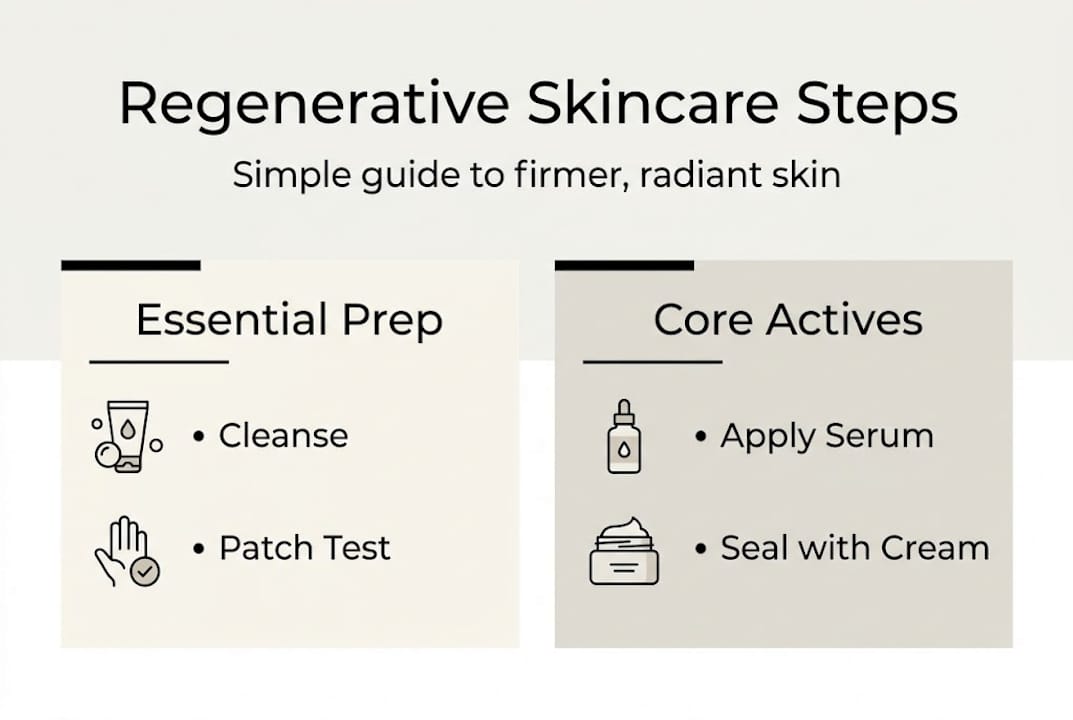
Follow this order for each session:
- Cleanse thoroughly. Use a gentle, non-stripping cleanser. You want a clean, balanced skin surface before anything else goes on.
- Patch test any new product before full-face application, especially if you are new to the specific formula.
- Apply your thinnest active first. If you are using an exosome serum or a peptide-based liquid serum, this goes on before heavier creams. Let it absorb for 60 to 90 seconds.
- Layer the TriHex peptide cream or regenerative moisturizer over the serum. These combination topical protocols maximize results compared to using a single product alone.
- If using a home microneedling device, apply a thin layer of the serum before the device pass. This enhances absorption into the microchannels. Follow device instructions strictly.
- Post-procedure care: After any device use, apply regenerative creams post-procedure to boost healing and hydration. Avoid actives like retinol or acids for at least 48 hours.
- Finish with SPF in the morning. Regenerated skin is more photosensitive. Protecting it is non-negotiable.
For a more thorough guide to the underlying science, see clinically proven skin regeneration steps that walk through cellular mechanisms alongside practical routines.
Pro Tip: If you are just starting out, skip the device for the first four weeks. Build your skin’s tolerance to topical actives first, then introduce microneedling or RF once your barrier is strong. Rushing device use is the top reason beginners experience excessive downtime.
Learn more about youthful skin actives to understand how each ingredient works before adding it to your system.
Troubleshooting and common mistakes with regenerative methods
Even well-researched routines go sideways. Knowing what can go wrong, and why, protects your skin and keeps your results on track.
Most common mistakes to avoid:
- Skipping the patch test and applying full-face on day one
- Layering too many actives at once, especially peptides with strong acids or retinoids
- Assuming all regenerative products deliver the same outcomes regardless of formulation
- Expecting quick results from PRP or PRF without understanding that response varies considerably by age and individual biology
- Using devices at settings higher than recommended when new to the method
On the topic of PRP and PRF, it is important to set realistic expectations. Some trials show no significant effect over placebo for PRP with microneedling in older women, while exosome-based treatments show more consistent and standardized outcomes across skin types.
Not all regenerative actives deliver guaranteed results. Quality, formulation standardization, age, and consistency of application all determine whether a product actually performs. Choose based on peer-reviewed data, not brand claims.
Sensitive skin types face higher risk when using strong regenerative actives without proper barrier preparation. Watch for these warning signs:
- Redness that worsens after two to three days instead of fading
- Burning or stinging that does not calm within an hour of application
- Flare-ups of underlying conditions like rosacea or eczema
If any of these appear, stop the active immediately, support your barrier with plain ceramide or squalane products, and review caring for sensitive skin protocols before reintroducing.
What results to expect and how to monitor progress
Regenerative skincare produces real, measurable change. But it does not happen overnight, and setting accurate expectations keeps you consistent when results feel slow.
| Outcome | Timeline | Top-performing active |
|---|---|---|
| Hydration improvement | 2 to 4 weeks | TriHex peptides, exosome serums |
| Skin texture smoothing | 4 to 8 weeks | Exosomes, RF microneedling |
| Firmness and elasticity | 3 to 6 months | RF microneedling, TriHex peptides |
| Pore reduction | 3 to 12 months | Exosome therapy |
| Tone evenness and erythema | 2 to 9 months | Exosome therapy |
Exosome therapy can reduce pores by 41%, erythema by 42%, and melanin by 31%, with results sustained up to 21 months in documented case studies. That kind of durability is rare in cosmetic interventions. RF microneedling gradually tightens skin over 3 to 6 months, making it one of the most reliable tools for structural firming.
How to track your own progress objectively:
- Take a clear, consistent photo in the same lighting every two weeks
- Keep a brief journal noting skin texture feel, hydration levels, and any reactions
- Mark the calendar for your 4-week, 8-week, and 12-week checkpoints
- Note changes in makeup application, since improved texture often shows up there first
Age and genetics will affect your timeline. Someone in their late 30s with minimal sun damage will likely see faster change than someone in their mid-50s with decades of cumulative UV exposure. That is not failure. It is biology. Adjust expectations accordingly and review skincare benefits and usage data to understand what a realistic arc looks like for your skin profile.
Our perspective: What most guides get wrong about regenerative skincare
Most skincare content does one of two things. It either oversimplifies, reducing regenerative science to “this one serum changes everything,” or it lists every possible ingredient without explaining how they work together. Both approaches miss the point.
What actually drives results is a methodical, combination-based protocol built on standardized, peer-reviewed formulations. Peer-reviewed efficacy matters more than hype, and the data consistently shows that exosomes outperform PRP in consistency, particularly as skin ages.
The other thing guides rarely say openly: your results will vary. That is not a marketing failure. It is biology. What makes the difference is not finding the perfect ingredient. It is committing to a smart, adjusted, ongoing cellular repair strategy that accounts for your skin’s baseline, your sensitivity level, and your willingness to course-correct when something is not working. Buzz ingredients come and go. Disciplined, protocol-driven routines produce the compound results that last.
Take the next step toward young, resilient skin
Real skin transformation is not about adding more products. It is about using the right ones, in the right order, backed by the right science.
At Cellure, every formulation is built around clinically supported bioactive ingredients designed for visible, lasting change. If you are ready to move from guesswork to a proven system, the Complete Skin Repair Kit brings together everything discussed in this guide into one cohesive protocol. For a broader look at what advanced cellular regeneration can do for your skin, explore the full range of science-backed solutions. Your skin has the biology to repair and rebuild. Give it the right tools.
Frequently asked questions
Is regenerative skincare safe for sensitive skin?
Yes, but patch testing and gradual introduction are essential. Medicalized actives carry higher risk for reactive skin types, so starting slow and monitoring your skin’s response is the safest path forward.
How soon should I see results with regenerative skincare?
Most users notice hydration and texture improvements within weeks. A 12-week trial showed elasticity and plumping gains, while structural tightening from RF microneedling typically takes 3 to 6 months.
Is exosome therapy better than PRP/PRF for aging skin?
For most people, yes. Exosome therapy matches PRP results without requiring blood draws, and delivers more consistent outcomes due to standardized formulation. PRP variability increases with age.
Do topical regenerative creams really make a difference?
Absolutely. Clinical studies confirm that regenerative creams post-laser improve hydration and reduce redness, making them valuable both as standalone products and as post-procedure recovery tools.
What is the most important step to avoid side effects?
Patch test every new active before full-face application. Gradual introduction, especially for sensitive skin and medicalized actives, is the single most effective way to prevent adverse reactions.
Recommended
- Unlock firm, radiant skin with regenerative science – Cellure
- Regenerative skincare ingredients: science-backed guide – Cellure
- Regenerative Skincare: Science, Benefits & How to Use It – Cellure
- Restore Skin Firmness: Science-Backed Steps for Results – Cellure
- What is light reflecting makeup: radiant skin guide – Luméra Cosmetica