


Results-Driven Skincare: How to Get Visible, Measurable Results
Results-driven skincare delivers measurable biological or visible change by pairing targeted active ingredients with the right formulation, evidence-backed concentrations, and consistent application over a realistic timeline. It is not a product category or a price point. It is a framework. The difference between a routine that actually changes your skin and one that just feels nice comes down to three things: whether the active molecule can reach its target layer, whether it is present at a concentration that triggers a biological response, and whether you apply it long enough for that response to show up.
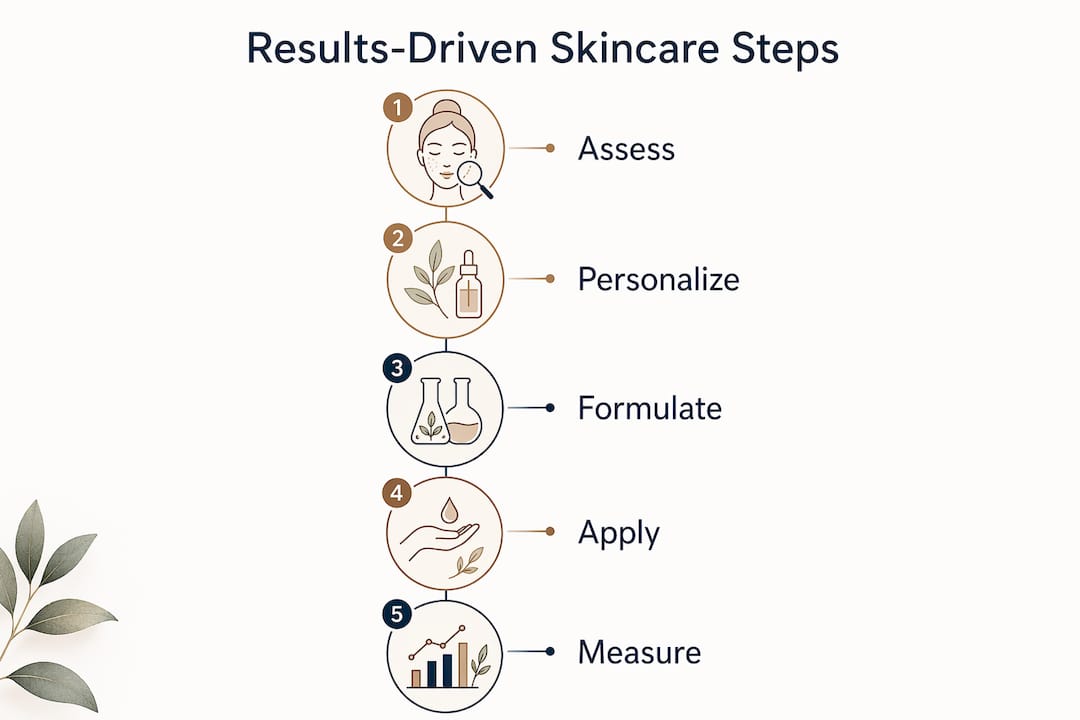
The benefits are specific and trackable: improved texture and hydration in as little as four weeks, measurable pigment reduction over three to six months, and structural changes like collagen remodeling that continue up to twelve months. Metrics like transepidermal water loss (TEWL), standardized photography, and corneometry give you and your clinician a way to confirm that change is real, not imagined. Brands like Cellure are built around exactly this model, using bioactive ingredients such as peptides, polynucleotides, and tranexamic acid in formulations designed for cellular-level repair.
Table of Contents
- What does “results-driven skincare” actually mean?
- How skin analysis and personalization set the foundation
- How ingredients and formulation science determine whether a product works
- Which ingredients have the strongest evidence behind them?
- What do effective morning and evening routines look like?
- How long until you see results, and how do you measure progress?
- Common misconceptions that block results
- How to build a results-driven plan from scratch
- How Cellure applies these principles in its formulations
- Key Takeaways
- The case for slowing down
- Cellure’s Complete Skin Repair Kit: a protocol built for real results
- Useful sources
What does “results-driven skincare” actually mean?
Most skincare products are marketed around sensory experience: the way a serum feels, the glow after one use, the elegant packaging. Results-driven skincare asks a different question entirely: does this product produce a measurable biological change?
Efficacy requires four things working together: the right active molecule, an evidence-backed concentration, a delivery vehicle that gets the ingredient past the stratum corneum, and consistent application over a biologically realistic timeline. Remove any one of those four and you have a product that may feel pleasant but will not move the needle on your skin’s actual structure or function.
The distinction between perceptual and biological benefits matters here. A “glow” after applying a hydrating mist is real, but it is a surface optical effect. Reduced TEWL, measurable pigment suppression, or increased dermal collagen density are biological changes. Results-driven skincare targets the latter, even when the former is a welcome side effect.
- Right molecule: The active must have a mechanism of action supported by published research, not just marketing language.
- Effective concentration: Vitamin C at 5% rarely triggers the same antioxidant and collagen-stimulating response as 15–20%. The label must show you the number.
- Delivery and formulation: A lipophilic active like retinol needs an oil-based or encapsulated vehicle. A pH-sensitive ingredient like L-ascorbic acid requires a formulation below pH 3.5 to remain stable and active.
- Consistent timeline: Skin biology runs on its own clock. Rushing it with more products does not accelerate results; it usually disrupts the barrier and sets you back.
The market is shifting toward transparency and measurable outcomes precisely because consumers have grown tired of paying for sensory experiences dressed up as clinical treatments.
How skin analysis and personalization set the foundation
No two people share the same barrier status, sebum production, pigmentation baseline, and sensitivity threshold. A product that repairs a compromised barrier beautifully on dry, mature skin can trigger breakouts on oily, acne-prone skin. Personalization is not a luxury add-on; it is the mechanism that makes a routine work for your skin rather than a statistical average.
A practical self-assessment checklist:
- Barrier status: Does your skin feel tight, sting after cleansing, or show visible flaking? These are signs of barrier compromise. Address this before introducing any active.
- Hydration: Does skin feel plump and resilient an hour after moisturizing, or does it feel dry again quickly?
- Sebum: Is there visible shine by midday, or does skin feel tight and dull?
- Pigmentation: Are there discrete dark spots, diffuse uneven tone, or post-inflammatory marks?
- Sensitivity: Do products regularly cause redness, burning, or itching?
- Primary goal: Rank your concerns. Trying to address everything at once is one of the most common reasons routines fail.
When to see a professional: Persistent hyperpigmentation that has not responded to over-the-counter actives after 12 weeks, acne that keeps returning despite a consistent routine, or increasing sensitivity to products you previously tolerated well are all signs that self-assessment has reached its limit. Professional treatments that promise lasting improvement combine a formal assessment with targeted actives and a sequence of sessions adjusted over time, not a single one-off service.
Clinical tools add precision that a mirror cannot: TEWL meters quantify barrier function, corneometers measure hydration, and standardized photography documents change over time with consistent lighting and angle. These are the same tools that let a clinician tell you, objectively, whether your routine is working.
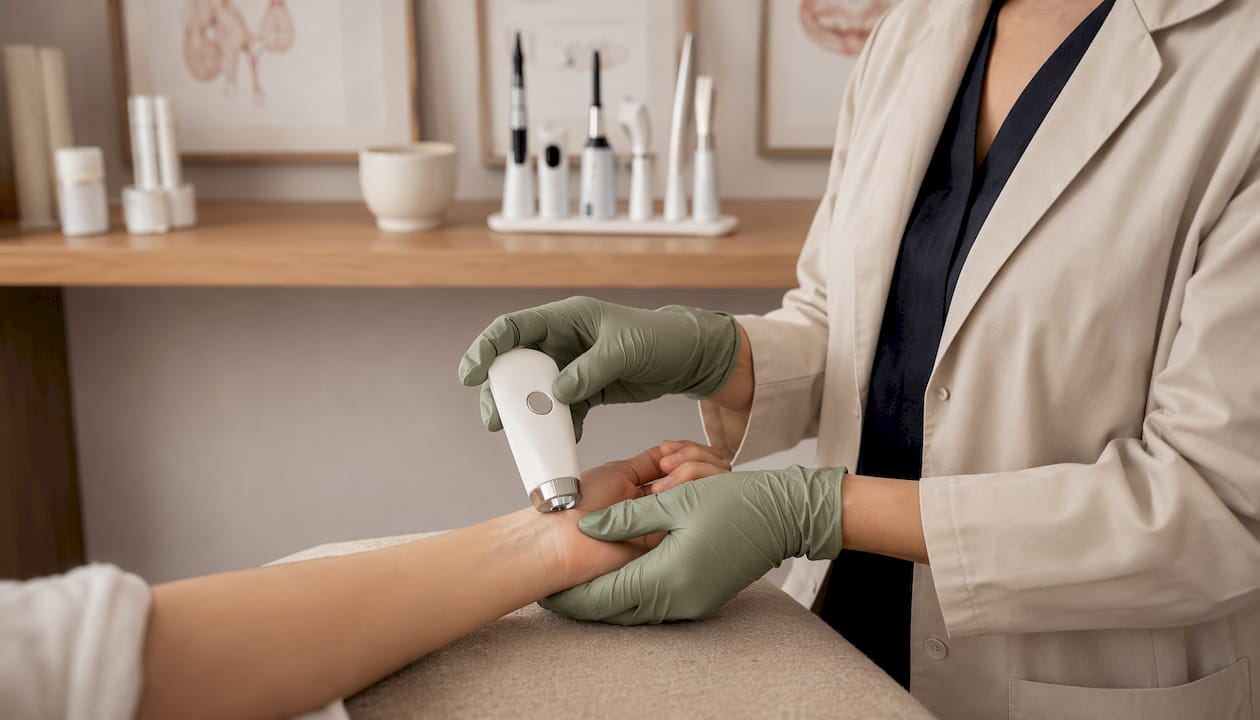
Pro Tip: Before your first consultation, take three standardized photos (front, left profile, right profile) in natural light with no makeup. This baseline is more useful to a clinician than any verbal description of your concerns.
How ingredients and formulation science determine whether a product works
Price is not a reliable predictor of efficacy. A drugstore retinol at 0.1% in a well-designed emulsion can outperform a prestige serum at the same concentration in a poorly buffered, unstable vehicle. What determines whether an active reaches its target layer is formulation science: the vehicle, the pH, the encapsulation method, and the preservative system; for a detailed dive into these principles, see the Anti Wrinkle Formulation resource.
A few examples that illustrate why this matters in practice:
- Vitamin C (L-ascorbic acid): Requires a pH below 3.5 and an anhydrous or low-water formulation to stay stable. Above pH 4, it oxidizes rapidly and delivers little antioxidant benefit. Ascorbyl glucoside and other derivatives are more stable but convert to L-ascorbic acid less efficiently in skin.
- Retinoids: Lipophilic. They need an oil-based or encapsulated vehicle to penetrate the stratum corneum effectively. Microencapsulation slows release, reducing irritation without sacrificing delivery.
- Tranexamic acid: Water-soluble, relatively pH-tolerant, and well-absorbed in aqueous serums. It works by interrupting melanin synthesis pathways, making it a strong choice for pigmentation without the irritation risk of high-dose hydroquinone.
- Peptides: Molecular weight matters. Short-chain peptides (di- and tripeptides) penetrate more readily than larger signal peptides, which often require carrier systems or liposomal encapsulation to reach the dermis.
- Hyaluronic acid: Molecular weight determines where it acts. High-molecular-weight HA sits on the surface and reduces TEWL. Low-molecular-weight HA penetrates deeper and supports dermal hydration.
For a practical example: a vitamin C serum reformulated from an aqueous base at pH 5 to an anhydrous base at pH 3.2 can dramatically improve stability and skin penetration, with users reporting less oxidation (the telltale orange discoloration) and more consistent brightening over eight weeks. The active did not change. The formulation did.
Pro Tip: When reading a label, look for the active ingredient listed in the top half of the INCI list, a stated percentage, and a pH range on the packaging or brand website. If none of those are disclosed, the brand is not being transparent about whether the product can actually work.
Formulation science, not branding or price, is the key determinant of clinical effect. Delivering a molecule at effective concentration into the right skin layer is what separates a product that changes skin from one that simply touches it.
For a deeper look at how bioactive ingredients work at the cellular level, Cellure’s ingredient science content is worth reading alongside your label research.
Which ingredients have the strongest evidence behind them?
Not all actives are equal. Some have decades of clinical research; others have one promising in-vitro study and a lot of marketing spend. Here is a prioritized breakdown.
Foundation tier (everyone needs these):
- Gentle cleanser: Removes surface debris without stripping the acid mantle or disrupting the lipid barrier. The wrong cleanser can undo everything else in your routine.
- Antioxidant (vitamin C): Neutralizes UV-generated free radicals, inhibits melanin synthesis, and supports collagen production. Apply in the morning before SPF.
- Moisturizer with barrier lipids: Ceramides, fatty acids, and cholesterol in roughly physiological ratios repair and reinforce the stratum corneum. Non-negotiable for any skin type.
- Broad-spectrum SPF 30+: UV exposure is the single largest driver of photoaging, pigmentation, and barrier degradation. A minimal effective routine built around these four products captures approximately 80% of available topical skincare benefit.
Second-tier actives (address specific concerns):
- Retinol/retinoids: The most evidence-backed anti-aging active available over the counter. Stimulates collagen, accelerates cell turnover, and reduces fine lines. Expect 12 weeks before visible improvement; irritation is common in the first four weeks.
- Tranexamic acid: Effective for post-inflammatory hyperpigmentation and melasma with a gentler profile than hydroquinone. Timeline: 8–12 weeks for visible lightening.
- Niacinamide: Reduces sebum, strengthens the barrier, and fades pigmentation. Pairs well with most actives and rarely causes irritation.
- Clinical peptides (e.g., Matrixyl, copper peptides, PDRN/polynucleotides): Support collagen synthesis and tissue repair. Polynucleotides in particular are gaining clinical traction for regenerative applications.
- Hyaluronic acid: Immediate surface hydration; low-molecular-weight forms offer deeper support. Best used on damp skin before sealing with a moisturizer.
When to escalate: If over-the-counter actives have not produced objective improvement after 12 weeks, prescription-strength retinoids (tretinoin), hydroquinone, or in-clinic procedures like chemical peels, microneedling, or laser may be appropriate. A dermatologist can confirm whether the issue is concentration, formulation, or an underlying condition requiring a different approach.
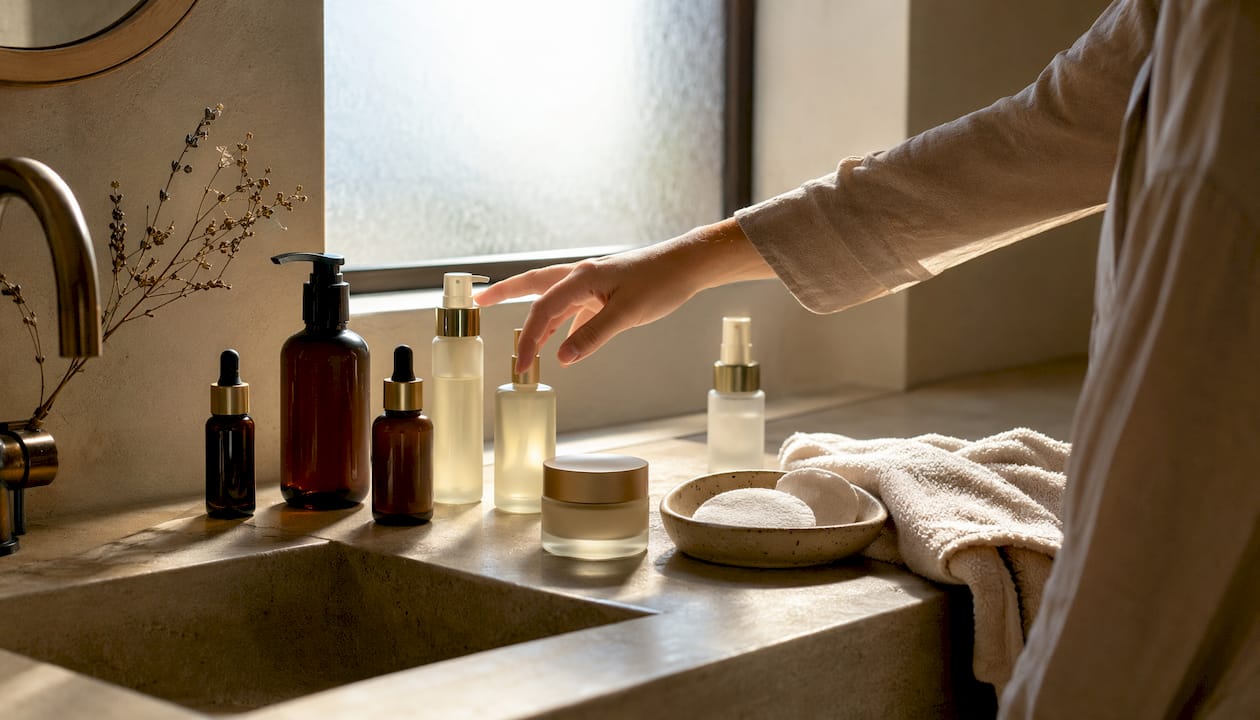
What do effective morning and evening routines look like?
The logic is simple: mornings are for defense, evenings are for repair. Every product in your routine should serve one of those two purposes.
AM routine (defense and hydration):
- Rinse or gentle cleanse: In the morning, a water rinse or mild cleanser is usually sufficient unless you have oily skin or applied an occlusive the night before.
- Vitamin C serum: Apply to dry skin. Give it 60 seconds to absorb before the next step.
- Moisturizer: Lock in hydration and reinforce the barrier before UV exposure.
- Broad-spectrum SPF 30+: The last step, every morning, regardless of weather. Reapply every two hours if you are outdoors.
PM routine (repair and targeted actives):
- Cleanser: A thorough cleanse to remove SPF, pollution, and sebum. Double cleansing (oil cleanser followed by water-based cleanser) is useful if you wear SPF or makeup.
- Targeted active serum: This is where retinol, tranexamic acid, peptides, or polynucleotides go. Apply one active at a time, especially when introducing something new.
- Moisturizer: Seal in the active and support overnight repair.
- Optional occlusive or barrier repair agent: A thin layer of petrolatum, squalane, or a ceramide-rich balm over a compromised barrier accelerates recovery.
Introducing a new active safely: Start at the lowest available concentration, two to three nights per week. Patch test on the inner arm for 48 hours first. After four weeks of tolerance, increase frequency. Never introduce two new actives in the same week. For layering guidance that covers sequencing and absorption, Cellure’s layering workflow is a practical reference.
How long until you see results, and how do you measure progress?
Skin biology does not care about your timeline. Changes happen at the pace of cellular processes, not marketing promises.
| Outcome | Typical timeline | Notes |
|---|---|---|
| Hydration and surface texture | 4–6 weeks | Often the first visible change; measurable with corneometry |
| Barrier repair | 4–8 weeks | TEWL reduction is the objective marker |
| Pigment reduction | 12–24 weeks | Requires consistent active use and daily SPF |
| Fine line reduction | 12–24 weeks | Retinoids and peptides; collagen response is gradual |
| Collagen remodeling | Up to 12 months | Dermal changes continue well beyond surface improvement |
Measurement checklist:
- Standardized photos every four weeks (same lighting, angle, and distance)
- Hydration self-check: does skin feel plump and resilient 60 minutes after moisturizing?
- Symptom journal: note any redness, flaking, or breakouts after introducing a new product
- Professional TEWL or corneometry at baseline and at 12 weeks if available
- Track your primary concern specifically, not a general impression of “better skin”
If you see no objective change after 12 weeks of consistent use, the right move is not to immediately switch products. Clinicians recommend re-evaluating concentration, formulation, and whether the original diagnosis was correct. For a structured list of indicators to track, Cellure’s tracking guide covers nine specific markers worth monitoring.
Common misconceptions that block results
The most persistent myth in skincare is that more products equal better results. Clinicians consistently report the opposite: simplified routines that protect the barrier and allow biological processes to run their course outperform complex, multi-active stacks.
Myth vs. fact:
- Myth: Expensive products work better. Fact: Ingredient identity, concentration, pH, and vehicle determine efficacy. A well-formulated drugstore retinol beats a poorly formulated prestige one.
- Myth: More actives = faster results. Fact: Overuse of actives increases irritation risk and can damage the barrier, reversing progress.
- Myth: If it tingles, it’s working. Fact: Tingling often signals irritation, not efficacy. A compromised barrier absorbs actives less efficiently, not more.
- Myth: Natural ingredients are always safe. Fact: Allergic reactions to botanical extracts are common. “Natural” is not a synonym for hypoallergenic.
Best-practice rules:
- Build your barrier first. If your skin is reactive or compromised, no active will perform well until the barrier is intact.
- One active at a time. Introduce it, document the response, and give it 6–12 weeks before adding anything new.
- Protect the barrier daily. SPF is not optional; UV damage undoes repair faster than any active can rebuild it.
Pro Tip: If your skin is suddenly reacting to products it previously tolerated, the problem is almost always barrier disruption, not a new allergy. Strip back to cleanser, moisturizer, and SPF for two weeks before reintroducing anything.
For a detailed guide on barrier repair strategies, Cellure’s barrier guide covers the science and the practical steps.
How to build a results-driven plan from scratch
Whether you are starting alone or working with a clinician, the process is the same: assess, simplify, introduce, document, and adjust.
- Take baseline photos. Front, left profile, right profile. Natural light, no makeup, same time of day. This is your reference point for everything that follows.
- Choose your foundation products. Cleanser, antioxidant, moisturizer, SPF. Get these right before adding anything else.
- Identify your primary concern. One concern, one active. Pick the ingredient with the strongest evidence for that concern.
- Introduce the active at low frequency. Two to three times per week for the first four weeks. Patch test first.
- Document at four-week checkpoints. New photos, symptom notes, hydration check. Compare against baseline.
- At 12 weeks, assess objectively. If your primary concern has not improved measurably, review concentration, formulation, and whether the diagnosis was correct before switching products.
Questions to ask a clinician or product advisor:
- What concentration of this active is in the formula, and is it within the clinically studied range?
- What delivery system does this use, and how does it affect penetration?
- What is a realistic timeline for my specific concern?
- Are there any interactions I should know about with my current routine?
- At what point should I escalate to prescription-strength or in-clinic treatment?
Professional treatments are built into multi-visit plans with assessment at each stage. If your concern is persistent hyperpigmentation, recalcitrant acne, or significant volume loss, a single product is unlikely to be sufficient. A dermatologist or licensed esthetician can confirm whether topical actives are the right tool or whether an in-clinic procedure is the more efficient path. Cellure’s step-by-step routine guide is a useful starting point for building that plan at home.
How Cellure applies these principles in its formulations
Cellure’s product line is built around the same four pillars that define results-driven skincare: actives at clinically meaningful concentrations, delivery vehicles matched to each molecule’s chemistry, formulations designed for barrier compatibility, and protocols structured around consistent use over realistic timelines.
The Complete Skin Repair Kit is the clearest expression of this approach. It brings together targeted serums addressing firmness, volume, tone, hydration, and barrier recovery into a curated protocol with instructions for progression. Rather than asking you to assemble a routine from scratch, it maps each product to a specific biological outcome and sequences them in a way that supports tolerance and cumulative effect.
Trust signals to check on any Cellure product page:
- Full INCI ingredient lists with key actives named and, where disclosed, their concentrations
- Clinical or consumer outcome metrics tied to specific formulations
- Before-and-after photography with documented timelines
- Author credentials:
- Consumer outcome data:
- Customer outcomes:
The actives Cellure uses, including peptides, polynucleotides, PDRN, EGF, copper peptides, tranexamic acid, and hyaluronic acid at multiple molecular weights, are chosen because each has a published mechanism of action and a track record in clinical or consumer studies. Formulations are designed to be gentle enough for sensitive skin while maintaining the concentrations needed to produce measurable change.
Cellure’s approach starts from the premise that a product should be able to answer one question: what biological change does this produce, and how do you measure it? Every formula in the line is built to answer that question with specifics, not marketing language.
The science behind Cellure’s development is documented on the brand’s site for readers who want to go deeper on the evidence base.
Key Takeaways
Results-driven skincare works because it pairs targeted actives at effective concentrations with personalized assessment, consistent application, and objective measurement over biologically realistic timelines.
| Point | Details |
|---|---|
| Four pillars of efficacy | Right molecule, effective concentration, matched delivery vehicle, and consistent timeline all must be present. |
| Timelines are biological | Hydration and texture improve in 4–6 weeks; pigment and collagen changes take 12–24 weeks or longer. |
| Simplicity outperforms complexity | A four-product routine captures approximately 80% of topical skincare benefit; more actives increase irritation risk. |
| Measure, don’t guess | Standardized photos, TEWL checks, and symptom journals turn subjective impressions into objective data. |
| Cellure’s Complete Skin Repair Kit | A curated, evidence-aligned protocol targeting firmness, tone, hydration, and barrier repair with bioactive ingredients. |
The case for slowing down
There is a version of results-driven skincare that the industry sells and a version that actually works. The industry version involves a new serum every month, a 12-step routine, and the constant anxiety that you are missing something. The version that works looks almost boring by comparison: four solid products, one active introduced at a time, consistent application, and the patience to let biology do its job.
The most common reason people fail to see results is not that they chose the wrong products. It is that they changed too many variables too quickly, disrupted their barrier, and then attributed the resulting sensitivity to the products rather than the approach. Skin is not a problem to be solved with more inputs. It is a biological system that responds to the right inputs, consistently applied.
If your routine is not producing measurable change after three months, the answer is almost never “add more.” It is usually “check the concentration, check the formulation, and consider whether the diagnosis was right.” That is the mindset that separates performance skincare from skincare theater.
Cellure’s Complete Skin Repair Kit: a protocol built for real results
Visible, measurable skin improvement does not require a complicated routine. What it requires is the right actives, formulated correctly, applied consistently. Cellure’s Complete Skin Repair Kit is designed around exactly that: a sequenced protocol using peptides, polynucleotides, tranexamic acid, and hyaluronic acid to address firmness, tone, hydration, and barrier recovery in a single, cohesive system.
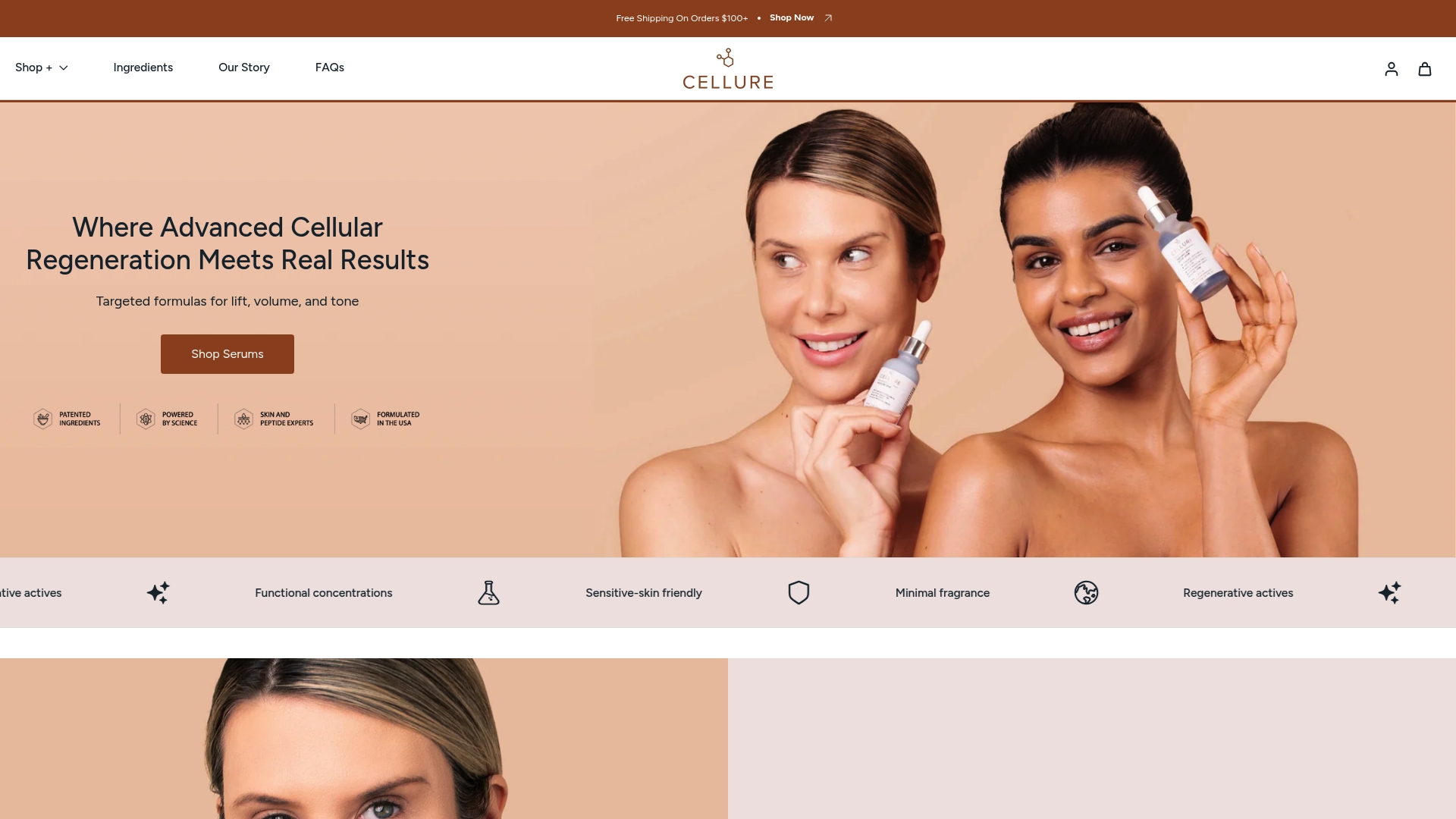
Each product in the kit maps to a specific biological outcome, with instructions for progression that mirror the introduction schedule outlined in this article. The formulations are gentle enough for sensitive skin and suitable for adults experiencing early to advanced signs of aging. Cellure sells direct-to-consumer with subscription options for ongoing use, and the brand’s blog provides detailed ingredient and protocol content for readers who want to go deeper before purchasing.
Visit Cellure to explore the full product range, review ingredient transparency, and find the protocol that fits your skin’s specific needs.
Useful sources
The following resources support the claims in this article and are worth reading if you want to go deeper on any specific topic.
- Avenue Five Institute: Result-Oriented Skin Care — Explains the professional framework for results-oriented skincare, including skin analysis, ingredient analysis, and lifestyle integration.
- American Academy of Dermatology: Basic Skin Care — Authoritative guidance on product application order and evidence-backed routine basics from a leading US dermatology body.
- Cleveland Clinic: Skin Care Routine Step-by-Step Guide — Dermatologist-reviewed guidance on building a routine matched to skin type and goals, with notes on price vs. efficacy.
- Northwestern Medicine: Do You Really Need a Skin Care Routine? — Covers skin types, seasonal adjustments, and the role of lifestyle factors in skin health.
- Soothhealth: Skincare That Actually Works — Evidence-based breakdown of timelines, formulation science, and reassessment guidelines.
- Glowstice: The Minimal Effective Routine — Explains the four-product framework and why simplicity improves adherence and outcomes.
- Cellure: Complete Skin Repair Kit — Product page for Cellure’s curated protocol targeting cellular repair and visible skin improvement.
- Cellure: Clinically Supported Skincare for Aging Skin — Cellure’s evidence framing for aging-related concerns, with ingredient and outcome context.
This article is general information, not medical or professional skincare advice. For persistent skin concerns or before starting prescription-strength treatments, consult a licensed dermatologist or esthetician for guidance specific to your situation.