


Skincare Layering Workflow: Maximize Every Product
TL;DR:
- Applying skincare products from the thinnest to thickest texture ensures proper absorption and effectiveness. Waiting 30 to 90 seconds between layers prevents pilling and ingredient conflicts, enhancing results. Proper sequencing and timing maximize ingredient performance and minimize skin irritation.
A skincare layering workflow is the practice of applying products in a specific order, from thinnest to thickest consistency and lowest to highest pH, so each formula absorbs fully before the next one lands. Get this order wrong and you waste money. Get it right and every ingredient reaches the skin cells it was formulated to target. The difference between a routine that delivers results and one that just sits on the surface comes down to sequence, timing, and compatibility. This guide covers the science, the step-by-step process, and the mistakes that quietly sabotage even expensive routines.
What key principles govern the correct skincare layering workflow?
The core rule is simple: apply products from the thinnest texture to the thickest. Watery toners go on before gel serums. Gel serums go on before creams. Creams go on before oils. This sequence exists because heavier formulas create a physical barrier that blocks lighter ones from penetrating the skin.
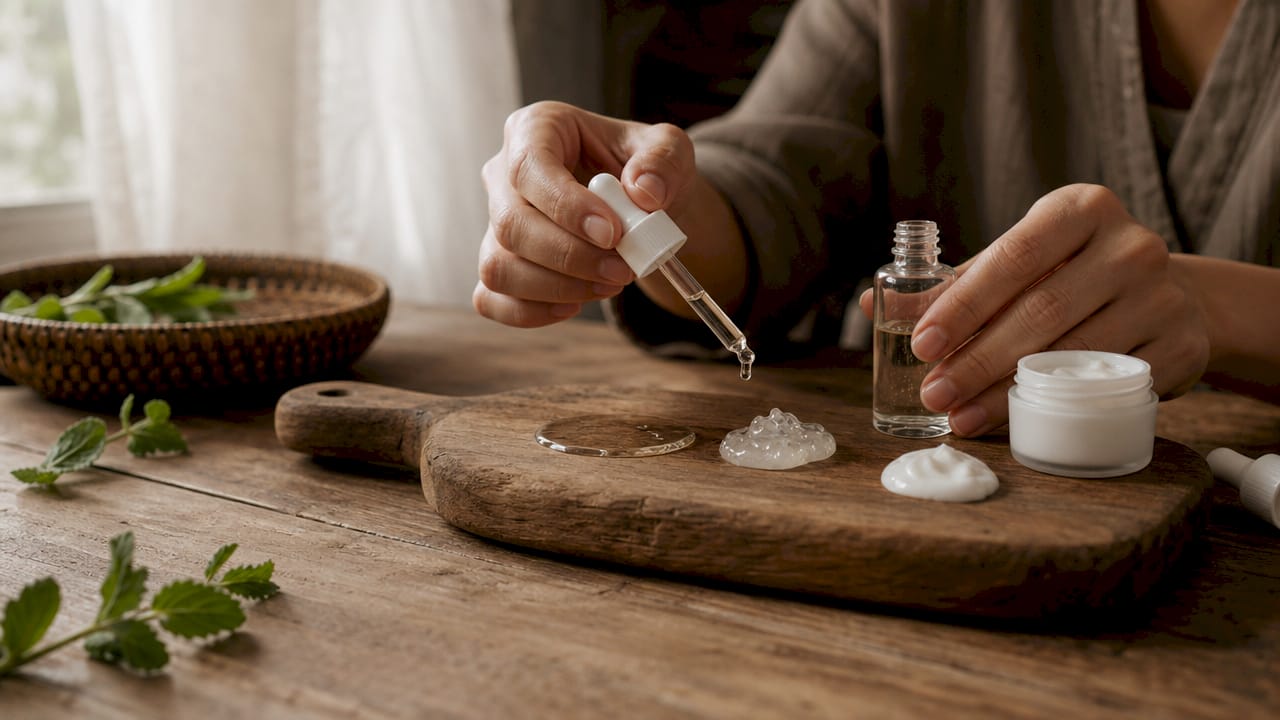
pH order matters just as much as texture. Low-pH products like vitamin C serums and chemical exfoliants need to be applied before higher-pH moisturizers. Applying a high-pH product first raises the skin’s surface pH, which reduces the effectiveness of any acid-based active that follows. The skin’s natural pH sits around 4.5 to 5.5, and your routine should work with that, not against it.
Timing between layers is the principle most people skip. A 30–90 second pause between each product allows the carrier ingredients to dissipate and the active compounds to begin absorbing. The American Academy of Dermatology endorses this wait time to prevent pilling and ingredient neutralization. Sixty seconds is the practical default for water-based products.
The layering principles that govern effective application are:
- Thinnest to thickest: Micellar water, toner, essence, serum, eye cream, moisturizer, oil, SPF.
- Lowest to highest pH: Vitamin C and exfoliants first, then peptide serums, then moisturizers.
- Water-based before oil-based: Water-soluble actives penetrate first; oils seal everything in.
- Occlusives always last: Occlusive oils and heavy creams form a physical barrier that blocks anything applied after them.
- Pause between layers: 30–90 seconds per layer, no exceptions.
Pro Tip: Set a 60-second phone timer after each serum application. It feels slow at first, but it becomes automatic within a week and the difference in product performance is real.
How to execute the ideal AM and PM skincare routines step by step
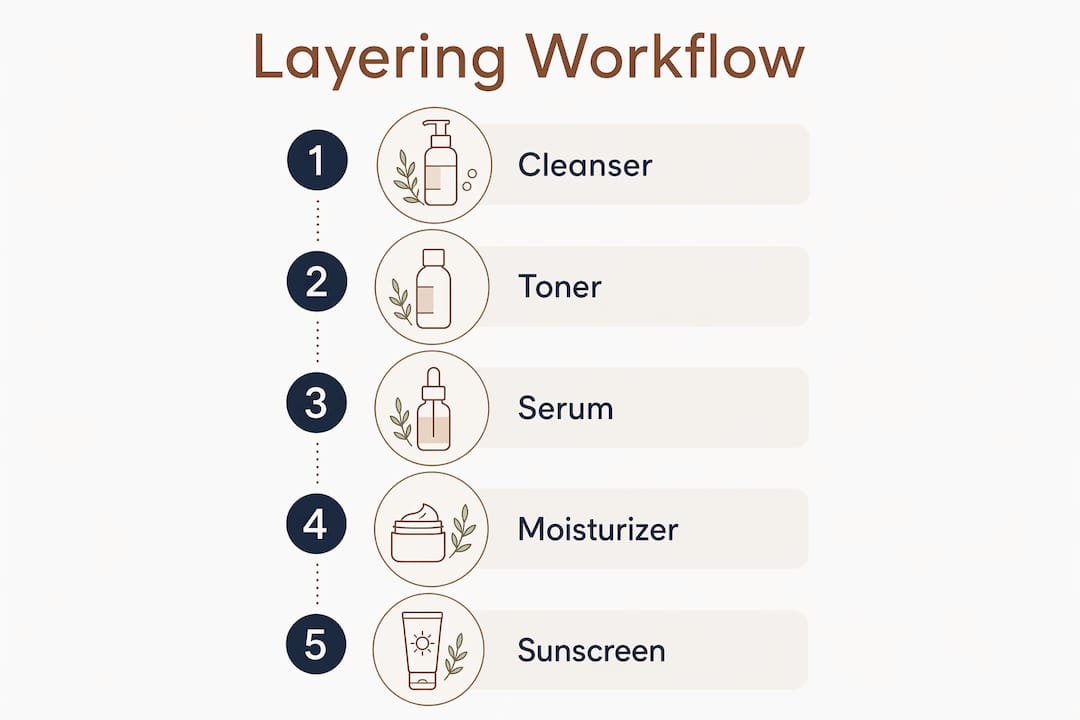
Morning and evening routines follow the same layering logic but serve different biological goals. The AM routine protects. The PM routine repairs. Mixing up that priority is one of the most common errors in any layering products guide.
Morning routine steps
- Cleanser. Use a gentle, low-pH cleanser to remove overnight sebum without stripping the barrier. A foaming cleanser is fine for oily skin; a cream cleanser works better for dry or sensitive types.
- Toner or essence. Apply a hydrating toner or essence immediately after cleansing while skin is still slightly damp. Pat it in rather than wiping to preserve the moisture gradient.
- Vitamin C serum. Vitamin C is water-soluble and low-pH, so it goes on early. Water-soluble ingredients like vitamin C must be applied before peptides and oil-based products to reach the skin effectively.
- Additional serums. Hyaluronic acid or niacinamide serums layer next. Wait 60 seconds between each one.
- Eye cream. Apply eye cream before your moisturizer. Under-eye skin is about 0.5 mm thick, and placing a richer moisturizer over the top helps lock in the eye treatment rather than dilute it.
- Moisturizer. A lightweight gel or lotion works for most AM routines. Heavier creams are better saved for PM.
- SPF. Sunscreen is always the final morning step. Wait 2–3 minutes before applying makeup to let the sunscreen set fully.
Evening routine steps
The PM routine adds two steps the morning skips: double cleansing and an occlusive final layer.
| Step | Product type | Wait time |
|---|---|---|
| 1 | Oil-based cleanser | None |
| 2 | Water-based cleanser | None |
| 3 | Toner or essence | 30 seconds |
| 4 | Treatment serum (retinoid, AHA, peptide) | 60–90 seconds |
| 5 | Eye cream | 30 seconds |
| 6 | Moisturizer | 60 seconds |
| 7 | Facial oil or occlusive balm | Final step |
Double cleansing at night is non-negotiable when you wear sunscreen or makeup. An oil-based cleanser dissolves SPF and sebum. A water-based cleanser removes what the oil left behind. Skipping this step means repair actives are trying to penetrate through a layer of sunscreen residue.
Pro Tip: Apply your retinoid or exfoliant serum to dry skin, not damp. Damp skin increases absorption speed, which raises irritation risk with strong actives. Dry skin gives you more control.
What common mistakes affect skincare layering and how to avoid them?
The most damaging mistake is combining incompatible actives in the same routine. Dr. Venus Ramos, M.D. advises strict separation of vitamin C and benzoyl peroxide, and retinoids with strong exfoliants. Pairing these in one session causes deactivation of the active ingredients and, in many cases, significant skin irritation.
The other mistakes are less dramatic but equally costly over time:
- Skipping wait times. Applying moisturizer immediately after a serum causes pilling. The serum has not absorbed, so the two formulas ball up on the surface instead of working independently.
- Over-layering. Applying more than 3–4 leave-on products in one session increases the risk of pilling, irritation, and ingredient conflict. More products do not mean more results.
- Oils before water-based serums. An oil applied mid-routine blocks every water-based product that follows. Oils belong at the end, always.
- Using the same routine AM and PM. Retinoids and strong exfoliants are PM actives. Vitamin C and SPF are AM actives. Swapping them reduces efficacy and raises photosensitivity risk.
- Ignoring skin type differences. Oily skin benefits from lighter, gel-based layers. Dry skin needs richer textures and occlusive final steps. Sensitive skin needs fewer active layers and longer introduction periods for new products.
“Proper scheduling of actives is essential for both results and skin health. Many people incorrectly combine incompatible actives in the same routine, leading to irritation and reduced efficacy.” — iHerb Wellness Hub
For those with reactive or sensitive skin, guidance on avoiding skin irritation during active introduction is worth reviewing before adding new treatment products to your routine.
How to choose and layer compatible skincare actives for maximum benefit
Active ingredients are where the real results happen, and also where most layering errors occur. The key is understanding which actives work together and which ones need to be kept apart.
Compatible pairings that work well together:
- Niacinamide and hyaluronic acid: both are water-based, non-acidic, and layer without conflict.
- Peptides and hyaluronic acid: peptides are larger molecules and go on after hyaluronic acid.
- Vitamin C (L-ascorbic acid) and ferulic acid: ferulic acid stabilizes vitamin C and boosts its antioxidant effect.
- Tranexamic acid and niacinamide: both address uneven tone and work at compatible pH levels.
- Polynucleotides and peptides: both support cellular repair and can be used in the same PM routine.
Actives that require separation by time of day or alternate days:
- Retinoids and AHAs/BHAs: use retinoids PM on one night, exfoliants on alternate nights.
- Vitamin C and retinoids: vitamin C is AM, retinoids are PM, no exceptions.
- Benzoyl peroxide and any antioxidant serum: benzoyl peroxide oxidizes and deactivates vitamin C and similar actives.
Serums with smaller molecules should always be applied before larger-molecule products. Hyaluronic acid and vitamin C go first. Peptides and oil-based formulas follow. This sequence reflects how transdermal penetration actually works at the molecular level.
For those focused on aging concerns, bioactive ingredients for aging skin like peptides, polynucleotides, and tranexamic acid each have specific placement needs within a layering sequence. Peptides go after water-based serums and before moisturizer. Polynucleotides, which support cellular regeneration, are typically applied as a treatment serum in the PM routine.
Introducing new actives slowly is not optional. Minimalism and consistency outperform excessive layering every time. Add one new active per week, monitor your skin’s response, and only add the next product once your skin has adjusted.
Pro Tip: Build your serum layering sequence around one hero active per routine, not three. One well-absorbed active outperforms three products fighting for penetration.
Key Takeaways
A correct skincare layering workflow, built on the thinnest-to-thickest rule, pH ordering, and 30–90 second absorption pauses, is the single most effective way to maximize what your products actually deliver.
| Point | Details |
|---|---|
| Layer thin to thick | Apply toners and serums before creams and oils to prevent absorption blockage. |
| Respect pH order | Use low-pH actives like vitamin C before higher-pH moisturizers for full efficacy. |
| Pause between layers | Wait 30–90 seconds between each product to prevent pilling and ingredient conflict. |
| Separate incompatible actives | Keep retinoids and exfoliants on alternate nights; keep vitamin C in the AM only. |
| Limit leave-on products | Use no more than 3–4 leave-on products per session to avoid barrier disruption. |
What I’ve learned from watching routines go wrong
After years of working with skincare formulations and reading the clinical literature, the pattern I see most often is not ignorance. It is impatience. People buy the right products, layer them in roughly the right order, and then rush through the routine in 90 seconds flat. The wait times feel like wasted time. They are not.
The 30–90 second pause between layers is where absorption actually happens. Skip it and you are essentially applying products on top of each other in one wet layer, which is exactly what causes pilling and the frustrating sense that nothing is working. The products are fine. The timing is the problem.
The second thing I see constantly is over-complication. A five-step routine done consistently beats a ten-step routine done sporadically. The skin responds to repetition. It adapts to actives over weeks, not days. Introducing a retinoid, a new exfoliant, and a peptide serum in the same week is a setup for a reactive episode that sends people back to basics and costs them a month of progress.
My honest advice: build your routine around two or three well-chosen actives, learn their compatibility rules, and give each one at least four weeks before judging results. The science of bioactive layering is not complicated once you stop treating your face like a testing ground for every new product.
— Sara
Cellure’s bioactive formulas, built for precise layering
Cellure formulates its serums and treatment kits around clinically supported bioactive ingredients, including peptides, tranexamic acid, and polynucleotides, each chosen for their specific role in cellular repair and their compatibility within a layered routine.
Every Cellure product is designed with viscosity and pH in mind, so it fits cleanly into the layering sequence without conflict. Whether you are addressing loss of firmness, uneven tone, or volume, the formulas are built to absorb at the right stage of your routine and deliver at the cellular level. Visit Cellure’s full product range to find the serums and repair kits that match your skin’s specific needs and slot directly into your existing workflow.
FAQ
What is the correct order for skincare layering?
Apply products from thinnest to thickest texture and lowest to highest pH. The standard sequence is cleanser, toner, serum, eye cream, moisturizer, oil, then SPF in the morning.
How long should you wait between skincare layers?
Wait 30–90 seconds between each product. Sixty seconds is the practical default for water-based serums and allows carrier ingredients to dissipate before the next layer.
Can you layer vitamin C and retinol in the same routine?
No. Vitamin C belongs in the AM routine and retinol belongs in the PM routine. Combining them in one session reduces the efficacy of both and increases irritation risk.
Why do skincare products pill when layered?
Pilling happens when products are applied too quickly without adequate absorption time. Applying moisturizer over a serum that has not yet absorbed causes the two formulas to ball up on the surface instead of penetrating.
How many serums can you layer at once?
Limit leave-on products to 3–4 per session. Layering more than that increases the risk of ingredient conflict, barrier disruption, and reduced absorption for every product in the stack.