


Growth Factor Serum: What It Is and Why It Works
A growth factor serum is a skincare product containing biologically active proteins that signal skin cells to repair, rebuild, and renew. These proteins, called growth factors, are the same molecules your skin uses naturally to maintain itself. When you apply them topically, you are essentially giving your skin’s repair system a direct nudge. The result, with consistent use, is firmer, more hydrated skin with improved appearance of fine lines.
Growth factor serums differ from retinol and vitamin C at the most fundamental level. Retinol accelerates cell turnover; vitamin C neutralizes free radicals. Growth factors do something more targeted: they intervene in cell-to-cell communication to support the skin’s own restoration process. That mechanism is why dermatologists increasingly recommend them alongside, not instead of, other actives.
Key functions of growth factor serums at a glance:
- Stimulate collagen and elastin synthesis for improved firmness
- Accelerate cell renewal and wound healing
- Boost hyaluronic acid production for deeper hydration
- Support the formation of new small blood vessels for better nutrient delivery
- Reduce the appearance of fine lines and uneven texture over time
Table of Contents
- How does a growth factor serum work on your skin cells?
- What are the clinically supported benefits of growth factor serums?
- How to apply growth factor serums for the best results
- What makes Cellure’s approach to growth factor formulation different?
- How to choose a reputable growth factor serum in the US market
- What ingredients should you look for in a growth factor serum?
- Cellure’s Complete Skin Repair Kit for cellular renewal
- Key Takeaways
How does a growth factor serum work on your skin cells?
Growth factors are local signaling proteins, not systemic growth hormones. That distinction matters for safety. Hormones are produced by glands and travel through the bloodstream to affect the whole body. Growth factors act locally, binding to specific receptors on the surface of nearby skin cells, particularly fibroblasts and keratinocytes, to trigger targeted repair responses.
Once a growth factor binds to its receptor, it sets off a protein phosphorylation cascade inside the cell. According to StatPearls via NCBI, most cell surface receptors for growth factors show tyrosine kinase activity, meaning they activate a chain of downstream proteins that ultimately alter gene expression. The practical outcome: the cell starts producing more collagen, more elastin, or more of whatever structural protein the signal called for.

The two types you will see most often in serums are EGF (epidermal growth factor) and FGF (fibroblast growth factor). EGF primarily speeds up skin cell turnover and repair. FGF focuses on supporting collagen and elastin production, which translates to structure and bounce. Both work through receptor binding, but they target different cell populations and trigger different downstream effects.
Key growth factor types in skincare:
- EGF (epidermal growth factor): speeds cell turnover, supports wound healing, well-documented in post-procedure care
- FGF (fibroblast growth factor): promotes collagen and elastin synthesis, improves skin structure
- TGF-beta (transforming growth factor beta): regulates tissue remodeling and scar formation
- VEGF (vascular endothelial growth factor): supports new blood vessel formation for better nutrient supply
Pro Tip: Not all cytokines are growth factors. As Britannica notes, only cytokines that stimulate cell growth or differentiation qualify. Some cytokines actually inhibit growth or trigger cell death, so the label “growth factor” on a product is more specific than it sounds.
What are the clinically supported benefits of growth factor serums?
The evidence base for growth factor serums is genuinely solid, particularly for firmness, hydration, and texture. Clinical studies document measurable reductions in wrinkles, improved skin hydration, and enhanced skin texture with regular use over weeks to months. Board-certified dermatologist Blair Murphy-Rose, MD, states that clinical trials have demonstrated their ability to improve skin firmness, hydration, and elasticity.
Growth factors stimulate collagen and elastin production directly, which is why the firmness improvement tends to feel structural rather than just surface-level. Retinol achieves something similar but through a different pathway, and it comes with a well-known tradeoff: irritation, peeling, and a gradual introduction period. Growth factor serums, by contrast, have been shown in clinical settings to improve skin with minimal irritation, making them a realistic option for people whose skin cannot tolerate retinol.
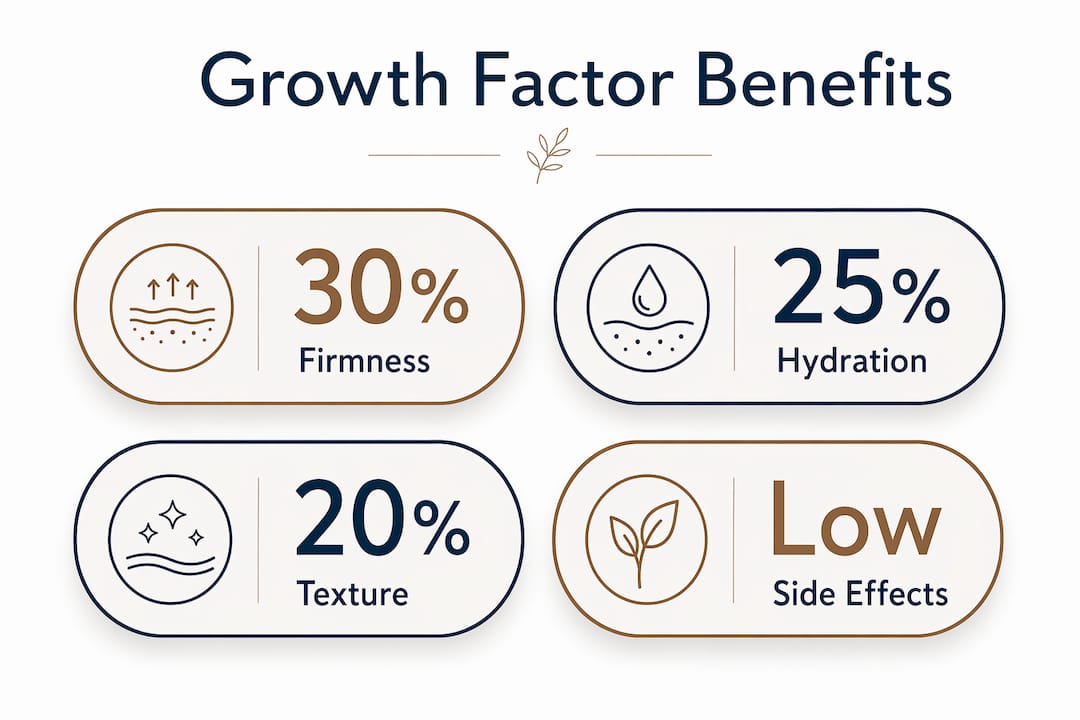
Side effects are minor and uncommon. Growth factor serums may cause occasional dryness or mild rashes but are generally safe for all skin types when properly formulated. The evidence-backed advantages of cellular rejuvenation extend beyond wrinkle reduction to include overall skin quality and resilience.
| Benefit | Evidence level | Typical timeline |
|---|---|---|
| Reduced fine lines and wrinkles | Clinical studies | consistent use over time |
| Improved skin firmness | Clinical trials | consistent use over time |
| Enhanced hydration | Clinical studies | consistent use over time |
| Better skin texture | Clinical studies | consistent use over time |
| Minimal irritation vs. retinol | Comparative clinical data | noted over usage |
Clinically supported benefits:
- Increased collagen and elastin production
- Improved skin firmness and elasticity
- Reduced appearance of fine lines
- Enhanced hydration through hyaluronic acid stimulation
- Accelerated repair of environmentally damaged skin
- Well tolerated by sensitive skin types
How to apply growth factor serums for the best results
Consistency is the single biggest factor in whether a growth factor serum works for you. Noticeable improvements typically require several weeks of regular use, and dermatologist Dr. Camp recommends giving any growth factor serum adequate time before making a final judgment on its effectiveness.
A straightforward daily routine looks like this:
- Cleanse thoroughly. Start with a gentle, pH-balanced cleanser to remove makeup, sunscreen, and surface debris. Growth factors need clean skin to reach their target receptors.
- Apply the serum to damp skin. Press a few drops into your face and neck while skin is still slightly damp. Avoid rubbing, which can disrupt the proteins before they absorb.
- Wait 60 seconds. Let the serum settle before layering anything on top.
- Follow with a moisturizer. A hydrating moisturizer locks in the serum and supports the skin barrier while the growth factors do their work.
- Apply SPF in the morning. Growth factors support repair, but UV exposure undoes it. Broad-spectrum SPF 30 or higher is non-negotiable.
- Use once or twice daily. Most formulas are designed for morning and evening use. Check your specific product’s instructions.
- Avoid pairing with strong acids on the same application. Low-pH exfoliants like AHAs and BHAs can denature proteins. Use them at a different time of day or on alternating evenings.
For sensitive skin, start with once-daily application in the evening and assess tolerance over two weeks before adding a morning application. Growth factor serums pair well with peptides, which work through complementary pathways commonly enhanced by microneedling benefits for a rejuvenated, youthful face. You can learn more about using peptides alongside serums to support firmness and glow.
What makes Cellure’s approach to growth factor formulation different?
Cellure builds its serums around clinically supported bioactive ingredients, with a particular focus on peptides and polynucleotides alongside growth factor signaling mechanisms. The formulations are designed to be gentle enough for daily use on all skin types, including reactive and post-procedure skin, without sacrificing the cellular-level activity that makes these products worth using.
The brand’s use of polynucleotides is worth noting. These are DNA-derived fragments that support tissue repair and hydration at a cellular level, complementing the signaling work of growth factors. Combined with targeted peptides, the result is a multi-pathway approach to skin renewal rather than a single-ingredient bet.
What sets Cellure’s formulations apart:
- Peptides that mimic growth factor signaling for stable, effective delivery
- Polynucleotides for deep cellular repair and hydration support
- Tranexamic acid for brightening and uneven tone correction
- Gentle pH-balanced bases that preserve ingredient integrity
- Suitable for all skin types, including sensitive and aging skin
Pro Tip: Full-protein growth factors are unstable and large, making skin penetration difficult. Biomimetic peptides are smaller, more stable alternatives that trigger the same repair pathways. Cellure’s peptide-forward formulations use this science to deliver consistent results without the stability issues of raw protein extracts.
Growth factor sources vary considerably across the industry, from human fibroblast cultures to recombinant plant-derived proteins, each with different purity profiles and ethical considerations. Cellure’s focus on biomimetic peptides sidesteps many of these sourcing complexities while maintaining the cellular signaling benefits that matter for anti-aging outcomes. For a broader look at what makes serums effective in 2026, the science points consistently toward ingredient stability and bioavailability as the deciding factors.
How to choose a reputable growth factor serum in the US market
The US market for growth factor serums is crowded, and the quality gap between products is real. A few criteria separate the serums worth buying from the ones that are mostly marketing.
Check the ingredient list first. Growth factors or their biomimetic peptide equivalents should appear in the first half of the ingredient list, not buried near the bottom where concentrations are negligible. If a product leads with water and fragrance, the active content is likely too low to do much.
Look for clinical backing, not just claims. Phrases like “clinically tested” mean almost nothing without published data or dermatologist endorsement behind them. Seek out brands that cite specific studies or have board-certified dermatologists involved in formulation. Science-backed serums with transparent ingredient rationale are a reliable signal of quality.
Consider the delivery format. As noted earlier, full-protein growth factors face penetration challenges. Products using biomimetic peptides or conditioned media from stem cell cultures tend to offer more reliable delivery. Neither approach is inherently superior for every skin type, but the formulation logic should be clearly explained.
Avoid products with unnecessary irritants. Alcohol, synthetic fragrance, and high concentrations of essential oils can disrupt the skin barrier and interfere with the signaling pathways growth factors depend on. A clean, minimal base is a good sign.
What ingredients should you look for in a growth factor serum?
The ingredient list tells you more than any marketing claim. These are the actives with genuine evidence behind them.
Peptides are the most practical delivery vehicle for growth factor activity. Biomimetic peptides like Matrixyl (palmitoyl pentapeptide-4) and Argireline (acetyl hexapeptide-3) signal fibroblasts to produce collagen and elastin through pathways similar to EGF and FGF. They are stable, well-tolerated, and extensively studied. For a detailed breakdown of top ingredients for skin rejuvenation, peptides consistently rank among the most evidence-backed options.
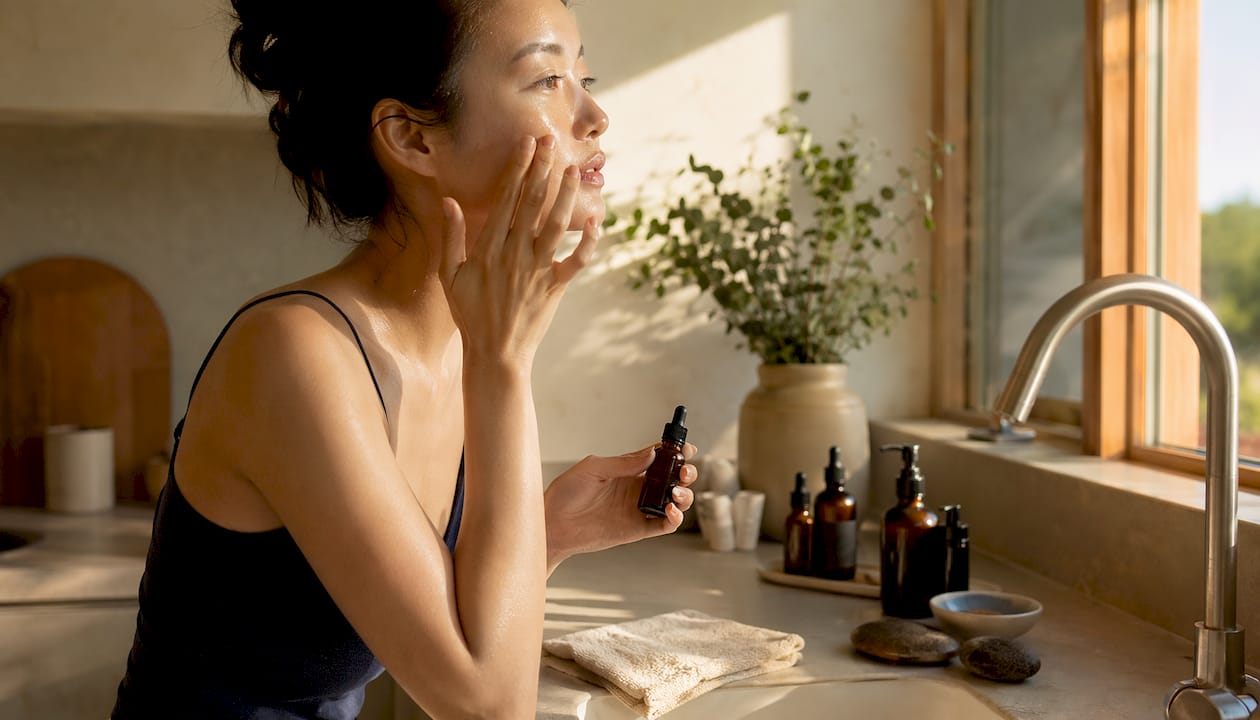
Polynucleotides are DNA-derived fragments that support tissue hydration and repair at the cellular level. They are increasingly common in high-performance serums and work well alongside peptide-based growth factor mimetics.
Hyaluronic acid supports the hydration boost that growth factors trigger indirectly through hyaluronic acid synthesis. Including it in the formula amplifies the moisturizing effect.
Niacinamide pairs well with growth factor serums by supporting the skin barrier and reducing inflammation, creating a more receptive environment for cellular repair signals.
Antioxidants such as vitamin C, vitamin E, and resveratrol protect the growth factors themselves from oxidative degradation and neutralize the free radicals that accelerate aging. Some formulas include them specifically to extend the active life of the growth factor proteins in the bottle and on the skin.
Cellure’s Complete Skin Repair Kit for cellular renewal
If you have been reading about growth factors and thinking about where to actually start, Cellure’s approach is worth a close look. Rather than a single serum, the Complete Skin Repair Kit combines peptides, polynucleotides, and complementary bioactives into a coordinated routine designed for cellular-level renewal.
The kit addresses the three most common aging concerns together: loss of firmness, uneven tone, and compromised hydration. Each product in the system is formulated to work with the others, so the signaling pathways one product activates are supported rather than disrupted by the next step. For people who want the science of growth factor serums without piecing together a routine from scratch, this is a practical, evidence-grounded starting point. Visit Cellure to explore the full kit and find the right fit for your skin.
Key Takeaways
Growth factor serums work by activating the skin’s own cellular repair pathways, and consistent use over at least 8 weeks is required to see measurable improvements in firmness, hydration, and fine lines.
| Point | Details |
|---|---|
| What growth factor serums do | They signal skin cells to produce more collagen, elastin, and hyaluronic acid through receptor-binding pathways. |
| Safety vs. hormones | Growth factors are local signaling proteins, not systemic hormones, making them safe for topical use on all skin types. |
| Timeline for results | Clinical studies show measurable improvements in wrinkles, hydration, and texture after 8 or more weeks of consistent use. |
| Peptides as delivery vehicles | Biomimetic peptides are smaller and more stable than full-protein growth factors, offering more reliable skin penetration. |
| Cellure’s formulation approach | Cellure combines peptides, polynucleotides, and complementary bioactives in the Complete Skin Repair Kit for multi-pathway cellular renewal. |