


Retinaldehyde for Skin Repair: Science-Backed Guide
TL;DR:
- Retinaldehyde is a potent vitamin A precursor that repairs skin by stimulating collagen production and remodeling the extracellular matrix. It converts quickly to retinoic acid, offers measurable improvements within weeks, and thickens the dermis rather than exfoliating its surface. Consistent use with daily sunscreen enhances results, especially in aging and post-procedure skin, making it a valuable middle-ground retinoid option.
Retinaldehyde is a vitamin A precursor that repairs skin at the structural level, stimulating collagen synthesis, accelerating keratinocyte differentiation, and remodeling the extracellular matrix. It sits one enzymatic step away from retinoic acid, which puts it meaningfully ahead of retinol in potency while typically causing less irritation than prescription tretinoin. If you want faster anti-aging results than retinol delivers but aren’t ready for a prescription, retinaldehyde is the most defensible middle ground in the retinoid family.
Quick TL;DR:
- Retinaldehyde converts to all-trans retinoic acid (atRA) in a single enzymatic step, making it more bioavailable than retinol
- Clinical trials show measurable improvements in texture, fine lines, pore size, and hydration, often within 8 weeks
- It thickens the dermis over time rather than simply exfoliating the surface
- Always apply broad-spectrum SPF every morning when using retinaldehyde; photosensitivity increases as cell turnover accelerates
- Start every other night, patch-test first, and pair with a barrier-supportive moisturizer
Action note: Sunscreen is non-negotiable from day one. Retinaldehyde speeds up the shedding of older cells and exposes fresher, UV-sensitive skin underneath. No SPF means you’re actively undoing the repair work.
Table of Contents
- How does retinaldehyde repair skin at the cellular level?
- What does the clinical evidence say about retinaldehyde?
- What retinaldehyde benefits for skin can you realistically expect?
- How does retinaldehyde compare with retinol and tretinoin?
- How do you add retinaldehyde to your skincare routine?
- What are the side effects and precautions you should know?
- How long does retinaldehyde take to show results?
- Deeper research insights: ECM remodeling, senescence, and post-procedure use
- Key Takeaways
- Why retinaldehyde deserves more credit than it gets
- Cellure’s Complete Skin Repair Kit supports your retinaldehyde routine
- Useful sources for further reading
How does retinaldehyde repair skin at the cellular level?
Retinaldehyde works by converting to all-trans retinoic acid in a single enzymatic step, then binding directly to nuclear retinoic acid receptors (RARs) that regulate gene expression across multiple repair pathways. That single-step conversion is the key pharmacokinetic advantage: it’s fast enough to produce meaningful biological effects, but the conversion is still rate-limited, which buffers the irritation response compared to applying retinoic acid directly.
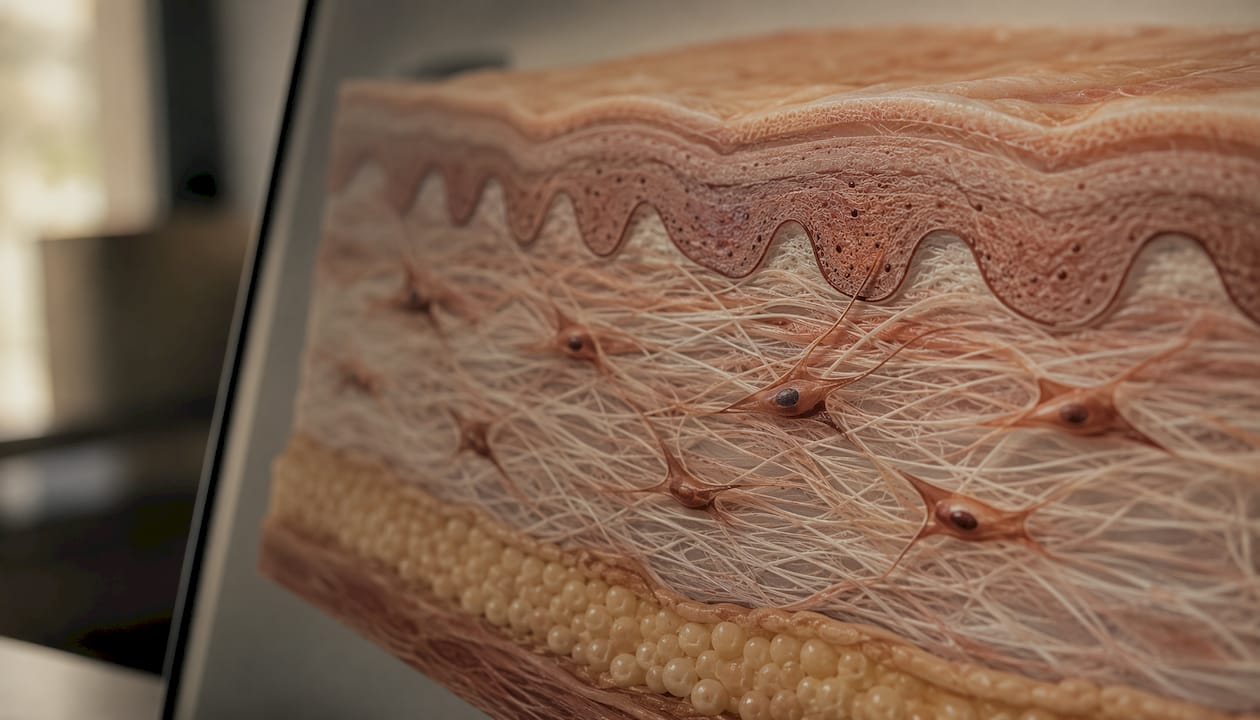
Once retinaldehyde reaches the dermis, it triggers collagen and procollagen synthesis, promotes keratinocyte differentiation and turnover in the epidermis, and modulates myofibroblast activity within the extracellular matrix (ECM). The result isn’t surface-level exfoliation. The dermis itself becomes structurally denser over months of consistent use.
Retinaldehyde doesn’t just resurface skin — it rebuilds it. By stimulating dermal collagen and remodeling the ECM, it addresses the structural causes of aging skin rather than only removing dead cells from the top layer. That distinction separates it from alpha-hydroxy acids and most over-the-counter exfoliants.
A common misconception is that retinoids thin skin. The opposite is true for retinaldehyde: it thickens the dermis by stimulating dermal components, which is central to its role as a cellular repair agent. The initial flaking some people experience is epidermal turnover accelerating, not the skin becoming fragile.
The single-step conversion also explains why retinaldehyde occupies a unique position in the retinoid hierarchy. Retinol requires two oxidative steps to reach atRA. Tretinoin is atRA itself and bypasses conversion entirely, which is why it’s potent and why it irritates. Retinaldehyde lands squarely in the middle: one conversion step to active form, meaningful receptor activation, and a tolerability profile that most adults can manage without a prescription.
What does the clinical evidence say about retinaldehyde?
Randomized controlled trials and controlled studies consistently show measurable improvements in skin texture, fine lines, pigmentation, and hydration with a favorable tolerability profile. The evidence base is smaller than for tretinoin, but the trials that exist are well-designed and clinically meaningful.
Key studies at a glance
| Study / Source | Concentration | Duration | Key Outcomes |
|---|---|---|---|
| Journal of Cosmetic Dermatology RCT | 0.05% and 0.1% | Several months | Significant improvements in texture, hydration, and melanin index; favorable safety profile at both concentrations |
| JDD clinical trial (retinal + peptides) | Not disclosed | 8 weeks | Fine lines: 12% improvement on face; pores: 20% improvement; hyperpigmentation: 19% improvement |
| PubMed post-procedure study | Cream formulation | 1 month | Improved firmness, plumping, and radiance vs. control in post-procedure patients |
The JDD trial is particularly useful because it tracked multiple endpoints across a mixed-skin-type cohort. Chest fine lines improved 11% at 2 weeks and 19% at 8 weeks, which gives a realistic sense of the trajectory: early texture changes, then progressive deepening of results.
What the evidence supports well:
- Texture refinement and pore reduction (consistent across trials)
- Hydration and reduced transepidermal water loss (TEWL)
- Fine line depth reduction within 8 weeks at effective concentrations
- Pigmentation improvement, particularly with consistent use
Where the evidence is still developing:
- Long-term dermal remodeling beyond 6–12 months of use
- Senescence-pathway effects in human clinical populations (preclinical data are promising but not yet confirmed at scale)
- Comparative head-to-head trials against tretinoin in matched populations
Reading clinical endpoints honestly matters here. A 12–20% improvement in a measured parameter is statistically meaningful in a controlled trial, but individual results depend on baseline skin condition, formulation quality, application consistency, and sun protection habits.
What retinaldehyde benefits for skin can you realistically expect?
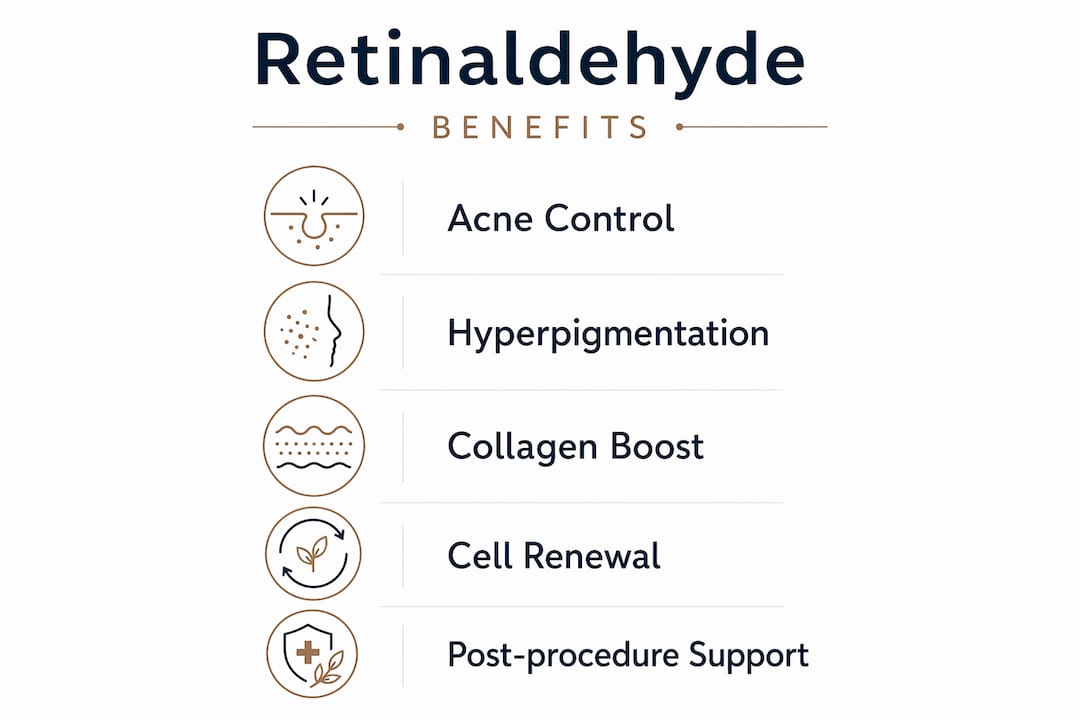
The retinaldehyde benefits for skin span from early surface improvements to longer-term structural changes, and the timeline matters as much as the benefit itself.
Fastest to appear (2–6 weeks):
- Smoother texture as keratinocyte turnover accelerates
- Reduced pore appearance as dead-cell buildup clears
- Improved skin clarity and radiance
Medium-term (8–12 weeks):
- Measurable reduction in fine line depth
- Hyperpigmentation fading as melanin turnover increases
- Improved hydration and barrier function with consistent use
Longer-term (3–6+ months):
- Increased dermal firmness from collagen stimulation
- Visible improvement in skin architecture and elasticity
- Continued ECM remodeling and structural thickening
On acne: retinaldehyde affects sebaceous cells and promotes follicular keratinocyte differentiation, which reduces the comedone formation that drives non-inflammatory acne. Whether retinaldehyde is effective for acne as a primary treatment depends on severity. For mild-to-moderate comedonal acne, it’s a reasonable option. Inflammatory or cystic acne typically warrants a dermatologist conversation rather than an OTC retinoid alone.
Skin of color responds well to retinaldehyde in available trial data, with hyperpigmentation improvement noted in mixed-cohort studies. The lower irritation profile compared to tretinoin is particularly relevant here, since post-inflammatory hyperpigmentation from retinoid irritation is a real risk in deeper skin tones. Starting at a lower concentration and ramping slowly reduces that risk substantially. For a broader look at bioactive ingredients that complement retinaldehyde in aging skin, the evidence base extends well beyond retinoids alone.
How does retinaldehyde compare with retinol and tretinoin?
Retinaldehyde sits closer to prescription tretinoin than retinol does, which is the core reason it outperforms retinol in most head-to-head comparisons while remaining accessible without a prescription.

| Feature | Retinol | Retinaldehyde | Tretinoin (Prescription) |
|---|---|---|---|
| Conversion steps to atRA | Two | One | Zero (active form) |
| Relative potency | Lower | Moderate-high | Highest |
| Typical OTC concentration | 0.05%–0.1% | 0.05%–0.1% | N/A (Rx only) |
| Irritation risk | Low-moderate | Moderate | High |
| Prescription required | No | No | Yes |
| Best for | Beginners, sensitive skin | Moderate users wanting faster results | Severe photoaging, clinician-supervised |
The practical implication: if you’ve been using retinol for 6+ months without significant results, retinaldehyde is the logical next step before escalating to a prescription. If you’re new to retinoids and have sensitive or reactive skin, starting with retinol and transitioning to retinaldehyde after a few months of tolerance-building is a reasonable path.
Tretinoin remains the gold standard for severe photoaging and acne, but it requires medical supervision for good reason. The irritation, peeling, and purging phase can be significant, and the effects on barrier function during the adjustment period are more pronounced. Retinaldehyde offers a middle path that most adults can manage independently, with results that are clinically meaningful rather than marginal. For a broader comparison of anti-aging ingredients and where retinoids fit in a complete regimen, the evidence hierarchy is worth understanding before committing to any single active.
How do you add retinaldehyde to your skincare routine?
Start at night, every other night, and apply sunscreen every single morning. That’s the non-negotiable foundation of any retinaldehyde skincare routine. Everything else is optimization.
Starter schedule
- Nights 1–2: Apply a pea-sized amount to clean, dry skin every other night. No other actives the same evening.
- Weeks 1–2: Continue every other night. Monitor for redness, flaking, or tightness.
- Weeks 3–4: If skin tolerates well, move to 4 nights per week.
- Month 2 onward: Nightly use if tolerated; maintain barrier support throughout.
Concentration and formulation
Common OTC retinaldehyde concentrations run 0.05%–0.1%. Start at 0.05% if you’re new to retinoids or have reactive skin. Cream and oil-based vehicles tend to be more tolerable than water-based serums during the adjustment phase because they buffer the active and support the barrier simultaneously. Serums work well for oilier skin types once tolerance is established.
What to layer with retinaldehyde
Pair retinaldehyde with hyaluronic acid (applied before or after, depending on formulation), niacinamide, and barrier-supportive peptides. These actives reduce TEWL and support the skin’s recovery during the adjustment phase, which directly improves adherence. Pairing with barrier-supportive agents like hyaluronic acid and niacinamide is backed by clinical and practitioner data showing reduced irritation and improved tolerance.
What to avoid in the same routine
- Strong AHAs and BHAs (glycolic acid, salicylic acid): don’t use on the same night; alternate evenings if you use both
- Benzoyl peroxide: can oxidize and degrade retinaldehyde; use on separate nights or in the morning
- Vitamin C (L-ascorbic acid): pH incompatibility and potential irritation stacking; use vitamin C in the morning, retinaldehyde at night
- Other prescription retinoids: never layer two retinoids simultaneously
Pro Tip: Apply retinaldehyde to completely dry skin. Damp skin increases penetration and irritation risk. Wait 10–15 minutes after cleansing before applying, especially in the first month.
What are the side effects and precautions you should know?
Retinaldehyde’s tolerability profile is genuinely better than tretinoin’s, but it’s not irritation-free. The adjustment phase is real, and managing it correctly determines whether you stick with the ingredient long enough to see results.
Common side effects during adjustment (weeks 1–4):
- Mild redness and warmth after application
- Flaking or peeling, particularly around the nose and mouth
- Transient dryness and tightness
- Increased photosensitivity
Safety checklist:
- Apply broad-spectrum SPF 30+ every morning, without exception. Daily sun protection is non-negotiable because retinaldehyde accelerates cell turnover and exposes newer, UV-sensitive cells
- Never use retinaldehyde on broken, sunburned, or acutely irritated skin
- Avoid waxing treated areas; skin is more fragile during the adjustment phase
- Maintain barrier support with a ceramide or peptide moisturizer nightly
- Reduce frequency if irritation persists beyond 2 weeks rather than pushing through
Pregnancy and breastfeeding: Avoid all retinoids, including retinaldehyde, during pregnancy and breastfeeding unless a clinician explicitly authorizes use. The systemic absorption from topical retinoids is low, but the precautionary principle applies given the known teratogenicity of retinoids at therapeutic doses. Consult your OB-GYN or dermatologist before using any vitamin A derivative during this period.
When to see a dermatologist:
- Severe blistering, weeping, or crusting
- Persistent dermatitis that doesn’t resolve after reducing frequency
- Signs of infection (warmth, swelling, pus)
- No improvement after 3–4 months of consistent use at appropriate concentration
This article is general information, not medical advice. Confirm current guidance with a dermatologist or qualified clinician for your specific situation.
How long does retinaldehyde take to show results?
Noticeable texture changes typically appear within 2–6 weeks. Meaningful collagen and firmness improvements usually require 3–6 months of consistent use. That gap between early and structural results is where most people give up too soon.
Timeline breakdown:
- 2–6 weeks: Smoother texture, improved radiance, early pore refinement
- 8 weeks: In the JDD peptide-retinal trial, pore size and hyperpigmentation showed measurable improvement at this mark
- 3–4 months: Visible firmness changes as collagen remodeling accumulates
- 6+ months: Continued dermal thickening and architectural improvement; the compounding effect of sustained ECM remodeling
Tracking progress with consistent photos (same lighting, same angle, every 4 weeks) is more reliable than daily mirror checks. Texture changes are often easier to feel than see early on. If you’re 3 months in with zero perceptible change, the most likely culprits are inconsistent application, insufficient concentration, or sun exposure undoing the repair work.
For adults over 30 managing multiple aging concerns simultaneously, an anti-aging checklist can help prioritize where retinaldehyde fits relative to other actives and lifestyle factors.
Statistic callout: In a clinical trial of a retinaldehyde serum with firming peptides, chest fine lines improved 11% at 2 weeks and 19% at 8 weeks, illustrating the progressive nature of retinaldehyde’s effects.
Deeper research insights: ECM remodeling, senescence, and post-procedure use
The most clinically significant aspect of retinaldehyde’s mechanism, and the one most consumer content ignores, is its effect on the extracellular matrix and myofibroblast activity. ECM remodeling isn’t just about collagen quantity. It involves the organization of collagen fibers, the regulation of matrix metalloproteinases (MMPs), and the differentiation of fibroblasts into myofibroblasts that actively contract and restructure dermal tissue. Retinaldehyde modulates all three of these processes, which is why its effects on skin architecture go beyond what surface-level exfoliants can achieve.
Emerging research also points toward retinaldehyde’s potential role in senescence-associated pathways. Senescent cells accumulate in aged skin and secrete pro-inflammatory signals (the senescence-associated secretory phenotype, or SASP) that degrade surrounding tissue. Preclinical data suggest retinoid interventions may reduce SASP markers, but human clinical data remain early-stage. Practitioners should treat senolysis claims as provisional until larger trials confirm them.
Post-procedure use is where retinaldehyde has the most immediately actionable clinical evidence. A comparative intra-individual study found that a retinaldehyde-based cream with niacinamide and hyaluronic acid improved firmness, plumping, and radiance as early as one month in post-procedure patients, with high compliance and maintained benefits relative to control. This positions retinaldehyde as a practical maintenance tool after in-office treatments like laser resurfacing or microneedling, where the goal is to lock in structural improvements and support barrier recovery simultaneously.
Clinician-facing guidance for post-procedure use:
- Begin retinaldehyde no earlier than 2–4 weeks post-procedure, once the barrier has stabilized
- Pair with hyaluronic acid and calcium-based minerals to reduce TEWL during re-introduction
- Use peptide-containing moisturizers to support fibroblast activity alongside retinaldehyde
- Monitor for signs of barrier compromise (stinging, persistent redness) and reduce frequency if they appear
Pro Tip: When introducing retinaldehyde post-procedure, the “sandwich” method works well: apply a thin layer of hyaluronic acid serum, then retinaldehyde, then a peptide moisturizer on top. This buffers penetration and supports barrier recovery without diluting the active.
Collagen synthesis doesn’t happen in isolation. Nutritional support, particularly adequate vitamin C intake, plays a supporting role in stabilizing newly synthesized collagen fibers. Understanding the collagen synthesis process from multiple angles, topical and systemic, gives a more complete picture of how to support the repair work retinaldehyde initiates.
For a deeper look at why cellular repair is the organizing principle behind effective anti-aging skincare, the mechanisms that make retinaldehyde work are part of a broader biological framework worth understanding.
Key Takeaways
Retinaldehyde repairs skin structurally, not just superficially, by stimulating collagen synthesis and ECM remodeling through a single-step conversion to retinoic acid, with clinical evidence showing measurable improvements in texture, fine lines, and firmness within 8–12 weeks of consistent use.
| Point | Details |
|---|---|
| Single-step conversion | Retinaldehyde converts to retinoic acid in one enzymatic step, making it more potent than retinol and more tolerable than tretinoin. |
| Clinical results timeline | Texture and pore improvements appear within 2–6 weeks; fine lines and firmness improvements require 3–6 months of consistent use. |
| Sunscreen is non-negotiable | Increased cell turnover exposes UV-sensitive skin; broad-spectrum SPF 30+ every morning is required from day one. |
| Avoid conflicting actives | Do not combine retinaldehyde with strong AHAs, BHAs, benzoyl peroxide, or vitamin C in the same evening application. |
| Cellure’s approach | Cellure’s Complete Skin Repair Kit pairs retinaldehyde-supporting actives, including peptides and hyaluronic acid, to support barrier recovery and structural repair together. |
Why retinaldehyde deserves more credit than it gets
Most skincare conversations jump straight from retinol to tretinoin, treating retinaldehyde as a footnote. That’s a mistake, and the clinical data make a strong case for reconsidering that hierarchy.
The real issue is that retinaldehyde is harder to formulate stably than retinol, which is why fewer brands use it and why it gets less shelf space. That’s a manufacturing and commercial constraint, not a reflection of its efficacy. When formulated correctly, with appropriate encapsulation or anhydrous vehicles, retinaldehyde outperforms retinol in every mechanism that matters for structural skin repair: faster conversion to active form, stronger receptor activation, more pronounced ECM effects.
What people underestimate about the effects of retinaldehyde on aging is the compounding nature of dermal remodeling. The first month of use produces surface changes. The third month produces structural ones. Most people assess a retinoid at 6 weeks and conclude it’s “not working” right before the meaningful results would have appeared. The 8-week JDD trial data showing 19–20% improvements in hyperpigmentation and pore size are a useful anchor: if you’re not there yet, the question is whether you’ve been consistent, not whether the ingredient works.
The post-procedure application is the most underused clinical strategy in this space. Using retinaldehyde to maintain and extend the results of in-office treatments is supported by a controlled study and makes mechanistic sense. Yet most post-procedure protocols focus on barrier recovery alone and miss the opportunity to reinforce the structural gains from the procedure itself.
Cellure’s Complete Skin Repair Kit supports your retinaldehyde routine
Getting retinaldehyde right means more than choosing the right concentration. The actives you pair it with determine how well your skin tolerates the adjustment phase and how much of the structural repair work actually sticks.
Cellure’s Complete Skin Repair Kit is built around exactly this principle. The kit combines barrier-supportive bioactives, including peptides, hyaluronic acid, and polynucleotides, that work alongside retinaldehyde to reduce TEWL, support fibroblast activity, and maintain skin integrity during the remodeling process. Rather than using a retinoid in isolation and managing irritation reactively, the kit gives you the supporting cast that clinical evidence consistently shows improves adherence and outcomes. For anyone managing aging-related concerns and wanting a science-backed starting point, visit Cellure to explore the full range and find the right fit for your skin.
Useful sources for further reading
-
Retinoids: active molecules influencing skin structure (PMC) — A peer-reviewed review covering retinoid mechanisms, receptor biology, and clinical applications across skin aging and repair. Strong foundational reference for understanding how retinaldehyde fits in the retinoid family.
-
Retinoids in the treatment of skin aging: clinical overview (PMC) — Covers randomized trial data on retinoid efficacy for photoaging, including tolerability comparisons across the retinoid class. Useful for understanding the evidence hierarchy.
-
Clinical efficacy and tolerability of a novel retinaldehyde serum with firming peptides (JDD) — The 8-week trial reporting 12–20% improvements in fine lines, pores, and hyperpigmentation. Primary source for timeline and outcome data cited throughout this article.
-
Efficacy and safety of retinaldehyde 0.1% and 0.05% creams for photoaged skin (Journal of Cosmetic Dermatology) — Randomized controlled trial comparing two concentrations; key source for concentration-based outcome data and tolerability profile.
-
Enhancing facial rejuvenation outcomes with a retinaldehyde-based cream (PubMed) — Post-procedure intra-individual study showing firmness and plumping improvements at one month. Directly supports the post-procedure maintenance application discussed in the advanced insights section.
-
Retinaldehyde and ECM remodeling (Frontiers in Cell and Developmental Biology) — Translational research on retinaldehyde’s effects on collagen synthesis, myofibroblast activity, and ECM architecture. The most mechanistically detailed source cited here.
-
Retinaldehyde and senescence-associated research (MDPI) — Covers preclinical and early clinical data on retinoid effects on SASP markers and senescent-cell pathways. Relevant for the forward-looking research section; treat findings as provisional.