


Anti-Aging Ingredients List: What Actually Works in 2026
TL;DR:
- Effective anti-aging skincare relies on proven ingredients like retinoids, vitamin C, peptides, and hyaluronic acid to target skin aging processes. Daily sunscreen provides essential protection against UV damage, preventing further aging and collagen breakdown. Emerging agents such as bakuchiol, tranexamic acid, and Corylin expand options for specific needs and cellular health.
An effective anti-aging ingredients list is built on scientifically validated compounds that target the root causes of skin aging: collagen loss, oxidative stress, and uneven pigmentation. Retinoids, vitamin C, peptides, and hyaluronic acid form the proven core of any evidence-backed skincare routine. Sunscreen remains the single most protective daily step. Emerging agents like bakuchiol, tranexamic acid, and the senotherapeutic compound Corylin are expanding what this list can do, offering gentler options and cellular-level benefits that go beyond surface correction.
1. What are the top anti-aging ingredients list staples?
Retinoids, vitamin C, peptides, hyaluronic acid, and broad-spectrum SPF are the five compounds that appear in virtually every dermatologist-recommended anti-aging skincare list. Each one targets a distinct biological mechanism. Together, they address the full spectrum of visible aging: lines, laxity, dullness, and dryness. Starting with these five gives you the highest return on investment before adding anything else.
2. Retinoids: the gold standard for collagen stimulation
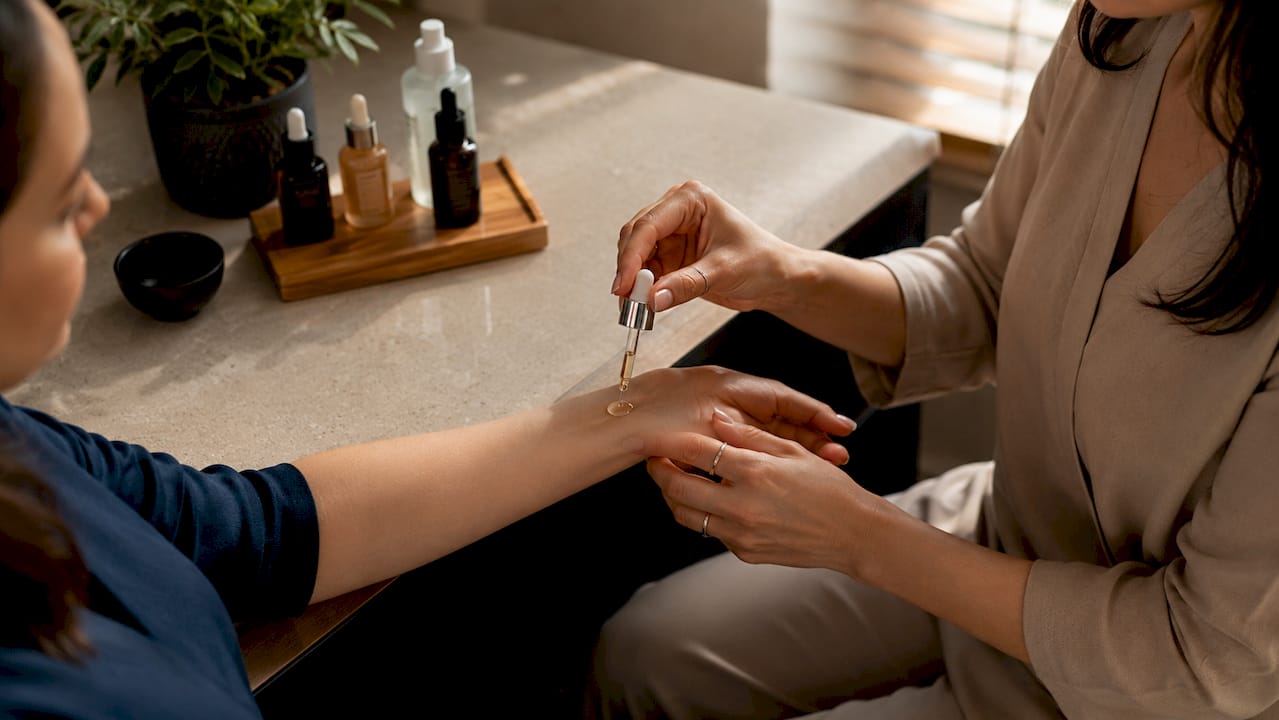
Retinoids robustly stimulate collagen in clinical trials, making them the most proven topical anti-aging compounds available without surgery. No other ingredient class matches their evidence base for accelerating cell turnover and rebuilding the skin’s structural protein. That distinction matters when you are choosing where to spend your money.
Over-the-counter retinol converts to retinoic acid in the skin. Prescription retinoids like tretinoin deliver retinoic acid directly, producing faster results but also more initial irritation. The mechanism is the same: both bind to nuclear receptors that switch on genes responsible for collagen production and cell renewal.
The retinization period is real. Redness, flaking, and sensitivity in the first four to eight weeks are normal, not a sign that the product is wrong for you. Gradual introduction at low concentrations (0.25%–0.5% retinol) is the standard approach to building tolerance without damaging your skin barrier.
Key usage rules for retinoids:
- Apply at night only. UV exposure degrades retinoic acid and increases photosensitivity.
- Start with two nights per week, then increase frequency over six to eight weeks.
- Avoid combining with AHAs or BHAs on the same night until your skin has adapted.
- Always follow with a moisturizer to reduce barrier disruption.
- Use SPF every morning without exception.
Pro Tip: If your skin is sensitive or you are pregnant, bakuchiol is validated for twice-daily use and delivers comparable fine-line reduction without the irritation or pregnancy safety concerns of retinoids.
3. How vitamin C enhances your anti-aging skincare routine
Vitamin C, specifically L-ascorbic acid, neutralizes free radicals generated by UV exposure and pollution before they can break down collagen. That makes it a morning ingredient, not a nighttime one. Applied under sunscreen, it adds a layer of chemical protection that SPF alone cannot provide.
The brightening effect is a secondary benefit. Vitamin C inhibits the enzyme tyrosinase, which drives melanin production. Regular use fades existing dark spots and prevents new ones from forming. This is why it appears on every credible anti-aging skincare list alongside retinoids.
Formulation stability is the biggest practical challenge with vitamin C. L-ascorbic acid degrades when exposed to light, heat, or air. A product that has turned orange or brown has already oxidized and lost most of its potency. Choose opaque or airless packaging and store the product away from heat.
- Look for concentrations between 10% and 20% L-ascorbic acid for proven efficacy.
- A pH below 3.5 is required for L-ascorbic acid to penetrate the skin effectively.
- Vitamin C derivatives like ascorbyl glucoside are more stable but less potent.
- Vitamin C combined with vitamin E and sunscreen provides synergistic protection against UV-induced oxidative stress.
Pro Tip: Apply your vitamin C serum first thing in the morning on clean, dry skin. Wait 60 seconds before layering moisturizer and SPF to allow absorption and avoid dilution.
4. What role do peptides and hyaluronic acid play in firmness and hydration?
Peptides are short chains of amino acids that signal skin cells to produce more collagen and elastin. They do not penetrate as deeply as retinoids, and the evidence base is more moderate. Still, they are well-tolerated by all skin types, including sensitive skin, and they layer cleanly with other actives without causing irritation.
Hyaluronic acid draws water into the skin from the environment and deeper tissue layers. It plumps the surface, softens the look of fine lines, and reduces the crepey texture that develops as skin loses moisture with age. Unlike peptides, it does not signal repair. It works purely through hydration.
| Ingredient | Primary role | Best for | Evidence level |
|---|---|---|---|
| Peptides | Collagen and elastin signaling | Firmness, skin repair | Moderate |
| Hyaluronic acid | Humectant hydration | Plumping, smoothing | Strong |
The two ingredients work well together. Peptides address the structural side of aging while hyaluronic acid addresses the volume and texture side. A serum that combines both is a practical choice for adults who want fewer products without sacrificing coverage. Look for formulations that list multiple molecular weights of hyaluronic acid, since smaller molecules penetrate deeper than larger ones.
Pro Tip: Apply hyaluronic acid to slightly damp skin, then seal it with a moisturizer. Applying it to completely dry skin in a low-humidity environment can actually pull moisture out of the skin instead of drawing it in.
5. Why sunscreen belongs on every anti-aging ingredients list
Sunscreen is not an ingredient in the traditional sense, but it is the most effective anti-aging step you can take daily. UVA rays penetrate deep into the dermis and break down collagen and elastin. UVB rays damage the surface and drive pigmentation changes. Both accelerate visible aging and raise skin cancer risk.
Dermatologists recommend broad-spectrum SPF 30+ applied 15 minutes before sun exposure and reapplied every two hours during outdoor activity. Most people apply far less than the tested amount, which cuts effective protection significantly. A full teaspoon for the face and neck is the correct quantity.
Mineral sunscreens containing zinc oxide or titanium dioxide sit on top of the skin and physically block UV rays. They are the better choice for sensitive or reactive skin. Chemical sunscreens absorb UV and convert it to heat. Both types work, and the best one is the one you will actually use every day.
- Sunscreen protects the collagen that retinoids and peptides are working to build.
- It prevents vitamin C from being overwhelmed by UV-generated free radicals.
- It is the only step that prevents photoaging before it starts, not after.
Pro Tip: If you find sunscreen heavy or greasy, try a mineral SPF 30+ powder for midday reapplication. It goes over makeup and takes seconds, removing the excuse to skip it.
6. What emerging anti-aging ingredients should adults consider?
The anti-aging ingredients list is expanding beyond the classic five. Several newer compounds have meaningful evidence behind them and fill gaps that retinoids and vitamin C do not address.
Bakuchiol is the clearest example of a natural anti-aging ingredient that has earned its place through clinical testing rather than marketing. It is safe for twice-daily use and during pregnancy, reduces fine lines and discoloration, and does not cause the initial irritation associated with retinoids. For anyone who cannot tolerate retinol, bakuchiol is the most evidence-supported alternative.
Tranexamic acid targets hyperpigmentation through a different pathway than vitamin C. It blocks the communication between UV-damaged cells and melanocytes, reducing the signal that triggers dark spot formation. The critical caveat: tranexamic acid requires strict SPF use to prevent sun exposure from reversing its effects. Without daily sunscreen, the ingredient works against itself.
Corylin represents the frontier of anti-aging science. This plant-derived compound acts as a senotherapeutic, targeting the cellular aging pathways that drive systemic decline. Corylin extends median lifespan in preclinical studies and modulates the RAGA-mTOR pathway, which regulates cellular metabolism and longevity. Human trials are ongoing, but the mechanism is distinct from anything in the classic anti-aging toolkit.
| Ingredient | Mechanism | Best suited for | Key requirement |
|---|---|---|---|
| Bakuchiol | Retinol-like cell signaling | Sensitive skin, pregnancy | Twice-daily use |
| Tranexamic acid | Melanocyte signal blocking | Hyperpigmentation | Daily SPF, no exceptions |
| Corylin | Senotherapeutic, mTOR modulation | Cellular aging research | Emerging, preclinical data |
Key takeaways
The most effective anti-aging skincare routine combines retinoids for collagen stimulation, vitamin C for oxidative protection, peptides and hyaluronic acid for repair and hydration, and daily SPF as the non-negotiable foundation.
| Point | Details |
|---|---|
| Retinoids lead the list | They are the only topical compounds proven to robustly stimulate collagen in clinical trials. |
| Vitamin C requires proper storage | L-ascorbic acid oxidizes quickly; use opaque packaging and apply in the morning under SPF. |
| Peptides and hyaluronic acid complement each other | Peptides signal repair while hyaluronic acid restores surface hydration and volume. |
| Sunscreen prevents and protects | SPF 30+ applied daily is the single most effective step against photoaging. |
| Emerging ingredients fill specific gaps | Bakuchiol suits sensitive skin; tranexamic acid targets pigmentation; Corylin targets cellular aging. |
What I have learned about building a routine that actually sticks
The case for fewer ingredients, used consistently
Most people who struggle with anti-aging skincare are not using the wrong products. They are using too many at once and abandoning the routine when irritation or complexity makes it unsustainable. I have seen this pattern repeatedly: someone loads up on retinol, AHAs, niacinamide, and three serums in week one, gets a compromised barrier by week three, and concludes that “actives don’t work for my skin.”
The retinization period is the most misunderstood part of starting retinoids. Flaking and redness in the first six weeks are not failure. They are the skin adapting to accelerated cell turnover. The people who push through that window with a low concentration and a simple routine are the ones who see the results that clinical trials document. Patience is not passive. It is the active ingredient.
My honest recommendation is to build your skincare routine for aging skin around three products before adding anything else: a retinoid at night, vitamin C in the morning, and SPF every day. Master that stack for three months. Then consider adding peptides or hyaluronic acid if you want more hydration or firmness support. The evidence-backed approach to gentle skincare consistently outperforms aggressive multi-step routines for long-term skin health.
Emerging ingredients like Corylin are genuinely exciting, but they belong in the conversation after you have the fundamentals working. Cellular longevity science is moving fast. The future of anti-aging is shifting from surface correction to metabolic and cellular regeneration. That shift is worth watching closely.
— Sara
How Cellure’s Complete Skin Repair Kit delivers the full list
Cellure’s Complete Skin Repair Kit brings together the core compounds from this anti-aging ingredients list into one coordinated routine. The kit includes formulations built around peptides, vitamin C, and hyaluronic acid, designed to work together without the guesswork of sourcing and layering individual products. Every formula uses clinically supported concentrations in stable, bioactive-friendly packaging. For adults who want a consistent, results-driven routine without building it from scratch, this kit removes the friction that causes most routines to fail. Explore the Complete Skin Repair Kit on the Cellure website to see the full ingredient breakdown and usage sequence.
FAQ
What are the most proven anti-aging ingredients?
Retinoids are the most clinically proven topical anti-aging compounds, with consistent evidence for collagen stimulation and cell renewal. Vitamin C, peptides, hyaluronic acid, and broad-spectrum SPF complete the core list.
How long does it take for retinoids to show results?
Most people see measurable improvement in fine lines and texture after 12–16 weeks of consistent use. The initial retinization period of four to eight weeks involves temporary redness and flaking before results become visible.
Can I use vitamin C and retinol together?
Apply vitamin C in the morning and retinol at night to avoid potential irritation and to maximize the protective benefit of vitamin C under sunscreen during the day.
Is bakuchiol as effective as retinol?
Bakuchiol produces similar reductions in fine lines and discoloration to retinol with significantly less irritation. It is the best-supported alternative for sensitive skin or during pregnancy.
Do I need sunscreen if I use antioxidants like vitamin C?
Yes. Vitamin C reduces oxidative damage but does not block UV radiation. Broad-spectrum SPF 30+ is required daily to prevent photoaging and to protect the collagen that your other actives are working to build.