


Your Skincare Routine Guide for Aging Skin
TL;DR:
- Aging skin requires a tailored, simple skincare routine focused on cleansing, moisturizing, and sun protection. Consistency, patience, and lifestyle habits such as hydration and sun safety significantly enhance visible results. Using targeted treatments thoughtfully and consulting dermatologists for persistent concerns ultimately supports healthier, youthful skin.
Most adults hit a point where their skin stops responding the way it used to. Products that worked in their 30s seem to do less. New options pile up, marketing gets louder, and building a clear skincare routine guide that actually fits aging skin feels harder than it should. This article cuts through that. You will get a practical, step-by-step skincare framework grounded in dermatology and real results, covering everything from daily essentials to targeted treatments, common mistakes, and the lifestyle factors that tie it all together.
Table of Contents
- Key takeaways
- Your skincare routine guide starts here: know your skin
- The core three: cleansing, moisturizing, and SPF
- Targeted treatments for aging concerns
- Mistakes that stall progress
- Lifestyle habits that support your skin
- My honest take on what actually works
- How Cellure supports your anti-aging routine
- FAQ
Key takeaways
| Point | Details |
|---|---|
| Start with three core steps | Cleanser, moisturizer, and SPF form the backbone of every effective daily routine. |
| Tailor to your skin type | Aging skin varies widely; matching products to your specific concerns prevents irritation and waste. |
| Give products real time | Most anti-aging treatments need 6 to 12 weeks of consistent use before results appear. |
| Apply sunscreen correctly | Use about 1/4 teaspoon for face and neck, and reapply every two hours when outdoors. |
| Keep it simple | Simplified routines tailored to your skin produce better outcomes than stacking a dozen products. |
Your skincare routine guide starts here: know your skin
Before you spend a dollar on serums or treatments, you need an honest assessment of what your skin is doing right now. Aging changes everything. The skin type you had at 35 may not be the skin type you have at 50.
As skin ages, it produces less sebum, meaning even people who once had oily skin often shift toward combination or dry. You lose collagen and elastin, which creates laxity and fine lines. Melanin distribution becomes uneven, producing dark spots and dullness. Cellular turnover slows, which means dead skin sticks around longer and products absorb differently.
Identifying where you fall on this spectrum shapes every product decision you will make. Here is what to look for:
- Dry aging skin: Feels tight after cleansing, may show flaking or rough texture, and lines appear deeper, especially around the eyes and mouth.
- Combination aging skin: Oily through the T-zone but dry or crepey on cheeks and around the jaw.
- Sensitive aging skin: Reacts to fragrances, alcohol, or environmental changes with redness, stinging, or breakouts.
- Normal to balanced aging skin: Generally tolerates most products well but may show gradual firmness loss and uneven tone over time.
Once you know your type and your primary concern, whether that is firmness, tone, texture, or hydration, you can build a routine that works for you specifically, not just one that sounds good in theory. This is where best skincare practices diverge from generic advice.
The core three: cleansing, moisturizing, and SPF
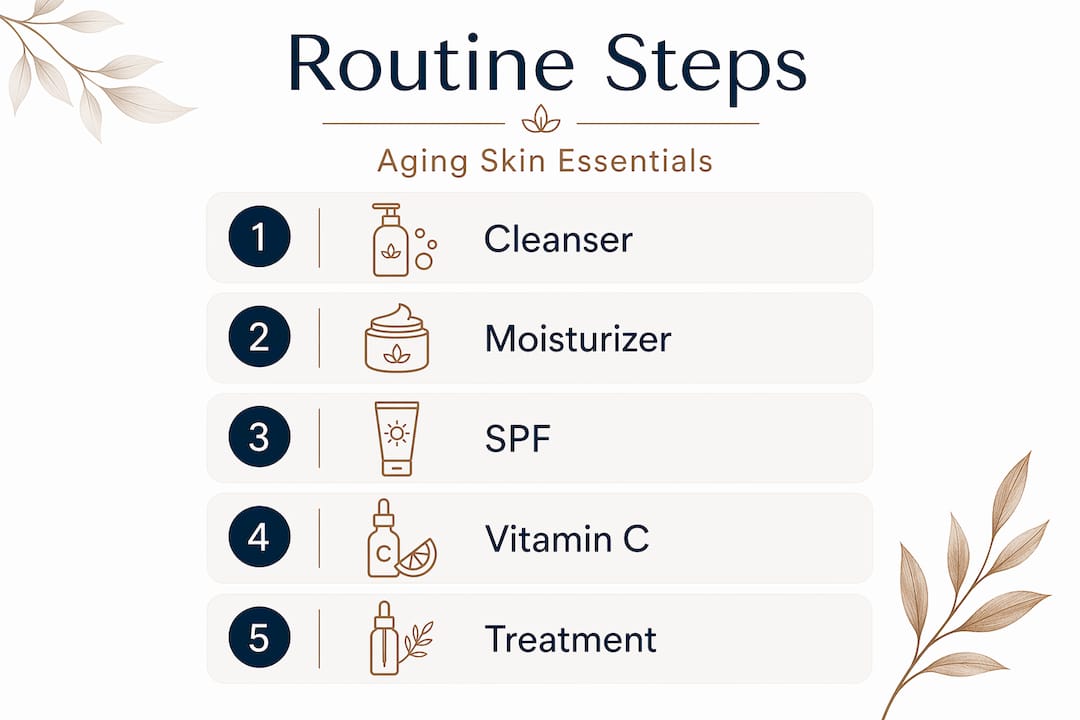
Every effective skincare routine, regardless of budget or complexity, rests on three daily steps. Get these right and every other product you add works better.
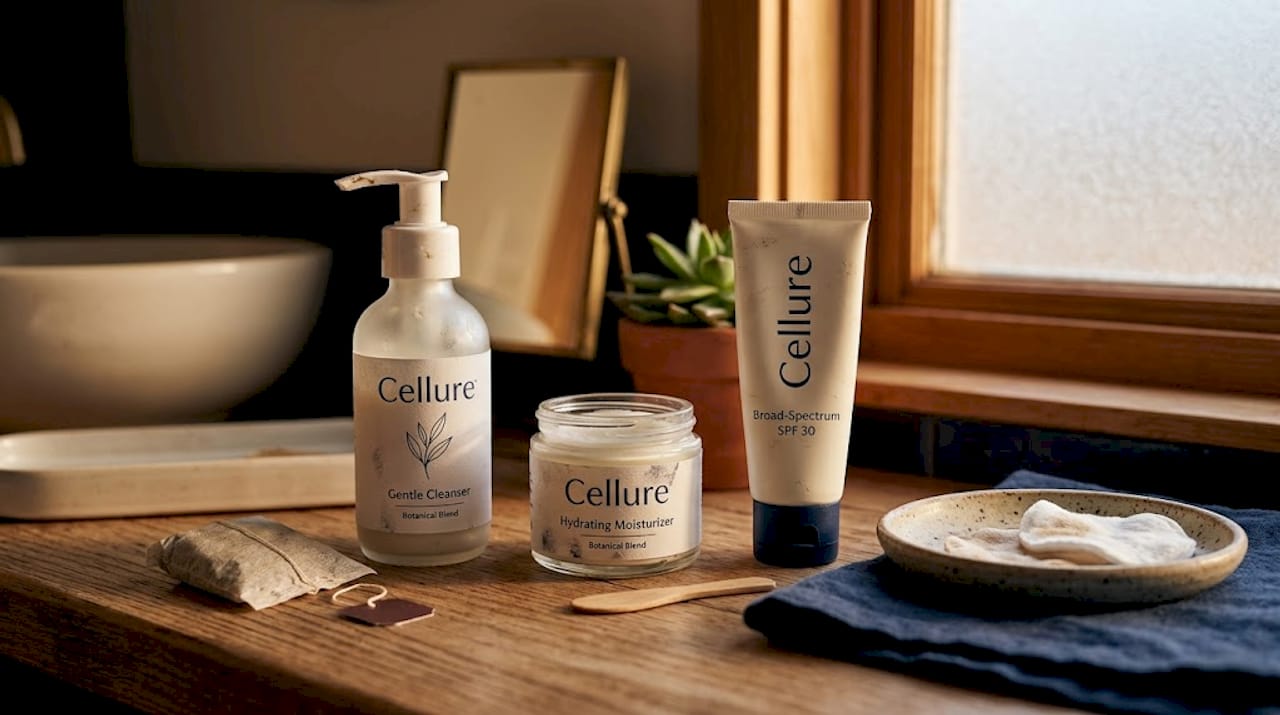
Step 1: cleansing
A simple daily routine for mature skin starts with a gentle, nonmedicated cleanser and lukewarm water. Hot water strips your lipid barrier faster than almost anything else you can do in two minutes. Pat your skin dry rather than rubbing.
For most adults with aging skin, one cleanse at night is enough. Morning cleansing is optional unless you sweat heavily overnight. Over-cleansing disrupts your skin barrier, which accelerates water loss and irritation.
Step 2: moisturizing
Moisturizer applied within three minutes of cleansing is genuinely more effective than moisturizer applied ten minutes later. That short window is when your skin absorbs humectants most efficiently. Look for formulas containing ceramides, which reinforce your barrier, and hyaluronic acid, which draws water into the skin. Niacinamide is another excellent addition for tone evening and barrier support.
Applying moisturizer promptly after washing locks hydration in before evaporation strips it back out. This is one of those small habits with outsized results.
Step 3: sunscreen
This is non-negotiable. SPF 30 or higher, applied every single morning, prevents the UV-driven collagen breakdown that accounts for most visible aging. Research confirms that regular SPF 30 use protects against UV-driven DNA methylation changes that accelerate skin aging. That is not marketing language. That is biology.
- Apply sunscreen as the last step in your morning routine.
- Use approximately 1/4 teaspoon for face and neck to achieve the SPF protection listed on the label. Most people apply less than half that amount.
- Cover ears, the back of your hands, and your neck. These areas show aging fastest because most people forget them.
- Reapply every two hours when outdoors, after sweating, or after towel drying.
Pro Tip: If you wear a tinted moisturizer or foundation with SPF, it does not replace dedicated sunscreen. Makeup SPF is applied too thinly to provide labeled protection.
An optional but genuinely useful addition is a vitamin C serum applied in the morning before sunscreen. It neutralizes free radicals generated by UV and pollution, adding an extra layer of antioxidant defense that SPF alone cannot provide.
Targeted treatments for aging concerns
Once your core three are dialed in and consistent, you can start adding treatments. The key word is start. Adding multiple actives at once makes it impossible to know what is helping and what is causing irritation.
- Retinoids: These are the most well-studied anti-aging actives available without a prescription. They stimulate collagen production, accelerate cell turnover, and reduce the appearance of fine lines and dark spots. Use retinoids at night only, as they degrade in sunlight. Start with a low-concentration formula two nights a week, then build from there. Expect some initial dryness or peeling. That is normal, not a reason to stop.
- Exfoliants: Chemical exfoliation with polyhydroxy acids or PHAs is gentler than AHAs for sensitive aging skin, and exfoliating no more than once or twice per week prevents barrier damage. Over-exfoliating is one of the most common ways adults unintentionally accelerate visible aging by destroying the barrier they are trying to protect.
- Spot treatments: For persistent pigmentation, niacinamide and tranexamic acid are two of the most evidence-backed options. For occasional breakouts, benzoyl peroxide remains effective but should be applied only to affected areas, not spread broadly across aging skin.
- Layering order: Apply products from thinnest to thickest consistency. Serums go on before moisturizer, and moisturizer goes on before sunscreen. This is not just convention. Heavier products create a physical barrier that prevents lighter molecules from penetrating.
Pro Tip: Log your start date when adding a new active. Most products take 6 to 12 weeks to show measurable change, and if you quit at week three, you will never know whether it would have worked.
The skincare ingredients guide from Mybestpharmacy.net is a useful reference for cross-checking which active ingredients have the strongest evidence base before you invest in a new product.
Mistakes that stall progress
Most people do not fail at skincare because they use the wrong products. They fail because of how they use them. These are the patterns worth breaking.
- Switching too fast. Evaluating a product after two weeks and moving on is one of the most common reasons routines produce no results. Give every new product a full six to twelve weeks before deciding whether it works.
- Stacking too many new things at once. If you introduce three new products in one week and your skin reacts, you have no idea which one caused it. Add one product at a time, spaced at least two to three weeks apart.
- Under-dosing sunscreen. Using too little is almost as ineffective as skipping it. The clinically correct dose is more sunscreen than most people are comfortable applying. Practice the amount until it feels normal.
- Skipping reapplication. Sunscreen applied at 7 AM does not protect you at noon. Reapplication every two hours when outdoors is the requirement, regardless of how high the SPF number is.
- Using fragrance-laden products on sensitized skin. Fragrance is one of the leading causes of contact dermatitis and barrier disruption in adults. Fragrance-free formulas are a safer default for aging skin.
Consistency beats perfection every time. A simple routine done daily produces far better results than a complex routine done occasionally. If your current setup takes longer than five minutes twice a day, it will not survive a hectic week.
Lifestyle habits that support your skin
Your topical routine handles roughly half the equation. What happens off your bathroom shelf matters just as much. The following lifestyle factors have direct, documented effects on skin aging:
- Hydration: Drinking adequate water supports skin turgor and reduces the appearance of fine lines. No serum compensates for chronic dehydration.
- Diet: Diets rich in antioxidants from vegetables, fruits, and healthy fats support collagen integrity and reduce systemic inflammation, which accelerates aging. Processed sugar, on the other hand, promotes glycation, a process that degrades collagen fibers.
- Sleep: Skin repair peaks during deep sleep. Chronic sleep deprivation elevates cortisol, which breaks down collagen and impairs barrier function.
- Stress management: Sustained stress disrupts the skin barrier and triggers inflammatory responses that worsen conditions like rosacea, acne, and eczema in aging skin.
- Smoking and alcohol: Smoking accelerates every visible sign of skin aging by impairing circulation and generating oxidative stress. Alcohol dehydrates skin and disrupts sleep quality, compounding the effects.
- Sun-protective clothing and shade: Broad-brimmed hats, UPF-rated clothing, and seeking shade between 10 AM and 4 PM substantially reduce UV exposure beyond what sunscreen alone can achieve.
Building these habits gradually alongside your topical routine produces compounding results that no single product can replicate.
My honest take on what actually works
I have read a lot of skincare science, and the finding that consistently shapes my thinking is this: simpler routines tailored to your skin type produce better outcomes than complex regimens. That is not a simplification. That is what the data shows.
In my experience, the adults who see the most improvement are not the ones using the most products. They are the ones who have nailed their cleanser, moisturize at the right moment, apply enough sunscreen, and actually reapply it. Those fundamentals sound boring. They are also responsible for roughly 80% of the visible results most people want.
The area I see most people under-invest in is patience. Switching products every few weeks because you have not seen a transformation is the single biggest routine killer. I have watched people abandon retinoids at week four, right before the point where most users start noticing improvement. Set a calendar reminder for twelve weeks and commit.
My other consistent recommendation: if you have persistent concerns like significant pigmentation, barrier damage, or accelerating laxity, a dermatology consult is worth far more than a new serum. Evidence-based skincare repair works best when it is targeting the right problem with the right tools.
— Sara
How Cellure supports your anti-aging routine
Building a science-backed routine is easier when your products are formulated around the same principles you have been reading about.
Cellure’s Complete Skin Repair Kit is designed specifically for adults dealing with the signs of aging. The kit brings together targeted serums formulated with bioactive ingredients including peptides, tranexamic acid, and polynucleotides, actives that support collagen repair, even skin tone, and restore firmness at the cellular level. Each product in the kit is gentle enough for daily use and layered to work together, so you are not guessing at compatibility.
If you want to understand exactly what goes into your skincare, Cellure’s ingredient transparency page breaks down the science behind each active. For a broader look at what Cellure offers across all skin concerns, explore the full range of regenerative skincare solutions built for lasting results.
FAQ
What is the correct order for a skincare routine?
Apply products from thinnest to thickest. In the morning: cleanser, serum, moisturizer, then sunscreen. At night: cleanser, treatment serums or retinoids, then moisturizer.
How long before I see results from anti-aging skincare?
Most anti-aging products require 6 to 12 weeks of consistent daily use before producing visible results. Switching products earlier than that prevents meaningful evaluation.
How much sunscreen should I apply to my face?
Use about 1/4 teaspoon for face and neck to reach the labeled SPF protection. Most people apply significantly less, which reduces their actual sun protection.
Can I use retinoids and exfoliants in the same routine?
Not on the same night. Alternate them to avoid over-sensitizing your skin. Use a retinoid two to three nights per week and a gentle exfoliant on different nights, no more than once a week.
What is the biggest mistake people make with their skincare routine?
The most common mistake is switching products before they have had time to work, paired with using too little sunscreen or skipping reapplication. Both habits undermine even a well-chosen routine.
Recommended
Share