


Hydration First: Dermatologist Aligned Menopause Skincare With SPF 30+
The most effective menopause skincare routine leads with hydration and barrier repair, not aggressive treatment. Mornings call for a gentle cleanser, vitamin C, a hydrating serum, a ceramide moisturizer, and SPF 30+. Evenings call for a gentle cleanse, a peptide or hydrating serum, a slowly introduced retinoid, and a richer barrier cream. Skip harsh exfoliation until the skin barrier is stable.
TL;DR:
- Menopausal skin requires gentle, barrier-supporting products, starting with cream or oil cleansers instead of foaming varieties to prevent lipid stripping.
- Incorporating vitamin C, humectant serums, ceramide moisturizers, and mineral SPF 30+ is essential for daytime, with niacinamide supporting both hydration and oil regulation.
- Night routines should focus on repair with mild cleansers, peptide or treatment serums, and heavier occlusive creams, avoiding layering acids and retinoids on the same evening.
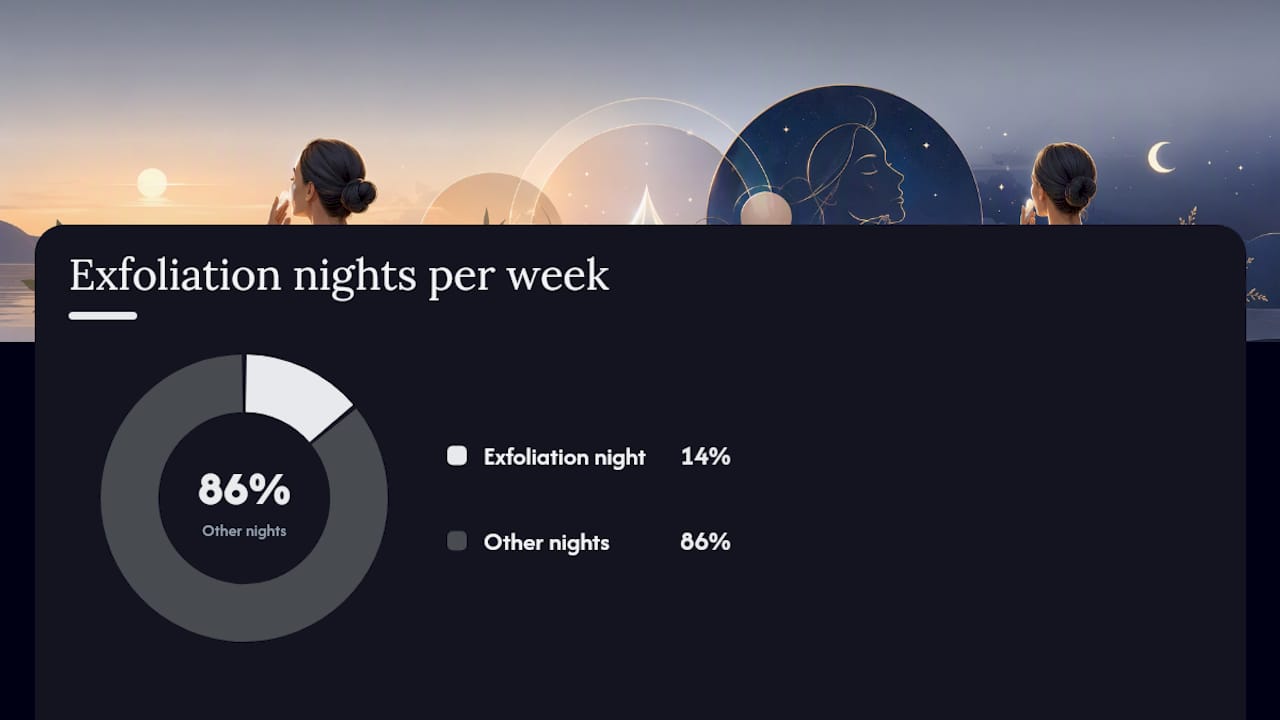
- Exfoliation should be limited to once a week using gentle acids like lactic or mandelic, with professional treatments only under dermatologist guidance to prevent skin damage.
- Introducing potent actives such as retinoids and acids must be gradual, buffering over moisturizer and patch testing before full application to reduce sensitivity and irritation risks.
Table of Contents
- What Should a Morning Menopause Skincare Routine Include?
- How Should an Evening Routine Repair Menopausal Skin?
- When Should You Exfoliate or Consider Professional Treatments?
- What Ingredients Actually Matter for Menopausal Skin?
- How Do You Introduce Retinoids and Acids Without Irritation?
- Why a Gentle, Cellular-Repair Approach Fits Menopausal Skin
- Does Hormone Therapy Change How You Should Care for Your Skin?
- How Do You Manage Rosacea or Adult Acne During Menopause?
- A Realistic Take on Timelines and Consistency
- Simplify Your Routine With the Complete Skin Repair Kit
- Sources
What Should a Morning Menopause Skincare Routine Include?
Morning skincare during menopause has one job before anything else: stop moisture loss before it starts. Estrogen decline slows oil production and thins the outer skin layer, so the products that worked at 35 can sting or strip at 50.
Start with a cream, milk, or oil cleanser instead of a foaming one. Foaming cleansers rely on surfactants that strip lipids skin can no longer replace quickly, which is why so many women in perimenopause suddenly find their old face wash leaves their skin feeling tight. Swapping to a non-foaming, cream-based cleanser is one of the highest-impact, lowest-risk changes you can make, and it often resolves that tight, “stretched” sensation without adding a single new serum, according to dermatologists interviewed by TODAY.
After cleansing, apply vitamin C. Dermatologists recommend a concentration between 10% and 20%, which protects against environmental damage and helps even out the uneven tone that often shows up alongside hormonal shifts, per the same TODAY reporting. Anything higher tends to irritate thinning skin without added benefit.
Next comes a hydrating serum built on humectants like hyaluronic acid or glycerin. These ingredients pull water into the skin, but they need something to seal that water in, which is where a ceramide and squalane moisturizer comes in. Pairing a humectant serum under an emollient moisturizer is considered the gold standard layering method for menopausal skin, since hydration and moisture are two different jobs that both need doing.
Quick statistic callout: Lower, sustained estrogen after menopause is linked to measurable collagen loss, with some published estimates putting early postmenopausal loss as high as 25 to 30 percent in the first several years. That decline is exactly why barrier support has to come before any anti-aging active.
Finish with broad-spectrum SPF 30+ every single day, rain or shine. Mineral sunscreens built on zinc oxide or titanium dioxide tend to sit better on sensitive, reactive skin than chemical filters, which can trigger stinging on skin that’s already compromised.
A short checklist for building the morning stack:
- Cream, milk, or oil cleanser (never a foaming or soap-based one)
- Vitamin C serum at 10% to 20% concentration
- Hyaluronic acid or glycerin serum for hydration
- Ceramide and squalane moisturizer to lock moisture in
- Mineral or broad-spectrum SPF 30+, applied last
If breakouts show up alongside dryness (a common and frustrating menopause combination), look for a niacinamide-containing moisturizer rather than switching to a stripping, acne-focused cleanser. Niacinamide calms redness and supports the barrier while still addressing oil regulation, which makes it one of the few ingredients that works for both problems at once. Cellure’s anti-aging checklist for adults 30 and over breaks this same morning sequence down step by step if you want a printable version.
How Should an Evening Routine Repair Menopausal Skin?
Nighttime is when skin actually rebuilds, so the evening routine should focus on repair rather than another round of protection. That means gentler cleansing, not more of it.
Double cleansing became popular for removing makeup and sunscreen, but it’s often unnecessary and sometimes counterproductive on menopausal skin. One gentle, cream-based cleanse is usually enough. Two rounds of cleansing, especially with a foaming second step, strips lipids skin needs overnight to repair itself.
After cleansing, treatment serums go on damp skin. Peptides support the skin’s natural repair signals. Tranexamic acid or azelaic acid target the uneven pigmentation and redness that tend to intensify with hormonal shifts. Hyaluronic acid, applied again at night, keeps hydration levels topped up while you sleep.
Retinoids deserve their own conversation, because they carry the strongest evidence for stimulating collagen and improving texture, but menopausal skin tolerates them less predictably than it did a decade earlier. Dermatologists at New River Dermatology recommend introducing retinoids slowly and cautiously given the heightened sensitivity that comes with thinner, drier skin. Start at a low concentration, two to three nights a week, and buffer it by applying moisturizer first, then the retinoid over top. That buffering step dilutes the retinoid’s contact with skin just enough to blunt the sting without erasing the benefit.
Close the routine with a richer night cream or a facial oil that locks the day’s hydration in. Look for ceramides, squalane, or shea butter. Thinner, more reactive skin benefits from a heavier occlusive layer at night than it did before menopause, even if that feels counterintuitive if you spent years avoiding “greasy” products.
A short list of what belongs on retinoid nights and what doesn’t:
- Retinoid nights: cleanser, treatment serum, moisturizer, then retinoid buffered on top
- Non-retinoid nights: cleanser, peptide or brightening serum, richer night cream
Pro Tip: Never layer a strong exfoliating acid and a retinoid on the same night. Alternate them across different evenings, or your barrier will pay for it within a week.
When Should You Exfoliate or Consider Professional Treatments?
Once-weekly exfoliation is usually the ceiling for menopausal skin, not the floor. Thinning skin has less margin for error, so gentle chemical exfoliants like lactic acid or mandelic acid make more sense than physical scrubs, which can create micro-tears you won’t notice until they show up as irritation two days later.
A practical weekly plan looks like this:
- Choose one exfoliation night per week, separate from retinoid nights.
- Use a lactic or mandelic acid formula rather than a scrub or beaded cleanser.
- Apply azelaic acid or tranexamic acid on non-exfoliation nights if pigmentation or redness is the main concern, since layering two acids at once raises irritation risk without adding benefit.
- Follow any exfoliation night with a hydrating mask or a heavier moisturizer to offset moisture loss.
- Reserve overnight hydrating masks for acute dryness flare-ups, not as a weekly default.
Professional treatments like microdermabrasion, chemical peels, or laser resurfacing carry higher risk on thinner postmenopausal skin, and dermatologists advise that these procedures should only happen under professional guidance rather than attempted at home, according to the American Academy of Dermatology. A dermatologist can assess how much collagen and thickness your skin has left before recommending anything more aggressive than a gentle exfoliant.
Patience matters here. Retinoids and peptides work at any age, but expect results over months, not weeks, and pacing the introduction matters more than the concentration you start with.
What Ingredients Actually Matter for Menopausal Skin?
Reading a label matters more after menopause than before it, mostly because the margin for irritation shrinks. Three categories do three different jobs, and confusing them is the most common mistake in menopause skincare.
Humectants (hyaluronic acid, glycerin) pull water into the skin from the environment and deeper layers. Emollients and lipids (ceramides, squalane) fill in gaps between skin cells and slow water loss. Occlusives (petrolatum, some heavier oils) sit on top and physically block evaporation. Menopausal skin needs at least the first two working together, according to guidance from dermatologists cited by TODAY, since a humectant with no lipid backup just draws water in and then loses it again within hours.
- Humectants: hyaluronic acid, glycerin — draw water in
- Emollients and lipids: ceramides, squalane — repair and seal the barrier
- Occlusives: heavier balms or oils — best for acute dryness or overnight use
- Peptides: support the skin’s own repair signals, working more slowly than retinoids
- Azelaic acid and tranexamic acid: favored for pigmentation without the irritation risk of stronger acids
- Niacinamide: calms redness and supports barrier function, useful for sensitive or breakout-prone skin
Statistic callout: Collagen loss accelerates in the years immediately following menopause, which is precisely the window when lipid-replacement ingredients stop being optional and start being foundational to any routine.
Ingredients to treat with caution: fragrance (a frequent trigger for reactive skin), high-alcohol toners that strip lipids on contact, and any mechanical scrub with visible beads or granules. On the sunscreen front, mineral filters like zinc oxide tend to sit better on sensitive, thinning skin than chemical UV filters, which can cause stinging on skin with a compromised barrier. Cellure’s guide to gentle skincare for aging skin walks through these ingredient categories in more depth if you want the full rationale behind each one.
How Do You Introduce Retinoids and Acids Without Irritation?
Adding potent actives to a menopause skincare routine works best as a slow ramp, not a leap. Rushing a retinoid or acid onto thinning skin is the single fastest way to trigger the redness, flaking, and stinging that sends people back to their dermatologist convinced their skin has “gotten worse.”
- Weeks 1 to 2: Apply a low-concentration retinoid (0.025% to 0.03% range) once or twice weekly, always buffered under moisturizer.
- Weeks 3 to 6: If skin tolerates it with no flaking or stinging, increase to three nights a week.
- Weeks 7 to 12: Continue at three nights weekly, or increase concentration only if a dermatologist has reviewed your skin’s response.
- Ongoing: Keep acid exfoliants on separate nights from retinoid nights, never combined.
Patch test any new active on the inner forearm for 48 hours before applying it to the face. If redness, burning, or visible flaking shows up, that’s your barrier signaling distress, and the right response is to strip the routine back to cleanser, moisturizer, and SPF for one to two weeks before reintroducing anything active.
Pro Tip: If your skin reacts to a new product, resist the urge to add something else to “fix” it. Stepping down and rebuilding the barrier first works better than piling on more actives, based on clinician guidance from DermApproved.
See a dermatologist if irritation persists beyond two weeks of stripped-back care, or if you notice persistent burning, swelling, or a rash pattern that doesn’t match simple dryness.
Why a Gentle, Cellular-Repair Approach Fits Menopausal Skin
Menopausal skin doesn’t need more products. It needs the right few, formulated to avoid the fragrance, alcohol, and layering conflicts that trip up sensitive, thinning skin. That’s the gap a bioactive-first approach is built to close.
Cellure formulates around ingredients with real mechanisms behind them: peptides that support the skin’s repair signaling, tranexamic acid for uneven tone, and polynucleotides aimed at cellular renewal rather than surface polish. The formulations are built to be gentle enough for the sensitivity that comes with a compromised barrier.
- Curated kits reduce the guesswork of layering order, which matters when skin reacts unpredictably to new combinations
- Ingredient concentrations are chosen with tolerability in mind, not just maximum strength
- Formulations avoid the common irritants (heavy fragrance, harsh surfactants) that trigger reactive skin
For readers who want ingredient-level detail before buying anything, Cellure’s skincare routine guide for aging skin and skin renewal checklist both walk through the reasoning product by product.
Does Hormone Therapy Change How You Should Care for Your Skin?
Hormone replacement therapy (HRT) can soften some menopausal skin changes, since restoring estrogen levels tends to support oil production and skin thickness for many women. That doesn’t mean skincare becomes optional if you’re on HRT, though. It means the products you use need to work alongside whatever your hormone levels are doing, not against them.
Women on HRT often notice their skin behaves more like it did in their 40s: slightly oilier, a bit more resilient, sometimes prone to occasional breakouts that mimic teenage acne. If that happens, resist reverting to stripping, acne-focused products. A gentle cleanser and a niacinamide-based moisturizer address mild breakouts without undoing the barrier work already done.
Women not on HRT, or those who’ve stopped it, need to lean harder into the humectant-and-lipid combination described earlier, since their skin isn’t getting any hormonal support for oil production or barrier thickness. In both cases, the skincare fundamentals stay the same: gentle cleansing, layered hydration, cautious active introduction. What shifts is how quickly you might need to adjust product richness or frequency based on how your skin is actually behaving that month, not how it behaved the month before.
Talk to your prescribing doctor about any skin changes you notice on HRT. Topical routines and hormone therapy address different mechanisms, and neither replaces the other.
How Do You Manage Rosacea or Adult Acne During Menopause?
Rosacea and adult acne both tend to flare during menopause, often for opposite-seeming reasons that stem from the same hormonal shift. Declining estrogen affects blood vessel behavior and oil gland activity simultaneously, which is why some women develop persistent facial redness while others break out for the first time since their twenties.

For rosacea-prone skin, avoid the vitamin C concentrations and retinoid pacing recommended earlier in this guide without extra caution. Lower the vitamin C to the bottom of the 10% to 20% range, patch test thoroughly, and introduce retinoids even more slowly than the standard ramp, since rosacea skin reacts to the same triggers that cause general menopausal sensitivity, only faster and more visibly.
For adult acne, avoid the reflex to switch to harsh, stripping acne treatments built for teenage skin. Salicylic acid at low concentrations can help, but pair it with the same ceramide-based moisturizer the rest of this routine relies on. Stripping oil production further on skin that’s already losing lipids tends to backfire, triggering more oil production as a rebound response.
Both conditions warrant a dermatologist consultation if over-the-counter adjustments aren’t working within six to eight weeks, since prescription options exist for each that go beyond what any skincare routine can achieve alone. Cellure’s guide on best practices for sensitive skin covers gentle formulation choices that work for both reactive and breakout-prone skin types.
A Realistic Take on Timelines and Consistency
Nothing in this routine works overnight, and expecting it to sets people up to quit right before results show up. Retinoids and peptides typically need eight to twelve weeks of consistent use before you see meaningful texture change, and collagen support takes even longer to become visible.
Consistency beats intensity every time. A simple four-step routine used every day outperforms an eight-step routine abandoned after two weeks of irritation. When skin turns reactive, the answer is almost always to simplify and read labels more carefully, not to add another product chasing a different problem.
One more thing worth saying plainly: skincare complements decisions about hormone therapy. It doesn’t replace them. If skin changes are severe or sudden, that conversation belongs with a doctor, not a serum.
— Sara
Simplify Your Routine With the Complete Skin Repair Kit
Menopausal skin doesn’t need a shelf of separate products bought through trial and error. It needs the right actives in the right order, formulated for a barrier that’s already working overtime. That’s the exact gap the Complete Skin Repair Kit is built to close.
The kit pairs peptides and hyaluronic acid with barrier-focused actives in a sequence designed to remove the guesswork this article just walked through step by step. Instead of separately sourcing a humectant serum, a peptide treatment, and a ceramide moisturizer and hoping they layer correctly, the kit arrives with that order already solved, formulated gently enough for sensitive, thinning skin. If you’ve read this far and want a straightforward next step, view the Complete Skin Repair Kit and see whether its formulation matches the routine gaps you’ve identified in your own skin.
Sources
This guide draws on dermatologist-reviewed guidance from the American Academy of Dermatology, product recommendations reported by TODAY, clinical context from RTE, and routine structure from New River Dermatology. For product-level detail, see Cellure’s gentle exfoliation guide and skincare routine guide for aging skin.
This article is general information, not a substitute for advice from a qualified doctor. Consult a qualified healthcare professional about your own circumstances before acting on anything here.
- Caring for your skin in menopause — American Academy of Dermatology (AAD)
- What should a perimenopausal skincare routine look like? — RTE
- The Best Skincare Routine After Menopause — New River Dermatology