


How to repair sensitive skin: 5 science-backed steps
Sensitive, aging skin sits at a frustrating intersection: the signs of time are visible, yet most anti-aging products trigger redness, stinging, or breakouts the moment you try them. You are not imagining it. The barrier that protects your skin weakens with age, and the wrong products accelerate that damage. The good news is that low-dose retinoids, bakuchiol, and niacinamide support aging sensitive skin with far less irritation than conventional actives. This guide walks you through every step, from understanding what is happening beneath the surface to building a routine that actually works without setting your skin on fire.
Table of Contents
- What causes sensitive skin damage and aging?
- Essential ingredients for repairing sensitive, aging skin
- Step-by-step: How to repair your sensitive skin barrier
- Troubleshooting sensitive skin repair: Common mistakes and solutions
- The truth about repairing sensitive, aging skin: What really works
- Gently repair and rejuvenate with the right solutions
- Frequently asked questions
Key Takeaways
| Point | Details |
|---|---|
| Repair the barrier first | Strengthening your skin’s barrier is the essential first step before introducing anti-aging actives. |
| Choose gentle actives | Opt for niacinamide, peptides, and bakuchiol—proven to reduce aging signs with minimal irritation. |
| Protect from UV every day | Sensitive skin is much more vulnerable to sun damage; always use a mineral sunscreen. |
| Introduce changes slowly | Add new ingredients one at a time and patch test to minimize adverse reactions. |
What causes sensitive skin damage and aging?
Sensitive skin is not just a personality type. It is a physiological reality. The outermost layer of your skin, called the stratum corneum, acts as a physical and chemical barrier. In sensitive skin, this barrier is structurally thinner and more permeable, which means irritants, allergens, and moisture loss move through it far more easily than in resilient skin types.
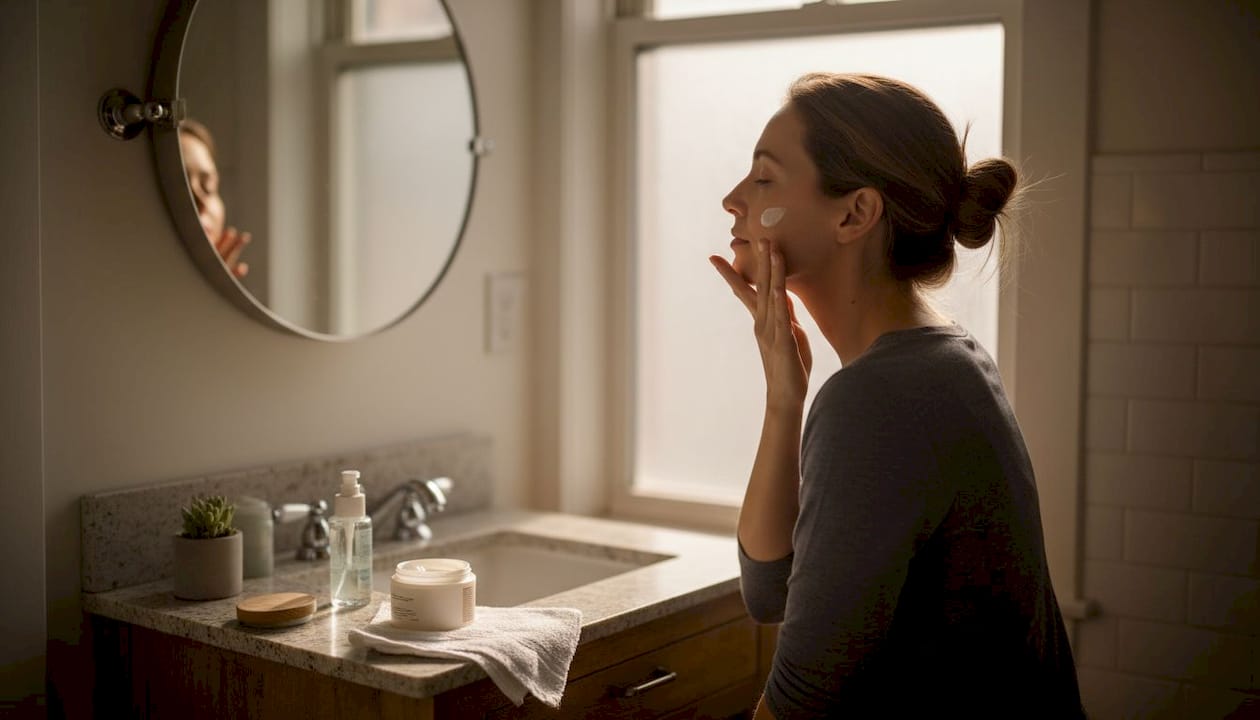
Aging compounds every one of these vulnerabilities. Starting in your late twenties, your skin produces less collagen, fewer natural lipids, and reduced ceramides. By your forties, transepidermal water loss (TEWL, meaning water escaping through the skin) increases noticeably, leaving skin drier and more reactive. Estrogen decline in perimenopausal skin accelerates this further, reducing both thickness and elasticity.
The result is a cycle: a weakened barrier allows irritants in, which triggers inflammation, which further degrades the barrier. Understanding caring for sensitive skin starts with recognizing this loop.
Common triggers that worsen barrier damage in sensitive, aging skin:
- Harsh sulfate-based cleansers that strip natural oils
- Unbuffered retinol applied at full strength too early
- High-concentration AHAs and BHAs used too frequently
- Fragrance and alcohol-based toners
- Skipping SPF, which compounds inflammation daily
One of the most overlooked consequences of a damaged barrier is sun vulnerability. A damaged barrier increases UV vulnerability by 70%, meaning your skin absorbs far more damaging radiation than healthy skin would. That is not a small margin. It is the difference between manageable photoaging and accelerated pigmentation, collagen breakdown, and chronic inflammation.
| Skin factor | Healthy skin | Sensitive, aging skin |
|---|---|---|
| Barrier integrity | Strong, intact | Thin, permeable |
| Lipid content | Adequate | Depleted |
| UV protection | Normal | 70% more vulnerable |
| Inflammatory response | Controlled | Easily triggered |
| Collagen production | Active | Declining |
The path forward starts with skin barrier repair as the non-negotiable first step. Anti-aging actives only work when the barrier is stable enough to tolerate and benefit from them.
“The skin barrier is not just a cosmetic concern. It is the foundation of every skincare result you are trying to achieve.”
Essential ingredients for repairing sensitive, aging skin
Not all actives are created equal, and for sensitive, aging skin, ingredient selection is everything. The goal is to rebuild, protect, and gradually renew without triggering the inflammatory cascade that derails so many routines.
Dermatologists recommend niacinamide, ceramides, and retinoids as the top repair ingredients for sensitive, aging skin. Here is why each one earns its place:
- Niacinamide (vitamin B3): Reduces redness, strengthens the lipid barrier, and delivers a measurable 23% reduction in fine lines after 12 weeks of consistent use. It is one of the most universally tolerated actives available.
- Low-dose retinoids or bakuchiol: Both stimulate collagen production with significantly less irritation than standard retinol. Bakuchiol is plant-derived and works well for those who cannot tolerate any retinoid form.
- Vitamin C derivatives (like ascorbyl glucoside): Gentler than pure L-ascorbic acid, these brighten uneven tone and protect against oxidative damage once the barrier is stable.
- Peptides: Short chains of amino acids that signal your skin to produce more collagen and elastin. They firm without causing sensitivity, making them ideal for long-term use. Explore peptides for skin to understand how different types target different aging concerns.
- Panthenol and centella asiatica (CICA): These two are your repair accelerators. Panthenol (provitamin B5) draws moisture in and speeds wound healing. CICA calms inflammation and supports new tissue formation.
| Ingredient | Primary benefit | Sensitivity risk | Best for |
|---|---|---|---|
| Niacinamide | Barrier, tone, fine lines | Very low | All sensitive types |
| Bakuchiol | Collagen, firmness | Low | Retinoid-intolerant |
| Peptides | Firmness, collagen | Minimal | Mature, sensitive skin |
| Panthenol | Hydration, healing | Very low | Post-procedure, dry |
| CICA | Calming, repair | Very low | Reactive, redness-prone |
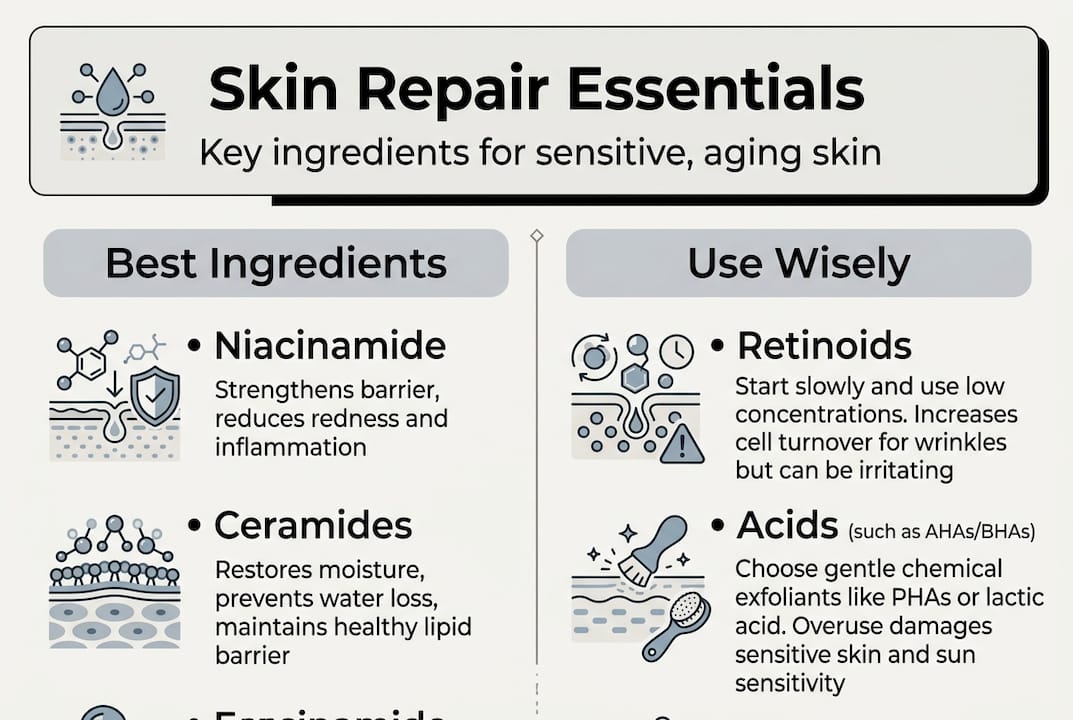
Pro Tip: Do not introduce more than one new active at a time. Wait two weeks between additions so you can identify any ingredient causing a reaction before your routine becomes too complex to troubleshoot.
For a deeper look at how these actives function at the cellular level, the top skin repair ingredients guide is worth reading alongside this one. And if you are building a full routine, the serum guide for sensitive skin offers product-level guidance.
Step-by-step: How to repair your sensitive skin barrier
A routine is only as effective as its sequence and pacing. For sensitive, aging skin, the order of application matters, and so does the pace at which you introduce new steps.
Your daily repair routine:
- Gentle, pH-balanced cleanser (AM and PM): Choose a fragrance-free, sulfate-free formula. Your cleanser should leave skin feeling comfortable, not tight. Tight skin after cleansing is a sign of barrier disruption.
- Hydrating toner or essence: Apply while skin is still slightly damp. Look for panthenol, hyaluronic acid, or CICA. This step preps the barrier to absorb what comes next.
- Repair-focused serum: This is your active layer. Use niacinamide in the morning and a peptide or bakuchiol serum at night. Alternate, do not stack, especially in the first 8 weeks.
- Ceramide-rich moisturizer: Ceramides are the lipids your barrier is missing. For dry, aging skin, richer lipid formulas are essential to counteract TEWL and restore suppleness. Oily-sensitive types can use a lighter gel-cream with ceramides and niacinamide.
- Mineral SPF 30 or higher (AM only): Zinc oxide or titanium dioxide formulas sit on top of the skin rather than absorbing into it, which is gentler for reactive skin.
Adjustments by skin subtype:
- Dry-aging sensitive: Add a facial oil (squalane or rosehip) over your moisturizer at night for extra lipid support
- Oily-sensitive: Swap heavy moisturizer for a niacinamide-based gel; focus on anti-inflammatory actives
- Post-procedure sensitive: Skip all actives for 7 to 14 days; use only cleanser, panthenol serum, ceramide moisturizer, and SPF
Pro Tip: Apply your serum to slightly damp skin. Hydrated skin absorbs actives more evenly and with less chance of localized irritation.
For more routine-building strategies, the gentle anti-aging tips guide and our cellular repair tips resource cover advanced pacing and layering techniques.
Troubleshooting sensitive skin repair: Common mistakes and solutions
Even a well-intentioned routine can stall or backfire. These are the most common errors we see, and exactly how to fix them.
Mistake 1: Over-exfoliation Acids feel like they are doing something because of the tingling. But for sensitive, aging skin, that tingling is often irritation, not efficacy. Exfoliating more than once or twice a week breaks down an already compromised barrier, leading to redness, burning, and paradoxically more visible texture.
Solution: Limit chemical exfoliation to once weekly at most during the repair phase. Use a low-percentage lactic acid (5% or below) rather than glycolic, which penetrates more aggressively.
Mistake 2: Skipping SPF This is the single most damaging habit for sensitive, aging skin. A damaged barrier increases UV vulnerability by 70%, and every day without protection adds to cumulative inflammation and collagen loss. Mineral SPF is non-negotiable.
Mistake 3: Layering too many actives at once More is not better here. Stacking retinol, vitamin C, AHA, and niacinamide in the same routine does not accelerate results. It triggers sensitization, which sets your repair timeline back by weeks.
Solution: Limit your active ingredients to one or two per routine. Prioritize barrier repair first, then layer in anti-aging actives gradually.
“Patience is not passive. In skin repair, it is the most active and effective strategy you have.”
Mistake 4: Ignoring hydration as a repair tool Many people focus entirely on actives and skip adequate moisturization. For repairing your skin barrier, consistent hydration is as important as any serum. Dehydrated skin cannot repair itself efficiently.
For additional guidance on scalp and skin hydrating solutions, complementary approaches to moisture management can support your overall skin health routine.
The truth about repairing sensitive, aging skin: What really works
Here is something most skincare content will not tell you directly: the majority of irritation people experience does not come from a single bad ingredient. It comes from impatience. New actives get added before the barrier is stable. Routines get overhauled every few weeks chasing the next promising ingredient. The skin never gets a chance to settle.
What we have observed, consistently, is that the people who see the most meaningful results are those who commit to boring consistency. A simple, barrier-first routine maintained for 8 to 12 weeks outperforms an aggressive, trend-driven one every single time. Barrier health is not a preliminary step you rush through. It is the entire foundation.
Anti-aging actives, including peptides for skin rejuvenation, only deliver their full benefit when the skin is stable enough to respond to them. Introducing peptides or bakuchiol into a compromised barrier is like planting seeds in broken soil. The conditions have to be right first.
The uncomfortable truth is that visible, lasting repair takes discipline, not discovery. You do not need more products. You need the right ones, used consistently, long enough to work.
Gently repair and rejuvenate with the right solutions
If you are ready to stop guessing and start seeing real results, the tools you need are formulated specifically for sensitive, aging skin. Gentle does not mean ineffective. It means precise.
The Complete Skin Repair Kit from Cellure is built around the exact repair-first philosophy outlined in this guide, combining barrier-supportive actives with clinically backed ingredients in a sequenced routine. For targeted collagen and firmness support, the peptide serum delivers bioactive peptides alongside tranexamic acid for brightening and tone correction. Both are formulated for sensitive skin and designed to work together without overwhelming your barrier.
Frequently asked questions
How long does it take to repair sensitive skin?
You should see noticeable improvement in 4 to 12 weeks with a consistent, gentle routine. Niacinamide alone delivers a 23% fine line reduction after 12 weeks of daily use.
Are retinoids safe for sensitive, aging skin?
Low-dose retinoids and bakuchiol are typically safe when introduced every other night and paired with ceramide moisturizer to buffer any dryness or initial sensitivity.
What is the best moisturizer type for sensitive, mature skin?
Look for formulas with ceramides, cholesterol, and fatty acids. Aging skin needs richer lipids to restore the barrier and counteract the dryness that accelerates with age.
Can sun exposure worsen sensitive skin damage?
Yes. A damaged barrier increases UV vulnerability by 70%, making daily mineral SPF one of the most protective steps in any sensitive skin routine.