


Discover Why Skin Rejuvenation Matters for Aging Skin
TL;DR:
- Skin aging involves intrinsic and extrinsic factors, impacting skin structure and function.
- Effective rejuvenation combines targeted treatments with consistent skincare supporting cellular renewal.
- Personalized protocols considering skin type and risk factors lead to safer, more satisfying results.
The sheer number of anti-aging treatments available today is enough to overwhelm anyone. From prescription retinoids and professional laser sessions to over-the-counter serums packed with peptides and polynucleotides, the choices keep multiplying while the marketing promises keep escalating. The problem is that not all treatments are equal, not all skin types respond the same way, and chasing the most aggressive option rarely delivers the best outcome. What actually works is understanding the science behind aging skin and matching your rejuvenation approach to your biology, your lifestyle, and your goals.
Table of Contents
- Understanding why skin ages and why rejuvenation matters
- How modern skin rejuvenation works: methods and mechanisms
- Comparing gentleness, efficacy, and suitability for your skin type
- Special considerations: Skin of color and individualized protocols
- Why nuanced decision-making matters for skin rejuvenation
- Explore gentle, science-backed rejuvenation solutions
- Frequently asked questions
Key Takeaways
| Point | Details |
|---|---|
| Science matters | Choosing skin rejuvenation based on biological mechanisms delivers safer, more predictable results. |
| Tailor your approach | The best results come from individualizing methods by skin type, tolerance, and goals. |
| Gentleness vs. results | Effective rejuvenation balances efficacy with your comfort and pigment risk, especially for sensitive skin. |
| Safety for all types | Extra care and protocol tailoring are essential for skin of color to avoid pigment complications. |
Understanding why skin ages and why rejuvenation matters
Skin aging is not a single event. It is a combination of two overlapping processes that every adult experiences, starting well before the first visible wrinkle appears. Once you understand what is actually driving the changes in your skin, it becomes much easier to evaluate what kind of help your skin genuinely needs.
Intrinsic aging is the biological clock your genetics set for you. Over time, your skin cells divide more slowly, collagen production declines, and a process called cellular senescence kicks in, where older cells stop functioning properly but refuse to clear themselves out. The result is gradual thinning, reduced elasticity, and subtle changes in texture that typically begin in your thirties and accelerate through your forties and fifties.
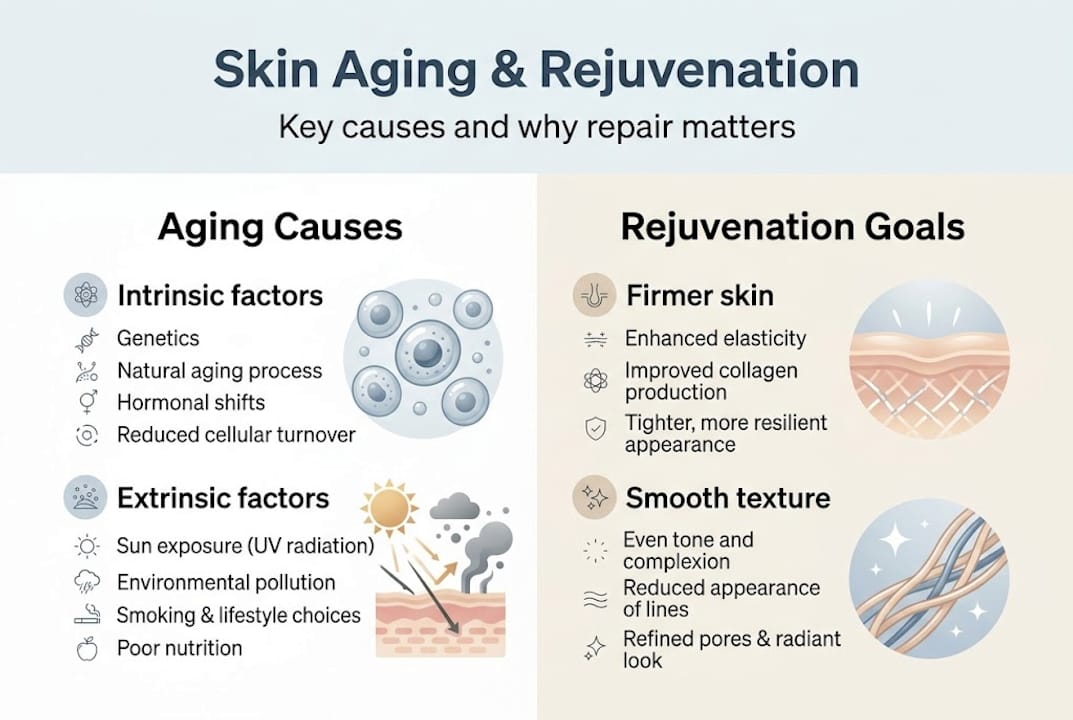
Extrinsic aging is the kind you have more control over, though it is also cumulative. Ultraviolet radiation is the single largest environmental driver of premature skin aging, causing what scientists call photoaging. UV exposure triggers free radical damage, degrades existing collagen, and stimulates irregular melanin production, which leads to uneven pigment and dark spots. Pollution, smoking, poor sleep, and chronic stress all compound this effect. Most adults in their thirties and forties are dealing with a mix of both intrinsic and extrinsic aging at the same time.
The visible signs that develop from this combination include:
- Fine lines and deeper wrinkles, especially around the eyes and mouth
- Loss of firmness and facial volume as collagen and fat pads diminish
- Uneven skin tone, dark spots, and dullness from irregular melanin distribution
- Rougher texture as cell turnover slows and the skin’s surface layer thickens
- Increased fragility and slower wound healing
As one peer-reviewed overview puts it, skin rejuvenation aims to improve the biological and clinical signs of skin aging driven by intrinsic and extrinsic stressors. This is an important framing because it shifts rejuvenation from a purely cosmetic pursuit to a medically meaningful one. You are not just changing how your skin looks. You are supporting how it functions.
“Skin rejuvenation is not about reversing time. It is about giving your skin the biological tools it needs to repair, remodel, and renew itself more effectively.”
Knowing this helps you evaluate any treatment or product more critically. If something claims to address aging but cannot explain which biological mechanism it targets, that is worth questioning. For a fuller picture of the biology behind this, science-backed skin rejuvenation provides a thorough breakdown of what the research actually supports. If you want to go even deeper, cellular skincare for aging explains how targeting the skin at a cellular level changes the game entirely.
How modern skin rejuvenation works: methods and mechanisms
Building on the causes of skin aging, let us explore the science behind today’s most effective rejuvenation methods. The core principle that unites most professional and advanced at-home treatments is controlled stimulation. Your skin has a remarkable capacity to repair itself, but it needs a trigger.
Most rejuvenation methods work through one of three biological pathways. They either stimulate collagen and elastin synthesis directly, reduce the burden of senescent cells, or correct irregular pigment at the cellular level. Often, effective treatments do more than one of these simultaneously.
Here is a practical overview of the main modalities:
- Topical bioactive agents such as retinoids, peptides, tranexamic acid, and polynucleotides work at the surface and below, signaling fibroblasts to produce more collagen and encouraging cellular turnover. They are the most accessible option and, with consistent use, show measurable results.
- Microneedling uses fine needles to create microscopic channels in the skin. This triggers the body’s natural wound-healing response without causing significant surface damage. It is particularly effective for texture, pore size, and mild laxity.
- Energy-based devices such as radiofrequency, ultrasound, and various laser systems deliver heat or light energy to deeper skin layers, driving collagen remodeling from the inside out.
- Injectables including neurotoxins and hyaluronic acid fillers address volume loss and dynamic wrinkles, though they do not trigger the same biological renewal as energy or topical approaches.
The most important thing to understand is why controlled injury actually works. Procedures create controlled injury or energy input that triggers remodeling through collagen and elastin pathway activation, while also modulating the biology of senescent cells. Your skin reads the controlled damage as a signal to rebuild, producing new structural proteins in the process.
| Method | Mechanism | Typical results |
|---|---|---|
| Topical bioactives | Signals fibroblasts, promotes turnover | Gradual, sustained improvement |
| Microneedling | Wound healing response | Texture, tone, mild laxity |
| Laser and energy devices | Collagen remodeling via heat/light | Lines, laxity, pigment |
| Injectables | Volume replacement, muscle relaxation | Immediate, temporary |
Clinical outcomes after a structured treatment program typically include reductions in fine lines and wrinkles, improved skin texture and tone, enhanced firmness, and a more even complexion. These results are not instant. Most protocols require multiple sessions and a consistent maintenance routine. The science-backed ingredients that support this process at home are increasingly sophisticated, and pairing them with professional treatments creates a compounding effect that neither approach achieves alone.
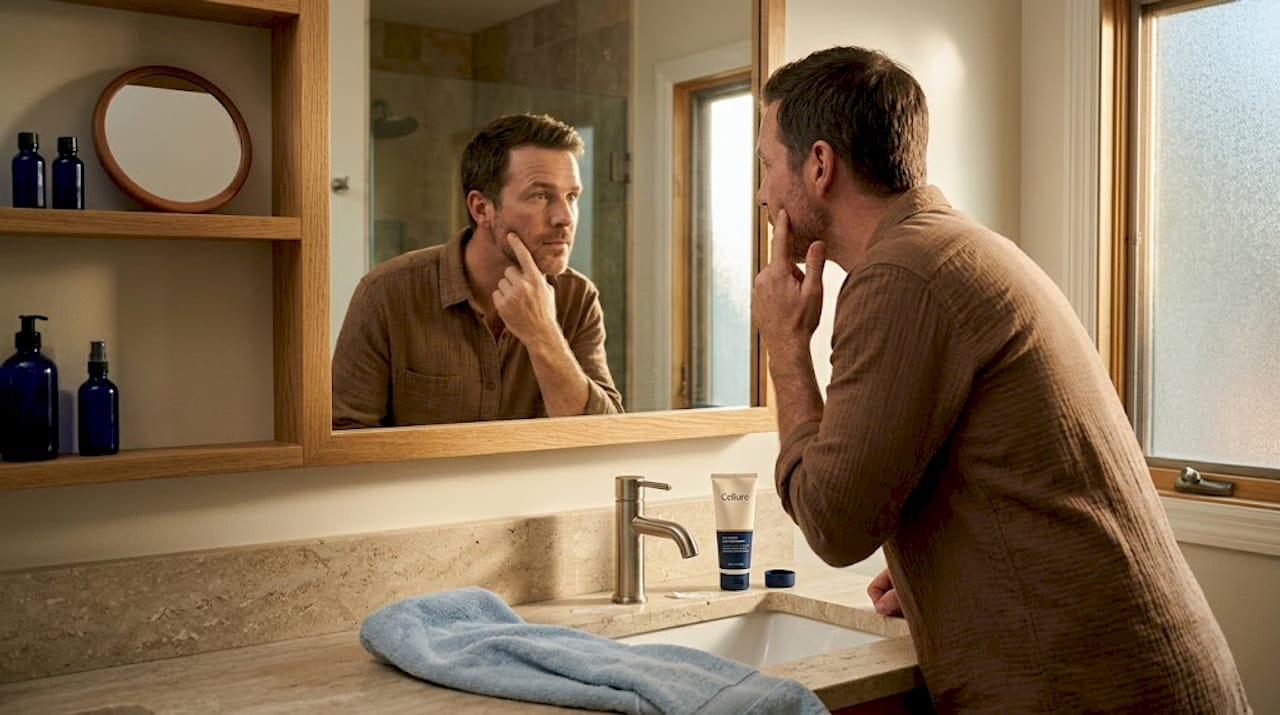
Pro Tip: If you are starting a rejuvenation program for the first time, begin with topical bioactives for at least six to eight weeks before adding any procedural treatment. This conditions your skin’s repair pathways and often makes professional treatments more effective. For a full picture of what is possible, real solutions for skin renewal lays out both the clinical and at-home options in practical terms.
Comparing gentleness, efficacy, and suitability for your skin type
With the science in mind, here is how leading options stack up for different needs and concerns. The most common mistake people make when choosing a rejuvenation approach is optimizing for the most dramatic result, without accounting for their skin’s actual tolerance, their schedule, or their risk profile.
Adults pursue skin rejuvenation for measurable quality-of-life improvements, but they consistently weigh downtime, tolerability, and risks like pigmentation complications against those benefits. This is especially true for adults over 40 who often have more complex skin profiles, including higher sensitivity, underlying redness, or existing pigment irregularities.
The trade-offs between aggressive and gentle protocols are real and significant:
- Fractional CO2 laser delivers impressive collagen remodeling and significant improvements in deep wrinkles and skin laxity, but it carries a meaningful risk of post-inflammatory hyperpigmentation (PIH), requires five to seven days of downtime, and can be painful. It is best suited to lighter Fitzpatrick skin types with adequate recovery time.
- Microneedling with radiofrequency is less aggressive, produces steady and measurable improvement in texture and firmness, and has a much shorter recovery window of one to two days. It is more broadly suitable across skin types.
- Topical bioactive serums, particularly those formulated with peptides and polynucleotides, produce the gentlest path to renewal. They work gradually, require no downtime, and are appropriate for virtually all skin types including sensitive and reactive skin.
| Treatment | Efficacy level | Downtime | PIH risk | Suitable skin types |
|---|---|---|---|---|
| Fractional CO2 laser | High | 5 to 7 days | Higher | Fitzpatrick I to III |
| Microneedling RF | Moderate to high | 1 to 2 days | Low to moderate | Fitzpatrick I to V |
| Non-ablative laser | Moderate | Minimal | Low | Fitzpatrick I to IV |
| Topical bioactives | Gradual | None | Minimal | All types |
For a thorough look at how laser and device outcomes compare across different parameters, the clinical data is increasingly nuanced. It is also worth reviewing best practices for skin repair before committing to any protocol, since the preparation and aftercare you choose dramatically influence how well your skin responds.
Pro Tip: If your skin is prone to redness, sensitivity, or you have any history of PIH, prioritize gentle approaches first. The peptide benefits for rejuvenation are well-documented and represent one of the safest pathways to real, cellular-level improvement without procedural risk.
Special considerations: Skin of color and individualized protocols
Not all skin responds the same way, and next, it is important to see what this means for individual safety and outcome. One of the most important conversations in modern dermatology centers on how energy-based and ablative treatments affect melanin-rich skin. The stakes are higher, the risks are more specific, and the evidence base is still catching up.
Adults with Fitzpatrick skin types IV through VI, which includes many individuals of African, South Asian, East Asian, and Latin American descent, have higher concentrations of melanin-producing cells called melanocytes. These cells are more reactive to heat, injury, and inflammation. This means that treatments which are routine for lighter skin types can trigger significant, sometimes long-lasting PIH in skin of color.
Energy-based skin rejuvenation for skin of color requires conservative treatment parameters, and PIH is consistently identified as the most frequent adverse event, particularly at higher energy settings. This is not a reason to avoid rejuvenation entirely. It is a reason to be strategic.
The best-evidence options for Fitzpatrick IV to VI skin currently include:
- Non-ablative lasers at conservative settings, such as the 1064 nm Nd:YAG, which targets deeper layers with less surface disruption
- Microneedling without thermal energy, which stimulates repair without significant melanocyte irritation
- Topical brighteners such as tranexamic acid and niacinamide, which address pigment irregularity at the cellular level without any procedural risk
- Chemical peels at lower concentrations, such as mandelic acid or lactic acid, which are gentler on melanin-rich skin than glycolic or TCA peels
“Personalization is not a luxury in skin rejuvenation for skin of color. It is a clinical necessity. One size fits no one, and the cost of getting it wrong is a longer recovery and less trust in future treatments.”
Long-term follow-up is particularly critical for this population. PIH can take months to resolve, and repeat treatments before full recovery can compound the problem. It also matters that this group has been historically underrepresented in clinical trials, meaning that protocols developed primarily on lighter skin types may not translate directly. Seeking practitioners with specific experience in skin of color, and choosing at-home products formulated to be safe across all Fitzpatrick types, makes a genuine difference. Top renewal tips for all skin types provides practical guidance that accounts for this diversity of skin response.
Why nuanced decision-making matters for skin rejuvenation
Here is an uncomfortable truth about the skin rejuvenation market: the loudest promises often come from the treatments that carry the most risk. The industry has a way of cycling through trends, with each new laser technology or injectable formulation marketed as the ultimate answer, until the next one arrives. People who chase these trends often end up with inconsistent results, unexpected side effects, and a growing sense that nothing really works.
The research tells a more measured story. Outcomes depend on standardized protocols and patient selection, and the benefits of any treatment must be interpreted within individual goals and risk tolerance. That is expert consensus, not pessimism. It means the best results consistently go to people who match their treatment to their skin rather than their social feed.
What we have learned through years of tracking ingredient science and clinical outcomes is that the adults who see the most satisfying, lasting results are those who combine evidence-based topical support with appropriately selected professional treatments and realistic expectations. They do not skip the boring fundamentals like SPF, barrier repair, and consistent active ingredient use. They treat clinically proven skin repair as a long-term practice, not a one-time intervention. That mindset shift, from instant fix to intelligent strategy, is where real skin transformation begins.
Explore gentle, science-backed rejuvenation solutions
If this article has clarified anything, it is that effective skin rejuvenation is not about the most aggressive option. It is about the right option for your skin, your goals, and your biology.
At Cellure, every product in our line is formulated around that principle. The Complete Skin Repair Kit brings together bioactive ingredients designed to support cellular renewal across all skin types, including sensitive and melanin-rich skin. For targeted brightening and pigment correction without procedural risk, the Tranexamic Acid Peptide Serum delivers clinically supported results in a gentle, daily-use formula. Want to understand exactly what is in your products and why? Our full ingredient science page breaks down the research behind every active we use.
Frequently asked questions
What are the main benefits of skin rejuvenation for adults aged 30 to 55?
Skin rejuvenation can improve texture, reduce wrinkles, even pigment, and enhance firmness, with clinical studies documenting improvements in fine lines and laxity after as few as three structured sessions.
Is skin rejuvenation safe for skin of color?
Yes, with cautious protocols. Non-ablative lasers and tailored topical approaches reduce pigment risks significantly, though PIH is the most frequent adverse event for Fitzpatrick IV to VI skin when higher energy settings are used.
How do I choose between gentle and more aggressive skin rejuvenation options?
Your choice should be based on skin type, specific concerns, tolerance for downtime, and acceptable risk of side effects. Fractional CO2 offers greater efficacy but significantly higher PIH risk and discomfort compared to microneedling radiofrequency.
How does skin rejuvenation trigger collagen and elastin production?
Treatments deliver controlled injury or energy input that the body reads as a repair signal, activating collagen and elastin production through the skin’s natural wound healing and remodeling pathways.
Are the results from skin rejuvenation permanent?
Results are long-lasting but not permanent. Aging continues at the cellular level, so consistent maintenance using both professional treatments and daily bioactive skincare is necessary to preserve and build on the improvements you achieve.