


Why use brightening serums for radiant, even skin
TL;DR:
- Brightening serums target biological processes causing dark spots and uneven skin tone rather than providing instant results.
- Effective use requires matching ingredients to specific pigmentation types, consistent sun protection, and patience over weeks.
Brightening serums have a reputation problem. Many adults assume they work like bleach, lightening skin uniformly or delivering overnight transformation. Neither is true. Understanding why use brightening serums correctly means recognizing them as precision tools that target specific biological processes driving uneven tone and dark spots in aging skin. This guide unpacks the science, the ingredient logic, and the practical habits that determine whether these serums actually work for you, so you can make a decision based on evidence rather than marketing language.
Table of Contents
- How brightening serums work to improve skin tone
- Why matching ingredients to your pigmentation type matters
- The crucial role of sunscreen alongside brightening serums
- How to use brightening serums effectively for aging skin
- Niacinamide: a gentle powerhouse for brightening and anti-aging
- Our perspective: the brightening serum question worth asking
- Cellure brightening serums built for real results
- Frequently asked questions
How brightening serums work to improve skin tone
Skin discoloration is not a surface stain. It forms when melanocytes, the pigment-producing cells in your skin, overproduce melanin in response to UV exposure, inflammation, or hormonal shifts. Brightening serums do not scrub that pigment away. They interrupt the biological chain of events that creates it in the first place.
The multiple mechanisms behind brightening serums explain why no single ingredient handles all types of discoloration equally. Different actives target different steps in the process. Here is what each major category does:
- Tyrosinase inhibitors (vitamin C, kojic acid, alpha-arbutin): Block the enzyme that triggers melanin synthesis, reducing how much pigment forms.
- Pigment transfer blockers (niacinamide): Prevent melanin from moving from melanocytes into surrounding skin cells, which is what makes a dark spot visible.
- Cell turnover accelerators (AHAs like glycolic acid, retinoids): Speed up shedding of the outer skin layer so pigmented cells exit faster.
- Antioxidants (vitamin C, resveratrol): Neutralize oxidative stress from UV radiation and pollution, which otherwise triggers excess melanin production.
- Anti-inflammatory actives (tranexamic acid, niacinamide): Calm the inflammatory signals that activate pigment cells after sun damage or breakouts.
When you understand how brightening ingredients work in this layered way, it becomes clear why the best formulas combine several actives rather than relying on a single hero ingredient. They cover more of the process from multiple angles.
Why matching ingredients to your pigmentation type matters
Not all dark spots share the same origin. Sun spots, also called solar lentigines, form from cumulative UV exposure. Post-inflammatory hyperpigmentation (PIH) appears after acne, a rash, or any skin injury that triggered inflammation. Melasma develops as a hormone-driven condition, often worsened by UV light but not fully caused by it.
Matching your actives to your discoloration type is one of the most overlooked factors in serum efficacy, and it separates real results from frustrating plateaus. Here is a practical breakdown:
- Sun spots: Vitamin C and kojic acid work well here because they target melanin synthesis triggered directly by UV exposure.
- Post-inflammatory marks (PIH): Niacinamide is particularly suited because it reduces irritation risk while blocking pigment transfer. Overusing harsh exfoliants on PIH can worsen it.
- Melasma: Tranexamic acid is the most clinically studied option for this condition. It reduces the inflammatory and vascular signals that drive melasma. Stubborn cases often require a combination approach.
- General uneven tone in aging skin: A layered formula containing niacinamide, low-dose retinol, and a tyrosinase inhibitor addresses multiple causes at once.
- Sensitive or mature skin: Prioritize ingredients with low irritation profiles, niacinamide, azelaic acid, and tranexamic acid, rather than starting with high-concentration AHAs or retinoids.
| Pigmentation type | Best-suited actives | Caution |
|---|---|---|
| Sun spots | Vitamin C, kojic acid, alpha-arbutin | Can oxidize; use stable formulas |
| PIH | Niacinamide, azelaic acid | Avoid over-exfoliation |
| Melasma | Tranexamic acid, niacinamide | May need combination treatment |
| General aging tone | Retinol, AHAs, vitamin C | Introduce gradually |
| Sensitive/aging skin | Niacinamide, tranexamic acid | Avoid high-dose actives initially |
Choosing correctly from the start means you are not wasting weeks on an ingredient that was never suited to your specific concern. Guidance on choosing serum ingredients based on skin type and pigmentation history can sharpen that decision significantly.
The crucial role of sunscreen alongside brightening serums
Here is a fact that changes the math on brightening completely: UV radiation does not just cause new dark spots. It reactivates the very melanocytes your serum is trying to quiet. Daily sunscreen is non-negotiable because UV exposure undoes brightening progress even on overcast days, even through windows.
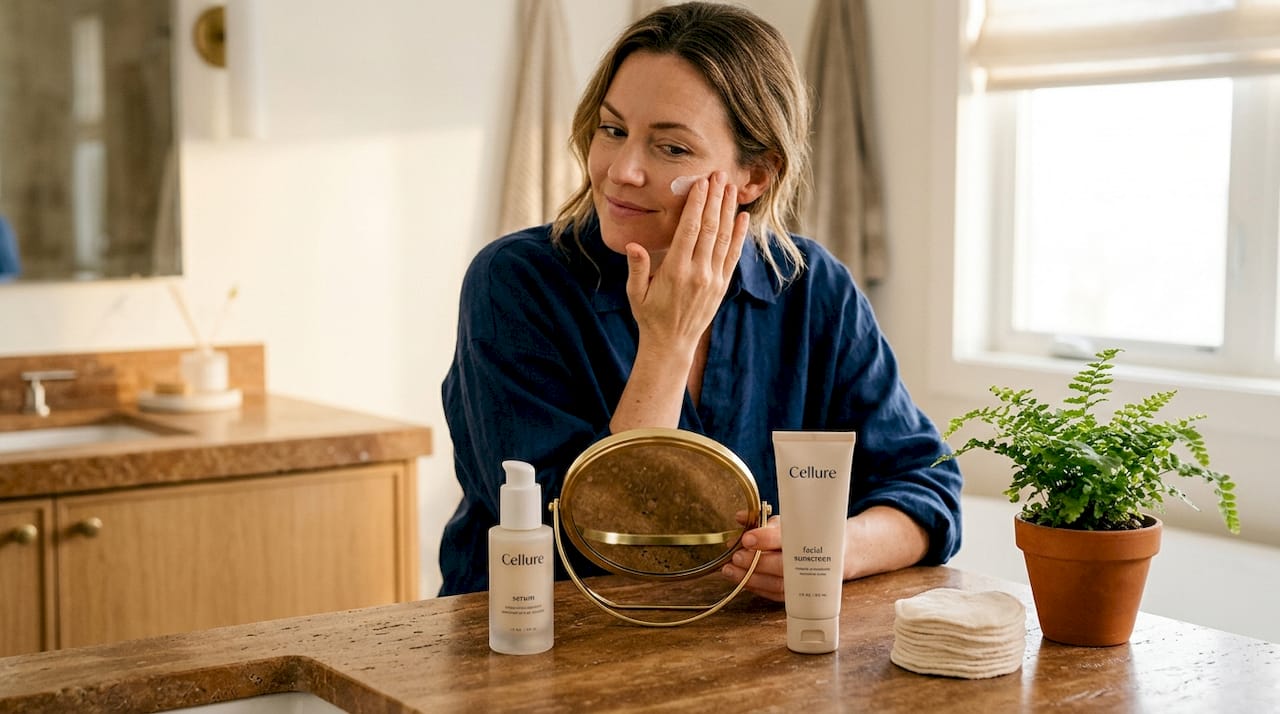
Think of it this way. Your serum is turning down the volume on pigment production. Unprotected sun exposure is simultaneously turning it back up. The serum cannot win that fight without your help.
Key points every brightening serum user needs to know about sun protection:
- UV stimulates melanocytes directly. Even incidental exposure, like a ten-minute drive, adds cumulative damage.
- Reapplication matters. A morning application of SPF wears off. If you are outdoors after noon, reapply every two hours.
- Mineral formulas with iron oxides offer extra coverage. Iron oxides, found in tinted mineral sunscreens, block visible light that can worsen melasma independent of UV.
- Consistency beats high SPF numbers. SPF 30 applied every day beats SPF 50 used twice a week.
“Brightening serums applied without sun protection are fighting a battle with one hand tied. Sunscreen is not a complement to the serum routine. It is the foundation that makes the routine possible.”
Pro Tip: Apply your brightening serum in the morning under a broad-spectrum SPF 30 or higher. If you spend time outdoors, keep a compact mineral sunscreen with you and reapply it over makeup. This single habit does more for your long-term results than upgrading to a stronger serum. The importance of sun protection when using active brightening treatments cannot be overstated.
How to use brightening serums effectively for aging skin
Aging skin is not more fragile, exactly, but its barrier is thinner and its cell turnover is already slower. That combination means it responds differently to actives than younger skin does. Going too fast or layering too many potent ingredients at once is the most common reason adults experience irritation, redness, and worsening pigmentation instead of improvement.
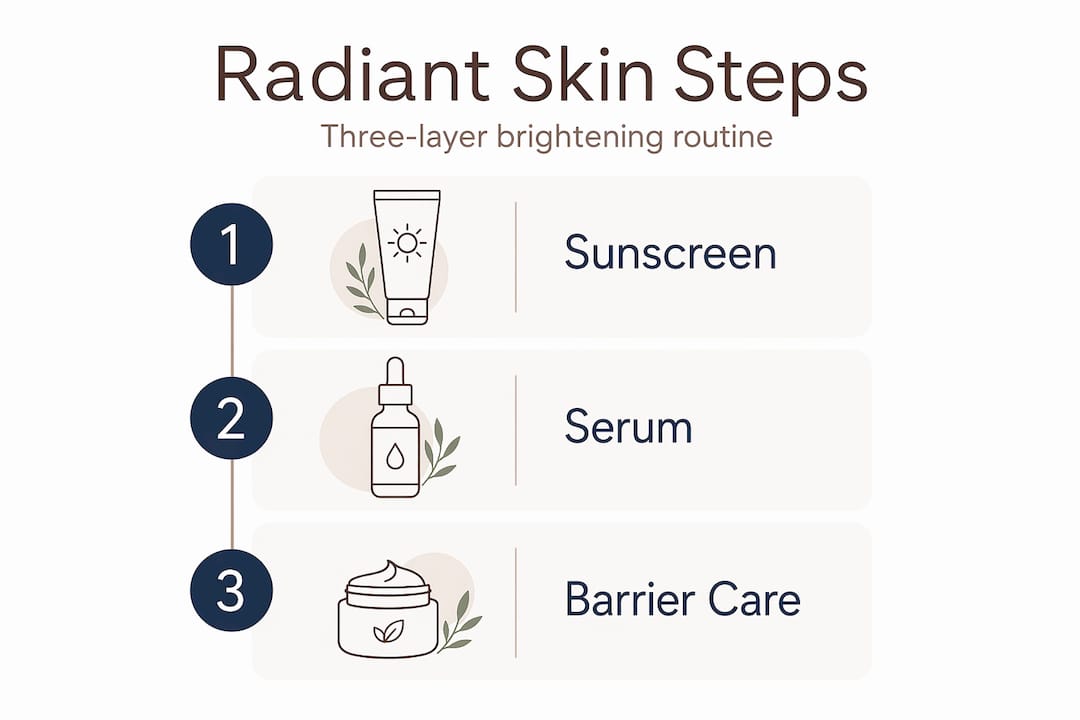
Here is a protocol that respects aging skin while still delivering results. Consistency, barrier support, and a layered approach over 8 to 12 weeks produce the most reliable outcomes.
- Cleanse and pat dry. Apply serum to clean, slightly dry skin for maximum penetration without irritation.
- Start once daily, in the evening. If your serum contains retinol or a high concentration of AHA, evening use avoids photosensitivity issues and allows repair during sleep.
- Use only one active serum initially. Layering vitamin C, retinol, and AHAs simultaneously is the formula for a damaged barrier. Add a second active only after four weeks of tolerance.
- Follow with a barrier-supportive moisturizer. Ingredients like ceramides, peptides, and squalane seal the active in and reduce the chance of irritation.
- Apply SPF every morning without exception. Even if your serum is applied at night, daytime sun protection determines your results.
- Evaluate at week 8. Pigmentation changes occur in skin cycles of roughly four to six weeks. Realistic first improvements often appear at week eight or later.
Pro Tip: Think in three layers: prevention (broad-spectrum sunscreen), treatment (your brightening serum), and repair (barrier moisturizer). This structure protects your gains, drives progress, and keeps aging skin resilient enough to tolerate the actives you’re using. Read the serum routine tips for aging skin to tailor this framework further.
Niacinamide: a gentle powerhouse for brightening and anti-aging
Among all the brightening ingredients available, niacinamide occupies a category of its own for aging, sensitive, or reactive skin. Most brightening actives do one job well. Niacinamide does several simultaneously, and it does them without the irritation risk that limits many other choices.
Here is what makes it worth highlighting in any conversation about brightening serum advantages:
- Blocks pigment transfer at the source. Niacinamide inhibits melanosome transfer, the step where melanin packages move from pigment cells into surface skin cells. This reduces visible darkening without touching melanin production itself.
- Strengthens the barrier. It increases ceramide synthesis in the skin, which matters enormously for aging skin that already produces less of its own lipids.
- Calms inflammation. Because PIH is driven partly by inflammation, niacinamide’s anti-inflammatory action makes it a dual tool: it treats existing marks and reduces the inflammatory signal that creates new ones.
- Pairs well with nearly everything. Unlike vitamin C or retinol, niacinamide is stable, pH-flexible, and compatible with most other actives.
The clinical evidence on niacinamide shows 4% topical niacinamide equals 4% hydroquinone in efficacy for facial hyperpigmentation, with significantly better tolerability and no reports of severe irritation. Hydroquinone, while effective, carries risks of irritation and rebound pigmentation with long-term use. Niacinamide removes those concerns entirely.
| Ingredient | Brightening mechanism | Irritation risk | Suitable for sensitive aging skin |
|---|---|---|---|
| Niacinamide 4% | Inhibits melanin transfer | Very low | Yes |
| Hydroquinone 4% | Blocks melanin synthesis | Moderate to high | Use with caution |
| Vitamin C (L-ascorbic) | Tyrosinase inhibition | Low to moderate | Formulation-dependent |
| Tranexamic acid | Anti-inflammatory, vascular | Very low | Yes |
| Retinol | Cell turnover acceleration | Moderate | Start low concentration |
Pro Tip: Combine niacinamide with a tranexamic acid serum for melasma or stubborn discoloration. Both have low irritation profiles, and their mechanisms complement each other without competing. Add consistent sunscreen and avoid over-exfoliation, which can create the inflammatory cycle niacinamide is trying to interrupt. More details on the benefits of niacinamide for sensitive aging skin explain how it fits into a full repair routine.
Our perspective: the brightening serum question worth asking
After years of watching adults invest in the wrong products for the right concern, we’ve noticed a pattern. The frustration is rarely with brightening serums as a category. It is with the gap between marketing expectations and biological reality.
The skincare industry often frames brightening as instant gratification. That framing sets people up to abandon genuinely effective products at week four, exactly when the skin is beginning to turn over its first cycle of treated cells. The irony is that the adults most likely to benefit from brightening serums, those dealing with years of accumulated UV damage and post-menopausal hormonal shifts, are also the ones whose skin cycles are slowest. Week eight is not a failure point. It is when the work starts showing.
There is also an uncomfortable truth about formulation quality that most articles sidestep. Not all brightening serums are equal, even when they share the same hero ingredient on the label. Vitamin C at 20% in an unstable, oxidized formula delivers less than 10% in a well-packaged, pH-corrected serum. The concentration on the label is only part of the story. Delivery, stability, and the surrounding ingredient ecosystem determine whether an active actually reaches the cells it is meant to influence.
Our position: invest in formulations built around cellular delivery and ingredient synergy, not just ingredient concentration. For aging skin, the combination of pigment-inhibiting actives, barrier-supporting peptides, and anti-inflammatory ingredients like tranexamic acid and niacinamide represents the most coherent, results-oriented approach currently available.
Cellure brightening serums built for real results
If you have reached this point, you understand that brightening is a process, not a product swap. What you need is a formulation designed around that process.
At Cellure, our brightening serums are built on clinically supported bioactive ingredients, including tranexamic acid, niacinamide, and peptides, working together to address pigmentation at the cellular level without compromising barrier integrity. These are not serums that promise overnight transformation. They are formulas designed for adults who want results that actually hold. Browse the Cellure brightening range to find a serum matched to your specific skin concern, whether that is sun damage, melasma, or general uneven tone from years of cumulative aging.
Frequently asked questions
Do brightening serums deliver immediate results?
No, brightening serums work gradually by targeting melanin production and cell turnover, typically showing visible improvements after 8 to 12 weeks with consistent use. Early visible changes depend on pigmentation type and often appear only after a full skin cycle of four to six weeks or longer.
Can I use brightening serums without sunscreen?
No, daily broad-spectrum sunscreen is essential to prevent new pigmentation and protect progress made with brightening serums. Without consistent sun protection, UV exposure can return pigmentation and undo treatment progress entirely.
Is niacinamide safe for sensitive, aging skin?
Yes, niacinamide is well tolerated, reduces pigment transfer, supports the skin barrier, and has fewer side effects than stronger prescription lighteners. Niacinamide’s tolerability is comparable in efficacy to hydroquinone with no reports of severe irritation.
Do brightening serums bleach the skin?
No, brightening serums normalize pigment production to fade excess dark spots and restore a more even tone without changing your natural skin color. Brightening serums target excess pigmentation specifically, leaving your baseline skin tone untouched.
Can brightening serums treat all types of hyperpigmentation?
They are effective for common discoloration like sunspots and post-inflammatory marks but may require combination treatments for stubborn conditions like melasma. Deeper pigmentation like melasma often needs topical combinations and professional guidance alongside serums for best results.