


Brighten uneven skin: proven steps for radiant results
Dark spots, patchy tone, and persistent dullness are among the most common skin complaints, yet the average drugstore shelf offers dozens of products that promise results and deliver very little. The frustration is real: you apply, wait, and see almost no change. The good news is that skin science has moved well beyond generic brightening creams. There are now clinically tested actives, structured routines, and targeted serums that produce measurable improvements in as little as eight weeks. This guide covers exactly what causes uneven tone, which ingredients actually work, how to build a daily routine, and how to track your progress so you know your effort is paying off.
Table of Contents
- What causes uneven skin tone?
- Essential tools and ingredients for brightening uneven skin
- Step-by-step routine to brighten uneven skin
- Top brightening serums: Clinical results compared
- Avoiding setbacks: Common pitfalls and how to adjust
- Tracking your progress: What to expect and when
- Power up your results with science-backed serums
- Frequently asked questions
Key Takeaways
| Point | Details |
|---|---|
| Combine multiple actives | Using more than one brightening ingredient boosts results for most skin types. |
| Daily sunscreen is essential | Consistent SPF use prevents dark spot recurrence and supports overall brightness. |
| Gentle routines matter | Introduce products slowly and adjust for sensitive or darker skin to avoid irritation. |
| Track progress consistently | Take photos and monitor every few weeks to ensure your routine is working. |
What causes uneven skin tone?
Before you can lighten uneven skin, it helps to understand what you’re up against. Uneven skin tone is not a single condition. It’s an umbrella term for several types of hyperpigmentation caused by excess melanin production triggered by UV exposure, inflammation, hormones, or genetics. The three most common forms are melasma (hormonally driven, often appearing as symmetrical patches), post-inflammatory hyperpigmentation or PIH (dark marks left after acne or injury), and sun spots (also called solar lentigines, caused by cumulative UV damage).
Melanin itself is not the enemy. It’s your skin’s natural defense against UV radiation. The problem starts when melanin synthesis is disrupted, causing overproduction, uneven transport, or retention of pigment in the outer skin cells called keratinocytes. The enzyme tyrosinase kicks off this process by converting L-tyrosine into dopaquinone, and when that step runs unchecked, you get visible dark patches.
Some people are more vulnerable than others. Those with Fitzpatrick skin types IV through VI (medium brown to deep skin tones) face a higher risk of PIH because their melanocytes are more reactive to inflammation. Understanding why skin tone becomes uneven is the first step toward choosing the right approach for your specific concern.
Common triggers include:
- Sun exposure without adequate SPF, which stimulates melanin overproduction
- Inflammation from acne, eczema, or skin injuries that leave PIH behind
- Hormonal shifts from pregnancy, birth control, or menopause that drive melasma
- Genetics, which determine baseline melanocyte activity and reactivity
- Certain medications that increase photosensitivity
Skin fact: Skipping daily SPF is one of the leading reasons dark spots return after treatment. Consistent broad-spectrum sunscreen use is essential to prevent recurrence and protect the results you’ve worked hard to achieve. If you target uneven skin tone without addressing sun exposure, you’re working against yourself every single day.
Essential tools and ingredients for brightening uneven skin
With the causes clear, you’ll need the right tools and ingredients to tackle unevenness efficiently. Not every brightening ingredient works the same way. Some block melanin production at the source, others prevent it from spreading to the surface, and some physically remove pigmented cells through exfoliation. The most effective routines use a combination of these mechanisms.
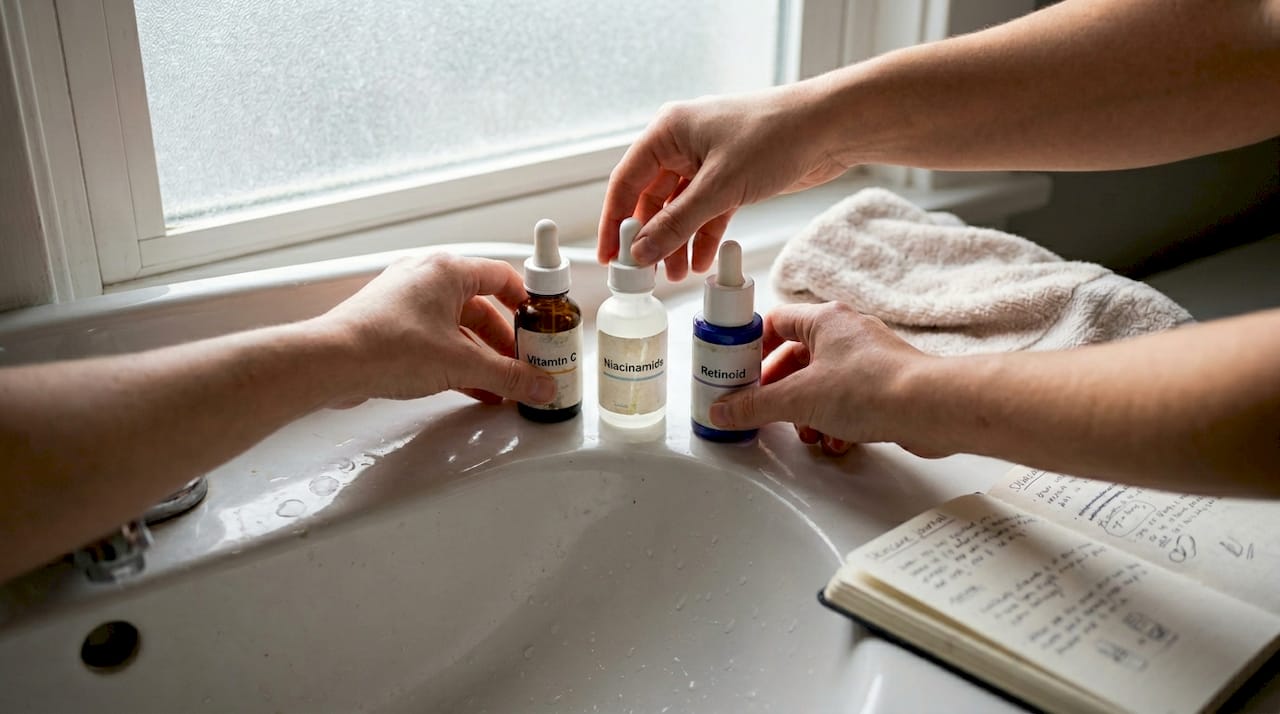
Here’s a breakdown of the top skin repair ingredients that clinical evidence supports:
| Ingredient | How it works | Best for |
|---|---|---|
| Vitamin C | Antioxidant; inhibits tyrosinase | All skin types, AM use |
| Niacinamide | Blocks melanin transfer to skin surface | All types, sensitive-friendly |
| Thiamidol | Potent tyrosinase inhibitor | Melasma, sun spots |
| Tranexamic acid | Reduces UV-triggered pigmentation signals | Melasma, PIH, sensitive skin |
| Retinoids | Accelerates cell turnover, fades pigment | Aging skin, PIH (start low) |
| AHAs (glycolic, lactic) | Exfoliates pigmented surface cells | Dull, uneven, textured skin |
| Azelaic acid | Inhibits tyrosinase, anti-inflammatory | Sensitive, darker skin tones |
Beyond actives, your routine needs a few supporting players. A gentle, non-stripping cleanser keeps your barrier intact. A barrier-supportive moisturizer prevents the irritation that can trigger rebound PIH. And SPF 30 or higher, ideally a tinted formula with iron oxide for deeper skin tones, is non-negotiable. You can explore the full ingredient glossary to understand exactly how each active functions at the cellular level.
What you’ll need for an effective brightening routine:
- A gentle, pH-balanced cleanser
- An antioxidant serum (Vitamin C or tranexamic acid) for morning use
- A niacinamide serum or moisturizer
- A targeted exfoliant (AHA or azelaic acid) for evening use
- A hydrating, barrier-repair moisturizer
- Broad-spectrum SPF 30+ (tinted if you have medium to deep skin)
Pro Tip: Always patch test new actives on your inner arm for 48 hours before applying to your face. This is especially important if you have sensitive or darker skin, where irritation can trigger the very pigmentation you’re trying to fade.
Step-by-step routine to brighten uneven skin
Now that you’ve assembled the best products, let’s put them together into a powerful daily plan. A structured AM and PM routine using targeted actives consistently outperforms any single product used in isolation. Here’s how to structure your days.
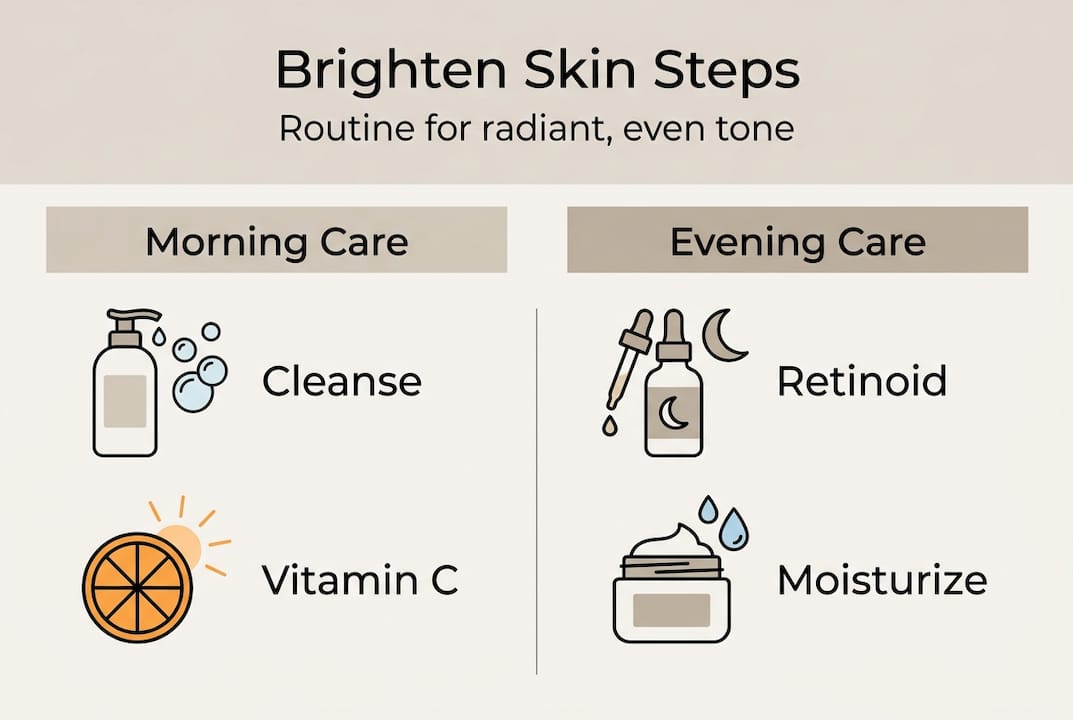
Morning routine:
- Cleanse with a gentle, sulfate-free cleanser. Rinse with lukewarm water.
- Apply Vitamin C serum while skin is slightly damp. This antioxidant neutralizes free radicals and inhibits tyrosinase before UV exposure begins.
- Layer niacinamide over or mixed with your Vitamin C. These two work well together in the AM to block melanin transfer and calm inflammation.
- Moisturize with a lightweight, barrier-supportive formula to lock in hydration.
- Apply SPF 30+ as the final step, every single morning, even indoors.
Evening routine:
- Double cleanse if you wear sunscreen or makeup. An oil cleanser first, then your regular cleanser.
- Apply your targeted active: use an AHA exfoliant one to two nights per week, or a retinoid or azelaic acid on alternating nights. Don’t layer these on the same night.
- Moisturize generously. If your skin is dry or reactive, a richer sleep mask works well here.
You can find proven methods for uneven skin that go deeper into active combinations and timing. For a full routine for even skin tone, including product layering order, that resource is worth bookmarking.
Pro Tip: Vitamin C in the AM and retinoid or azelaic acid in the PM is one of the most clinically supported combinations for fading hyperpigmentation. Adding niacinamide to your morning step amplifies the effect without increasing irritation risk.
Top brightening serums: Clinical results compared
To give you a head start, here’s how the most effective brightening serums stack up in clinical testing. Not all serums are created equal, and the difference between a 10% improvement and a 42% improvement often comes down to the specific actives and their concentrations.
Clinical data on leading brightening serums shows a wide range of outcomes depending on formulation:
| Serum / Regimen | Main actives | Improvement | Duration | Skin type notes |
|---|---|---|---|---|
| Skinbetter Even Intensive | Thiamidol complex | 42% MASI score | 12 weeks | All types, melasma |
| 2-MNG (Melasyl) + SPF | Melasyl, SPF | 29% dyschromia reduction | 12 weeks | Skin of color (SOC) |
| Thiamidol serum regimen | Thiamidol | Significant ITA° increase | 8-12 weeks | Radiance, all types |
| RGN-6 multimodal serum | Multiple actives | Improved tone/evenness | 8-12 weeks | Post-procedure, all |
Statistic callout: Consistently using a clinically formulated brightening serum alongside SPF produces 40-50% improvement in skin tone evenness within 8 to 12 weeks. That’s a meaningful, visible change, not a subtle shift.
When evaluating any serum, look beyond the hero ingredient. The best formulas include supporting actives for barrier protection, like ceramides or panthenol, alongside the brightening agents. Understanding what makes serums effective goes beyond a single active. If your skin is reactive, start with gentle serums for sensitive skin before moving to higher-strength formulas. For a curated list, the top skin repair serums guide is a practical starting point.
Avoiding setbacks: Common pitfalls and how to adjust
Even with the best plan, a few easy mistakes can undo weeks of effort, especially for sensitive or darker skin. The most common errors aren’t about choosing the wrong product. They’re about using the right products incorrectly.
Mistakes that slow your progress:
- Over-exfoliating: Using AHAs or retinoids too frequently strips the barrier and triggers inflammation, which causes more PIH
- Skipping SPF: Even one unprotected day in the sun can reverse weeks of fading
- Layering too many actives at once: Introducing multiple new products simultaneously makes it impossible to identify what’s working or causing irritation
- Expecting overnight results: Impatience leads to product-hopping before anything has time to work
- Using high-strength formulas on reactive skin: Stronger is not always better, especially for darker skin tones
For those with Fitzpatrick skin types IV through VI, gentler actives like azelaic acid, niacinamide, and mandelic acid at lower concentrations are safer starting points. Tinted SPF with iron oxide provides additional protection against visible light, which also stimulates melanin in deeper skin tones. Melasma, in particular, is a chronic condition with a hormonal component. It often requires a combination of topical actives and, in some cases, oral tranexamic acid under physician guidance.
Expert note: Avoiding irritation is not just about comfort. For darker skin tones and those prone to melasma, any inflammatory trigger can cause rebound PIH that’s harder to treat than the original dark spot. Slow, consistent, and gentle always wins.
The science-backed solutions for uneven skin resource covers how to personalize your approach based on your skin’s specific reactivity and pigmentation pattern.
Tracking your progress: What to expect and when
Once your routine is underway, staying objective helps keep you motivated and signals when to adjust. Skin changes slowly, and without a system for tracking, it’s easy to feel like nothing is happening when real improvement is actually building beneath the surface.
How to monitor your results effectively:
- Take baseline photos in consistent lighting (natural light, same angle) before you start. This is your reference point.
- Keep a simple skin journal: Note which products you’re using, any reactions, and your skin’s overall feel each week.
- Check in at week 4: Look for subtle changes in texture and overall brightness. Spot fading may not be visible yet, but skin should feel more even.
- Assess at week 8: This is when most people see the first clear reduction in dark spot intensity. Consistent routines show 40-50% improvement by this point in clinical settings.
- Full evaluation at week 12: Compare your current photos to your baseline. Adjust your routine based on what’s working and what isn’t.
If you’ve followed a consistent routine for 12 weeks and see no improvement, or if you notice worsening pigmentation, new patches, or significant sensitivity, it’s time to see a dermatologist. Melasma in particular often needs professional input to manage effectively. The guide to even skin tone includes additional benchmarks and tips for staying on track through the process.
Power up your results with science-backed serums
If you’re ready to upgrade your results with next-generation, clinically proven actives, here’s what works. A well-structured routine is only as strong as the products you put in it.
At Cellure, we’ve formulated our serums and repair kits around the same bioactive principles covered in this guide: targeted actives, barrier support, and cellular-level renewal. The Tranexamic Acid Peptide Serum combines two of the most clinically supported brightening mechanisms in a single, gentle formula suitable for all skin types, including sensitive and deeper skin tones. For a complete approach, the Complete Skin Repair Kit brings together multiple actives designed to work in sequence, the way the clinical data says they should. Explore the full range of Cellure skin solutions and find the right fit for your skin’s specific needs.
Frequently asked questions
What is the most effective way to brighten uneven skin?
The best approach is a daily routine combining sunscreen, an antioxidant serum, and targeted actives like niacinamide or retinoids, all layered in the right order and tailored to your skin type. Consistency matters more than any single product.
How long until I see brighter, more even skin?
Most people notice real improvement between 8 and 12 weeks with consistent use of proven serums and sunscreen. Clinical trials confirm 40-50% improvement is achievable in that window with the right formulas.
Which ingredients should I avoid if I have sensitive or darker skin?
Avoid high-strength exfoliants and aggressive hydroquinone cycles. Start with gentler actives like azelaic acid and niacinamide at lower concentrations, and always use tinted SPF.
Can I use the same products for melasma and sun spots?
Many actives overlap, but melasma is a chronic, hormonally driven condition that often needs a more tailored regimen. Combining topicals with oral tranexamic acid under physician guidance is sometimes necessary, and diligent SPF use is non-negotiable for both.
Recommended
- Step-by-Step Guide to Even Skin Tone for Radiant Results – Cellure
- How to address uneven skin tone with proven methods – Cellure
- Why Target Uneven Skin Tone for Radiant Aging – Cellure
- Why Skin Tone Becomes Uneven – Causes and Solutions – Cellure
- Skin tone balancing routine for clear skin in 2026 – NORML
- Medically Guided Skincare Steps for Lasting Natural Results