


How to address uneven skin tone with proven methods
Uneven skin tone frustrates millions who struggle to find treatments that work. Many products promise results but lack scientific backing, leaving you stuck with shelves of ineffective serums. This guide cuts through the confusion with a clear, science-backed plan using proven ingredients and professional insights to help you achieve balanced, radiant skin.
Table of Contents
- Understanding Uneven Skin Tone And Its Causes
- Prerequisites: What You Need Before Starting Treatment
- Clinically Proven Ingredients For Uneven Skin Tone
- Daily Skincare Routine Structure For Tone Correction
- Professional Treatments To Accelerate Results
- Safety Considerations And Common Mistakes To Avoid
- Expected Timelines And How To Measure Progress
- Explore Advanced Solutions With Cellure
- FAQ
Key takeaways
| Point | Details |
|---|---|
| Multiple causes | Uneven skin tone develops from sun damage, aging, hormones, and inflammation affecting pigment distribution. |
| Proven ingredients | Tranexamic acid, niacinamide, retinoids, and peptides deliver measurable improvements when used consistently. |
| Sun protection essential | Daily SPF 30+ prevents further damage and protects treatment progress from UV exposure. |
| Professional options | Microneedling and laser treatments accelerate visible improvements when combined with home care. |
| Patience required | Consistent routines show measurable results within 6 to 12 weeks with proper adherence. |
Understanding uneven skin tone and its causes
Uneven skin tone includes hyperpigmentation, redness, dullness, and texture irregularities that make your complexion appear patchy or aged. These visible concerns become more pronounced as skin cell turnover naturally slows with aging, allowing pigment clusters to accumulate instead of being shed efficiently.
Common causes include sun damage, hormonal changes, inflammation, and slowing cell turnover with age. Sun exposure triggers melanin overproduction in protective response, creating dark spots that persist long after the damage occurs. Hormonal shifts during pregnancy, menopause, or from certain medications can activate melanocytes unevenly, resulting in patches of darker skin called melasma.
Inflammation from acne, eczema, or harsh skincare products leaves behind post-inflammatory hyperpigmentation that lingers for months. As you age, your skin’s natural repair mechanisms weaken, making it harder to bounce back from these insults. Understanding which factors contribute most to your specific concerns helps you select the right treatment approach for uneven skin tone.
Key contributors to uneven tone:
- UV radiation causing melanin clusters and sun damage
- Hormonal fluctuations triggering irregular pigment production
- Inflammatory responses leaving dark marks after healing
- Declining cell turnover allowing pigment buildup
- Genetic predisposition affecting melanin distribution
Prerequisites: what you need before starting treatment
Assess your skin type and specific tone irregularities before buying products. Look closely at whether you have dark spots, overall dullness, redness, or textural issues, as each responds to different active ingredients. Take photos in natural lighting to track your starting point objectively.
Select dermatologist-approved products containing proven skin repair ingredients backed by clinical research. Avoid products with vague “brightening complex” claims that don’t list specific actives or concentrations. Research shows targeted formulations with transparent ingredient lists deliver predictable results.
Commit to consistency and daily sun protection as non-negotiable habits. Treatments fail when you skip days or forget sunscreen, allowing UV damage to undo your progress. Set phone reminders if needed to build the routine into your daily schedule.
Consult a dermatologist for severe hyperpigmentation, melasma, or if you have sensitive skin prone to reactions. Professional guidance helps you avoid wasting time and money on inappropriate products. They can also identify underlying conditions requiring medical treatment rather than cosmetic solutions.
Essential preparation steps:
- Photograph skin in consistent lighting every four weeks
- Research active ingredient concentrations and clinical evidence
- Clear schedule for morning and evening routine commitment
- Budget for quality products that will last 2 to 3 months
- Professional consultation scheduled if concerns are severe
Understand that visible improvements require 6 to 12 weeks of consistent use. Impatience leads many people to switch products prematurely, never giving any formula enough time to work. Mental preparation for this timeline prevents frustration and product hopping.
Clinically proven ingredients for uneven skin tone
Tranexamic acid effectively reduces hyperpigmentation and evens skin tone within 4 to 12 weeks with consistent topical use. This ingredient works by blocking plasmin activity, which prevents melanin synthesis triggered by UV exposure and inflammation. Studies show 2% to 5% concentrations deliver optimal results with minimal irritation, making it suitable for sensitive skin.
Niacinamide reduces redness and pigmentation while improving skin texture with minimal irritation. This form of vitamin B3 inhibits melanosome transfer from melanocytes to keratinocytes, preventing dark spots from forming in the surface layers. It also strengthens the skin barrier, reducing inflammation that can worsen uneven tone.

Retinoids accelerate cell turnover and improve melanin dispersion, reducing pigmentation with cautious use. Prescription tretinoin or over-the-counter retinol speeds the shedding of pigmented cells while preventing new clusters from forming. Start with low concentrations two to three times weekly, gradually increasing as your skin builds tolerance over 4 to 6 weeks.
Peptides promote collagen synthesis improving skin firmness and tone. While primarily known for anti-aging benefits, peptides support overall skin health that contributes to more even tone. They help repair damage that can lead to irregular pigmentation and texture issues.
Key ingredients for tone correction:
- Tranexamic acid: blocks pigment formation, gentle for daily use
- Niacinamide: brightens and calms, strengthens barrier function
- Retinoids: accelerate turnover, require gradual introduction
- Vitamin C: antioxidant protection, brightens existing spots
- Alpha arbutin: tyrosinase inhibitor, fades hyperpigmentation
Pro Tip: Introduce one active ingredient at a time, waiting three to four weeks before adding another. This approach lets you identify which ingredients your skin tolerates and which deliver visible results. If irritation occurs, you’ll know exactly which product caused it.
Explore detailed information about how these skin repair ingredients work at the cellular level. Understanding mechanisms helps you make informed choices and set realistic expectations. Learn about tranexamic acid benefits for aging skin and how to use peptides effectively to maximize results.
Daily skincare routine structure for tone correction
Start with gentle cleansing using a pH-balanced formula that removes impurities without stripping natural oils. Harsh cleansers damage the skin barrier, triggering inflammation that worsens uneven tone. Choose cream or gel cleansers over foaming formulas if you have dry or sensitive skin.
Apply targeted serums immediately after cleansing while skin is slightly damp. This timing maximizes absorption of active ingredients like tranexamic acid or niacinamide. Use two to three drops, pressing gently into skin rather than rubbing aggressively.
Follow with moisturizer to seal in serums and support barrier function. Even oily skin needs hydration to maintain healthy cell turnover and prevent compensatory oil production. Look for lightweight, non-comedogenic formulas with ceramides or hyaluronic acid.
Finish every morning routine with broad-spectrum SPF 30 or higher, reapplying midday if you’re outdoors. Sun protection prevents new damage and protects the improvements you’re working to achieve. Mineral sunscreens with zinc oxide or titanium dioxide offer physical UV blocking without irritation.
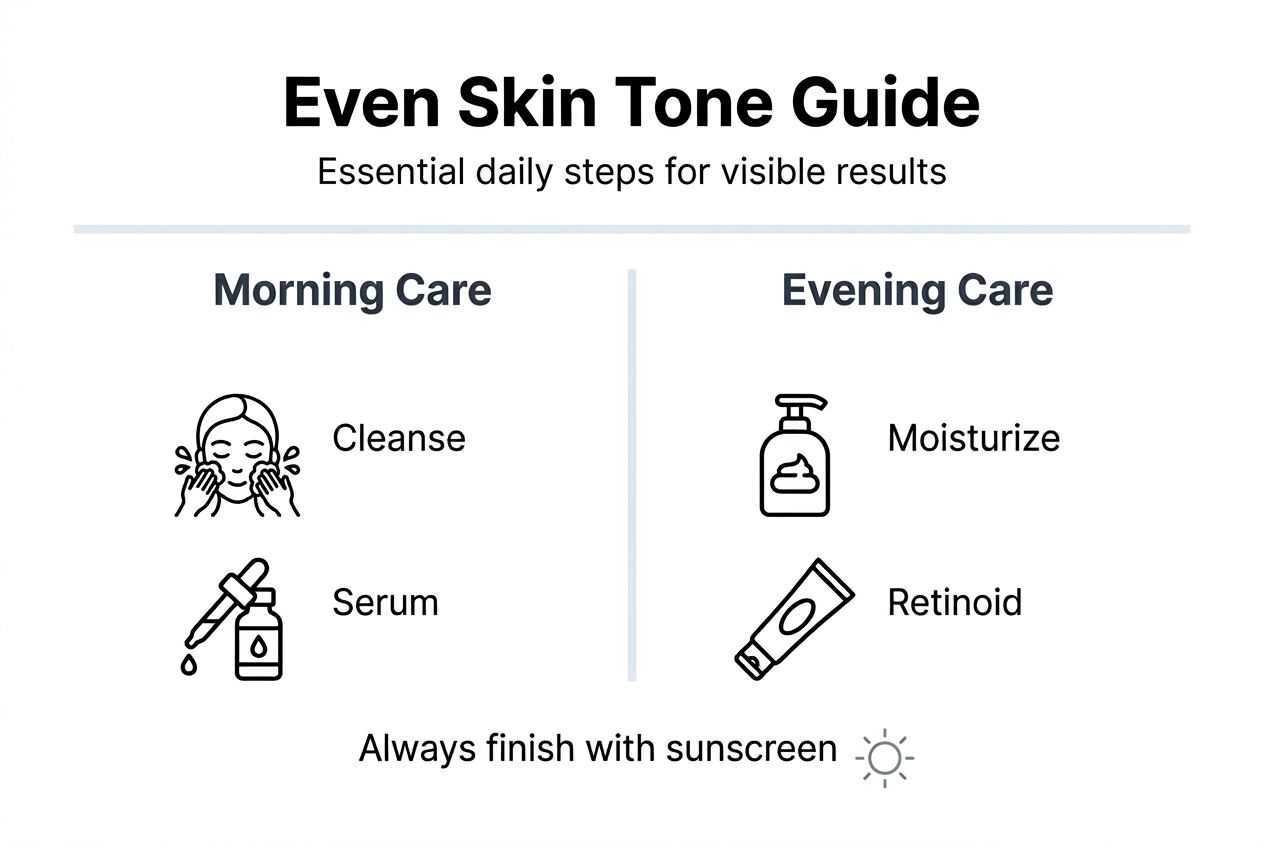
Use potent actives like retinoids only at night, starting two to three times weekly. Your skin repairs itself during sleep, making evening the ideal time for cell turnover accelerators. Adjust frequency based on how your skin responds over the first month.
Morning and evening routine structure:
| Time | Step | Product Type | Key Function |
|---|---|---|---|
| AM | 1 | Gentle cleanser | Remove overnight oils without stripping |
| AM | 2 | Brightening serum | Tranexamic acid or niacinamide application |
| AM | 3 | Moisturizer | Barrier support and hydration |
| AM | 4 | SPF 30+ | UV protection and damage prevention |
| PM | 1 | Gentle cleanser | Remove makeup, sunscreen, daily buildup |
| PM | 2 | Treatment serum | Peptides or targeted actives |
| PM | 3 | Retinoid (2-3x/week) | Cell turnover acceleration |
| PM | 4 | Moisturizer | Overnight barrier repair |
Avoid layering multiple harsh actives simultaneously, especially when starting treatment. Combining retinoids, strong acids, and high-concentration vitamin C causes irritation that damages your barrier and worsens pigmentation. Build your routine gradually, adding products only after your skin tolerates existing ones.
Pro Tip: Apply sunscreen as the final step every morning, waiting five minutes after moisturizer. Reapply every two hours during extended sun exposure, even on cloudy days when 80% of UV rays still penetrate. This habit alone prevents most treatment failures.
Follow this guide to even skin tone and radiant results for additional routine optimization strategies. Consistency matters more than expensive products or complex routines with ten steps.
Professional treatments to accelerate results
Microneedling combined with radiofrequency improves skin texture and tone with minimal downtime. This procedure creates controlled micro-injuries that trigger collagen production and allow better penetration of topical treatments. RF energy adds heat to deeper layers, enhancing results without damaging the surface.
Laser and IPL treatments reduce pigmentation rapidly when paired with topical maintenance. These technologies target melanin clusters with precise wavelengths, breaking them apart for natural elimination. Results appear faster than topical-only approaches, but require more recovery time and carry higher risks.
Combination treatments optimize both safety and effectiveness by addressing multiple tone issues simultaneously. Many dermatologists now recommend pairing gentle professional procedures with prescription-strength topicals for comprehensive correction. This approach delivers faster results while minimizing the aggressive treatments needed.
Professional evaluation ensures treatment appropriateness for your specific concerns and skin type. Not all pigmentation responds to the same procedures, and some conditions contraindicate certain treatments. A qualified dermatologist assesses your needs and designs a personalized plan.
Treatment comparison:
| Treatment | Primary Benefit | Downtime | Ideal For |
|---|---|---|---|
| Microneedling | Texture improvement, enhanced product absorption | 1-3 days redness | Mild to moderate unevenness, all skin tones |
| RF Microneedling | Deeper collagen stimulation, tightening | 3-5 days redness | Moderate concerns, firmness loss |
| Laser resurfacing | Rapid pigment reduction, texture refinement | 5-10 days peeling | Stubborn hyperpigmentation, lighter skin tones |
| IPL photofacial | Multiple concerns, redness, and spots | 1-2 days darkening | Sun damage, redness, surface pigmentation |
Key advantages of professional treatments:
- Faster visible improvements compared to topicals alone
- Addresses deeper pigmentation beyond topical reach
- Professional monitoring reduces complication risks
- Customized protocols for individual skin needs
- Enhanced topical penetration after procedures
Explore 2026 cosmetic treatment options to understand the latest advances in dermatological care. Professional treatments work best as complements to solid home care routines, not replacements for them.
Safety considerations and common mistakes to avoid
Inconsistent sunscreen use remains the most common cause of treatment failure and worsening pigmentation. UV exposure triggers melanin production that overwhelms even the strongest topical treatments. Skipping sunscreen on cloudy days or during short errands sabotages months of progress.
Overuse of exfoliants damages skin barrier, worsening uneven tone and sensitivity in 40% to 50% of users. Physical scrubs and daily chemical peels strip protective lipids, triggering inflammation that creates new dark spots. Limit exfoliation to twice weekly maximum, choosing gentle formulas.
Starting strong actives without assessing tolerance causes irritation that delays results. Jumping straight to prescription-strength retinoids or high-percentage acids overwhelms skin, forcing you to stop treatment while damage heals. This start-stop cycle extends your timeline significantly.
Impatience leads to premature product switching before ingredients have time to work. Most actives require 6 to 12 weeks to show visible improvements, but many people change products after just two to three weeks. This prevents you from ever identifying what actually works for your skin.
Skipping sunscreen or over-exfoliating can reverse all your progress. These two mistakes cause more treatment failures than any other factors combined.
Common mistakes and corrections:
- Mistake: Using harsh scrubs daily. Correction: Limit gentle exfoliation to twice weekly maximum.
- Mistake: Layering multiple strong actives immediately. Correction: Introduce one new active every three to four weeks.
- Mistake: Forgetting sunscreen on cloudy days. Correction: Apply SPF 30+ daily regardless of weather or season.
- Mistake: Switching products after two weeks. Correction: Commit to 8 to 12 weeks before evaluating effectiveness.
- Mistake: Ignoring irritation signs. Correction: Reduce frequency immediately if redness or stinging occurs.
If you have sensitive skin, explore gentle cellular repair options that deliver results without irritation. Building tolerance slowly prevents setbacks that extend your treatment timeline by months.
Expected timelines and how to measure progress
Visible improvements typically appear after 6 to 12 weeks of consistent use of science-backed treatments. This timeline reflects the natural skin cell turnover cycle and the time required for new, evenly pigmented cells to reach the surface. Expecting faster results leads to frustration and product hopping that prevents success.
Look for reduction of dark spots, more balanced overall tone, and smoother texture as primary improvement markers. Spots may lighten gradually rather than disappearing completely, blending better with surrounding skin. Overall radiance increases as cell turnover improves and inflammation decreases.
Track changes with regular photos under consistent lighting every four weeks. Use the same location, time of day, and camera settings to ensure accurate comparison. Progress photos reveal subtle improvements your eye might miss when looking in the mirror daily.
Visit your dermatologist periodically for professional assessment of treatment effectiveness. They can measure improvements objectively and adjust your protocol if results plateau. Professional monitoring also catches potential issues before they become problematic.
Measurable improvement signs:
- Dark spots lightening by one to two shades
- More uniform color distribution across face
- Reduced redness and post-inflammatory marks
- Smoother, more refined skin texture
- Enhanced overall radiance and clarity
Tracking tips for accurate progress monitoring:
- Photograph in natural window light, not bathroom lighting
- Use consistent angle and distance for each photo
- Avoid makeup or filters that alter true appearance
- Take notes on products and concentrations used
- Mark calendar for monthly progress check-ins
Encourage patience and resist the urge to change products every few weeks. Consistency delivers results, while constant switching prevents you from identifying what actually works. Give each properly selected product the full 8 to 12 weeks it needs to demonstrate effectiveness.
Explore advanced solutions with Cellure
Now that you understand science-backed approaches to uneven skin tone, discover how Cellure translates this knowledge into practical solutions. The brand’s targeted formulations feature ingredients discussed throughout this guide, including tranexamic acid and peptides, developed specifically for tone correction and aging concerns.
The Complete Skin Repair Kit provides everything needed for a daily routine aligned with 2026 skincare science. This comprehensive system includes serums with regenerative actives plus essential sun protection to support consistent treatment. Each product works synergistically to address multiple causes of uneven tone simultaneously.
Explore the Tranexamic Acid Peptide Serum featuring clinically effective concentrations of ingredients proven to reduce hyperpigmentation. This formula combines brightening actives with collagen-supporting peptides for comprehensive tone improvement. Discover the full range of Cellure’s cellular regeneration solutions designed for adults seeking science-backed skincare results.
FAQ
How long does it take to see results addressing uneven skin tone?
Visible improvements generally appear after 6 to 12 weeks of consistent daily use with proven treatments. This timeline reflects natural skin cell turnover cycles and varies based on severity and skin type. Patience and strict routine adherence are essential, as premature product switching prevents actives from demonstrating effectiveness.
Can I use retinoids if I have sensitive skin?
Retinoids can be used by sensitive skin types when introduced gradually under professional guidance. Start with low concentrations twice weekly, slowly increasing frequency over 4 to 6 weeks as tolerance builds. Patch testing on your jawline for three consecutive nights helps identify potential reactions before full-face application.
Is sunscreen really necessary when treating uneven skin tone?
Daily use of broad-spectrum SPF 30 or higher is absolutely essential to prevent worsening pigmentation and treatment failure. UV exposure triggers melanin production that overwhelms topical treatments, undoing months of progress. Sunscreen also protects treatment gains by preventing new sun damage that causes additional unevenness.