


Why Skin Tone Becomes Uneven – Causes and Solutions
Waking up to uneven skin tone and lingering dark spots can leave you searching for answers each morning. This challenge is more than just a cosmetic concern, as modern dermatology recognizes that skin discoloration reflects a complex mix of internal and external influences, including sun exposure, hormonal shifts, and the natural aging process. By exploring the cellular mechanisms of pigmentation, you can better understand the roots of skin tone variation and discover targeted solutions that support true rejuvenation.
Table of Contents
- Defining Uneven Skin Tone And Common Misconceptions
- Key Types And Visible Patterns Of Uneven Tone
- Major Causes – Sun, Hormones, Aging, And More
- How Cellular Processes Drive Skin Tone Changes
- Risks, Missteps, And Science-Backed Prevention
Key Takeaways
| Point | Details |
|---|---|
| Uneven Skin Tone Complexity | Uneven skin tone is influenced by diverse genetic, hormonal, and environmental factors, not solely by age or race. |
| Significant Causes | Major contributors include sun exposure, hormonal fluctuations, and inflammation, all requiring targeted preventive approaches. |
| Cellular Mechanisms | Understanding melanin production and distribution at the cellular level is crucial for managing skin tone irregularities effectively. |
| Prevention and Treatment | Proactive sun protection and personalized interventions can mitigate the risks of pigmentation changes and improve skin health. |
Defining Uneven Skin Tone and Common Misconceptions
Uneven skin tone represents a complex dermatological condition characterized by variations in pigmentation across facial and body surfaces. Despite widespread misconceptions, this phenomenon extends far beyond simple racial categorizations, involving intricate cellular mechanisms and environmental interactions. Modern dermatology recognizes that skin tone diversity is a nuanced spectrum influenced by multiple genetic, hormonal, and environmental factors.
The scientific understanding of skin pigmentation has significantly evolved, moving away from traditional reductive frameworks. Contemporary dermatological research emphasizes the importance of understanding skin tone variations with cultural sensitivity and biological precision. Key aspects of uneven skin tone include:
- Hyperpigmentation in specific areas
- Localized color variations
- Differences in melanin distribution
- Potential hormonal or inflammatory triggers
Contrary to popular belief, uneven skin tone is not exclusively an aging concern or limited to specific demographic groups. It represents a complex interplay between internal physiological processes and external environmental influences. Factors like sun exposure, hormonal changes, inflammatory responses, and genetic predispositions all contribute to pigmentation irregularities.
Melanin Production plays a crucial role in skin tone variations. When melanocytes (pigment-producing cells) become overactive or unevenly distributed, they create patches of darker or lighter skin. This process can result from multiple triggers, including:
- Prolonged ultraviolet radiation exposure
- Hormonal fluctuations
- Post-inflammatory responses
- Genetic inheritance patterns
Cellular Mechanisms underlying skin tone variations are sophisticated and multifaceted. Melanin production involves intricate biochemical pathways that can be influenced by numerous internal and external factors. Understanding these mechanisms requires moving beyond simplistic skin color narratives and embracing a more nuanced scientific perspective.
Pro tip: Consult a dermatological professional for personalized skin assessment to understand your unique pigmentation profile and potential targeted interventions.
Key Types and Visible Patterns of Uneven Tone
Uneven skin tone manifests through diverse and complex patterns, each representing a distinct dermatological challenge. Dermatological research identifies multiple distinctive types of pigmentation irregularities that can significantly impact skin appearance and individual confidence.
The primary categories of uneven skin tone include:
- Hyperpigmentation: Dark spots or patches caused by excess melanin production
- Hypopigmentation: Lighter skin areas with reduced pigmentation
- Vascular Redness: Inflammatory or blood vessel-related skin discoloration
- General Skin Dullness: Lack of uniform skin radiance and texture
Hyperpigmentation represents the most common manifestation of uneven skin tone. These dark patches emerge from several specific conditions:
- Melasma (hormonal pigmentation)
- Solar lentigines (sunspots)
- Post-inflammatory hyperpigmentation
- Age spots
Hypopigmentation presents as lighter skin patches, often resulting from conditions like vitiligo or localized skin damage. These areas demonstrate reduced melanin production, creating noticeable contrast against surrounding skin tones.
Accurate diagnosis requires professional dermatological assessment to distinguish between different pigmentation patterns and determine appropriate treatment strategies.
Vascular redness occurs when blood vessels become visible or inflamed, creating a persistent reddish appearance. This type of uneven tone can stem from various underlying causes, including rosacea, sun damage, or inflammatory skin conditions.
Skin Texture Variations also contribute to perceived unevenness. Rough patches, fine lines, and inconsistent skin surface can make pigmentation differences more pronounced, creating a complex visual landscape of skin irregularities.
Here’s a summary of skin discoloration types and how dermatologists typically approach their diagnosis:
| Skin Discoloration Type | Common Visual Presentation | Likely Underlying Cause | Diagnostic Consideration |
|---|---|---|---|
| Hyperpigmentation | Brown/dark patches | Sun, hormones, aging | Pattern and symmetry |
| Hypopigmentation | White/lighter spots | Vitiligo, skin injury | Sharpness of edges |
| Vascular Redness | Persistent redness | Blood vessels, rosacea | Vessel visibility |
| General Dullness | Lack of radiance | Aging, poor texture | Overall tone quality |
Pro tip: Photograph your skin under consistent lighting to track pigmentation changes and help your dermatologist understand your specific tone variations.
Major Causes – Sun, Hormones, Aging, and More
Comprehensive skin research reveals that uneven skin tone emerges from a complex interplay of intrinsic and extrinsic factors. Understanding these underlying causes provides crucial insights into preventing and managing pigmentation irregularities.
The primary contributors to uneven skin tone can be categorized into several key domains:
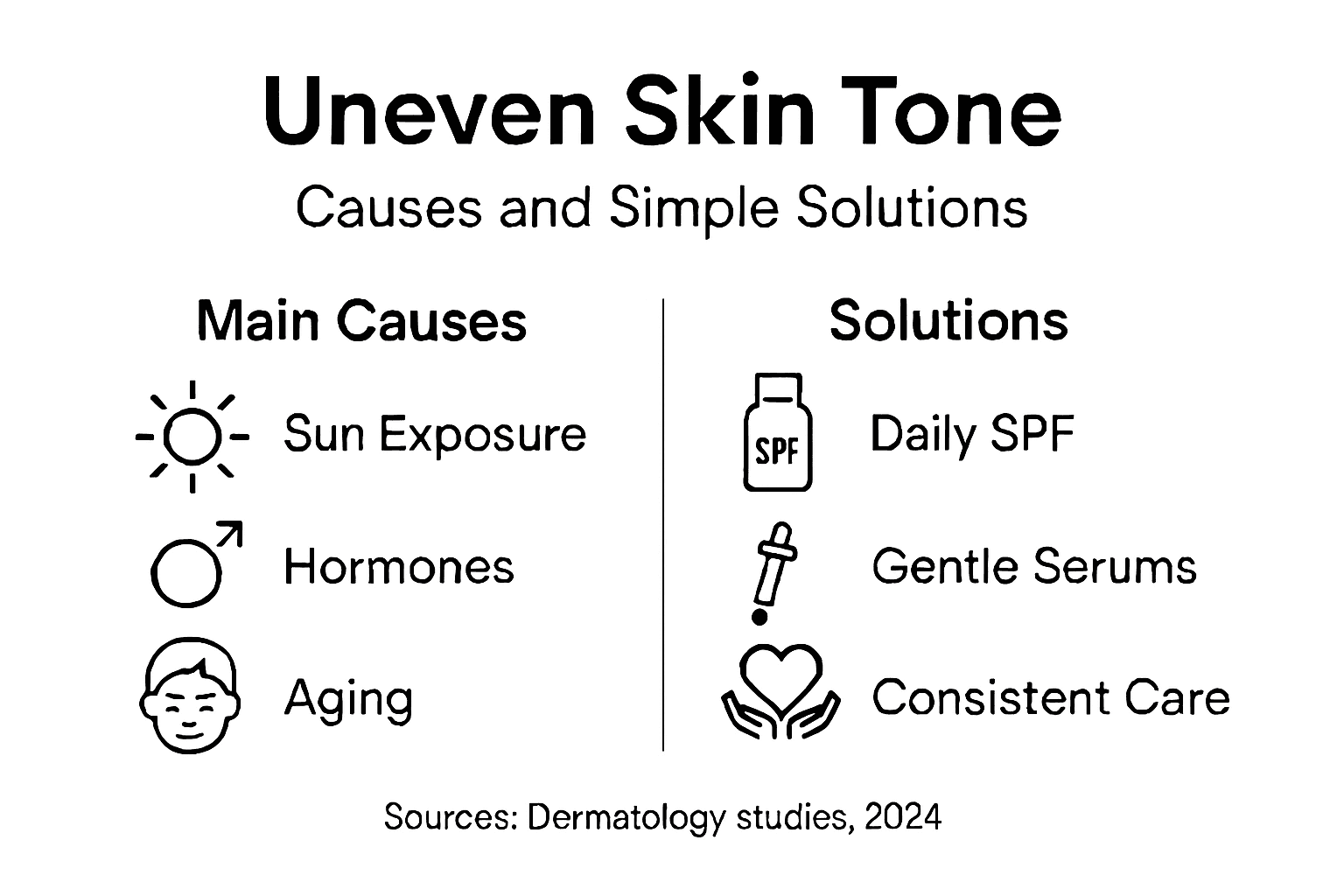
- Sun Exposure: Primary trigger for melanin overproduction
- Hormonal Fluctuations: Causing pigmentation shifts
- Aging Process: Reducing cellular regeneration
- Inflammatory Responses: Creating post-inflammatory pigmentation
- Genetic Predisposition: Influencing melanin distribution
Sun Radiation stands as the most significant external cause of uneven skin tone. Ultraviolet rays stimulate melanocytes, triggering defensive pigment production that can result in:
- Sunspots
- Freckles
- Widespread hyperpigmentation
- Accelerated skin aging
Hormonal Influences play a critical role in pigmentation changes. Pregnancy, menopause, and contraceptive use can dramatically alter melanin production, often causing conditions like melasma - characterized by symmetrical brown patches typically appearing on cheeks, forehead, and upper lip.
Cellular metabolism shifts dramatically during hormonal transitions, creating complex pigmentation landscapes that require targeted interventions.
Aging Mechanisms contribute significantly to uneven skin tone. Dermatological studies demonstrate that reduced collagen production, decreased cellular turnover, and accumulated environmental damage lead to progressive pigmentation irregularities.

Additional factors like chronic inflammation, medication side effects, and environmental pollutants further complicate skin tone uniformity. These elements interact dynamically, creating a nuanced backdrop for pigmentation challenges.
To better understand what contributes to uneven skin tone, see the comparison of intrinsic vs. extrinsic factors below:
| Cause Category | Examples | Influence on Skin Tone |
|---|---|---|
| Intrinsic Factors | Genetics, hormones, aging | Long-term pigmentation patterns |
| Extrinsic Factors | Sun exposure, pollution, drugs | Sudden or gradual tone changes |
Pro tip: Photograph your skin annually under consistent lighting to track pigmentation changes and identify emerging patterns.
How Cellular Processes Drive Skin Tone Changes
Molecular mechanisms of pigmentation reveal a complex cellular dance that determines skin tone with remarkable precision. The intricate process begins deep within specialized cells called melanocytes, where pigment production occurs through sophisticated biochemical pathways.
The primary cellular components driving skin tone include:
- Melanocytes: Primary pigment-producing cells
- Melanosomes: Specialized cellular organelles for pigment storage
- Keratinocytes: Cells receiving and distributing melanin
- Tyrosinase Enzyme: Critical catalyst for melanin synthesis
- Cellular Transport Mechanisms: Responsible for melanin distribution
Melanin Synthesis represents the foundational process of skin pigmentation. Within melanocytes, a series of complex biochemical reactions transform amino acids into pigment molecules through these critical steps:
- Tyrosine conversion
- Melanosome formation
- Pigment maturation
- Cellular transportation
Cellular Transfer Mechanisms play a crucial role in determining skin tone uniformity. Scientific research demonstrates that melanosomes are strategically transported from melanocytes to surrounding keratinocytes, creating protective pigment caps over cellular nuclei.
Genetic variations in melanosome production and transfer can create significant differences in pigmentation patterns across individuals.
Disruptions in these cellular processes can lead to uneven skin tone. Factors like inflammation, hormonal changes, and environmental stress can alter melanin production, distribution, and degradation, creating visible pigmentation irregularities.
Cellular Signaling further modulates pigmentation through complex molecular communication. Hormones, growth factors, and inflammatory mediators can trigger changes in melanin synthesis, creating dynamic shifts in skin tone over time.
Pro tip: Track your skin’s pigmentation changes by documenting cellular-level variations through consistent, well-lit photography.
Risks, Missteps, and Science-Backed Prevention
Photoexacerbated pigmentary disorders represent a complex challenge in dermatological care, particularly for individuals with diverse skin tones. Understanding potential risks and implementing strategic prevention becomes crucial in managing uneven skin pigmentation.
Key risks associated with uneven skin tone include:
- Sun Damage: Primary accelerator of pigmentation irregularities
- Incorrect Product Usage: Potential for worsening skin conditions
- Hormonal Fluctuations: Triggering unexpected pigment changes
- Inflammatory Responses: Creating post-inflammatory hyperpigmentation
- Genetic Predispositions: Increasing susceptibility to tone variations
Sunlight Exposure remains the most significant risk factor for pigmentation disorders. Ultraviolet radiation can dramatically accelerate melanin production, creating lasting skin tone irregularities through these mechanisms:
- Direct cellular DNA damage
- Inflammatory response activation
- Oxidative stress generation
- Melanocyte hyperactivity
Prevention Strategies require a multifaceted scientific approach. Broad-spectrum sunscreen with high SPF, designed for specific skin tones, provides critical first-line defense against pigmentation changes. Additional protective measures include:
- Consistent sun protection
- Antioxidant-rich skincare
- Regular skin examinations
- Targeted therapeutic interventions
Precise, personalized photoprotection strategies are essential for maintaining uniform skin tone across diverse genetic backgrounds.
Hormonal influences and inflammatory conditions can further complicate skin tone management. Comprehensive prevention requires understanding individual genetic predispositions, environmental exposures, and potential metabolic variations that impact pigmentation.
Treatment Considerations must address the underlying cellular mechanisms driving pigmentation changes. Advanced therapeutic approaches now focus on molecular-level interventions that can modulate melanin production and distribution.
Pro tip: Photograph your skin annually under consistent lighting to document potential pigmentation changes and track the effectiveness of preventive strategies.
Restore Your Skin’s Natural Balance with Targeted Care
Uneven skin tone results from complex processes like melanin imbalance, hormonal changes, and environmental damage. If you are struggling with hyperpigmentation, redness, or dullness, you deserve science-backed solutions that work at the cellular level. At Cellure, we understand these challenges and offer advanced skincare products formulated with powerful bioactive ingredients such as peptides, tranexamic acid, and polynucleotides to help renew and even your skin tone gently and effectively.
Explore our Best Sellers – Cellure to find serums and treatment kits designed specifically to target pigmentation irregularities and support skin regeneration.
Take control of your skin’s future by choosing regenerative skincare solutions that are proven to address the root causes of uneven tone. Visit Cellure’s Homepage now to discover products tailored for your skin’s unique needs. Start your journey towards brighter, more radiant skin today at https://cellure.co.
Frequently Asked Questions
What are the main causes of uneven skin tone?
Uneven skin tone can be caused by a combination of factors, including sun exposure, hormonal fluctuations, aging processes, inflammatory responses, and genetic predispositions.
How does sun exposure affect skin tone?
Sun exposure triggers melanin overproduction, leading to dark spots, freckles, and hyperpigmentation. UV rays can damage cellular DNA and activate inflammatory responses that contribute to uneven skin tone.
What types of pigmentation irregularities are common?
Common types of pigmentation irregularities include hyperpigmentation (dark patches), hypopigmentation (light spots), vascular redness (visible blood vessels), and general skin dullness.
How can I manage and treat uneven skin tone?
Management and treatment of uneven skin tone involve using broad-spectrum sunscreen, incorporating antioxidant-rich skincare products, seeking professional dermatological advice, and potentially using targeted treatments for specific pigmentation issues.