


Skin Sensitivity Triggers: Causes, Symptoms, and Solutions
What are skin sensitivity triggers?
Skin sensitivity triggers are specific agents or conditions that irritate the skin or provoke a hypersensitive reaction, typically by compromising the skin’s natural barrier or activating immune and nerve responses. They range from something as simple as a cold wind to a preservative buried in your moisturizer. The reaction itself can be visible, like redness or a rash, or purely sensory, like burning or stinging with no visible sign at all.
According to the Cleveland Clinic, sensitive skin means your skin reacts to things that don’t typically cause irritation in most people. The most common triggers fall into four broad categories:
- Environmental factors: temperature extremes, wind, sun exposure, low humidity, and ultraviolet light
- Cosmetic and skincare ingredients: soaps, fragrances, detergents, preservatives, and certain active ingredients
- Underlying skin conditions: eczema, rosacea, atopic dermatitis, and psoriasis
- Lifestyle and internal factors: stress, hormonal changes, diet, hydration, and medications
The underlying mechanism in most cases is a weakened skin barrier. When the outer layer of skin, called the stratum corneum, is compromised, irritants and allergens penetrate more easily, stimulating nerve endings and triggering inflammation. Sensitive skin is not a formal medical diagnosis but rather a signal that something is disrupting normal barrier function.
Pro Tip: Keep a simple skin diary for two weeks. Log what touched your skin each day, including laundry detergent, fabrics, and weather conditions, alongside any symptoms. Patterns emerge faster than you’d expect.
Table of Contents
- How does sensitive skin actually show up?
- What causes skin sensitivity and which triggers are most common?
- How do doctors identify and diagnose skin sensitivity?
- How do you manage and treat sensitive skin effectively?
- How can you prevent sensitive skin flare-ups?
- What does the science say about skin barrier function and sensitivity?
- Key Takeaways
- Cellure’s Complete Skin Repair Kit supports barrier recovery from the inside out
How does sensitive skin actually show up?
Sensitive skin reactions split into two categories: objective symptoms you can see, and subjective symptoms you can only feel. Visible reactions include redness, rashes, dryness, scaling, peeling, and hives. Sensory reactions include stinging, burning, itching, tingling, and tightness, sometimes with no visible change on the skin surface at all.
The type of reaction you experience often points to what’s causing it. Here’s how the main reaction types differ:
- Irritant contact dermatitis: the most common type, caused by direct chemical or physical damage to the skin barrier. No prior sensitization is needed. Symptoms appear after repeated or intense exposure.
- Allergic contact dermatitis: an immune-mediated response requiring prior exposure to an allergen. Reactions intensify over time and typically appear 24–72 hours after contact.
- Sensorineural irritation (subjective irritation): stinging, burning, or itching with no visible rash and no detectable inflammation on biopsy. Lactic acid and propylene glycol in cosmetics are classic triggers.
- Photosensitivity: reactions triggered by sunlight, ranging from easy sunburn to hives or tingling.
- Contact urticaria: immediate hives appearing within minutes of skin contact with a trigger, resolving within hours.
Skin hypersensitivity reactions are also classified by timing. Type I reactions are immediate, producing hives or swelling within minutes. Type IV reactions are delayed, appearing hours or days later as contact dermatitis. Knowing which type you’re dealing with changes how you approach treatment.
Symptoms also vary by body site. The face, particularly the cheeks and nasolabial area, tends to be the most reactive zone, partly because the skin there is thinner and more vascularized.

What causes skin sensitivity and which triggers are most common?
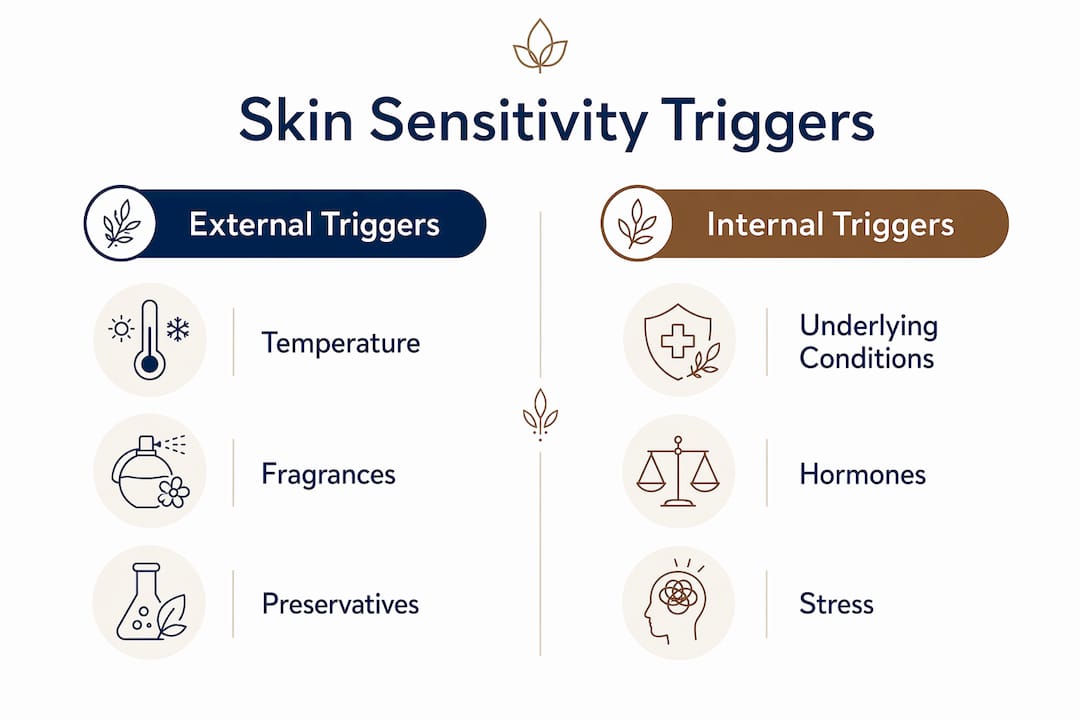
Environmental triggers
Temperature extremes are among the most reliable irritants. Cold, dry air strips moisture from the skin surface, while heat dilates blood vessels and intensifies flushing. Wind accelerates water loss from the skin. Low humidity, especially indoors during winter, compounds all of these effects. UV radiation is a direct stressor that damages the skin barrier and triggers photosensitivity reactions in susceptible people.
Cosmetic and skincare product triggers
Fragrances are the single most common allergen in personal care products. Preservatives like methylisothiazolinone and formaldehyde-releasing agents are close behind. Soaps and detergents, particularly those used in “wet work” (frequent hand washing, dishwashing, or prolonged water exposure), are the leading cause of irritant contact dermatitis. The problem usually isn’t one product but a combination of mild irritants adding up over time.

Certain active skincare ingredients also trigger reactions in sensitive skin, including high-concentration retinoids, alpha hydroxy acids, and physical exfoliants. Understanding which ingredients weaken the skin barrier is the first step toward building a routine that doesn’t backfire.
Underlying skin conditions
Eczema, rosacea, and atopic dermatitis all compromise the skin barrier structurally, making the skin far more reactive to triggers that wouldn’t bother intact skin. Rosacea, for example, can cause sensitivity to cosmetics that a person used without issue for years, then suddenly cannot tolerate. Dry skin from any cause, including thyroid disease or certain medications, creates the same vulnerability.
Hormonal changes and stress
Stress and hormonal fluctuations disrupt both barrier function and immune regulation, intensifying sensitivity reactions. Cortisol, released during stress, impairs the skin’s ability to retain moisture and repair itself. Hormonal shifts during menstruation, pregnancy, or menopause frequently coincide with new or worsening skin sensitivity. Diet and hydration matter too. Dehydration reduces skin resilience, and certain foods can trigger inflammatory responses in people with underlying conditions like eczema.
Sensitive skin most often reflects irritant contact dermatitis, a condition driven by cumulative exposure to mild irritants rather than a single dramatic allergen. Addressing it requires modifying daily habits and repairing the barrier, not just switching one product.
How do doctors identify and diagnose skin sensitivity?
Sensitive skin is not a formal diagnosis, but a professional evaluation is worth pursuing when reactions are persistent, severe, or don’t respond to basic trigger avoidance. Ruling out conditions like psoriasis, urticaria, or cutaneous mastocytosis matters because each requires a different treatment approach.
Clinical assessment typically involves:
- Detailed patient history covering product use, occupational exposures, and symptom timeline
- Physical examination of affected skin sites
- Patch testing to identify specific allergens causing allergic contact dermatitis
- Prick testing for contact urticaria
- Skin barrier function measurements, including transepidermal water loss (TEWL) and stratum corneum hydration
Subjective assessment tools include:
- Self-reported questionnaires: validated tools that capture sensory symptoms and perceived reactivity. Useful for identifying type II sensitive skin, characterized by high vascular reactivity and sebum content without obvious barrier impairment.
- Lactic Acid Sting Test (LAST): a chemical probe test where a dilute lactic acid solution is applied to the nasolabial fold. A stinging response indicates neurosensory hyperactivity and often correlates with impaired barrier function.
Research published in PMC shows that questionnaires and LAST capture different subtypes of sensitive skin. Questionnaires tend to identify people with vascular reactivity and subjective sensitivity, while LAST identifies those with fragile barrier function and increased transepidermal water loss. Neither method alone gives the full picture.
Differentiating irritant contact dermatitis from allergic contact dermatitis is clinically important. Irritant reactions are dose-dependent and affect most people at sufficient exposure. Allergic reactions are immune-mediated, affect only sensitized individuals, and tend to worsen with each subsequent exposure.
How do you manage and treat sensitive skin effectively?
The foundation of managing sensitive skin is two-pronged: avoid the triggers you’ve identified, and actively repair the skin barrier. Moisturizing alone is not enough if the underlying irritant exposure continues.
General management principles:
- Switch to fragrance-free, dye-free cleansers and laundry detergents
- Limit shower temperature and duration to reduce barrier stripping
- Pat skin dry rather than rubbing
- Apply a barrier-repair moisturizer immediately after cleansing, while skin is still slightly damp
- Reduce “wet work” exposure where possible, or use protective gloves
Pro Tip: When introducing a new skincare product, apply it to a small patch of skin on your inner arm for 48 hours before using it on your face. This simple step catches most contact reactions before they become a bigger problem.
For sensitive skin repair, look for formulations containing ceramides, niacinamide, or peptides. These ingredients support the lipid matrix of the stratum corneum and help restore the barrier’s ability to retain moisture and exclude irritants. Cellure’s approach centers on bioactive ingredients that work at the cellular level, making them well suited to skin that has been repeatedly compromised.
Medical treatments depend on the underlying condition. Eczema may require topical corticosteroids or calcineurin inhibitors during flares. Rosacea responds to topical metronidazole or azelaic acid, along with strict trigger avoidance. Allergic contact dermatitis requires identifying and eliminating the specific allergen through patch testing, then managing acute reactions with antihistamines or short-course corticosteroids.
Stress management is not optional in this context. Because cortisol directly impairs barrier repair, chronic stress can keep sensitive skin in a reactive cycle regardless of what products you use.
How can you prevent sensitive skin flare-ups?
Prevention comes down to protecting the barrier before it breaks down, rather than reacting after it does.
- Wear broad-spectrum SPF daily. UV exposure is a direct barrier stressor and a photosensitivity trigger. SPF 30 or higher, applied every morning, reduces cumulative damage.
- Choose products with short, recognizable ingredient lists. Fewer ingredients mean fewer potential triggers. Fragrance-free is a baseline, not a bonus.
- Moisturize consistently, not just reactively. A daily barrier-supporting moisturizer keeps the stratum corneum intact and less permeable to irritants. Look for barrier-repairing ingredients like ceramides, fatty acids, and cholesterol.
- Dress for the weather. Wool and synthetic fabrics like polyester are common mechanical irritants. Natural fibers like cotton and bamboo are gentler on reactive skin.
- Manage stress actively. Exercise, sleep, and stress-reduction practices all support the skin’s immune and repair functions.
- Watch your diet and hydration. Staying well hydrated supports skin moisture levels. For people with eczema, identifying food triggers like dairy, eggs, or nuts can reduce flare frequency.
- Introduce new products slowly. One new product at a time, with a two-week gap between introductions, makes it possible to identify a trigger if a reaction occurs.
- Avoid extreme temperature shifts. Moving between very hot and very cold environments stresses the vascular system in the skin and can trigger flushing and redness, particularly in rosacea.
What does the science say about skin barrier function and sensitivity?
The skin barrier is a layered structure, with the stratum corneum acting as the outermost defense. It’s made up of corneocytes (flattened, protein-rich cells) embedded in a lipid matrix of ceramides, cholesterol, and free fatty acids. This “brick and mortar” architecture controls water loss and blocks the entry of irritants, allergens, and microorganisms. When the lipid matrix is disrupted, the barrier becomes permeable, and stimuli that would normally be harmless reach the nerve endings in the upper skin layers.
Sensitive skin affects all skin types and is linked to barrier dysfunction rather than being a distinct skin type on its own. It’s a quality that can develop in anyone whose barrier is sufficiently compromised, whether through genetics, chronic irritant exposure, or an underlying condition. Understanding skin lipid barrier function is foundational to understanding why some people react and others don’t.
The pathophysiology of sensitive skin involves two interconnected mechanisms: impaired epidermal barrier function and neurosensory hyperactivity. When the barrier is weakened, chemical irritants penetrate more deeply and stimulate sensory nerve fibers, producing stinging, burning, and itching even in the absence of visible inflammation.
Research using the Lactic Acid Sting Test has shown that people with fragile barriers have measurably higher transepidermal water loss and increased vascular reactivity, particularly on the cheeks and chin. Blood vessels in LAST-positive individuals sit closer to the skin surface and branch more frequently, which explains the persistent redness many people with sensitive skin experience.
Scientists now recognize at least three physiological subtypes of sensitive skin. Type I involves impaired barrier function. Type II features normal barrier function but chronic inflammation driving flushing and erythema. Type III is a sub-health state with neither obvious barrier impairment nor active inflammation, yet still producing sensory discomfort. This classification matters because barrier support strategies that work for Type I may not address the vascular and neurological components driving Type II reactions.
Key Takeaways
Skin sensitivity triggers are cumulative and highly individual. Identifying your specific triggers and repairing the barrier simultaneously is the most effective path to lasting relief.
| Point | Details |
|---|---|
| Triggers span four categories | Environmental factors, cosmetic ingredients, underlying conditions, and lifestyle factors all drive skin sensitivity. |
| Barrier compromise is the core mechanism | A weakened stratum corneum allows irritants to reach nerve endings, producing both visible and sensory reactions. |
| Irritant vs. allergic reactions differ | Irritant contact dermatitis is dose-dependent and most common; allergic contact dermatitis is immune-mediated and worsens with repeat exposure. |
| Stress and hormones amplify reactivity | Cortisol impairs barrier repair and immune regulation, keeping sensitive skin in a reactive cycle. |
| Diagnosis uses both objective and subjective tools | Patch testing, LAST, and validated questionnaires each capture different subtypes of sensitive skin. |
Cellure’s Complete Skin Repair Kit supports barrier recovery from the inside out
If your skin keeps reacting despite trigger avoidance, the barrier itself likely needs targeted support. Cellure’s Complete Skin Repair Kit is formulated with clinically supported bioactive ingredients, including peptides and polynucleotides, designed to work at the cellular level to restore barrier integrity and calm reactive skin. It’s built for people who want results grounded in regenerative science, not just symptom management.