


Top Skin Calming Solutions for Sensitive, Irritated Skin
TL;DR:
- Skin calming solutions help reduce redness and irritation by repairing the skin barrier and lowering inflammation. Using ingredients like ceramides, niacinamide, and colloidal oatmeal enhances long-term skin resilience, especially in sensitive skin. Combining immediate relief methods, such as cool compresses and refrigerated moisturizers, with barrier repair creates more effective and safer skincare routines.
Skin calming solutions are products and methods that reduce redness, irritation, and discomfort by repairing the skin barrier and lowering inflammation. The top skin calming solutions work on two levels: they deliver immediate relief and build long-term skin resilience. Sensitive skin reacts to triggers ranging from harsh ingredients to stress and diet, making the right approach critical. Ingredients like ceramides, niacinamide, and colloidal oatmeal are proven barrier repairers, and knowing how to use them correctly separates short-term comfort from lasting skin health.
What ingredients make skin calming solutions effective?
The most effective soothing ingredients work by restoring the skin barrier, reducing inflammation, or both. Knowing which ones to look for saves you from wasting money on products that feel nice but do nothing.
Ingredients to seek out:
- Ceramides: Lipids that hold skin cells together and prevent moisture loss. They are the foundation of any barrier repair formula.
- Niacinamide: A form of vitamin B3 that reduces redness, strengthens the barrier, and calms inflammatory responses without irritating sensitive skin.
- Colloidal oatmeal: Finely milled oats that coat the skin, lock in moisture, and reduce itching. The FDA recognizes it as a skin protectant.
- Centella asiatica (cica): A plant extract with strong anti-inflammatory properties, widely used in gentle skincare for inflammation and post-procedure recovery.
- Green tea extract: Rich in polyphenols that neutralize free radicals and reduce visible redness.
- Aloe vera: A classic natural calming skin treatment that cools on contact and delivers anti-inflammatory compounds directly to irritated tissue.
- Hyaluronic acid: Draws water into the skin, keeping it plump and less reactive to environmental triggers.
Ingredients to avoid:
Fragrance, alcohol, retinoids, and some essential oils consistently worsen irritation in sensitive skin. That means fragrance-free, alcohol-free formulations are non-negotiable when your skin is reactive. Retinoids are powerful anti-aging tools, but they thin the barrier temporarily, making them a poor choice during a flare-up.
These ingredients appear in moisturizers, serums, toners, and calming sprays. The product format matters less than the formula inside it.
Pro Tip: Introduce one new product at a time and wait at least one week before adding another. This is the only reliable way to identify specific irritants without guessing.
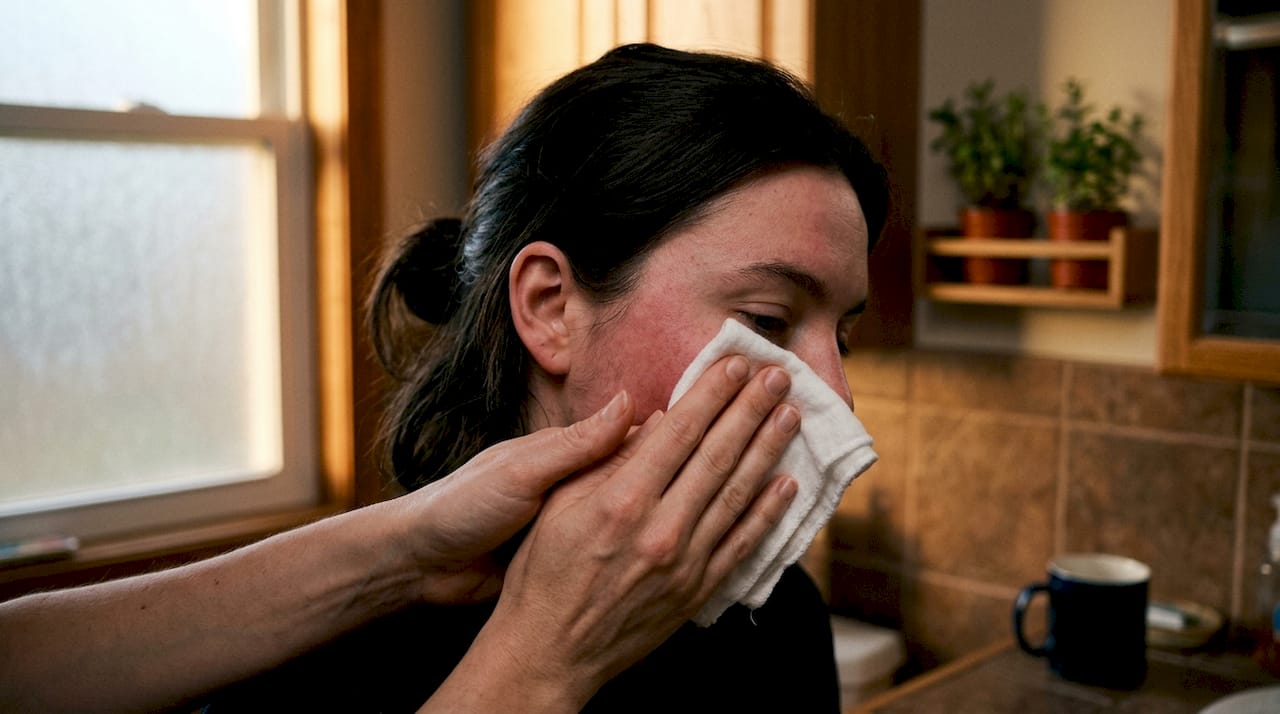
1. Cool, damp compresses
A cool, damp compress is the fastest way to reduce acute redness and burning. Applied for 10–15 minutes several times daily, it lowers skin temperature, constricts blood vessels, and reduces the urge to scratch. No product required. This method works for contact dermatitis, sunburn, and general reactive skin flare-ups.
2. Colloidal oatmeal baths
Colloidal oatmeal baths calm widespread irritation across the body. The key is technique: enclose oats in a muslin or organza bag rather than pouring loose oats directly into the tub. The bag creates a soothing milk infusion that coats the skin without clogging your drain. Soak for 15–20 minutes in lukewarm water for best results.
3. Refrigerated moisturizer or facial spray
Storing your moisturizer or facial spray in the refrigerator is one of the most underused skin soothing remedies available. Refrigerated skincare reduces burning and stinging more effectively than room-temperature application. The cold constricts capillaries and delivers an immediate anti-inflammatory effect. This works especially well for rosacea-prone skin and post-sun exposure.
Pro Tip: Keep a small facial spray in the refrigerator and mist your face whenever you feel heat or tightness building. It takes seconds and delivers real relief.
4. Over-the-counter hydrocortisone cream
Hydrocortisone cream is the go-to topical treatment for acute inflammation and itching. Apply a thin layer 2–4 times daily to the affected area. Use it for short periods only, typically no more than one week on the face, since prolonged use can thin the skin. Consult a dermatologist if there is no improvement after a few days.
5. Aloe vera gel
Pure aloe vera gel is one of the best natural calming skin treatments for mild to moderate irritation. It absorbs quickly, delivers cooling relief, and contains compounds like acemannan that reduce inflammation. Choose a formula with aloe as the first ingredient and no added fragrance. Refrigerate it for an enhanced cooling effect.
6. Ceramide-rich moisturizers
Ceramide-rich moisturizers do more than hydrate. They actively repair the skin barrier by replenishing the lipids that hold skin cells together. A compromised barrier is the root cause of most chronic sensitivity, so rebuilding it is the most important long-term step. Apply immediately after cleansing while skin is still slightly damp to lock in moisture.
7. Niacinamide serums
Niacinamide serums address redness and sensitivity at a cellular level. Niacinamide reduces the production of inflammatory cytokines and strengthens the skin’s outer layer over time. It pairs well with ceramides and hyaluronic acid. Start with a low concentration (around 5%) if your skin is highly reactive, and build up gradually.
8. Calamine lotion
Calamine lotion is a classic effective skin irritation solution for itching caused by rashes, insect bites, and mild allergic reactions. It contains zinc oxide, which has mild antiseptic and anti-inflammatory properties. Calamine works best for acute, localized itching rather than chronic redness. It dries out the skin slightly, so follow up with a fragrance-free moisturizer after the itch subsides.
9. Centella asiatica (cica) toners and creams
Cica products have moved from wound care into mainstream skincare for good reason. Centella asiatica accelerates barrier repair and reduces redness visibly within days of consistent use. Cica toners work well as a first step after cleansing, while cica creams provide a protective layer over reactive skin. Look for products that list centella asiatica or madecassoside near the top of the ingredient list.
10. Lifestyle adjustments that support skin calming
No topical product works in isolation. Stress triggers cortisol-related skin issues, and inflammatory diets weaken the skin barrier from the inside. Managing stress through sleep, exercise, and reduced screen time directly reduces flare-up frequency. Staying hydrated and eating anti-inflammatory foods like leafy greens, fatty fish, and berries gives your skin the raw materials it needs to repair itself.
How to use skin calming solutions safely and effectively
Applying the right product incorrectly can make irritation worse. These guidelines protect your skin while you treat it.
Safe application practices:
- Patch test every new product. Apply a small amount to your inner forearm for 24–48 hours before using it on your face. This catches reactions before they spread.
- Use lukewarm water only. Lukewarm water with a pH-balanced, fragrance-free cleanser is the gold standard for sensitive skin cleansing. Hot water strips the barrier and worsens redness.
- Never scratch. Scratching creates microscopic breaks in the skin that allow bacteria to enter and delay healing. Use a cool compress or refrigerated spray instead.
- Apply hydrocortisone sparingly. A thin layer is enough. Overuse causes skin thinning, especially on the face and around the eyes.
- Layer products correctly. Apply the thinnest, most water-based products first (toners, serums), then seal with a richer moisturizer. This order maximizes absorption and protection.
- Seek professional advice when needed. If irritation persists beyond two weeks despite consistent gentle care, see a dermatologist. Chronic redness can signal conditions like rosacea or eczema that require prescription treatment.
For a deeper look at building a daily routine around sensitive skin best practices, a structured approach makes a measurable difference over time.
Comparing types of skin calming solutions
Different situations call for different tools. This table helps you match the right solution to your skin’s current state.
| Solution type | Best for | Effectiveness | Key caution |
|---|---|---|---|
| Topical corticosteroids (hydrocortisone) | Acute flare-ups, intense itching | High for short-term relief | Limit use to 7 days on face; avoid overuse |
| Ceramide barrier creams | Daily maintenance, chronic sensitivity | High for long-term repair | Choose fragrance-free formulas only |
| Natural extracts (aloe, cica, green tea) | Mild irritation, daily soothing | Moderate; best combined with barrier repair | Verify no added fragrance or alcohol |
| Cooling compresses | Immediate burning or stinging | High for instant relief | Use clean cloth; avoid ice directly on skin |
| Colloidal oatmeal baths | Widespread body irritation | High for full-body calming | Use muslin bag method; follow with moisturizer |
The most common myth about natural remedies is that they are always safe for sensitive skin. Aloe vera and essential oils can both trigger reactions in some people. Always patch test, even with natural options. The most effective approach combines evidence-based ingredients with gentle application habits, not one or the other.
Key takeaways
The most effective skin calming strategy pairs immediate relief methods like cool compresses with long-term barrier repair using ceramides, niacinamide, and fragrance-free formulations.
| Point | Details |
|---|---|
| Barrier repair is the priority | Ceramides and niacinamide rebuild the skin’s defense layer and reduce chronic sensitivity. |
| Avoid known irritants | Fragrance, alcohol, and retinoids worsen reactive skin; always choose fragrance-free formulas. |
| Refrigerate for instant relief | Chilled moisturizers and sprays reduce burning and stinging faster than room-temperature products. |
| Patch test every new product | Introduce one product at a time to identify triggers before they cause a full reaction. |
| Lifestyle matters | Stress and inflammatory diets weaken the skin barrier; managing both reduces flare-up frequency. |
What I’ve learned from years of watching sensitive skin routines fail
The most common mistake I see is people treating a flare-up like a problem to solve fast. They pile on three new products at once, switch cleansers, add a calming mask, and wonder why their skin gets worse. The skin barrier does not respond well to urgency.
The single most reliable insight I have is this: less is more, and patience is the active ingredient. When skin is reactive, the goal is to stop adding variables. Strip the routine back to a gentle cleanser, one barrier-repair moisturizer, and a cooling method. Let the skin stabilize before introducing anything else.
Stress and diet are the factors most people ignore. I have seen people spend hundreds on serums while sleeping five hours a night and eating processed food daily. Their skin never fully calmed down. Irritation is often systemic, and no topical product can fully compensate for internal inflammation.
The refrigerator trick is the most underrated tool in sensitive skincare. Keeping a facial spray chilled and using it at the first sign of heat or tightness breaks the itch-scratch cycle before it starts. It costs nothing extra and works every time.
Finally, know when to stop self-treating. Two weeks of consistent gentle care with no improvement means your skin needs a professional assessment. Rosacea, eczema, and contact allergies all look like general sensitivity but require different treatment paths. Listening to your skin means knowing when it is asking for more than you can give it at home.
— Sara
Gentle, science-backed skincare from Cellure
Sensitive skin deserves products built around it, not adapted for it as an afterthought.

Cellure formulates its calming skincare collection with bioactive ingredients like peptides and barrier-supporting compounds designed to soothe without triggering further reactions. Every product is built for skin that needs results without the risk of added irritation. If you are ready to move beyond guessing which products your skin can handle, Cellure’s gentle formulations for sensitive skin offer a clear, science-supported starting point. Your skin barrier can recover. The right formula makes that process faster and more predictable.
FAQ
What are the best ingredients for calming irritated skin?
Ceramides, niacinamide, colloidal oatmeal, centella asiatica, and aloe vera are the most effective ingredients for soothing irritated skin. They reduce inflammation and repair the skin barrier without triggering further sensitivity.
How do I calm a skin flare-up quickly?
Apply a cool, damp compress for 10–15 minutes and follow with a fragrance-free, ceramide-rich moisturizer. If itching is severe, a thin layer of over-the-counter hydrocortisone cream applied 2–4 times daily provides faster relief.
Are natural remedies safe for sensitive skin?
Natural does not always mean safe for sensitive skin. Aloe vera and colloidal oatmeal are well-tolerated by most people, but essential oils and some plant extracts can trigger reactions. Always patch test before applying any new ingredient to your face.
How long does it take for irritated skin to calm down?
Mild irritation typically settles within 2–5 days with consistent gentle care. If redness and discomfort persist beyond two weeks despite using fragrance-free, barrier-supporting products, consult a dermatologist to rule out conditions like rosacea or eczema.
Can stress really make skin irritation worse?
Yes. High stress raises cortisol levels, which disrupts the skin barrier and increases inflammatory responses. Managing stress through sleep, exercise, and diet directly reduces how often and how severely sensitive skin flares up.