


Examples of Barrier-Repairing Ingredients for Skin
TL;DR:
- Barrier-repairing ingredients like ceramides, cholesterol, and fatty acids rebuild the skin’s protective barrier by restoring its lipid matrix. Niacinamide supports barrier function internally by stimulating lipid production, reducing water loss, and calming redness. A proper routine layers humectants, emollients, and occlusives in the correct order to maximize repair and recovery.
Barrier-repairing ingredients are specific compounds that strengthen and restore the skin’s protective lipid and hydration barrier, which dermatologists formally call the stratum corneum. The most clinically proven examples of barrier-repairing ingredients include ceramides, niacinamide, cholesterol, fatty acids, hyaluronic acid, panthenol, squalane, and petrolatum. Each one works differently. Some rebuild the lipid matrix directly. Others stimulate the skin to produce its own lipids. Still others seal moisture in so the barrier has time to recover. If your skin stings when you apply even gentle products, that is a clear sign of compromise and a signal to start here.
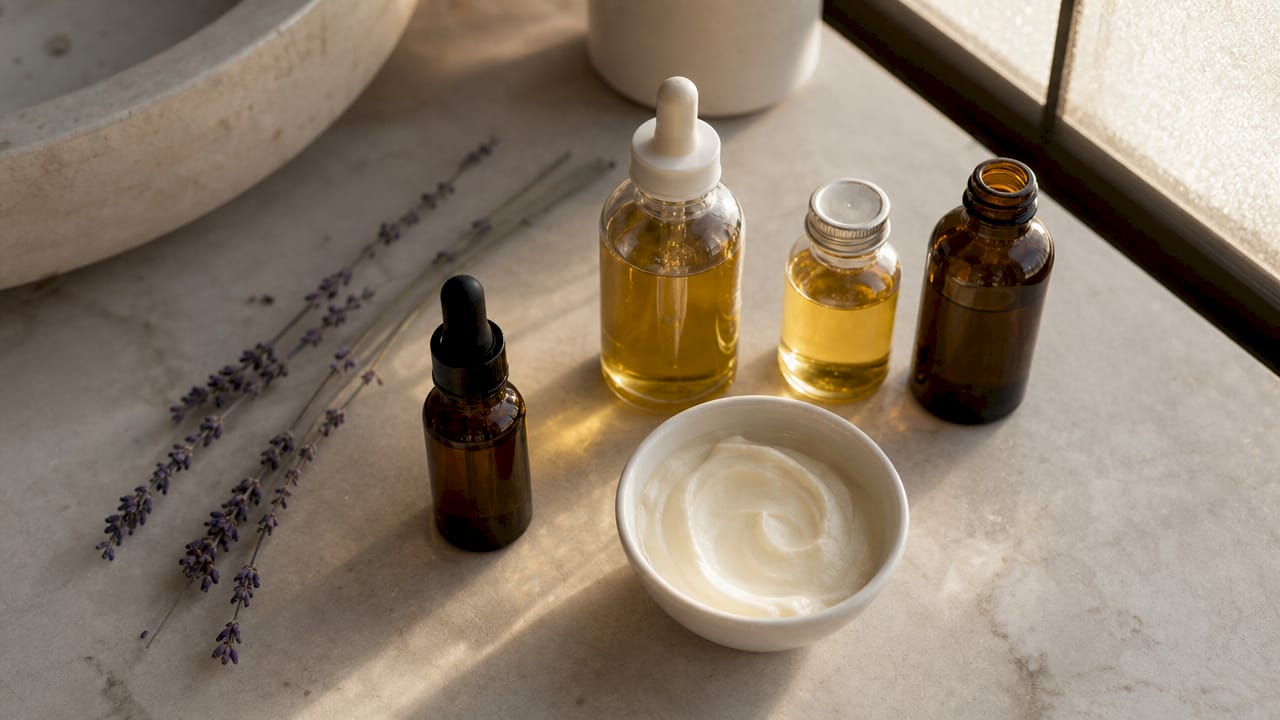
1. What are examples of barrier-repairing ingredients?
The best barrier repair ingredients fall into three functional categories: structural lipids, lipid-production stimulators, and hydration managers. Structural lipids physically rebuild the skin’s mortar. Lipid-production stimulators prompt the skin to make more of its own protective compounds. Hydration managers attract and seal water so the barrier stays plump and intact.
The most clinically supported examples across all three categories are:
- Ceramides (types NP, AP, EOP): structural lipid backbone
- Cholesterol: provides fluidity to the lipid bilayer
- Free fatty acids (linoleic acid, palmitic acid): complete the lipid matrix
- Niacinamide (4–5%): stimulates endogenous ceramide and fatty acid synthesis
- Hyaluronic acid: humectant that draws water into the skin
- Glycerin: humectant with strong water-binding capacity
- Panthenol (provitamin B5): humectant and wound-healing support
- Squalane: lightweight occlusive that mimics natural sebum
- Petrolatum: the most effective single occlusive available
No single ingredient repairs the barrier alone. The science consistently shows that combining structural lipids with humectants and occlusives produces the strongest results.
2. Why ceramides are the foundation of barrier repair
Ceramides form roughly 50% of the stratum corneum’s lipid content, making them the primary structural component of the skin’s protective mortar. Without adequate ceramides, the lipid bilayers that hold skin cells together break down, and water escapes freely. This is the core mechanism behind dry, reactive, and aging skin.
Not all ceramide types are equal. Ceramide types NP, AP, and EOP are the most clinically relevant and should appear in the top half of a product’s ingredient list to deliver meaningful benefit. Products that list ceramides near the bottom are likely underdosing.
Ceramides also cannot work in isolation. Effective lipid barrier repair requires ceramides, cholesterol, and free fatty acids in an approximate 3:1:1 molar ratio to properly assemble the lamellar bilayers that give the barrier its integrity. A ceramide-only moisturizer may add surface hydration, but it will not fully reconstruct the lipid matrix.
Pro Tip: When reading an ingredient label, look for at least two ceramide types listed alongside cholesterol and a fatty acid such as linoleic acid. That combination signals a formulation built for real repair, not just surface moisture.
3. How niacinamide boosts barrier function from within
Niacinamide is the only topical ingredient proven to increase the skin’s own production of ceramides, cholesterol, and fatty acids simultaneously. This makes it uniquely valuable because it supports barrier repair without requiring the skin to absorb large lipid molecules from the outside.
At 4–5% concentration applied twice daily, niacinamide reduces transepidermal water loss by up to 30% within four weeks. That is a measurable, clinically significant improvement in barrier function. After 8–12 weeks, the same concentration also visibly reduces dark spots and fine lines.
Niacinamide also suppresses pro-inflammatory cytokines including IL-6, IL-8, and TNF-α, which makes it one of the few barrier-repair ingredients that simultaneously calms redness and irritation. This dual action makes it particularly well suited for sensitive, acne-prone, and aging skin.
Key niacinamide benefits at a glance:
- Stimulates ceramide, cholesterol, and fatty acid synthesis in the epidermis
- Reduces TEWL by up to 30% at 4–5% concentration within four weeks
- Suppresses inflammatory signaling to calm redness and sensitivity
- Improves uneven tone and fine lines with continued use beyond eight weeks
- Tolerated by virtually all skin types, including reactive and compromised skin
4. The role of fatty acids and cholesterol in skin barrier recovery
Fatty acids and cholesterol are the two supporting lipids that complete the 3:1:1 ratio alongside ceramides. Without them, even a ceramide-rich formula cannot fully reconstruct the lipid bilayer. Cholesterol provides fluidity to the membrane structure. Fatty acids, particularly linoleic acid, fill the gaps between ceramide molecules and maintain the barrier’s flexibility.
Plant oils are a common source of fatty acids in skincare. Rosehip oil, sunflower oil, and sea buckthorn oil are high in linoleic acid and integrate well into the lipid matrix. Olive oil, despite its popularity, is not suitable for barrier repair. Its high oleic acid content disrupts the lipid bilayer rather than supporting it, which can worsen barrier damage over time.
The distinction between physiologic lipids and simple emollients matters here. Physiologic lipids (ceramides, cholesterol, free fatty acids) match the skin’s own lipid composition and integrate into the stratum corneum. Simple emollients like mineral oil or dimethicone sit on top of the skin and provide occlusion without contributing to structural repair. Both have a place in a routine, but only physiologic lipids genuinely rebuild the barrier.
5. Humectants and occlusives: the hydration side of barrier repair
Humectants attract water molecules and hold them in the skin. Occlusives form a physical film on the skin’s surface that slows water from escaping. Both are necessary for effective skin barrier recovery, and they work best when layered in the correct order.
Hyaluronic acid can hold up to 1,000 times its weight in water, making it one of the most powerful humectants available. The catch is that in low-humidity environments, unsealed hyaluronic acid can pull moisture from deeper skin layers and release it into the air, making dryness worse. An occlusive applied on top prevents this.
Humectants like hyaluronic acid and glycerin require an occlusive layer afterward, or they can paradoxically increase moisture loss. This is the logic behind the “sandwich method”: humectant, then emollient, then occlusive, applied in sequence for maximum hydration retention.
Panthenol acts as both a humectant and a skin protectant. It supports wound healing, reduces the stinging sensation that comes with a compromised barrier, and attracts moisture into the upper layers of the skin. It is one of the most underrated ingredients in barrier-focused formulations.
Squalane mimics the skin’s natural sebum and provides lightweight occlusion without clogging pores. It suits all skin types, including oily and acne-prone skin, which often struggle to tolerate heavier occlusives. Petrolatum is the most effective occlusive available, reducing TEWL by more than 98% at a 5% concentration. It is not glamorous, but the clinical data behind it is unmatched.
Pro Tip: Apply your humectant serum to slightly damp skin, then follow immediately with an emollient moisturizer and finish with a thin layer of squalane or petrolatum. This sequence locks hydration in at every layer.
6. How to combine barrier-repair ingredients in a routine
Layering order determines how well barrier-repair ingredients actually perform. The correct sequence is humectants first, emollients second, and occlusives last. Reversing this order traps ingredients in the wrong layer and reduces their effectiveness.
When the barrier is actively compromised, the most effective approach is a 2–4 week barrier reset. This means stripping the routine down to three products: a gentle, fragrance-free cleanser, a ceramide-based moisturizer with the full 3:1:1 lipid ratio, and a mineral SPF. No actives. No exfoliants. No retinoids.
After the reset period, reintroduce actives one at a time, starting with the mildest options. Niacinamide is a logical first addition because it supports barrier function rather than stressing it. AHAs, retinoids, and vitamin C should wait until the skin no longer stings or flushes on contact with basic products.
A practical barrier-repair routine looks like this:
- Rinse with a gentle, sulfate-free cleanser (morning and evening)
- Apply a humectant serum (hyaluronic acid or glycerin) to damp skin
- Follow with a ceramide-rich moisturizer containing cholesterol and fatty acids
- Seal with a lightweight occlusive (squalane or petrolatum) in the evening
- Apply mineral SPF 30 or higher every morning as the final step
Avoid fragrances, alcohol-based toners, and physical scrubs during the repair phase. These ingredients weaken the skin barrier and undo the work of every repair ingredient you apply.
Pro Tip: Check your moisturizer’s ingredient list for ceramide NP or ceramide AP in the top third, alongside cholesterol and linoleic acid. If those three appear together, the formula is built to repair, not just moisturize.
Key takeaways
The most effective approach to barrier repair combines structural lipids (ceramides, cholesterol, fatty acids) with humectants (hyaluronic acid, glycerin, panthenol) and occlusives (squalane, petrolatum) in the correct layering sequence and concentration.
| Point | Details |
|---|---|
| Ceramides need partners | Ceramides alone do not fully repair the barrier; they require cholesterol and fatty acids in a 3:1:1 ratio. |
| Niacinamide works from within | At 4–5%, niacinamide reduces TEWL by up to 30% in four weeks by stimulating the skin’s own lipid production. |
| Layer humectants before occlusives | Apply hyaluronic acid or glycerin first, then seal with squalane or petrolatum to prevent moisture loss. |
| Reset before reintroducing actives | A 2–4 week routine using only cleanser, ceramide moisturizer, and mineral SPF stabilizes a compromised barrier. |
| Avoid oleic-acid-heavy oils | Oils like olive oil disrupt the lipid bilayer and worsen barrier damage despite their moisturizing reputation. |
What I’ve learned about barrier repair after years of watching it go wrong
Most people who come to me with reactive, sensitized skin have the same story. They used too many actives at once, their skin started stinging, and they added more products to fix it. The problem is that adding more products to a compromised barrier is like patching a leaking pipe with more water.
The single most important thing I have observed is that simplicity works faster than complexity. A two-product routine with a well-formulated ceramide moisturizer and a mineral SPF will outperform a ten-step routine full of actives every single time during the repair phase. Skin does not need stimulation when it is damaged. It needs structure and time.
The second thing I have learned is that the 3:1:1 lipid ratio is not marketing language. It is the actual molecular architecture of a healthy stratum corneum. Products that ignore this ratio and load up on ceramides alone are selling hydration, not repair. Read labels carefully. If cholesterol and a fatty acid are not present alongside the ceramides, the formula is incomplete.
My honest advice on timelines: expect four weeks before you see meaningful improvement in sensitivity, and eight weeks before you see changes in texture and tone. Skin barrier recovery is not fast. Anyone promising results in a week is selling you something other than science.
For aging skin specifically, the barrier thins naturally over time, which is why cellular repair strategies become increasingly important alongside barrier-focused ingredients. Niacinamide and peptides together address both the structural and regenerative sides of that equation.
— Sara
Cellure’s Complete Skin Repair Kit: barrier science in one routine
Cellure formulates with the same clinically validated ingredients covered here, including peptides, tranexamic acid, and polynucleotides, to address barrier repair and cellular regeneration together. The Complete Skin Repair Kit is built for people who want a structured, science-backed routine without piecing together individual products.
The kit targets loss of firmness, uneven tone, and barrier compromise simultaneously, which is the combination most common in aging and sensitized skin. Every formulation is designed to be gentle enough for daily use while delivering the ingredient concentrations that clinical evidence supports. If you are ready to move from understanding barrier-repair ingredients to actually using them, the Complete Skin Repair Kit is a logical next step.
FAQ
What are the most important barrier-repairing ingredients?
Ceramides, cholesterol, and free fatty acids are the most structurally important barrier-repair ingredients because they directly rebuild the lipid matrix. Niacinamide, hyaluronic acid, panthenol, squalane, and petrolatum support hydration and sealing.
How long does it take to repair a damaged skin barrier?
A compromised barrier typically shows measurable improvement within 2–4 weeks of a simplified routine using ceramide moisturizer, gentle cleanser, and mineral SPF. Full recovery in texture and tone takes closer to 8–12 weeks.
Can I use retinoids while repairing my skin barrier?
Retinoids should be paused during the active repair phase. Reintroduce them only after the skin no longer stings on contact with gentle products, typically after the 2–4 week reset period.
Why does hyaluronic acid sometimes make dry skin worse?
Hyaluronic acid draws moisture from the environment, but in low-humidity conditions it pulls water from deeper skin layers instead. Applying an occlusive like squalane or petrolatum immediately after seals that moisture in and prevents the paradox.
What is the 3:1:1 ratio and why does it matter?
The 3:1:1 molar ratio of ceramides, cholesterol, and free fatty acids mirrors the natural composition of the stratum corneum. Products formulated at this ratio rebuild the lipid bilayer more effectively than any single lipid ingredient alone.