


Why Skin Becomes Sensitized: Causes and Solutions
TL;DR:
- Sensitized skin is a reversible condition caused by damage to the skin’s protective barrier from environmental, behavioral, and physiological stressors. Restoring the barrier with simplified routines, hydrating ingredients, and stress management can reduce reactivity and improve skin health. Proper identification and barrier repair are essential for managing and preventing skin sensitization effectively.
Sensitized skin is an acquired condition, not a genetic trait, caused by damage to the skin’s protective barrier that allows irritants to trigger immune reactions. This distinction matters because it changes everything about how you treat it. True sensitive skin is a chronic, inherited state affecting an estimated 10–15% of the population. Sensitized skin, by contrast, can develop in anyone at any age when the barrier breaks down. Understanding why skin becomes sensitized is the first step toward reversing it, and the science behind it is more specific than most skincare advice suggests.
Why does skin become sensitized?
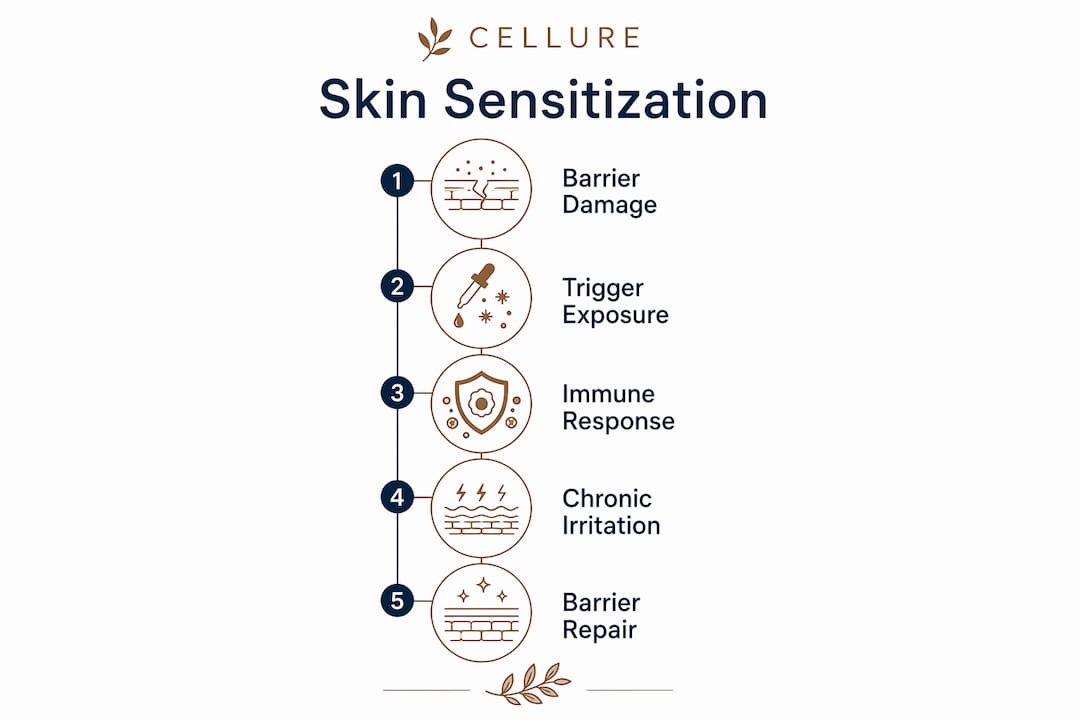
Skin sensitization is defined in dermatology as an acquired state of barrier impairment that causes the skin to react to substances it previously tolerated. The clinical term is “acquired cutaneous hypersensitivity,” and it differs from genetic sensitivity in one critical way: it is reversible. The barrier breaks down through cumulative damage, and once that damage is repaired, reactivity typically decreases.
The triggers fall into three broad categories: environmental, behavioral, and physiological.
Environmental factors are often underestimated. Extreme temperature changes rank as the most frequent triggers of skin sensitivity symptoms globally. Pollution, hard water, and low humidity compound the problem for urban residents, who face these stressors daily. Environmental assaults like pollution and hard water degrade the lipid layer that holds the barrier together, leaving skin exposed.
Behavioral triggers are where most people unknowingly cause the most damage:
- Over-exfoliation with acids like glycolic acid or physical scrubs strips the lipid layer faster than it can regenerate
- Misuse of retinoids at too high a concentration or too frequently accelerates cell turnover beyond the barrier’s capacity to keep up
- Layering too many active ingredients simultaneously creates chemical interactions that irritate even resilient skin
- Repeated wet and dry cycles, such as frequent hand washing or swimming, deplete natural moisturizing factors
Physiological stressors close the loop. Elevated cortisol from chronic stress disrupts ceramide production and lowers the skin’s inflammatory threshold. Ceramides are the lipid molecules that act like mortar between skin cells. When cortisol suppresses their production, the barrier weakens even without any topical provocation.
Pro Tip: If your skin started reacting to products it handled fine six months ago, look at what changed in your routine or stress levels first. The product probably did not change. Your barrier did.
How does the skin barrier break down and cause reactivity?
The skin barrier is a layered lipid structure composed primarily of ceramides, cholesterol, and fatty acids. These lipids fill the spaces between corneocytes, the flat dead cells on the skin’s surface, forming a physical seal that keeps moisture in and irritants out. When this seal is intact, the skin tolerates most environmental contact without reacting.
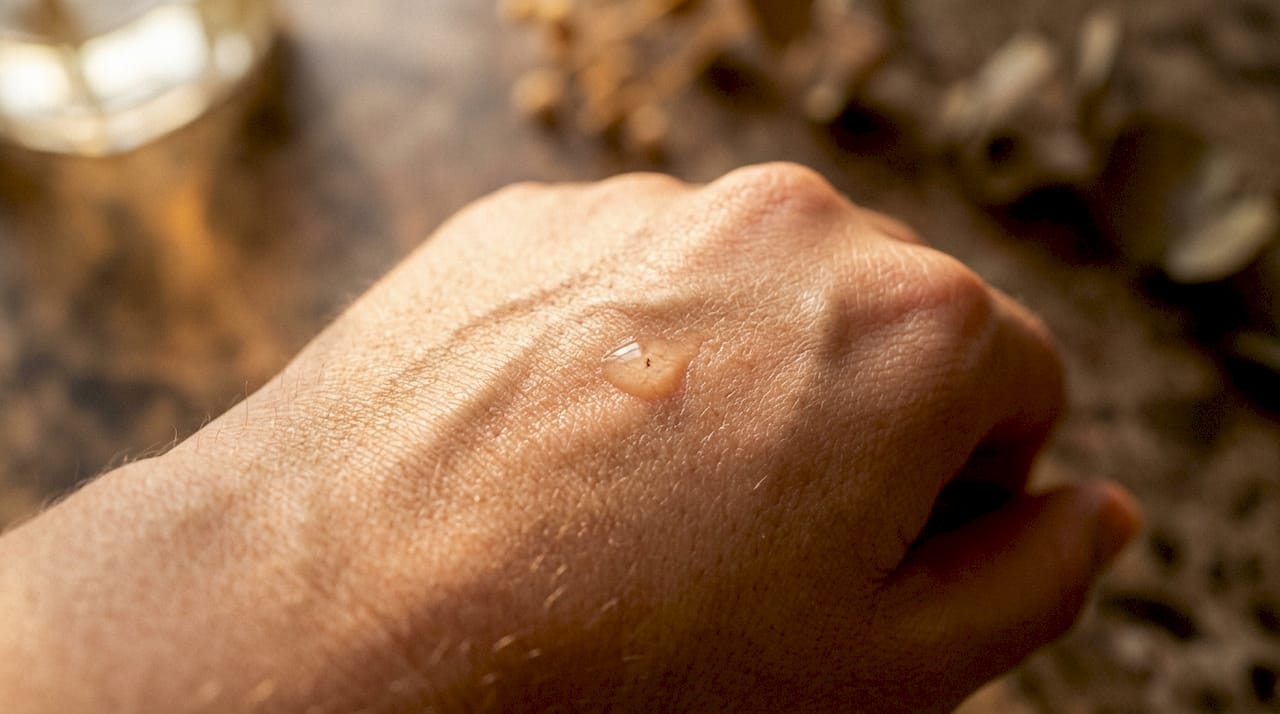
Barrier disruption begins with lipid depletion. Harsh cleansers, solvents, and over-exfoliation dissolve these lipids faster than the skin can replace them. The result is increased transepidermal water loss, which is the rate at which water evaporates through the skin. Dehydration follows, and the skin’s ability to buffer chemical and microbial contact drops sharply.
The immunological consequence is where sensitization becomes self-reinforcing. Low molecular weight haptens, which are reactive chemical fragments typically under 5,000 daltons in molecular mass, penetrate the compromised barrier and bind to skin proteins. The immune system reads these protein-hapten complexes as foreign and mounts a response. That response primes the skin to react to the same hapten on future contact, even at concentrations that would not affect intact skin.
Chronic irritation shifts the immune response further. Th2-skewed immune pathways activate in persistently irritated skin, sensitizing it to weak allergens and even commensal organisms that normally cause no reaction at all. This is why chronically sensitized skin seems to react to everything. The immune system has been recalibrated toward hypersensitivity.
| Barrier component | Normal function | Effect when depleted |
|---|---|---|
| Ceramides | Seal intercellular spaces | Increased water loss, hapten entry |
| Cholesterol | Maintain lipid fluidity | Reduced barrier flexibility |
| Fatty acids | Support antimicrobial defense | Higher infection and irritation risk |
| Natural moisturizing factors | Regulate hydration | Dehydration, tightness, flaking |
Pro Tip: Barrier damage shows up as dehydration and subclinical inflammation before you see visible redness. If your skin feels tight after cleansing, that is an early warning sign worth acting on immediately.
What is the difference between sensitive, sensitized, and reactive skin?
These three terms describe related but distinct conditions. Conflating them leads to the wrong management approach, which often makes things worse.
Sensitive skin is genetic and chronic. People with this skin type are born with a thinner stratum corneum, fewer lipids, and a lower sensory threshold. Their skin reacts to a wide range of stimuli across their entire life. This condition affects roughly 10–15% of the population and cannot be permanently resolved, only managed.
Sensitized skin is acquired and, critically, reversible. Anyone can develop it regardless of their baseline skin type. It results from barrier compromise through the environmental and behavioral factors described above. The reactivity is real and uncomfortable, but it is not permanent. Restore the barrier and the sensitivity typically resolves.
Reactive skin is the most specific category. Sensitivity is chronic and systemic, while reactivity is usually localized and ingredient-specific. A person with reactive skin responds to a particular ingredient, fragrance, or environmental trigger in a defined area. They may have no generalized sensitivity at all. Identifying the specific trigger and avoiding it is the primary management strategy.
The practical implications are significant:
- Sensitive skin requires lifelong gentle care and barrier support as a baseline
- Sensitized skin requires a period of barrier repair followed by a simplified routine, with gradual reintroduction of actives
- Reactive skin requires trigger identification, often through patch testing, and targeted avoidance
All sensitive skin is reactive, but not all reactivity indicates sensitivity. Getting this distinction right determines whether you need a permanent lifestyle adjustment or a temporary repair protocol.
How do poor skincare routines make sensitization worse?
The most counterproductive pattern in sensitized skin care is the instinct to treat irritation with more products. When skin reacts, many people add a calming serum, a barrier cream, a new cleanser, and a targeted treatment simultaneously. Each new product introduces additional ingredients, and a compromised barrier absorbs them all more readily than healthy skin would.
Subclinical inflammation from micro-friction and overuse of active ingredients creates what dermatologists call “background noise” inflammation. This low-level irritation does not always produce visible redness, but it primes the immune system and lowers the threshold for full reactions. The skin appears to worsen for no obvious reason because the cause is invisible.
The paradox deepens with product tolerance. Cumulative barrier damage explains why people suddenly react to products they have used for years. The product has not changed. The barrier has eroded to the point where previously tolerable concentrations of an ingredient now cross the irritation threshold. Many people interpret this as a new allergy and add another product to address it, compounding the problem.
The evidence-based approach to breaking this cycle follows a clear sequence:
- Strip the routine back to three steps: a gentle cleanser, a hydrating serum or moisturizer, and SPF
- Hold that simplified routine for at least four weeks before assessing whether the skin has stabilized
- Reintroduce one active ingredient at a time, starting at the lowest available concentration
- Wait two weeks between each new addition to accurately identify any trigger
- Prioritize hydration before correction at every stage, since hydration before actives supports barrier restoration
Pro Tip: Patch test every new product on the inner arm for 48 hours before applying it to your face. Sensitized skin reacts faster and more intensely than you expect, and a localized test prevents a full-face flare.
How can you prevent and manage skin sensitization?
Prevention centers on protecting the barrier before it breaks down. Management centers on restoring it after it has. Both require the same core principles applied at different intensities.
Avoiding known triggers is the foundation:
- Choose fragrance-free, sulfate-free cleansers with a pH between 4.5 and 5.5 to match the skin’s natural acid mantle
- Limit exfoliation to once per week maximum during barrier repair, and stop entirely if redness or stinging occurs
- Avoid ingredients that weaken the skin barrier such as high-concentration alcohols, synthetic fragrances, and certain preservatives
- Use lukewarm water for cleansing, since hot water dissolves barrier lipids rapidly
- Apply a ceramide-containing moisturizer within 60 seconds of cleansing to lock in moisture before evaporation begins
Barrier repair requires targeted ingredients. Ceramides replenish the lipid matrix directly. Peptides signal fibroblasts to support structural proteins. Ingredients like tranexamic acid address inflammation-driven pigmentation that often accompanies sensitization without further disrupting the barrier. Polynucleotides, which are DNA-derived fragments used in regenerative skincare, support cellular repair at a level that surface moisturizers cannot reach.
Stress management is not optional. Since elevated cortisol directly suppresses ceramide synthesis, practices that lower cortisol, including consistent sleep, reduced caffeine, and even brief daily mindfulness, have a measurable effect on barrier function. Skin health and systemic health are not separate systems.
Seek professional care when reactivity is severe, widespread, or accompanied by swelling, hives, or systemic symptoms. A dermatologist can distinguish contact dermatitis from atopic dermatitis, identify specific allergens through patch testing, and prescribe targeted treatments that over-the-counter products cannot replicate. For sensitive skin barrier support, the goal is always to restore function, not just suppress symptoms.
Key Takeaways
Sensitized skin is an acquired, reversible condition caused by barrier breakdown, and restoring that barrier is the single most effective path to reducing reactivity.
| Point | Details |
|---|---|
| Sensitized skin is acquired | Unlike genetic sensitivity, it develops from environmental and lifestyle damage and can be reversed. |
| Barrier lipid loss drives reactivity | Depleted ceramides allow haptens to penetrate and trigger immune responses that lower tolerance thresholds. |
| Routine overload worsens the cycle | Adding more products to irritated skin compounds barrier damage and prolongs sensitization. |
| Hydration before correction | Restoring moisture before reintroducing active ingredients is the evidence-based sequence for barrier repair. |
| Stress is a direct barrier disruptor | Elevated cortisol suppresses ceramide production, making stress management a clinical skin concern. |
What I have learned from watching people fight their own skin
The pattern I see most often is this: someone with previously normal skin starts an ambitious routine, their skin reacts, and they interpret the reaction as proof they need more products. They add a calming serum, switch to a “sensitive skin” line, and layer on a barrier cream. Six months later, they are using twelve products and their skin is worse than when they started.
The uncomfortable truth is that most cases of acquired sensitization are self-inflicted, not through negligence but through enthusiasm. The skincare industry rewards complexity. More steps, more actives, more results. But skin biology rewards simplicity during repair. A compromised barrier needs fewer inputs, not more.
What gives me genuine optimism is that sensitization is reversible. I have seen people strip their routines to three products, hold that for six weeks, and watch their skin stabilize in ways that years of targeted treatments never achieved. The biology is on your side once you stop working against it.
The other thing worth saying plainly: sensitive skin syndrome is increasingly understood as a neurovascular inflammatory disorder, not a cosmetic inconvenience. If your skin is significantly affecting your quality of life, that is a medical concern and deserves professional attention. Patience and simplicity are powerful, but they are not substitutes for clinical care when it is genuinely needed.
— Sara
Cellure’s approach to barrier repair and skin sensitivity
Skin sensitization responds best to formulations that work at the cellular level rather than just coating the surface. Cellure develops science-backed repair serums using peptides, polynucleotides, and tranexamic acid, ingredients chosen specifically for their ability to support barrier function and reduce reactivity without adding unnecessary chemical load to already-stressed skin.
Cellure’s calming and repair formulations are designed for adults dealing with acquired sensitization, where the goal is restoring barrier integrity rather than masking symptoms. The brand also publishes detailed ingredient and routine guidance for people navigating sensitive skin repair steps at every stage of recovery. If your skin has been reacting to products it once tolerated, Cellure’s targeted approach offers a clinically grounded starting point.
FAQ
What is the main cause of skin sensitization?
Skin sensitization is caused primarily by damage to the skin’s lipid barrier, which allows irritants and immune-triggering haptens to penetrate. Environmental stressors, over-exfoliation, and chronic stress all contribute to this barrier breakdown.
Can sensitized skin return to normal?
Yes. Unlike genetic sensitive skin, sensitized skin is an acquired and reversible condition. Restoring barrier function through simplified routines, ceramide-rich moisturizers, and reduced irritant exposure typically resolves reactivity over weeks to months.
How do I know if my skin is sensitized or just sensitive?
Sensitive skin is a lifelong, genetic condition present since childhood. Sensitized skin develops suddenly in previously normal skin, often after a change in routine, environment, or stress levels. If your skin recently became reactive, sensitization is the more likely explanation.
Does stress actually affect skin sensitivity?
Stress elevates cortisol, which directly suppresses ceramide production and lowers the skin’s inflammatory threshold. This makes stress a measurable physiological driver of skin sensitization, not just an indirect lifestyle factor.
Why does my skin react to products I have used for years?
Cumulative barrier damage lowers your skin’s tolerance threshold over time. A product that was previously tolerable can cross that threshold once the barrier has eroded enough, which is often misread as a new allergy rather than a sign of barrier compromise.