


Step by Step Skin Rejuvenation: Your 2026 Guide
TL;DR:
- A systematic skin rejuvenation process combines daily skincare with clinical procedures to stimulate collagen and reduce aging signs. Consistent routines with sunscreen, vitamin C, retinoids, and professional treatments at appropriate intervals maximize long-term results and skin health. Proper pre- and post-care are essential to ensure safety, effectiveness, and sustained improvements over time.
Step by step skin rejuvenation is a systematic process that combines daily at-home skincare with clinical procedures to stimulate collagen, restore firmness, and reduce visible signs of aging. For adults between 30 and 60, this is not about chasing perfection. It is about understanding which interventions actually work, in what order, and why. This guide walks you through the complete sequence: from your morning cleanser to advanced energy-based treatments, with the science to back every step.
What are the essential daily skin care steps for rejuvenation at home?
The foundation of any skin renewal plan is a consistent daily routine built around three interventions that dermatologists universally agree on: daily sunscreen, a vitamin C serum in the morning, and a retinoid at night. These three steps reliably reduce UV-induced aging and uneven pigmentation. Everything else in your routine supports these three pillars.
Here is the sequence that works:
- Gentle cleanse (morning and evening). Use a low-pH, non-stripping cleanser suited to your skin type. Preserving your skin barrier is the prerequisite for every active ingredient that follows. Harsh cleansers undo the work of your serums before they even start.
- Vitamin C serum (morning). Apply a stabilized L-ascorbic acid formula, ideally paired with ferulic acid, immediately after cleansing. Vitamin C neutralizes free radicals generated by UV exposure and brightens uneven tone over time. This is your daytime antioxidant shield.
- Moisturizer with ceramides and hyaluronic acid (morning and evening). Ceramides reinforce the lipid barrier, while hyaluronic acid draws water into the skin. Together, they keep the skin plump and receptive to active ingredients. Look for formulas that also include niacinamide for added barrier support.
- Retinoid (evening, 3 nights per week to start). Retinoids are the most evidence-backed topical ingredient for skin renewal. Start at 0.025 to 0.05% retinol twice weekly, then build gradually to nightly use. Buffering with moisturizer before application reduces irritation without sacrificing results.
- Broad-spectrum SPF 30 or higher (every morning, last step). Sunscreen is the single most important step in any effective skin care routine. UV exposure is the primary driver of collagen breakdown, pigmentation, and premature aging. No other product compensates for skipping it.
Pro Tip: Apply your retinoid to dry skin, not damp skin. Damp skin increases absorption and the risk of irritation, which is the most common reason people abandon retinoids before seeing results.
Simplifying to this core regimen reduces irritation and improves adherence, which is what actually drives results. Consistent use of fewer, well-chosen products outperforms a complicated 10-step routine every time.
How do advanced professional treatments complement daily skincare in skin rejuvenation?
Daily skincare maintains and protects. Professional treatments rebuild. The two work together, and understanding the sequence of clinical procedures helps you have better conversations with your provider and set realistic expectations.
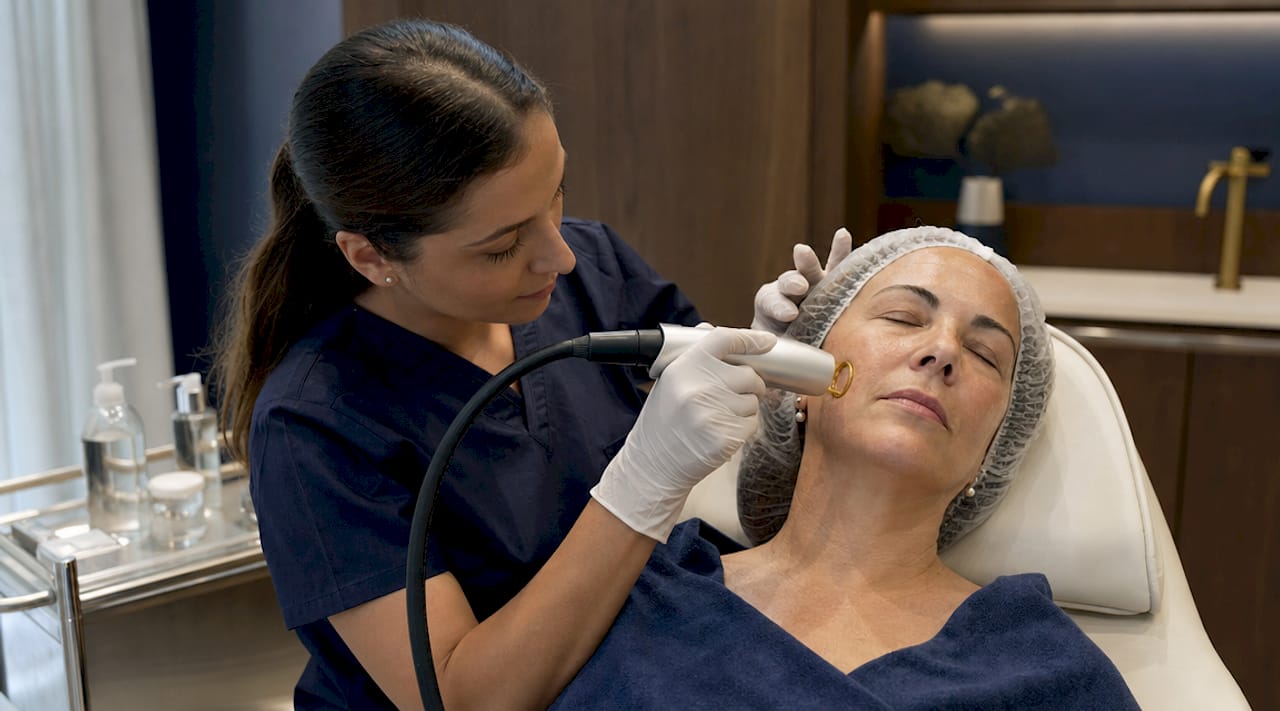
Skin rejuvenation procedures in 2026 follow a methodical stepwise approach: medical-grade cleansing first, then ultrasound targeting multiple tissue depths, followed by microneedle radiofrequency, and finally laser or combined modality protocols. Each step prepares the skin for the next.
Here is what each stage involves:
- Medical-grade cleansing and numbing. Before any energy-based treatment, the skin is thoroughly cleansed to remove oils, sunscreen, and product residue. Topical numbing cream is applied for 20 to 45 minutes. This is not optional prep. It directly affects how deeply and safely energy can be delivered.
- Ultrasound (HIFU or microfocused ultrasound). Ultrasound targets tissue at 1.5mm to 4.5mm depth, reaching the collagen-rich SMAS layer beneath the dermis. This is the foundational lift step. It stimulates fibroblast growth factors and heat-shock proteins, triggering new collagen and elastin production at a structural level.
- Microneedle radiofrequency (RF). Radiofrequency microneedling delivers controlled thermal energy into the mid-dermis through fine needles, creating micro-injuries that stimulate dermal remodeling. This step improves texture, pore size, and skin laxity. It works at a shallower depth than ultrasound, making the two modalities genuinely complementary.
- Laser therapy. A 675 nm laser activates fibroblast activity and collagen I and III synthesis at the surface level. When combined with microfocused ultrasound, wrinkle scores improve significantly between months three and six, outperforming either treatment alone.
- Combined protocols. Layering energy-based treatments synergistically stimulates collagen across different skin depths. The order matters: deep ultrasound first, mid-dermal RF second, surface laser last. This sequence optimizes safety and outcome.
“Combined energy-based treatments using a 675 nm laser and microfocused ultrasound reduced the Fitzpatrick Wrinkle Scale from 1.88 to 1.13 and the Baker Gravitational Ptosis Classification from 2.78 to 1.55 by months three to six, outperforming single-modality approaches.” — Dual-modality approach study
Post-treatment, expect mild redness, swelling, and sensitivity for 24 to 72 hours. These are signs of active tissue remodeling, not damage. For a broader overview of which treatment types suit your concerns, understanding the full menu of options helps you prioritize.
What preparations and post-care routines maximize results and safety?
The outcome of any professional skin rejuvenation session is shaped as much by what you do before and after as by the treatment itself. Preparation reduces risk. Post-care determines how well the results hold.
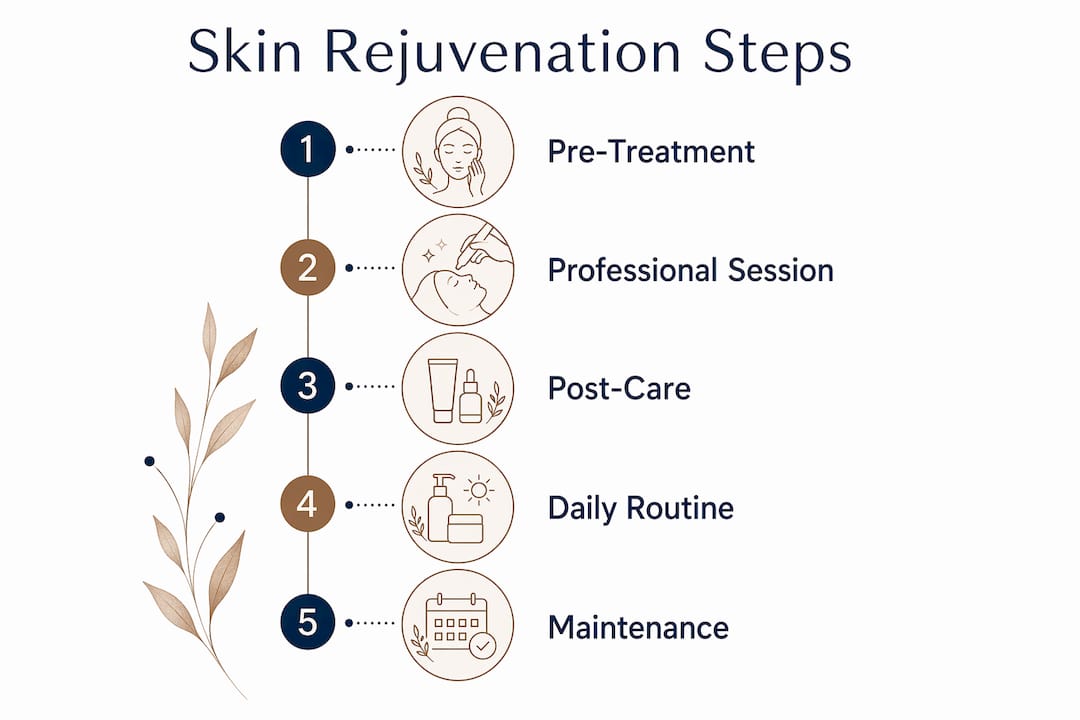
| Phase | What to do | Why it matters |
|---|---|---|
| Pre-treatment (1 to 2 weeks before) | Stop fish oil, vitamin E, and aspirin if not medically required | Reduces bruising and bleeding risk during needling or laser |
| Pre-treatment (3 to 5 days before) | Apply ceramide-rich moisturizer twice daily | Primes the skin barrier for faster healing post-procedure |
| Pre-treatment (48 hours before) | Patch test any new products | Identifies sensitivity before treatment amplifies skin reactivity |
| Post-treatment (72 hours) | Avoid sun exposure, intense exercise, and active ingredients like retinoids and acids | Protects collagen maturation and reduces pigmentation risk |
| Post-treatment (ongoing) | Resume gentle skincare with SPF and ceramide moisturizer | Supports the healing environment and locks in results |
Discontinuing blood-thinning supplements before treatment is one of the most overlooked preparation steps. Fish oil and vitamin E are common culprits. Most people do not think of supplements as variables that affect treatment outcomes, but they are.
Pro Tip: Take clinical photographs of your skin before each treatment session, ideally in consistent lighting. Skin changes happen gradually, and without a baseline image, it is easy to underestimate how much progress you have made over three to six months.
Post-procedure care for at least 72 hours after treatment accelerates collagen maturation and reduces the risk of post-inflammatory hyperpigmentation. Sweat, heat, and harsh actives during this window can compromise results. Keep your routine minimal and focused on barrier support.
How to maintain and extend skin rejuvenation benefits over time?
Results from professional treatments are not permanent without maintenance. Collagen continues to degrade with age, UV exposure, and lifestyle factors. The goal of a long-term plan is to stay ahead of that degradation curve.
These habits sustain the gains from your initial treatment series:
- Daily sunscreen and antioxidants, without exception. Antioxidants like vitamin C, ferulic acid, and resveratrol neutralize free radicals that accelerate collagen breakdown. Skipping these on “cloudy days” or “indoor days” is where most people lose ground.
- Scheduled professional touch-ups. Annual HIFU sessions and biannual microneedle RF treatments maintain the structural collagen gains from your initial protocol. Think of these as service intervals, not one-time fixes.
- Avoid over-treatment. More sessions do not always mean better results. Excessive energy-based treatments create cumulative cell stress and can thin the dermis over time. Your provider should space sessions appropriately.
- Lifestyle factors that directly affect skin aging. Sleep quality, dietary sugar intake, smoking, and chronic stress all accelerate collagen breakdown through oxidative and inflammatory pathways. No topical or clinical treatment fully compensates for these variables.
- Track your progress. Periodic skin analysis or clinical photography gives you objective data. It also helps you and your provider adjust the plan based on what is actually changing, rather than guessing.
For a practical checklist that ties daily habits to professional care, the skin renewal checklist from Cellure is a useful reference to keep your routine on track between appointments.
Key takeaways
Effective skin rejuvenation requires a layered approach: a consistent daily routine anchored by sunscreen, vitamin C, and retinoids, combined with professionally sequenced energy-based treatments and disciplined post-care.
| Point | Details |
|---|---|
| Daily routine is non-negotiable | Sunscreen, vitamin C, and retinoids form the evidence-backed core of any skin renewal plan. |
| Professional treatments follow a specific order | Ultrasound first, microneedle RF second, laser last. Sequence determines safety and outcome. |
| Preparation reduces risk | Stop blood-thinning supplements and prime the barrier with ceramides before any clinical session. |
| Post-care protects results | Avoid sun, heat, and active ingredients for 72 hours after treatment to support collagen maturation. |
| Maintenance extends benefits | Annual HIFU and biannual RF touch-ups, paired with consistent daily care, sustain long-term results. |
What I have learned about realistic skin rejuvenation expectations
The most common mistake I see is treating skin rejuvenation as a one-time event. Someone invests in a HIFU session or a laser series, sees good results at month three, and then abandons their daily routine because they feel “done.” Six months later, they are back at square one, wondering why the results did not last.
The science is clear: consistent use of fewer, well-chosen products outperforms complex, frequently changing routines. But the harder truth is that most people are not consistent. They get bored, they chase new ingredients, or they overload their skin with too many actives and then quit everything when irritation sets in.
My honest recommendation is to pick three products you will actually use every day, sunscreen, a vitamin C serum, and a retinoid, and use them for six months before adding anything else. The top ingredients backed by science are not secrets. They are just unglamorous in their simplicity.
On the clinical side, I have seen the best outcomes in people who combine a well-maintained daily routine with one or two professional treatments per year, not people who do monthly sessions without any at-home care. The synergy between the two approaches is real. Neither one alone delivers what both together can.
Customization also matters more than most guides acknowledge. Fitzpatrick skin type, hormonal status, and existing barrier health all affect which retinoid concentration is appropriate, which laser wavelength is safest, and how aggressively you can push treatments. A plan that works well for a 35-year-old with oily skin may be wrong for a 55-year-old with a compromised barrier. Start with a consultation, not a product haul.
— Sara
Support your skin with science-backed cellular repair
If you are ready to take your skin renewal plan beyond the basics, Cellure’s formulations are built around the same bioactive ingredients that clinical research supports: peptides, polynucleotides, and tranexamic acid, all designed to work at the cellular level. The Complete Skin Repair Kit is a practical starting point for anyone looking to support their skin between professional sessions with products that are gentle enough for daily use and effective enough to make a measurable difference. For the full range of cellular regeneration solutions, Cellure’s product line is built around regenerative science, not marketing claims.
FAQ
What is the correct order for a daily skin rejuvenation routine?
The correct order is: gentle cleanser, vitamin C serum, moisturizer with ceramides, and SPF in the morning. At night, replace SPF with a retinoid applied to dry skin. This sequence maximizes absorption and minimizes irritation.
How often should you get professional skin rejuvenation treatments?
Most protocols recommend an initial series of two to three sessions spaced four to six weeks apart, followed by annual HIFU and biannual microneedle RF maintenance. Over-treating increases cell stress and can thin the dermis over time.
Can you combine at-home skincare with professional treatments?
Yes, and the combination consistently outperforms either approach alone. Daily antioxidants and retinoids maintain collagen between sessions, while professional treatments rebuild structural tissue that topical products cannot reach.
How long does it take to see results from skin rejuvenation?
Retinoids show visible improvement over weeks to months with consistent use. Combined energy-based treatments show measurable wrinkle and laxity improvement between months three and six. Patience and consistency are the determining factors.
What ingredients should you avoid after a professional skin treatment?
Avoid retinoids, AHAs, BHAs, and vitamin C for at least 72 hours post-treatment. Stick to a gentle cleanser, ceramide moisturizer, and mineral SPF until the skin barrier has fully recovered.