


Skincare Trends in 2026: What You Need to Know
TL;DR:
- Skincare in 2026 emphasizes supporting skin longevity through personalized biomarker diagnostics and biotechnological ingredients that act at the cellular level. This shift prioritizes resilience and vitality over surface correction, with actives like PDRN and Urolithin A moving into mainstream consumer products. Wearable devices and stage-specific, biomarker-guided routines enhance targeted repair, making skincare more precise and evidence-based.
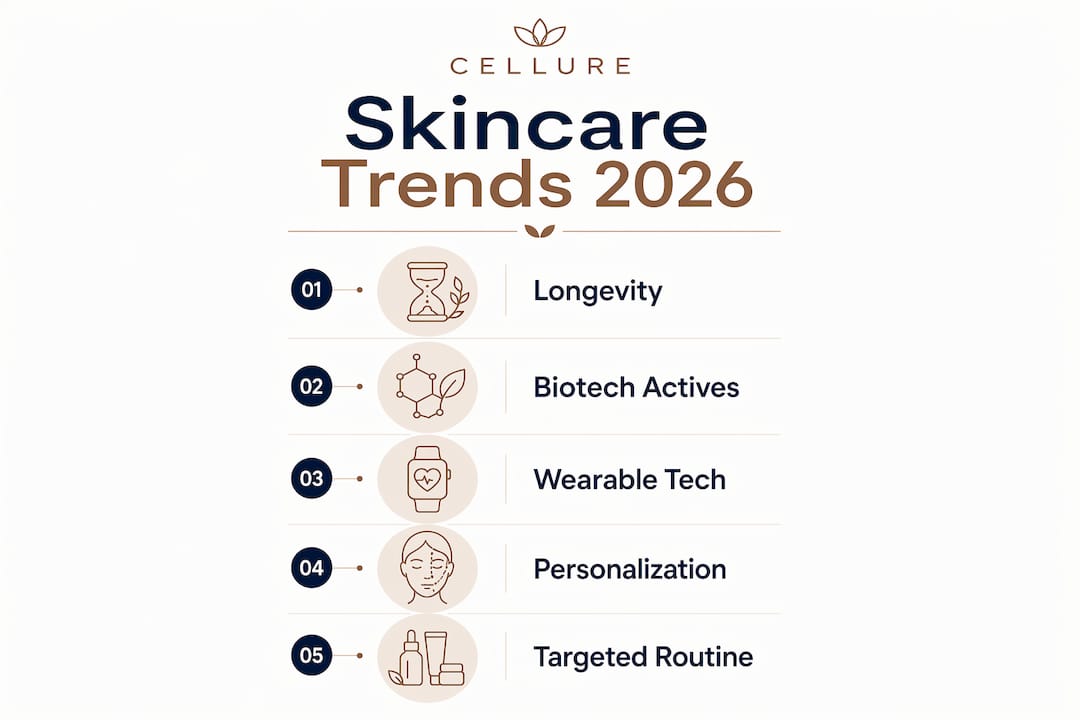
Skincare trends in 2026 are defined by a fundamental shift away from surface-level correction toward skin longevity, personalized biomarker diagnostics, and biotechnological ingredients that work at the cellular level. The old model of “anti-aging” is giving way to a science-backed framework that treats skin as a living system worth maintaining across every life stage. Biotech actives like PDRN (polydeoxyribonucleotide) and Urolithin A are moving from clinical settings into consumer products, while wearable device technologies are making professional-grade delivery accessible at home. If you want to understand where skin health is heading, this is the full picture.
What are the skincare trends in 2026?
The defining shift in 2026 skincare is the move from anti-aging to skin longevity, a framework that prioritizes resilience, vitality, and biological function rather than simply masking visible signs of aging. This distinction matters because it changes what you are actually trying to achieve with your routine. Instead of chasing wrinkle reduction as the end goal, longevity-focused skincare targets the underlying mechanisms that keep skin healthy across decades.
Personalization is the second major pillar. Biomarker diagnostics now allow brands to assess your skin’s biological age, which can differ significantly from your chronological age, and build regimens around that data. Biotech actives like PDRN and Urolithin A are gaining serious traction, supported by clinical evidence rather than marketing claims. Wearable device technologies, including near-infrared photothermal microneedle patches, are delivering ingredients more precisely than any topical cream can. These four forces together define what 2026 skincare innovations actually look like in practice.
What is skin longevity and how is it changing skincare routines?
Skin longevity is defined as the practice of supporting the biological processes that maintain skin structure, function, and resilience over time, rather than correcting visible damage after it appears. The distinction from traditional anti-aging is meaningful. Anti-aging has historically meant targeting wrinkles, dark spots, or sagging after they develop. Longevity skincare intervenes earlier and more systematically, addressing the cellular mechanisms behind those changes.
Biological age versus chronological age is central to this model. Two people who are both 45 years old can have skin that behaves like it is 35 or 55, depending on genetics, lifestyle, and cumulative environmental exposure. Measuring biological skin age through biomarkers gives you a more accurate picture of where your skin actually is, and what it needs.
Lancôme’s Absolue Longevity MD framework is the clearest commercial example of this approach in action. The system uses a stage-specific intervention model built around three phases: Anticipate, Intercept, and Reset. Anticipate targets early-stage cellular decline before visible signs appear. Intercept addresses active aging processes mid-course. Reset focuses on restoring function in skin that has already experienced significant change. Each phase uses different actives and concentrations, which is a more sophisticated approach than applying the same retinol serum regardless of where your skin actually is in its aging trajectory.
The practical implication for your routine is that timing and targeting matter more than product volume. Piling on actives without understanding your skin’s current biological state often leads to irritation and diminishing returns. Longevity-based skincare supports the skin’s own repair capacity rather than overwhelming it with correction-focused ingredients.
Pro Tip: Before adding new actives to your routine, consider whether you are in an Anticipate, Intercept, or Reset phase. A simple consultation with a dermatologist using biomarker assessment can prevent months of trial and error.
Which biotech ingredients are shaping skincare in 2026?
The biotech ingredient story in 2026 centers on a handful of actives with genuine clinical backing. Consumer demand is shifting toward evidence-backed ingredients, and the Spate 2026 Ingredient Trends Report, which aggregates data from Google, TikTok, Instagram, and Reddit, confirms that ingredient literacy is now a mainstream consumer behavior rather than a niche interest.

PDRN (Polydeoxyribonucleotide) is the standout biotech active of 2026. Derived from salmon DNA, PDRN supports tissue regeneration and elasticity by stimulating adenosine A2A receptors, which modulate inflammation and promote collagen synthesis. The AAD 2026 conference highlighted PDRN’s regenerative and inflammatory modulation benefits as a key trend moving from injectable treatments into topical formulations. You can learn more about how PDRN works at the cellular level through Cellure’s bioactive ingredients guide.
Urolithin A (Mitopure) targets mitochondrial function, the energy production system inside skin cells. As mitochondria decline with age, skin renewal slows and the barrier weakens. Urolithin A triggers mitophagy, the process of clearing damaged mitochondria and replacing them with functional ones. Lancôme’s integration of Mitopure into its longevity framework represents one of the first high-profile commercial applications of this mechanism in skincare.
Here is how the leading 2026 biotech actives compare across key performance dimensions:
| Ingredient | Primary mechanism | Key benefit | Evidence stage |
|---|---|---|---|
| PDRN | Adenosine receptor activation | Tissue repair, elasticity | Clinical (injectable + emerging topical) |
| Urolithin A (Mitopure) | Mitophagy induction | Cellular energy, renewal | Clinical trials |
| Botanical exosomes | Antioxidant delivery via nano-vesicles | Oxidative stress reduction | Early clinical |
| Next-gen peptides | Signal peptide receptor binding | Collagen and elastin stimulation | Established clinical |
| Precision RNA actives | Gene expression modulation | Targeted repair pathways | Emerging research |
Botanical exosomes, particularly those derived from Falanghina grape, represent an emerging category worth watching. These nano-scale vesicles carry antioxidant compounds directly into skin cells with higher bioavailability than conventional topical antioxidants. However, evaluating any “next big active” requires scrutiny of delivery chemistry, including stability and particle size, to confirm that clinical results translate to the product on your shelf.
Pro Tip: When evaluating a new biotech ingredient, ask for the study design behind the claim. In vitro (cell culture) results and in vivo (human skin) results are not interchangeable. Prioritize actives with peer-reviewed human trials.
How are new wearable and device technologies advancing skincare efficacy?
Device technology is solving a problem that topical skincare has never fully cracked: getting the right ingredient to the right depth without damaging the skin barrier. The most significant 2026 development in this space is the wearable near-infrared (NIR) photothermal microneedle patch, which combines physical micro-penetration with controlled heat activation to enhance ingredient delivery at sensitive skin sites.
A published study demonstrated that NIR microneedle patches improved under-eye wrinkles by 16.3% over four weeks without adverse events. The NIR actuation alone produced a 14.1% improvement. These are meaningful numbers for a non-invasive, at-home device applied to one of the most delicate areas of the face. The clinical significance is that this technology achieves results previously associated only with in-office procedures like radiofrequency microneedling.
| Technology | Mechanism | Reported outcome | Application site |
|---|---|---|---|
| NIR photothermal microneedle patch | Heat-activated ingredient release via micro-channels | 16.3% wrinkle reduction in 4 weeks | Periorbital (under-eye) |
| Radiofrequency microneedling | Thermal energy via needle electrodes | Collagen remodeling, tightening | Face, neck, body |
| LED light therapy (at-home) | Photobiomodulation | Inflammation reduction, mild collagen support | Full face |
The key engineering principle behind the NIR patch is the decoupling of penetration from actuation. Traditional microneedles create channels and deliver ingredients simultaneously, which limits control over depth and timing. By separating these two functions, the NIR system allows precise control over when and how deeply an active is released. This distinction separates genuine delivery innovation from devices that simply create micro-injuries without meaningful ingredient transfer.
Scalp care is also entering the device conversation in 2026. The AAD 2026 reports describe scalp treatments moving from niche to mainstream, with a focus on barrier support and microbiome balance for long-term hair and scalp vitality. Devices targeting scalp circulation and ingredient absorption are following the same trajectory as facial tools, reflecting the broader longevity framing applied to the entire skin surface.
How is personalization transforming skincare routines?
Personalized skincare in 2026 is not about answering a quiz and receiving a custom label on a generic moisturizer. It is built on skin-surface biomarker diagnostics that measure biological aging markers, hydration levels, barrier integrity, and inflammatory status to generate a data-driven picture of your skin’s actual condition.
Biomarker-guided protocols serve a specific and practical function: they prevent the random stacking of actives that leads to irritation, sensitization, and wasted money. Lancôme’s biomarker tool, developed with its international scientific director Dr. Annie Black, guides stage-specific regimens across the Anticipate, Intercept, and Reset phases. The tool functions as a decision-support system, not a replacement for clinical judgment, but it meaningfully narrows the range of appropriate interventions for a given individual.
The practical benefits of personalized skincare in 2026 include:
- Reduced irritation risk from avoiding incompatible active combinations
- More targeted spending by focusing on actives your skin actually needs at its current biological stage
- Better long-term outcomes by addressing the right mechanisms at the right time
- Clearer progress tracking through repeat biomarker assessments over months or years
The limitations are worth acknowledging. Consumer-grade biomarker tools vary significantly in accuracy and clinical validation. High-end brand diagnostics, like those from Lancôme, are more rigorous but also more expensive and less accessible. For most people, the practical starting point is working with a dermatologist who uses validated assessment tools, then building a regimen around those findings rather than trend-driven product selection.
The evidence-backed approach to personalization also means resisting the pressure to adopt every new active simultaneously. Introducing one variable at a time, assessing its effect over six to eight weeks, and adjusting based on results is a more reliable method than overhauling your entire routine every season.
Key takeaways
The most effective skincare approach in 2026 combines longevity-focused frameworks, clinically validated biotech actives, and biomarker-guided personalization to support skin health at the cellular level rather than correcting surface symptoms after they appear.
| Point | Details |
|---|---|
| Longevity replaces anti-aging | Target biological skin mechanisms and resilience, not just visible correction. |
| PDRN and Urolithin A lead biotech | Both have clinical backing for tissue repair and cellular energy renewal. |
| NIR microneedle patches deliver results | A 16.3% wrinkle reduction in 4 weeks sets a new benchmark for at-home devices. |
| Biomarker diagnostics reduce guesswork | Stage-specific protocols prevent irritation and improve long-term outcomes. |
| Evidence first, novelty second | Scrutinize delivery chemistry and human trial data before adopting new actives. |
Why I think the longevity shift is the most important thing happening in skincare right now
I have spent years watching the skincare industry cycle through ingredient trends, and most of them follow the same arc: a compelling mechanism, early clinical data, massive consumer adoption, then a quiet retreat when real-world results fall short of the marketing. What feels different about the longevity framework is that it changes the question being asked. Instead of “what removes this wrinkle,” the question becomes “what keeps this skin functioning well for the next 20 years.” That is a harder question to answer, but it is the right one.
The biotech actives gaining traction in 2026, particularly PDRN and Urolithin A, have mechanisms that hold up to scrutiny. They are not novelty ingredients with a single in vitro study behind them. The mitophagy pathway that Urolithin A targets is well-established in cellular biology, and PDRN’s adenosine receptor activity has been documented in clinical injectable use for years. The translation to topical formulations is the frontier, and that is where I would apply healthy skepticism rather than wholesale rejection.
What I find most practically useful about the personalization trend is the permission it gives you to stop doing things. Biomarker diagnostics are as valuable for what they tell you to remove from your routine as for what they recommend adding. Most people are over-treating their skin with incompatible actives and wondering why their barrier feels compromised. A diagnostic that says “your skin is in the Anticipate phase, not the Reset phase” can save you from years of unnecessary retinol use.
My honest advice: do not wait for perfect personalization tools before acting on what the science already supports. Start with one well-validated biotech active, give it eight weeks, and measure the result. The future skincare techniques emerging in 2026 are genuinely exciting, but the fundamentals of consistency and evidence still determine outcomes.
— Sara
Build your 2026 skincare routine with Cellure
The longevity and biotech principles shaping 2026 skincare are exactly what Cellure has built its formulations around. Cellure’s products use clinically supported bioactive ingredients, including peptides and polynucleotides, to address cellular repair and skin renewal at the level where aging actually begins.
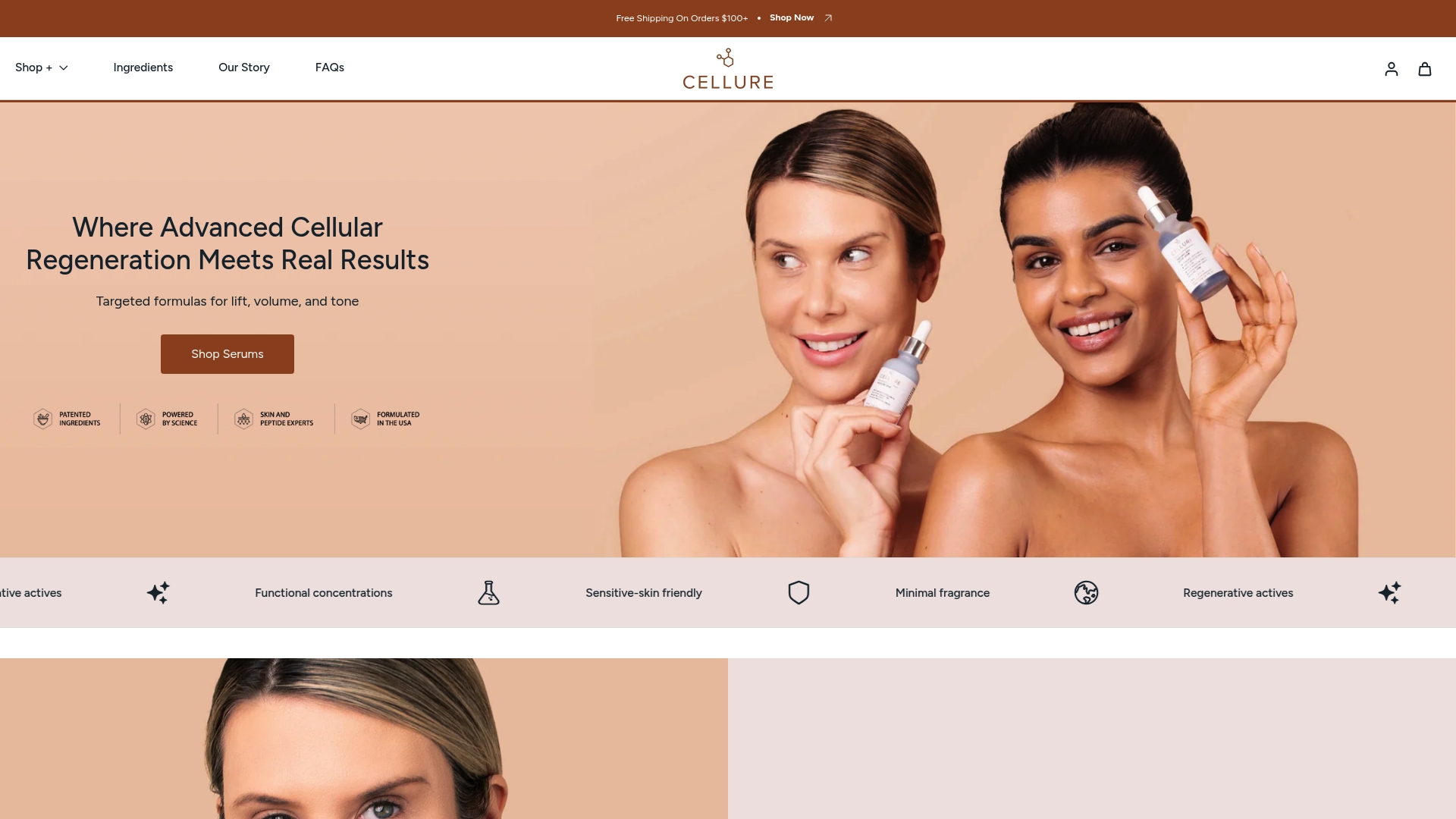
The Complete Skin Repair Kit from Cellure brings together targeted serums designed for firmness, volume, and tone correction, formulated with the same regenerative science discussed throughout this article. If you are ready to move beyond surface-level correction and invest in a regimen built on evidence, Cellure’s repair kit is a practical starting point. Explore the full range of upcoming skincare products and find the formulations that match your skin’s current needs.
FAQ
What is skin longevity in skincare?
Skin longevity is the practice of supporting the biological processes that maintain skin structure and resilience over time, rather than correcting visible damage after it appears. It targets cellular mechanisms like mitochondrial function and tissue repair across life stages.
What is PDRN and why is it trending in 2026?
PDRN (polydeoxyribonucleotide) is a biotech active derived from salmon DNA that supports tissue regeneration and elasticity by modulating inflammation and promoting collagen synthesis. It was highlighted at the AAD 2026 conference as a key ingredient moving from injectable treatments into topical skincare.
How do near-infrared microneedle patches work?
Near-infrared photothermal microneedle patches combine micro-channels with heat-activated ingredient release to deliver actives precisely to the target skin depth. A 2026 study showed a 16.3% improvement in under-eye wrinkles over four weeks with no adverse events.
What does biomarker-based personalization mean for skincare?
Biomarker diagnostics measure biological skin age, barrier integrity, and inflammatory status to guide stage-specific regimens. This approach reduces irritation risk by preventing the random stacking of incompatible actives and focuses treatment on what your skin actually needs.
Is Urolithin A safe for daily skincare use?
Urolithin A, marketed as Mitopure, has been studied in clinical trials for its role in triggering mitophagy and supporting cellular energy renewal. Current evidence supports its use as a topical active, though formulation quality and concentration determine real-world efficacy.
Recommended
Share