


Repair Serum vs. Surgery: Your Skin Rejuvenation Guide
TL;DR:
- Repair serums support skin rejuvenation by stimulating collagen production and reducing inflammation in tissues capable of self-repair. They complement surgery by preparing tissue beforehand and aiding recovery afterward but cannot replace procedures involving structural failure. Consistent use over 8 to 12 weeks enhances skin density, making serums a credible non-surgical option for mild to moderate concerns.
Repair serums are topical formulations that actively support skin rejuvenation by enhancing cellular function, modulating inflammation, and stimulating collagen remodeling at the tissue level. The role of repair serum over surgery is not about replacement. It is about understanding when biology can do the work that a scalpel cannot, and when both tools work best together. Clinical research now confirms that non-surgical biological therapies can match surgical outcomes for partial tissue concerns, making serums a medically credible option for adults who want results without recovery rooms.
How do repair serums work biologically to support skin rejuvenation?
Repair serums work by delivering bioactive molecules directly into the skin’s living layers, where they trigger specific repair pathways. Unlike a moisturizer, which sits on the surface, a well-formulated serum penetrates to the dermis and signals cells to behave differently.
The most clinically active ingredients fall into three categories.
- Peptides signal fibroblasts to produce more collagen and elastin. They act like short-chain messengers that tell aging cells to restart repair processes they have slowed down.
- Antioxidants such as N-acetyl cysteine (NAC) neutralize free radicals generated by UV exposure, pollution, and post-procedure inflammation. NAC also acts as a precursor to glutathione, the skin’s primary internal antioxidant. The NAC-based repair serum developed for post-injectable and laser recovery demonstrates how antioxidant chemistry translates directly into faster clinical healing.
- Polynucleotides (PDRN) are DNA fragments derived from salmon sperm that bind to adenosine receptors in skin tissue. They reduce inflammation, stimulate new blood vessel formation, and regulate fibroblast activity. A 2023 randomized controlled trial found that early PDRN application after surgery significantly lowered vascularity subscores at three months, which means less redness and less raised scar tissue.
Growth factors round out the picture. These proteins coordinate the entire wound-healing cascade, from clot formation through tissue remodeling. Serums that include epidermal growth factor (EGF) or fibroblast growth factor (FGF) accelerate the proliferative phase, which is the stage where new skin cells multiply and collagen fibers organize.
Pro Tip: Apply your repair serum immediately after cleansing on damp skin. The slightly hydrated surface improves penetration of water-soluble actives like peptides and PDRN by reducing surface tension.
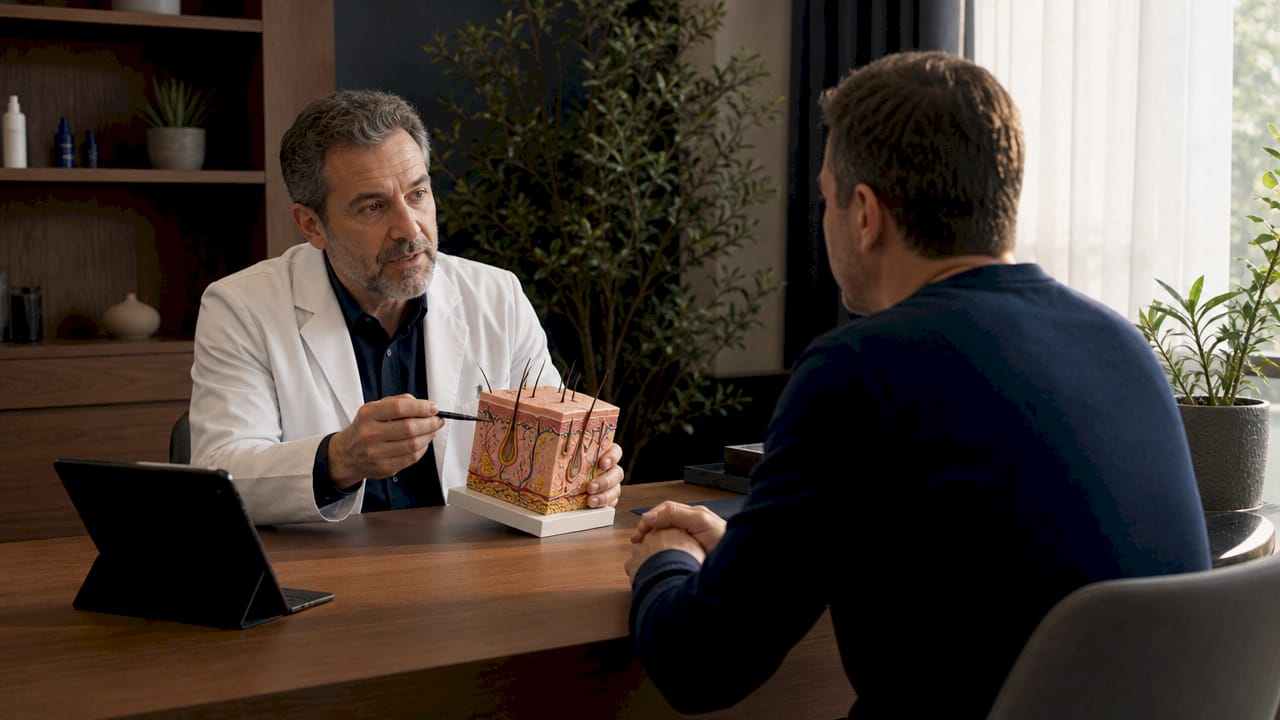
The inflammation-modulating role is what separates a repair serum from a standard anti-aging product. Chronic low-grade inflammation, sometimes called “inflammaging,” degrades collagen faster than aging alone. Serums that contain anti-inflammatory botanicals alongside peptides address both the symptom and the underlying driver.
What are the clinical benefits and limitations of repair serums versus surgery?
The honest answer is that repair serums and surgery solve different problems. Conflating them leads to disappointment in both directions.
A May 2026 systematic review of 1,818 patients across 33 trials found that surgical cohorts scored higher on clinical outcome measures than non-surgical biological treatment groups. The critical detail: the difference did not cross the minimum clinically important difference (MCID) threshold for partial tissue concerns. That means patients in both groups experienced outcomes that felt meaningfully similar in daily life.
“Regenerative therapies address biological dysregulation in tissue that retains reparative capacity. Surgical repair is necessary for complete tears or mechanical failure; regenerative care can delay or sometimes prevent surgery entirely.”
This distinction matters enormously for adults weighing their options. Serums work where the tissue still has the biological machinery to repair itself. Surgery is the right call when that machinery is gone.
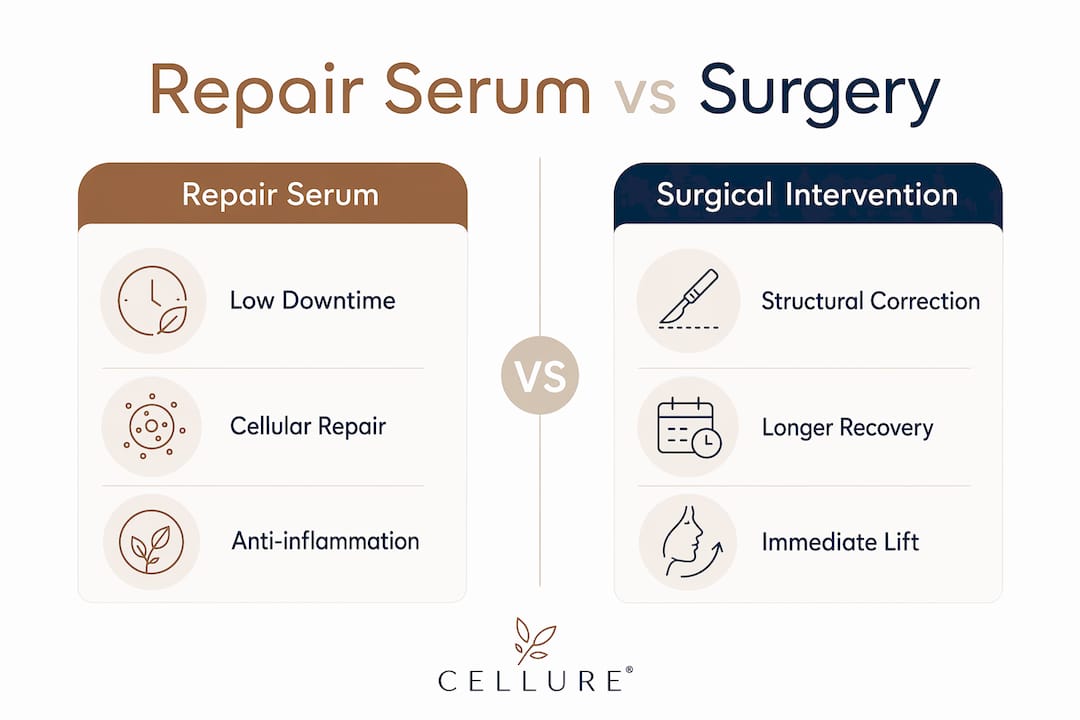
| Category | Repair serums | Surgical intervention |
|---|---|---|
| Downtime | None to minimal | Days to weeks of recovery |
| Scar risk | None | Present; requires management |
| Collagen stimulation | Gradual, sustained over months | Disrupted then rebuilt post-op |
| Best for | Mild to moderate skin concerns, post-procedure recovery | Structural failure, complete tissue loss |
| Cost trajectory | Ongoing monthly investment | Single large upfront cost |
The neuropeptide serum clinical trial published in a double-blind randomized format found statistically significant improvement (p < 0.05) in skin hydration and post-injection recovery compared to standard moisturizers. That result matters because it shows serums are not just supportive. They actively accelerate measurable healing.
The limitation of serums is structural. If a person has significant volume loss, deep dermal disruption, or complete tissue failure, no topical formulation will rebuild what is missing. Surgery addresses mechanical problems. Serums address biological ones. The two categories are not in competition. They operate in different domains.
When should adults consider repair serums as alternatives or complements to surgery?
The decision framework is simpler than most people expect. It comes down to the severity of the concern and the phase of healing.
- Mild to moderate skin concerns. Loss of firmness, uneven tone, fine lines, and early texture changes all respond well to evidence-based regenerative serums used consistently over three to six months. These concerns involve biological slowdown, not structural failure.
- Pre-surgical preparation (“prehabilitation”). Clinical protocols now recommend applying repair serums for 4–12 weeks before surgery to optimize tissue quality and the inflammatory environment. Better tissue going into surgery means faster healing coming out of it.
- Post-surgical scar management. The proliferative phase, roughly weeks two through eight after surgery, is when fibroblasts are most active. Applying PDRN-containing serums during this window modulates fibroblast behavior and reduces hypertrophic scar formation. Timing is the variable that separates good outcomes from great ones.
- Hair restoration without procedures. Growth factor serums applied daily provide a needle-free hair restoration option that requires no blood draws and no downtime, unlike platelet-rich plasma (PRP) injections or transplant surgery. Treatment typically runs about three months for visible scalp health improvement.
- Post-procedural recovery support. After laser resurfacing, microneedling, or injectables, the skin barrier is temporarily compromised. A repair serum applied in the days following these treatments accelerates re-epithelialization and reduces redness faster than moisturizer alone.
Pro Tip: If you are planning a cosmetic procedure, start a peptide and antioxidant serum at least six weeks before your appointment. Your clinician will likely notice improved skin quality at your pre-op consultation.
The cellular repair principles that guide serum selection also apply to timing. A serum used at the wrong phase of healing can interfere with the natural inflammatory response the body needs to close a wound. Always confirm post-procedure serum timing with your treating clinician.
How to incorporate repair serums into your skincare routine effectively
Effective serum use follows a consistent logic regardless of the specific product. The sequence, frequency, and ingredient pairing determine whether you get clinical results or just expensive moisturization.
- Sequence matters. Apply serums after cleansing and before heavier creams or SPF. Thinner, water-based serums go first. Oil-based formulas go last before sunscreen.
- Frequency drives results. Most repair serums require daily application to maintain the signaling environment that drives collagen production. Skipping days resets the biological clock on peptide signaling.
- Layer complementary ingredients. Ceramides, cholesterol, and fatty acids restore the skin barrier fastest when used alongside repair serums. Korean barrier repair research confirms that replacing multiple lipid classes simultaneously outperforms occlusive-only approaches for damaged skin.
- Protect your investment with SPF. UV radiation degrades newly synthesized collagen within hours of exposure. A broad-spectrum SPF 30 or higher applied every morning preserves the repair work your serum initiates overnight.
- Consult a professional for complex cases. Adults managing post-surgical skin, active rosacea, or significant pigmentation benefit from a personalized regimen. A dermatologist or aesthetic clinician can identify which actives to prioritize and which to avoid stacking. For a structured starting point, the complete guide to serums covers application protocols in detail.
The skin-strengthening serum science behind peptide formulations shows that consistent use over eight to twelve weeks produces measurable changes in skin density. Short-term trials consistently underperform because collagen remodeling operates on a slower biological timeline than most people expect.
Key Takeaways
Repair serums and surgery address different biological problems, and the strongest outcomes come from using each at the right time and for the right concern.
| Point | Details |
|---|---|
| Serums work at the cellular level | Peptides, PDRN, and NAC trigger collagen production and reduce inflammation where tissue can still self-repair. |
| Surgery and serums are not opposites | Clinical evidence supports serums as pre-surgical prep and post-surgical recovery tools, not just standalone treatments. |
| Timing determines outcomes | Applying PDRN during the proliferative phase (weeks 2–8 post-surgery) measurably reduces hypertrophic scarring. |
| Surgery is irreplaceable for structural failure | Complete tissue loss or mechanical failure requires surgical correction; serums cannot rebuild what is structurally absent. |
| Consistency is non-negotiable | Repair serums require daily use over 8–12 weeks to produce measurable collagen density changes. |
The case for rethinking the serum-versus-surgery debate
The framing of serums “versus” surgery has always bothered me, and the clinical literature backs up my frustration. After years of reviewing regenerative skincare research and watching adults make decisions based on oversimplified comparisons, the pattern is clear: the people who get the best outcomes are the ones who stop treating these as competing options.
What I find most underappreciated is the prehabilitation window. Most adults who are planning a cosmetic procedure spend zero time preparing their skin biologically beforehand. They show up to surgery with tissue that is inflamed, depleted of antioxidants, and producing suboptimal collagen. Then they wonder why recovery takes longer than expected. Starting a targeted repair serum six to twelve weeks before a procedure is one of the highest-return decisions a person can make, and almost nobody talks about it.
The other thing I want to push back on is the idea that serums are only for people who “can’t afford” or “aren’t ready for” surgery. That framing is condescending and clinically inaccurate. For mild to moderate concerns, a well-formulated serum with PDRN or bioactive peptides is not a consolation prize. It is the appropriate first-line intervention. Surgery on tissue that still has reparative capacity is often overkill, and it introduces risks that a serum simply does not carry.
My honest recommendation: get a professional assessment before committing to either path. The best clinicians will tell you which concerns are biological and which are structural. That distinction is the whole game.
— Sara
Cellure’s Complete Skin Repair Kit: science-backed repair in one system
Adults who want a clinically grounded starting point for serum-based skin repair do not need to piece together a routine from scratch.
Cellure’s Complete Skin Repair Kit brings together bioactive peptides, polynucleotides, and targeted repair actives in a single coordinated system designed for cellular-level rejuvenation. The formulations address firmness loss, uneven tone, and post-procedure recovery without the downtime or risk profile of surgical intervention. Every ingredient is selected for clinical relevance, not marketing appeal. For adults ready to move from research to results, the Complete Skin Repair Kit is the place to start.
FAQ
What is the role of repair serum over surgery for skin rejuvenation?
Repair serums address biological slowdown in skin that retains reparative capacity, while surgery corrects structural failure. For mild to moderate concerns, serums offer comparable real-world outcomes with no downtime or scarring risk.
How long does a repair serum take to show results?
Consistent daily use over 8–12 weeks produces measurable changes in collagen density and skin firmness. Shorter trials underperform because collagen remodeling operates on a slower biological timeline.
Can I use a repair serum before or after surgery?
Yes. Clinical protocols recommend serum use 4–12 weeks before surgery to optimize tissue quality, and during the proliferative healing phase post-surgery to reduce hypertrophic scarring.
What ingredients should I look for in a repair serum?
Peptides, polydeoxyribonucleotide (PDRN), N-acetyl cysteine (NAC), and growth factors are the most clinically supported actives for skin repair and rejuvenation.
Are repair serums effective for hair restoration without surgery?
Growth factor serums applied daily provide a needle-free alternative to PRP injections or transplant surgery, with visible scalp health improvement typically seen after about three months of consistent use.