


EGF for Skin: What the Clinical Evidence Actually Shows
Topical EGF can support skin repair and measurably improve hydration, elasticity, and surface texture in short-term trials. It is generally well tolerated in clinical and observational studies. That said, benefits are gradual, formulation quality determines whether you get active ingredient to your receptors at all, and anyone in active cancer treatment should consult a clinician before use.
The evidence base breaks down like this: a completed pilot trial (NCT05724589) using twice-daily topical EGF serum measured hydration, elasticity, pigmentation, and wrinkles over 16 weeks in 30 participants. A 1,172-patient multicenter cohort of cancer patients using an rhEGF-based cream during radiotherapy reported mostly mild adverse events and high tolerability. A small 12-week randomized pilot (n=20) comparing recombinant versus human-derived EGF showed improvements in texture and firmness but minimal change in wrinkle severity. Taken together, the signal is real but modest, and the cosmetic trial data is still preliminary.
Who might try topical EGF:
- Adults with early-to-moderate signs of aging looking to support hydration, elasticity, and skin texture
- People recovering from in-office procedures (laser, microneedling) where barrier repair is the goal
- Those who have already addressed basics (SPF, moisturizer, retinoid) and want an adjunct repair signal
Who should consult a clinician first:
- Anyone currently undergoing cancer treatment or with a history of skin malignancy
- People with open, infected, or compromised skin
- Those who are pregnant or breastfeeding
Where to look for evidence: peer-reviewed clinical trial records (ClinicalTrials.gov, PubMed), product INCI labels that name the exact EGF type, and brand-published study data with instrumented endpoints.
Pro Tip: When reading product claims, look for specific instrument names like corneometer or cutometer in the supporting evidence. Vague language like “clinically proven” without named endpoints is a red flag.
Key Takeaways
Topical EGF has the strongest clinical support for hydration, elasticity, and texture improvements over 8–12 weeks, with formulation quality and delivery being the decisive factors in whether a product delivers active ingredient to skin receptors.
| Point | Details |
|---|---|
| EGF’s best-supported benefits | Hydration, elasticity, and surface texture show the most consistent improvement; wrinkle reversal is modest and variable. |
| Trial evidence is preliminary | The largest cosmetic pilot used 30 participants; a 12-week RCT enrolled 20. Findings are promising, not definitive. |
| Safety is generally favorable | A 1,172-patient radiotherapy cohort reported 4% adverse events and 99.2% safety categorization; consult a clinician if you have active malignancy. |
| Formulation determines efficacy | Look for a specific INCI name (sh-Oligopeptide-1), airless packaging, and disclosed pH; “growth factor complex” without specifics is insufficient. |
| Cellure’s repair kit as a pairing | The Complete Skin Repair Kit provides peptides, PDRN, and barrier actives that support the cellular environment EGF targets. |
Table of Contents
- How EGF works in skin: the biology behind the benefits
- What clinical studies show about EGF’s effects on skin
- Safety profile, tumor-promotion concerns, and who should avoid EGF
- Why formulation and delivery determine whether topical EGF actually works
- How to use topical EGF: a practical starter regimen
- What improvements to expect from EGF and when
- How to choose an EGF product that actually delivers
- Regulatory context, clinically used products, and the limits of OTC claims
- An editorial perspective on EGF in a skin-repair toolkit
- Cellure’s skin repair kit pairs well with an EGF-based regimen
- Primary sources and further reading
- Sources
How EGF works in skin: the biology behind the benefits
Epidermal growth factor is a small polypeptide signaling molecule that binds to the epidermal growth factor receptor (EGFR) on the surface of skin cells, triggering a cascade of repair and renewal processes. That receptor interaction is the whole mechanism. Without it, nothing downstream happens.
The primary cellular targets are keratinocytes (the cells that form your skin’s outer layers) and fibroblasts (the cells in the dermis that produce collagen and elastin). When EGF binds EGFR on keratinocytes, it drives cell proliferation and migration, which is why it has such a strong history in wound healing. On fibroblasts, EGFR activation supports collagen and elastin synthesis signaling, which is the basis for cosmetic claims around firmness and texture.
The downstream effects include:
- Mitogenesis: stimulating cell division to replace damaged or aging cells
- Cell motility: accelerating migration of keratinocytes across a wound or compromised surface
- Collagen/elastin signaling: supporting the structural protein matrix in the dermis
- Cytoprotection: reducing oxidative stress-related cell damage
Understanding this mechanism also explains why EGF’s cosmetic effects are gradual rather than instant. It is not a filler. It does not physically plump the skin the way hyaluronic acid does, and it does not chemically accelerate surface turnover the way retinoids do. EGF works upstream, at the receptor level, nudging cells toward repair behaviors that take weeks to produce visible structural changes. Think of it as a long-term renovation signal rather than a quick coat of paint.
The distinction matters when you are evaluating product claims. A serum that promises “immediate plumping” from EGF is misrepresenting the mechanism. What EGF can plausibly deliver over 8–12 weeks is improved hydration retention, smoother texture, and modest gains in elasticity, all of which are consistent with what the clinical trial data actually shows.
What clinical studies show about EGF’s effects on skin
Clinical literature supports EGF for wound healing with decades of evidence, and shows promising but preliminary results for cosmetic outcomes including hydration, elasticity, and texture. Evidence for major wrinkle reduction is limited and inconsistent across trials.
Wound healing and regenerative medicine
EGF’s therapeutic history in wound care is long. Topical EGF formulations have been used in diabetic foot ulcers, burns, and post-surgical wounds in clinical settings across multiple countries. The Archives of Pharmacal Research review summarizes this history and notes that EGF’s role in wound healing is well established, while also flagging that topical delivery for cosmetic purposes faces real stability and bioavailability challenges that wound-care formulations often address through different vehicles and concentrations.
Radiotherapy skin injury: the large cohort
The most statistically substantial safety and tolerability data for topical EGF in a clinical context comes from a multicenter prospective cohort of 1,172 cancer patients receiving more than 50 Gy of radiotherapy. Patients used an rhEGF-based cream to prevent radiation-induced skin injury. The results: adverse events occurred in a small proportion of patients, skin toxicity above mild levels was uncommon, and nearly all participants were categorized as safe at their last visit. Common mild effects included erythema, pruritus, and irritation. This is not a cosmetic trial, but it is the largest real-world tolerability dataset for topical EGF available, and the signal is reassuring.
Cosmetic pilot trials: what they actually show
The cosmetic evidence is more limited by design. The 12-week randomized double-blinded pilot enrolled 20 participants (predominantly women aged 50–65) and compared a recombinant EGF serum against a human-derived EGF serum. Investigator ratings favored the recombinant formulation for texture and firmness, and participant satisfaction was higher in that group. Wrinkle severity, though, changed minimally in both groups. The authors and reviewers of similar systematic work note that small sample sizes, short follow-up windows, and heterogeneous formulations across studies make it difficult to quantify the effect size for cosmetic endpoints with confidence.
The ClinicalTrials.gov pilot (NCT05724589) used a one-group before-and-after design with 30 participants over 16 weeks, measuring outcomes with corneometer (hydration), tewameter (transepidermal water loss), cutometer (elasticity), visioscan (surface texture), and mexameter (pigmentation). The instrumented endpoint design is a strength. The single-arm design and small sample are the limits.
Outcomes with more consistent improvement across trials:
- Hydration (corneometer readings)
- Elasticity and firmness (cutometer)
- Pigmentation indices (mexameter)
- Surface texture (visioscan)
Outcomes with weak or variable change:
- Global wrinkle depth and severity scores
- Deep structural wrinkle reversal
A 2023 review in the Journal of Cosmetic Dermatology calls for larger, longer, and more diverse studies to confirm benefit magnitude for global wrinkle severity — the current cosmetic evidence base is promising but not yet definitive.
Safety profile, tumor-promotion concerns, and who should avoid EGF
Topical EGF is generally well tolerated in clinical and observational studies. The theoretical concern about tumor promotion is real and worth understanding, but it does not translate to a clear clinical cancer signal in the follow-up data available for topical use.
What the tolerability data shows
The 1,172-patient radiotherapy cohort is the most informative real-world dataset. Adverse events were reported in a small minority of patients, with common symptoms like erythema, pruritus, and irritation. Serious adverse events were rare, and nearly all participants were classified as safe at their final visit. This is a therapeutic context with compromised skin under radiation, which arguably represents a more demanding test of tolerability than routine cosmetic use.
The tumor-promotion question
Growth factors, by definition, promote cellular proliferation. That is the mechanism that makes EGF useful for repair. Preclinical literature has noted that the same cellular events involved in tissue repair overlap with pathways relevant to tumor progression, which prompted early and ongoing evaluation of malignant risk. The distinction in the literature is between tumor initiation (causing a normal cell to become cancerous) and tumor promotion (accelerating growth of already-transformed cells). Preclinical co-carcinogenesis findings are mixed. Clinical follow-ups in therapeutic EGF use contexts have not shown a clear increase in cancer incidence attributable to topical EGF in those cohorts, but the evidence is not zero and the follow-up periods in cosmetic use are shorter.
The practical takeaway: for most healthy adults using a topical EGF serum for cosmetic purposes, the available evidence supports a favorable risk-benefit profile. The concern is meaningful enough to warrant caution in specific populations.
Practical contraindications
- Active malignancy under treatment: consult your oncologist before using any growth-factor product
- History of skin malignancy: discuss with a dermatologist before starting
- Open or infected wounds: therapeutic use in supervised wound care is different from self-directed cosmetic use on broken skin
- Pregnancy and breastfeeding: insufficient safety data; caution is appropriate
- Sensitive or reactive skin: patch test before full-face application
Pro Tip: Apply a small amount to your inner forearm for 48 hours before using any new EGF product on your face. Persistent redness, swelling, or itching beyond mild initial tingling means stop and consult a dermatologist before continuing.
Why formulation and delivery determine whether topical EGF actually works
EGF is a delicate polypeptide. Topical formulas must protect it from degradation and support receptor-level delivery, or the active ingredient simply does not reach the cells it needs to reach. This is where the gap between a well-formulated product and a poorly documented one becomes clinically meaningful.
Stability challenges
EGF degrades in the presence of heat, certain pH ranges, proteolytic enzymes on the skin surface, and oxidative conditions. A serum that was not formulated with these vulnerabilities in mind may contain EGF on the label but deliver little to no active molecule to skin receptors. The Archives of Pharmacal Research review specifically highlights stability and bioavailability as the central challenges for topical EGF applications, and identifies biomaterial-based and nanoparticle carrier systems as active research directions to address them.
Common formulation types and what they mean
- Aqueous serums: lightweight, fast-absorbing, but EGF stability depends heavily on pH control, preservative system, and packaging (airless pump preferred)
- Creams and emulsions: can offer a protective matrix but oil-heavy formulations may impede peptide penetration
- Hydrogels: provide a moist environment and can slow degradation; used in wound care and some cosmetic patches
- Nanoparticle and liposome systems: encapsulate EGF to protect it from surface degradation and improve dermal penetration; strong mechanistic rationale, growing preclinical evidence, but limited clinical validation for cosmetic endpoints specifically
Understanding bioavailability optimization in topical formulations helps explain why two products with the same INCI listing can perform very differently in practice.
Labeling and verification
Some consumer products use “growth factor complex” without specifying which growth factor, at what concentration, or in what form. That vagueness is a problem. The INCI name should specify the EGF type: sh-Oligopeptide-1 is the INCI designation for recombinant human EGF. Human-derived EGF and peptide mimetics have different INCI names and different evidence profiles.
What to look for on a label and in product documentation:
- Exact INCI name for the EGF component
- Documented EGF type: recombinant (synthetic), human-derived, or peptide analogue
- pH range of the formulation (EGF is typically most stable in slightly acidic to neutral pH)
- Packaging that limits air and light exposure (airless pump, opaque container)
- Any peer-reviewed or instrumented study data the brand references
Advanced delivery approaches
Micro-needling or micro-infusion before EGF serum application is proposed to bypass the stratum corneum barrier and improve delivery to viable epidermis and dermis. The mechanistic rationale is sound. Clinical evidence for this combination specifically in cosmetic EGF use is limited, and any needling procedure should be performed by or under the guidance of a trained professional. Research-backed formulation approaches increasingly address these delivery challenges, but the gap between mechanistic promise and clinical proof remains real for most advanced delivery systems in cosmetic contexts.
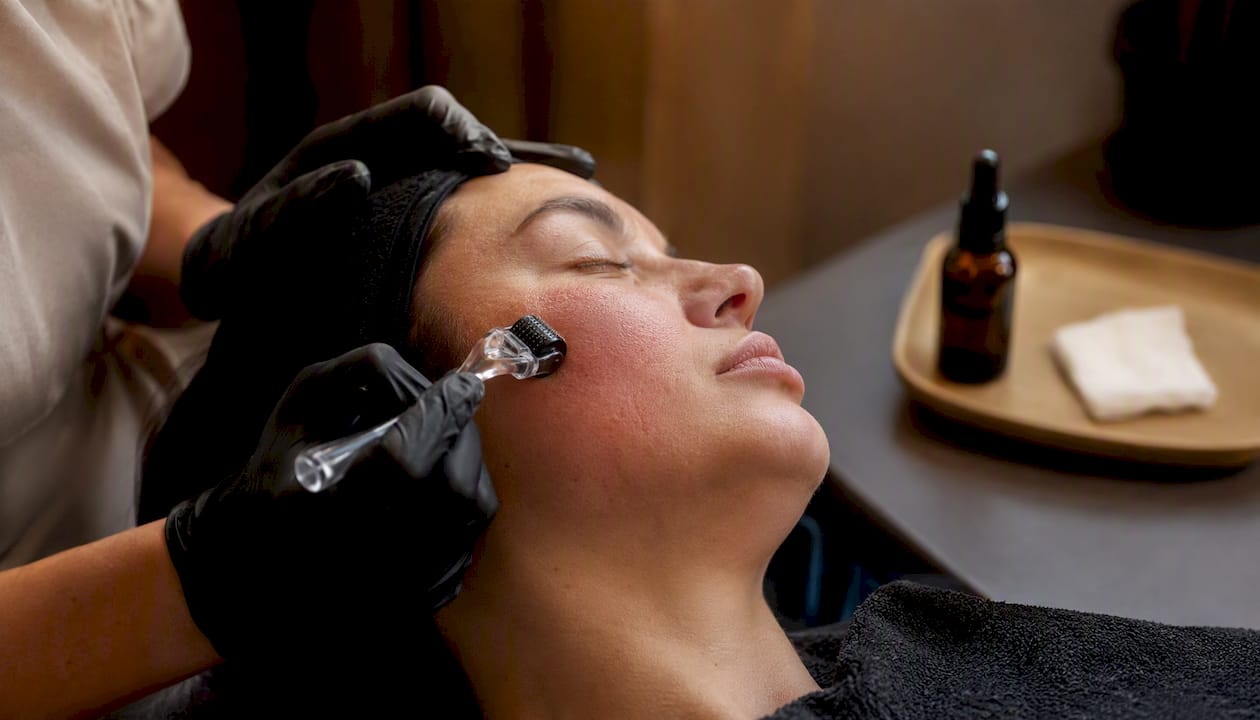
Pro Tip: If a brand claims “enhanced delivery” or “micro-infusion technology,” ask for the specific study or technical documentation behind that claim. A mechanistic rationale is not the same as a clinical trial result.
How to use topical EGF: a practical starter regimen
A conservative starting plan is twice-daily serum application, which mirrors the frequency used in the NCT05724589 pilot trial. Start with once daily for the first week to assess tolerance, then move to twice daily if your skin responds well.
Morning vs. evening considerations
EGF serum fits well in both AM and PM routines, but the morning slot requires a non-negotiable follow-up: broad-spectrum SPF 30 or higher. EGF supports cell proliferation and repair, and new or sensitized skin cells are more vulnerable to UV damage. Skipping sunscreen while using any repair-focused active is counterproductive.
Starter regimen
- Cleanse with a gentle, pH-balanced cleanser (avoid high-pH bar soaps that disrupt the skin barrier)
- Apply EGF serum to damp or dry skin, pressing gently rather than rubbing to avoid mechanical degradation of the peptide
- Follow with a moisturizer that supports barrier function (look for ceramides, niacinamide, or hyaluronic acid)
- Apply SPF in the morning as the final step
For practical guidance on pairing EGF with a firmness-focused routine, Cellure’s guide on restoring skin firmness with science-backed steps covers layering principles that apply directly here.
What to avoid pairing with EGF
- Strong exfoliating acids (AHA/BHA at high concentrations) in the same application: low pH can destabilize EGF; if you use acids, apply them at a separate time of day or on alternate evenings
- Oil-heavy occlusive formulas applied before the serum: these can form a physical barrier that impedes peptide absorption
- Retinoids in the same step: both are active repair signals; using them at the same time increases irritation risk for most people. Stagger them (EGF in the morning, retinoid at night) or introduce them sequentially
When to stop or seek help
Stop use and consult a dermatologist if you experience persistent redness beyond the first few days, swelling, pustules, or any rapid unexplained change in skin appearance. These are not typical responses to a well-formulated EGF serum.
Pro Tip: Take a baseline photo under consistent lighting (same room, same time of day, no filter) before you start. Repeat at weeks 4, 8, and 12. Skin changes from repair-focused actives are gradual enough that you will not notice them day-to-day, but a photo comparison at 12 weeks often tells a clear story.
What improvements to expect from EGF and when
Improvements from topical EGF are gradual. Texture, hydration, and pigment indices can show measurable changes in weeks; elasticity and firmness take longer; and visible wrinkle reduction, if it comes at all, is incremental and usually requires combination approaches or longer use.
Typical timeline:
- Weeks 4–8: Improved hydration feel, reduced surface roughness, and early texture smoothing are the most commonly reported early changes. Corneometer readings in trials tend to show the earliest measurable shifts here.
- Weeks 8–12: Elasticity and firmness measures (cutometer) show more consistent change in this window. This is also when participant-reported satisfaction tends to improve in the trial data.
- Weeks 12+: Visible perception differences become more noticeable, but remain incremental. Pigmentation indices (mexameter) can continue improving. Wrinkle depth scores, where measured, show the smallest and most variable changes.
For context on why hydration improvements matter structurally, Cellure’s explainer on skin hydration science and aging covers the relationship between hydration retention and long-term skin quality.
Outcomes more likely to change:
- Corneometer (hydration) readings
- Cutometer (elasticity/firmness) measures
- Mexameter (pigmentation) indices
- Visioscan surface texture scores
Outcomes with smaller, more variable change:
- Global wrinkle depth scores
- Deep structural wrinkle reversal
Individual variability is real. Baseline skin condition, age, concurrent treatments, sun exposure habits, and the specific formulation you use all affect outcomes. Someone with significant photoaging and no prior repair-focused routine may see more noticeable early change than someone already using retinoids and peptides. The age-related changes that EGF targets are well documented, but the rate of response varies person to person.
How to choose an EGF product that actually delivers
The non-negotiables: a clear INCI name for the EGF component, documented EGF type (recombinant, human-derived, or peptide mimetic), some form of published or brand-supported clinical evidence, and formulation details that suggest the product was designed with stability in mind.
The practical checklist
Ingredient transparency:
- INCI name present and specific (sh-Oligopeptide-1 for recombinant human EGF)
- EGF type clearly stated: recombinant (synthetic), human-derived, or peptide analogue
- No vague “growth factor complex” without further specification
Formulation quality signals:
- pH range disclosed or available from customer support (EGF stability is pH-sensitive)
- Airless pump or opaque packaging to limit oxidative degradation
- Preservative system appropriate for a peptide-containing formula
- Storage instructions that reflect stability requirements (avoid heat, direct light)
Evidence quality:
- Peer-reviewed or instrumented trial data referenced (look for corneometer, cutometer, or mexameter endpoints)
- Study timepoints stated (8 weeks minimum for hydration/texture; 12 weeks for elasticity)
- Sample size disclosed; be appropriately skeptical of n=10 or less
Brand transparency:
- Manufacturer identity and contact information clearly listed
- Ingredient sourcing or manufacturing standard referenced
- Responsive customer support that can answer formulation questions
Cellure’s approach to ingredient documentation, including how peptides work in skin repair and how actives are selected for its formulas, reflects the kind of transparency worth looking for in any brand operating in this space.
Pro Tip: Contact customer support before buying and ask two questions: “What is the pH of this product?” and “Do you have any instrumented study data for this formula?” A brand that can answer both clearly is operating at a different standard than one that redirects you to marketing copy.
Regulatory context, clinically used products, and the limits of OTC claims
EGF appears in both prescription therapeutic products and over-the-counter cosmetic formulations. The regulatory framing depends entirely on the intended use and the claims made. Past FDA safety communications shape the context here and are worth understanding before you buy.
The FDA and growth-factor products
The FDA has issued safety communications regarding Regranex (becaplermin gel), a prescription PDGF-based product for diabetic foot ulcers, noting a potential increased risk of cancer mortality in patients who used three or more tubes. Becaplermin is a different growth factor than EGF, but the communication reinforced regulatory and clinical attention to growth-factor safety signals generally. For topical EGF specifically, the FDA has not issued a comparable safety communication, and the ingredient appears in cosmetic products marketed under standard cosmetic (not drug) regulatory pathways.
The critical distinction: a product marketed as a cosmetic can claim to improve the appearance of skin (smoother, more hydrated, firmer-looking). It cannot legally claim to alter the structure or function of skin (treat wrinkles, regenerate tissue, heal wounds) without crossing into drug territory under U.S. law. When you see an OTC EGF serum claiming to “regenerate” or “heal” skin, that language technically exceeds what cosmetic regulations permit.
Clinically used EGF formulations vs. OTC serums
- Prescription/therapeutic context: rhEGF-based formulations used in wound care (diabetic ulcers, burns, post-radiation skin injury) are subject to clinical trial evidence requirements and physician oversight. The 1,172-patient radiotherapy cohort used this category of product.
- OTC cosmeceutical serums: sold without prescription, regulated as cosmetics, held to a lower evidence threshold. Claims are limited to cosmetic benefit language. Quality and evidence vary widely across brands.
- The evidence gap: a product used in a supervised wound-care setting with documented clinical outcomes is not the same as a retail serum with similar INCI labeling. Formulation, concentration, vehicle, and oversight all differ.
BIOEFFECT, an Iceland-based brand, is one of the more frequently cited industry examples in the EGF skincare space, known for using barley-derived recombinant EGF (sh-Oligopeptide-1) in its serums. Cellure, as a publisher of evidence-focused skincare content and a formulator of bioactive repair products, operates in the same OTC cosmeceutical category and applies the same evidence-first documentation standard to its ingredient choices.
What U.S. consumers should watch for:
- Claims that cross from cosmetic benefit into therapeutic territory (treat, heal, regenerate, cure)
- Products that do not disclose the specific EGF INCI name
- Brands that cite clinical studies without linking to them or disclosing sample sizes
- Concentration claims without supporting stability or bioavailability data
An editorial perspective on EGF in a skin-repair toolkit
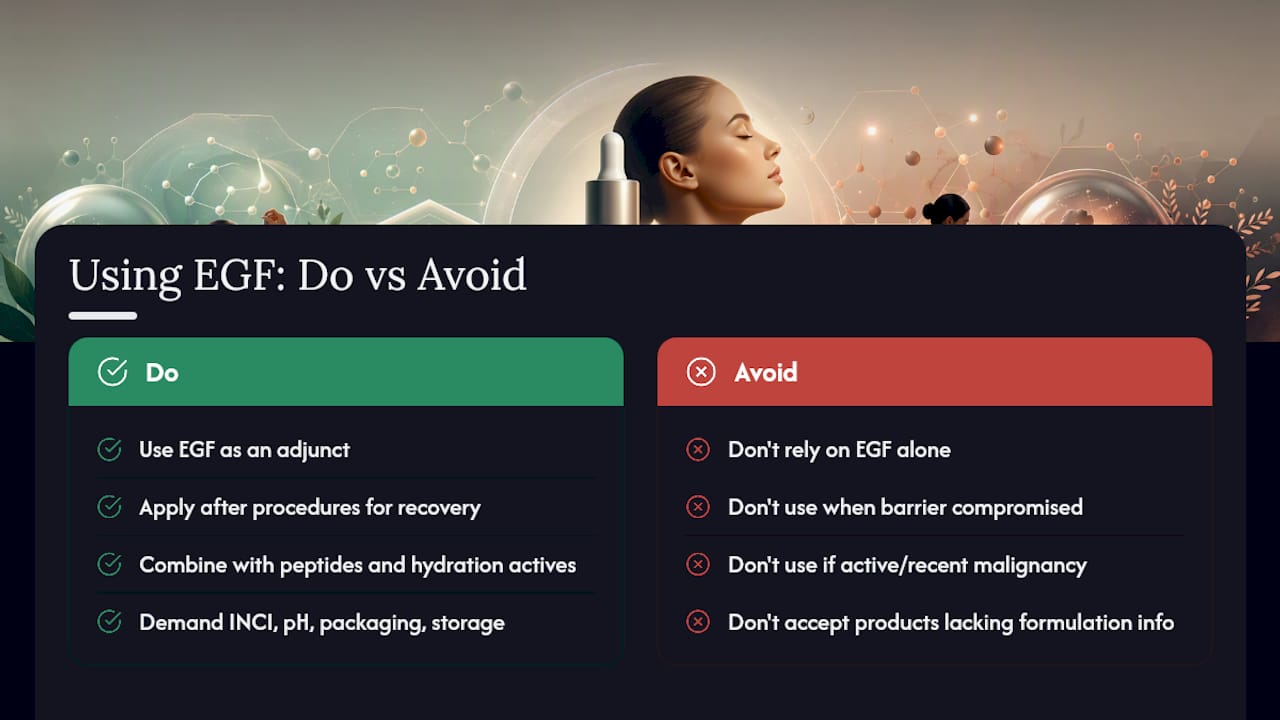
The most common mistake people make with EGF is treating it as a standalone solution rather than a signal within a system. The clinical evidence is consistent on one point: EGF works best when the skin’s baseline conditions support receptor engagement. A compromised barrier, chronic UV damage, or a routine that is actively disrupting the skin’s pH environment will blunt whatever repair signal EGF is trying to send.
Where EGF genuinely earns its place is as an adjunct to a repair-focused regimen, not as the centerpiece of one. The strongest use cases in the evidence are post-procedure recovery (after laser, microneedling, or chemical peels, where the barrier is temporarily disrupted and cell proliferation is the goal) and as a complement to peptides and hydration-focused actives that support the structural environment EGF is trying to improve. Cellure positions EGF within its product suite exactly this way: alongside peptides, polynucleotides, and barrier-support formulas, not as a replacement for them.
There is also a formulation literacy gap that the skincare industry has not done enough to close. Most people buying EGF serums have no way to evaluate whether the product they are holding contains active, stable EGF or a degraded peptide in an incompatible vehicle. The INCI name is a start, but pH, packaging, and storage conditions matter just as much. Demanding that information from brands is not unreasonable. It is the minimum standard for a product making biological claims.
The tumor-promotion concern deserves honest acknowledgment rather than dismissal. The biological mechanism that makes EGF useful for repair is the same one that warrants caution in specific populations. For healthy adults using a well-formulated topical product for cosmetic purposes, the available evidence supports use. For anyone with an active or recent malignancy, the conversation belongs with an oncologist, not a skincare brand.
Cellure’s skin repair kit pairs well with an EGF-based regimen
Topical EGF delivers its best results when the surrounding regimen supports barrier function, hydration, and collagen signaling simultaneously. Cellure’s Complete Skin Repair Kit is built for exactly that context.
The kit combines bioactive ingredients including peptides, polynucleotides, hyaluronic acid, and PDRN in formulas designed for cellular repair and firmness recovery. It is suited for adults experiencing early-to-moderate signs of aging, those recovering from in-office procedures, and anyone looking to build a repair-focused routine around a core active like EGF. The formulas are gentle enough for sensitive skin and documented with ingredient-level specificity.
If you are ready to move from researching EGF to actually running a structured 8–12 week trial, the Complete Skin Repair Kit gives you the supporting actives that make that trial more likely to show results. Visit the product page to review the full ingredient list and find the right starting point for your skin.
Primary sources and further reading
The four peer-reviewed and clinical sources below form the evidence base for this article. Each addresses a distinct aspect of EGF’s clinical profile.
- Archives of Pharmacal Research — EGF wound healing and delivery review: A recent review covering EGF’s established role in wound healing, formulation stability challenges, and biomaterial/nanoparticle delivery systems as active research directions. Essential context for understanding why vehicle choice matters as much as the active ingredient itself.
This article is general information, not a substitute for advice from a qualified doctor. Consult a qualified healthcare professional about your own circumstances before acting on anything here.
Sources
- The Effectiveness of Epidermal Growth Factor Serum in Improve Facial Skin Hydration, Elasticity, Pigmentation, and Wrinkles.
- The safety and efficacy of EGF-based cream for the prevention of radiotherapy-induced skin injury: results from a multicenter observational study
- A Randomized, Double‐Blinded Pilot Study Comparing Synthetic Versus Human‐Derived Topical Epidermal Growth Factor for Facial Rejuvenation and Psychosocial Perception
- EGF, a veteran of wound healing: highlights on its mode of action, clinical applications with focus on wound treatment, and recent drug delivery strategies | Archives of Pharmacal Research | Springer Nature Link
Recommended
Share