


Why Skin Repair Slows with Age: A Cellular Guide
TL;DR:
- Skin repair slows with age due to senescent cells, chronic inflammation, and declining metabolic support. Calming inflammation before applying repair actives enhances skin healing, which is compromised by tissue ecosystem collapse. A multi-axis approach targeting inflammation, proteostasis, ECM, and barrier health offers the most effective pathway to rejuvenation.
Skin repair slows with age because the tissue ecosystem loses adaptive capacity, driven by accumulating senescent cells, chronic low-grade inflammation, and declining metabolic and vascular support. The single most useful first step: calm that inflammatory environment before layering in repair-stimulating actives, because a chemically hostile tissue resists even the most advanced ingredients.
- Senescent cells accumulate and release SASP factors (IL-6, MMP-1/9) that degrade the extracellular matrix and spread dysfunction to neighboring cells
- Chronic inflammation (“inflammaging”) creates a tissue environment hostile to repair signaling
- Metabolic and vascular decline reduces the energy and oxygen supply fibroblasts need to synthesize collagen and elastin
- Structural changes including epidermal thinning, which occurs progressively with age, reducing thickness steadily over time, and DEJ flattening physically disconnect repair signaling between skin layers
Table of Contents
- Why does skin repair slow with age? The core biology
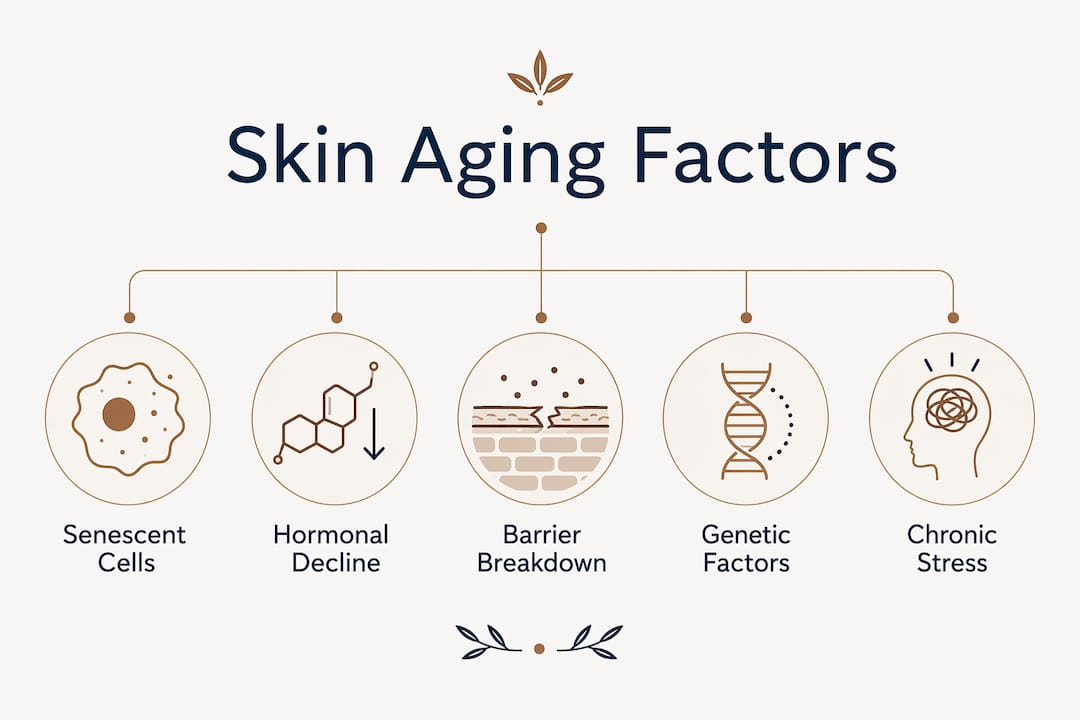
- Why senescent cells are the engine of impaired repair
- Why a multi-axis approach is the only one that works
- Which topical actives actually support cellular repair?
- Lifestyle and clinical options that shift tissue biology
- How to design a practical regimen and set realistic expectations
- How Cellure formulates for cellular repair
- How hormonal changes slow skin repair with age
- How barrier decline and dehydration impair repair capacity
- How genetics and epigenetics shape individual repair decline
- How psychological stress and cortisol impair skin repair with age
- Key Takeaways
- The case for measured optimism on cellular repair
- Cellure advanced repair kits: a ready, evidence-driven option
- Selected authoritative sources and further reading
Why does skin repair slow with age? The core biology
Aging skin doesn’t fail at one point. It fails across several interconnected systems simultaneously, and that’s what makes single-ingredient fixes so limited.
| Mechanism | What breaks down | Impact on repair |
|---|---|---|
| Senescent cells / SASP | IL-6, MMP-1/9 secretion | ECM degradation, paracrine spread of dysfunction |
| Fibroblast decline | Reduced proliferation, ECM output | Less collagen, elastin, hyaluronic acid |
| Mitochondrial dysfunction | Impaired oxidative phosphorylation | Energy deficit for repair synthesis |
| Epidermal thinning | ~6% per decade | Slower barrier recovery, reduced nutrient exchange |
| DEJ flattening | Reduced surface area between layers | Impaired signaling and nutrient transfer |
| Reduced vascular perfusion | Less oxygen and growth factor delivery | Slower cell turnover and healing |
| Impaired autophagy | Protein aggregate accumulation | Proteostasis failure in fibroblasts and keratinocytes |
The EMBO Journal’s review of skin aging frames this as a coordinated failure across multiple tissue compartments, driven by both intrinsic biology and the cutaneous exposome. UV exposure accelerates the process by generating ROS that push keratinocytes into senescence, triggering SASP secretion that then degrades the ECM further. Elastin is particularly hard to recover: adult elastogenesis is severely limited, and elastin’s half-life is estimated at roughly 74 years, meaning damaged fibers are essentially permanent without targeted intervention.
Why senescent cells are the engine of impaired repair
A senescent cell doesn’t just stop working. It actively poisons the neighborhood. Research from the University of Pittsburgh shows that SASP factors spread senescence to adjacent healthy cells in a paracrine cascade, turning a localized problem into a tissue-wide repair failure.
Two geroscience strategies address this. Senolytics clear senescent cells intermittently; senomorphics suppress SASP signaling continuously without eliminating the cells. For topical and regenerative skincare, GeroScience research points toward senomorphics as often the safer and more practical route, particularly when preserving wound-healing surveillance or anti-cancer functions matters.
Pro Tip: If you’re using any active that stimulates cell turnover (retinoids, microneedling, growth factors), consider pairing it with a senomorphic-oriented formula first. Stimulating repair in a SASP-inflamed environment is like trying to rebuild a house while a fire is still burning.
Why a multi-axis approach is the only one that works
Aging skin is an ecosystem collapse. Targeting one axis while ignoring the others produces transient results at best.
| Axis | What’s failing | Topical intervention | Lifestyle / clinical |
|---|---|---|---|
| Inflammation | SASP, inflammaging | Antioxidants, tranexamic acid, peptides | Sleep, stress reduction, sun protection |
| Proteostasis | Impaired autophagy, protein aggregates | PDRN, copper peptides | Intermittent fasting (research stage) |
| Mitochondrial health | Energy deficit in fibroblasts | CoQ10, NAD+ precursors (topical) | Exercise, targeted supplements |
| ECM integrity | Collagen/elastin loss, MMP activity | Retinoids, EGF, polynucleotides | Microneedling, energy-based devices |
| Hydration / barrier | Reduced ceramides, NMF | Hyaluronic acid, barrier lipids | Humidified environments |
| Vascular / hormonal | Reduced perfusion, estrogen decline | Growth factors | HRT (physician-guided), exercise |
The Frontiers homeodynamic rejuvenation framework explains why staged, adaptive regimens outperform single-ingredient fixes: aged skin loses its ability to sense stress and recover, so rebuilding that adaptive capacity requires hitting multiple axes together.
- Combining anti-inflammatory and ECM-repair actives reduces the risk of stimulating collagen synthesis in a pro-degradation environment
- Addressing mitochondrial health improves the energy available for anabolic repair processes
- Barrier restoration amplifies the penetration and efficacy of subsequent actives
Which topical actives actually support cellular repair?
Topicals can meaningfully support cellular repair when they target inflammation, proteostasis, and ECM remodeling together, and when they’re delivered in bioavailable formats.
- Retinoids (retinol, tretinoin): upregulate collagen synthesis via nuclear receptor signaling; cornerstone of photoaging management, though irritation limits periocular use
- Peptides (signal, carrier, enzyme-inhibitor): stimulate fibroblast activity and collagen production; copper peptides additionally support wound healing and anti-inflammatory signaling
- Polynucleotides / PDRN: a PLOS One clinical study found topical PDRN-850K activated PI3K-Akt and TGF-β/Smad pathways, producing greater improvements in periocular dermal structure and wrinkle parameters than retinol at identical concentrations in a randomized split-face trial
- EGF (epidermal growth factor): accelerates keratinocyte and fibroblast proliferation; most effective post-barrier disruption
- Tranexamic acid: suppresses melanin overproduction and has emerging anti-inflammatory effects; pairs well with brightening and calming formulas
- Antioxidants (vitamin C, niacinamide, CoQ10): neutralize ROS before they trigger keratinocyte senescence; vitamin C also co-factors collagen synthesis
- Hyaluronic acid: restores hydration and creates a permissive environment for repair signaling; multi-weight formulas penetrate different skin depths
Layering order: antioxidant/calming serum → peptide or PDRN serum → moisturizer with barrier lipids → SPF (AM). Avoid mixing retinoids with high-concentration vitamin C or AHAs in the same application.
Pro Tip: Formulation matters as much as the ingredient. Look for encapsulated retinoids (reduced irritation), low-molecular-weight hyaluronic acid (deeper penetration), and pH-optimized vitamin C (below 3.5 for L-ascorbic acid stability). A brilliant active in the wrong vehicle barely reaches the dermis.
Cellure’s bioactive ingredient approach combines these actives into curated serums targeting specific repair axes, including formulas built around PDRN, copper peptides, and tranexamic acid.
Lifestyle and clinical options that shift tissue biology
Topicals work better when the tissue environment is already improving. Lifestyle and clinical interventions change that environment at a systemic level.
- Sun protection (immediate): UV is the single largest extrinsic driver of keratinocyte senescence and ECM degradation. Broad-spectrum SPF 30+ daily is non-negotiable.
- Sleep and nutrition (weeks 1–4): Deep sleep drives growth hormone release and tissue repair. Anti-inflammatory diets (omega-3s, polyphenols) reduce systemic inflammaging.
- Exercise (weeks 2–8): Improves dermal vascular perfusion and mitochondrial biogenesis in fibroblasts.
- Targeted supplements (weeks 4–12): Collagen peptides, vitamin D, and zinc have the strongest evidence base for supporting skin repair.
- Microneedling / energy-based devices (months 2–6): Stimulate controlled collagen remodeling; most effective after inflammation is calmed. Recovery is slower in older adults.
- Injectables (months 3+): Biostimulators (e.g., poly-L-lactic acid) and hyaluronic acid fillers address volume and ECM support; physician-guided.
- mRNA-based therapies (research stage): ScienceDirect research shows mRNA-LNP delivery can induce tropoelastin expression in fibroblasts, but inflammatory aged tissue reduces translation efficiency, reinforcing why calming inflammation first is critical.
Cost ranges (broad): Advanced serums typically run $50–$200 per unit; in-office procedures range from $300 (microneedling) to $2,000+ (laser resurfacing) per session. For post-procedure skin recovery, natural regeneration support can complement clinical aftercare.
Safety notes: Retinoids are contraindicated during pregnancy. Procedures require SPF compliance during recovery. Consult a board-certified dermatologist before combining energy-based devices with active retinoid use.
How to design a practical regimen and set realistic expectations
A staged approach works best: calm inflammation first, restore barrier and repair programs, then stimulate remodeling.
- Weeks 1–4: Introduce a calming antioxidant serum and a barrier-repair moisturizer. Add SPF daily. Patch-test all new actives.
- Weeks 4–8: Add a peptide or PDRN serum. Begin low-concentration retinol (2–3 nights per week). Assess tolerance.
- Weeks 8–12: Increase retinoid frequency if tolerated. Consider adding EGF or growth factor serum. Evaluate for in-office procedures if goals include structural ECM remodeling.
Safety guardrails:
- Always patch-test on the inner arm for 48 hours before full-face application
- Ramp retinoids slowly: start at 0.025–0.05%, increase every 4 weeks
- Never skip SPF when using retinoids or AHAs
- Consult a dermatologist if you have rosacea, active eczema, or are on photosensitizing medications
Cellular changes precede visible outcomes. Expect measurable improvement in barrier function and skin texture within 4–8 weeks; ECM remodeling and visible firmness changes typically require 3–6 months of consistent use. For a step-by-step implementation roadmap, Cellure’s evidence-based repair guide walks through each phase in detail.
How Cellure formulates for cellular repair
Cellure’s product line maps directly to the multi-axis framework above, with each formula targeting a specific repair axis rather than offering a generic anti-aging blend.
- Lifting and firming serums: Built around signal peptides and copper peptides that stimulate fibroblast activity and support ECM synthesis; targets the ECM integrity axis
- Brightening and tone-evening serums: Tranexamic acid combined with antioxidants to suppress SASP-driven pigmentation and reduce oxidative stress; targets the inflammation axis
- PDRN repair serums: Polynucleotides that activate PI3K-Akt and TGF-β pathways for integrated ECM restoration; targets proteostasis and ECM axes simultaneously
- Comprehensive repair kits: Curated combinations of the above, sequenced for the staged regimen approach (calm → repair → remodel)
The ingredient rationale is straightforward: each active was selected because it addresses a documented failure point in aged skin repair, not because it’s trending. Hyaluronic acid restores the hydration environment that repair signaling depends on. Copper peptides support both wound healing and anti-inflammatory signaling. PDRN addresses the multi-pathway fibroblast dysfunction that single actives can’t reach. Learn more about Cellure’s cellular repair framework and how it applies to your skin concerns.
How hormonal changes slow skin repair with age
Estrogen decline at menopause is one of the most abrupt drivers of accelerated skin aging. Estrogen supports collagen synthesis, skin thickness, and moisture retention; its loss correlates with a roughly 30% reduction in skin collagen in the first five years post-menopause, according to the National Institute on Aging. Testosterone decline in men produces similar, if more gradual, effects on dermal thickness and sebum production.

Both hormones influence fibroblast activity and vascular tone in the dermis. Lower estrogen means reduced TGF-β signaling, slower keratinocyte turnover, and a thinner, drier barrier that is less able to mount an effective repair response. Hormone replacement therapy can partially reverse these changes, but it requires physician guidance and individual risk assessment.
How barrier decline and dehydration impair repair capacity
A compromised barrier doesn’t just cause dryness. It actively slows repair by allowing transepidermal water loss to increase, reducing the hydration that repair enzymes and signaling molecules need to function. Aged skin produces fewer ceramides, less natural moisturizing factor, and less hyaluronic acid, all of which normally maintain the water-rich environment that supports cell migration and proliferation during healing.
The structural changes compound this: DEJ flattening reduces the surface area for nutrient exchange between the dermis and epidermis, meaning even well-formulated topicals face a less receptive tissue environment. Restoring barrier function with ceramide-rich moisturizers and multi-weight hyaluronic acid is therefore a prerequisite for repair, not an optional add-on.
How genetics and epigenetics shape individual repair decline
Not everyone ages at the same rate, and the gap is partly genetic. Telomere length, DNA repair gene variants, and the efficiency of proteasome function all influence how quickly senescent cell burden accumulates. Shorter telomeres accelerate fibroblast senescence and reduce the regenerative capacity of epidermal stem cells, as documented in PMC hallmarks of skin aging research.
Epigenetic changes, particularly DNA methylation patterns, shift gene expression in ways that reduce collagen synthesis and increase MMP activity over time. These changes are influenced by UV exposure, diet, smoking, and stress, meaning lifestyle choices can accelerate or slow the epigenetic clock. This is why two people of the same chronological age can have dramatically different skin repair capacity.
How psychological stress and cortisol impair skin repair with age
Chronic psychological stress elevates cortisol, which suppresses immune function, increases systemic inflammation, and directly impairs skin barrier recovery. Cortisol reduces keratinocyte proliferation and slows the inflammatory-to-proliferative transition that wound healing requires. In older adults, the cortisol stress response is already dysregulated, making stress-induced repair impairment more pronounced than in younger skin.
Sleep deprivation compounds this: growth hormone, which peaks during deep sleep and drives tissue repair, is blunted by both age and poor sleep quality. Managing stress through evidence-based practices (adequate sleep, exercise, mindfulness) isn’t peripheral to a skincare regimen. It directly changes the hormonal environment in which topical actives have to work.
Key Takeaways
Skin repair slows with age because senescent cells, chronic inflammation, and metabolic decline create an ecosystem collapse that no single ingredient can reverse alone.
| Point | Details |
|---|---|
| Calm inflammation first | SASP-driven inflammation must be reduced before repair-stimulating actives can work effectively. |
| Multi-axis targeting required | Address ECM, proteostasis, mitochondrial health, and barrier function together for durable results. |
| Expect months for ECM remodeling | Barrier and texture improve in 4–8 weeks; collagen and firmness changes take 3–6 months. |
| Hormones and stress matter | Estrogen decline and elevated cortisol directly impair repair capacity alongside topical factors. |
| Cellure repair kits | Cellure’s curated kits combine PDRN, peptides, and tranexamic acid to target multiple repair axes in sequence. |
The case for measured optimism on cellular repair
The science here is genuinely encouraging, but it demands honesty about what “repair” means at the cellular level. The field has moved past the idea that a single hero ingredient reverses aging. What the evidence actually supports is more interesting: a staged, multi-axis approach that first reduces the inflammatory burden, then rebuilds the cellular machinery that repair depends on. That’s a harder sell than a miracle serum, but it’s also a more durable outcome.
What I find most compelling is the senomorphic direction. Rather than trying to eliminate senescent cells entirely (which carries its own risks), calming their SASP output creates a tissue environment where the repair programs that are still present can actually function. Pair that with barrier restoration, evidence-backed actives, and the lifestyle factors that change tissue biology systemically, and you have a framework that holds up to scrutiny. The timeline is months, not weeks, for the structural changes that matter. That’s worth knowing before you invest in a regimen, and worth committing to once you do. For anyone serious about addressing age-related skin concerns at a biological level, the tools are genuinely better than they’ve ever been.
Cellure advanced repair kits: a ready, evidence-driven option
Skin repair at the cellular level requires the right actives in the right sequence. Cellure’s advanced repair kits bring together PDRN, copper peptides, tranexamic acid, and hyaluronic acid in formulas designed around the multi-axis framework this article describes, so you’re not assembling a regimen from scratch or guessing at compatibility.
Each kit maps to the staged approach: calming and barrier-restoring formulas first, followed by ECM-repair and remodeling actives. Browse Cellure’s cellular repair kits to find the combination that fits your current skin concerns and regimen stage.
Selected authoritative sources and further reading
- Skin aging: mechanisms, evaluation, and rejuvenation | The EMBO Journal
- Targeting cellular senescence in dermatology: senolytic and senomorphic strategies | GeroScience
- Homeodynamic Rejuvenation: an adaptive framework for resetting skin aging | Frontiers in Aging
- Topical PDRN enhances dermal ECM repair in photodamaged skin | PLOS One
- Elastin production by mRNA technology for rejuvenation of aged skin | ScienceDirect
- Aging changes in skin | MedlinePlus Medical Encyclopedia
- Skin Care and Aging | National Institute on Aging
- Hallmarks of Skin Aging: Update | PMC / NCBI
- Cellular senescence and wound healing in aged and diabetic skin | Frontiers in Physiology
- Why do older people heal more slowly? | PittWire
- Aging changes in skin: what actually changes over time? | Distance Physiology, University of Florida
This article is general educational information, not medical or dermatological advice. Confirm any treatment approach with a board-certified dermatologist for your individual situation.