


Why Address Age-Related Skin Concerns for Lasting Health
TL;DR:
- Addressing age-related skin concerns early preserves barrier strength and reduces long-term fragility.
- Daily SPF 30+ effectively prevents up to 80% of visible aging by protecting skin from UV damage in real time.
Addressing age-related skin concerns is a clinical necessity, not a cosmetic preference. Your skin is your body’s largest organ, and its ability to protect, repair, and regulate declines measurably with every decade. Dr. Rachel Ho defines this goal as skin longevity: preserving structural integrity, biological resilience, and functional capacity rather than simply chasing a younger appearance. UV radiation alone accounts for up to 90% of visible aging, which means most of what you see in the mirror is preventable. The science is clear, and the window to act is always now.
Why address age-related skin concerns before visible damage appears
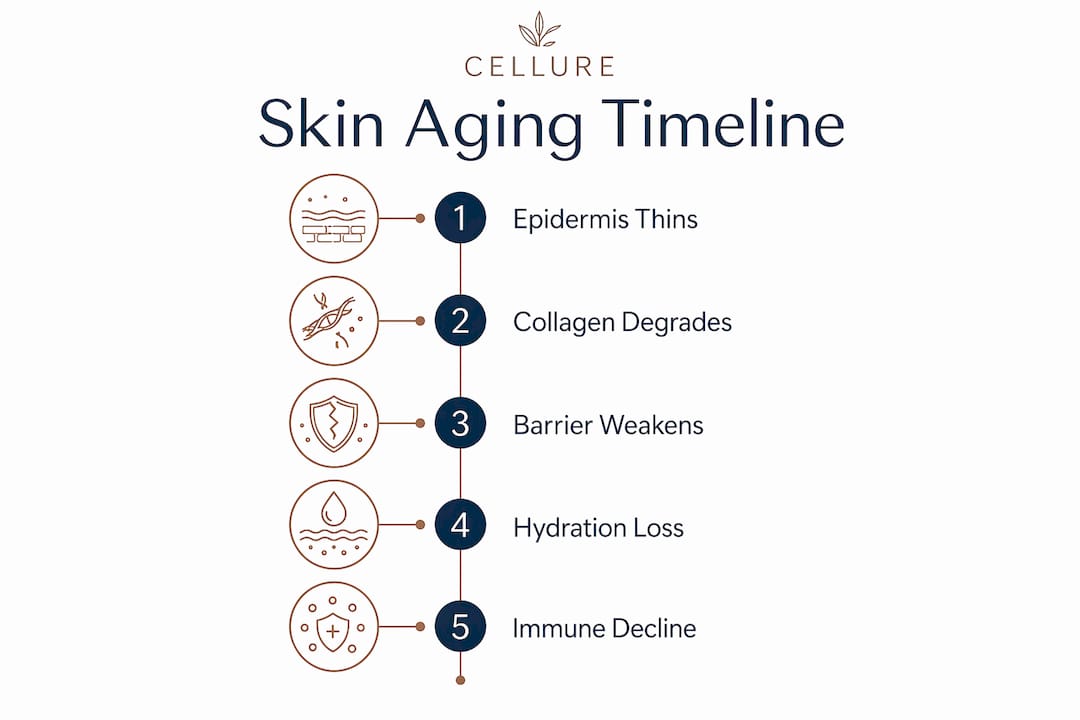
The skin’s epidermis loses roughly 6% of its thickness per decade, and wound healing slows by up to four times in aging skin. That statistic matters because thinner skin tears more easily, heals more slowly, and offers weaker protection against pathogens and environmental stressors. By the time you notice visible thinning or fragility, the underlying structural decline has been building for years.
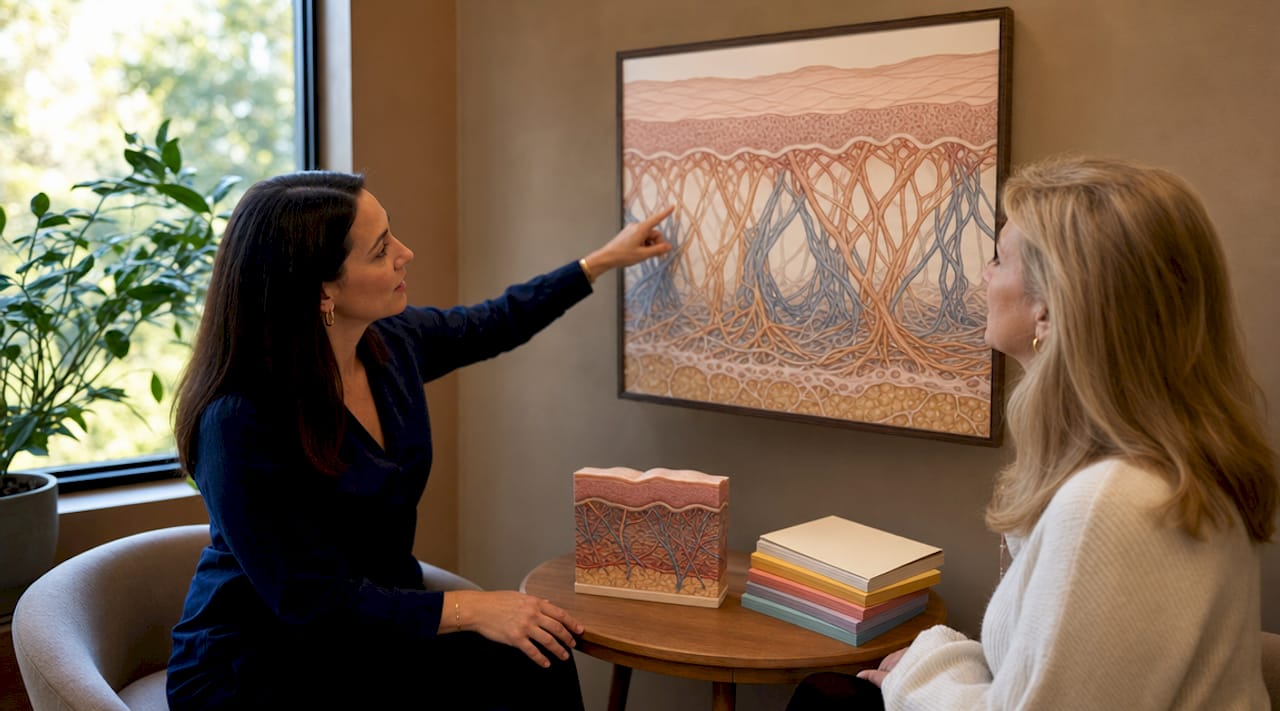
Collagen and elastin, the proteins that give skin its firmness and bounce, degrade continuously after your mid-twenties. Intrinsic aging, the biological clock you cannot stop, drives this process from within. Extrinsic aging, caused by UV radiation, pollution, smoking, and stress, accelerates it from outside. The two processes compound each other, which is why unprotected sun exposure in your thirties can produce the skin condition of someone a decade older.
The skin barrier weakens with age, leading to increased transepidermal water loss, chronic dryness, and a heightened inflammatory response to products that once caused no reaction. This is not just a comfort issue. A compromised barrier raises the risk of dermatitis, infection, and delayed healing from minor cuts or abrasions. Treating mature skin means treating the barrier first, not last.
Pro Tip: If your skin has become reactive to products it tolerated for years, that is a barrier signal, not a sensitivity quirk. Simplify your routine and prioritize ceramide-based moisturizers before reintroducing actives.
| Biological change | Functional consequence |
|---|---|
| 6% epidermal thinning per decade | Greater fragility and slower wound repair |
| Collagen and elastin degradation | Loss of firmness and reduced skin resilience |
| Barrier lipid decline | Dryness, inflammation, and increased infection risk |
| Wound healing up to 4x slower | Higher risk of chronic skin integrity issues |
How addressing aging skin improves more than appearance
Skin longevity focuses on maintaining structural integrity, biological resilience, and functional capacity, not just reducing visible signs. This distinction separates a genuinely effective anti-aging skincare routine from one that only targets surface aesthetics. When you support the skin’s repair mechanisms, you reduce the long-term risk of fragility, chronic dryness, and conditions like contact dermatitis that become increasingly common in older adults.
The benefits of consistent intervention are measurable and well-documented:
- Improved barrier function: Moisturizers containing ceramides, niacinamide, and hyaluronic acid restore the lipid matrix that aging strips away, reducing water loss and inflammation.
- Collagen preservation: Retinoids stimulate fibroblast activity and slow collagen breakdown, producing clinically significant improvements in skin texture after 8 to 12 weeks of consistent use.
- Reduced photoaging: Daily broad-spectrum SPF 30 or higher prevents up to 80% of premature visible aging, making it the single highest-return intervention available without a prescription.
- Sustained hydration: Well-hydrated skin maintains its plumpness, which directly supports the appearance of fine lines and the skin’s ability to recover from minor damage.
- Lower chronic condition risk: Addressing the barrier and immune competence of aging skin reduces susceptibility to eczema flares, skin infections, and delayed healing from everyday injuries.
Many adults focus exclusively on visible concerns like wrinkles and uneven tone while ignoring the skin’s immune competence and repair capacity. This approach leaves the skin functionally vulnerable even when it looks better on the surface. The goal of skin renewal is to build a skin that performs well, not just one that photographs well.
What are the most effective strategies for treating mature skin?
The most cost-effective and evidence-backed treatment for aging skin is daily broad-spectrum sunscreen. Sunscreen prevents UV-induced collagen degradation immediately upon correct application, making it the only intervention that works in real time rather than over weeks. Apply SPF 30 or higher every morning, including overcast days and days spent mostly indoors near windows.
Here is a practical, evidence-based routine for addressing age-related skin changes:
- Gentle cleansing: Use a low-pH, non-stripping cleanser morning and evening. Harsh cleansers remove barrier lipids and accelerate the dryness cycle that aging skin is already prone to.
- Antioxidant serum: Apply a vitamin C serum (10 to 20% L-ascorbic acid) in the morning. Vitamin C neutralizes free radicals from UV and pollution, and it supports collagen synthesis independently of retinoids.
- Barrier moisturizer: Choose a formula with ceramides, fatty acids, and humectants like glycerin or hyaluronic acid. Adequate moisturization is not optional for aging skin. It is the foundation every active ingredient depends on.
- Retinoid (evening): Start with a low-concentration retinol two to three nights per week and increase frequency over four to six weeks. Retinoids are the most clinically validated topical ingredient for collagen stimulation and cell turnover in mature skin.
- Broad-spectrum SPF 30+: Apply as the final morning step, every day. No other single product delivers a comparable return on investment for long-term skin health.
- Lifestyle factors: Physical activity and stress management correlate directly with improved biological skin age. Smoking accelerates collagen breakdown and impairs circulation. Nutrition, particularly adequate protein and antioxidants, supports the skin’s repair processes from within.
For concerns that topicals cannot fully address, dermatology procedures including fractional laser resurfacing, radiofrequency microneedling, and prescription-strength retinoids offer clinically proven results. These are not replacements for a daily routine but amplifiers of one.
Pro Tip: Introduce retinoids on nights when you are not using exfoliating acids. Layering both on the same evening is one of the most common causes of barrier breakdown in people who are otherwise doing everything right.
Common myths that undermine your anti-aging skincare routine
Misinformation about aging skin is widespread, and acting on it can set your skin back by months. These are the most damaging myths, corrected by the evidence.
- “Retinol thins the skin.” Retinol does cause initial flaking and sensitivity, which many people mistake for thinning. The opposite is true over time. Retinoids stimulate collagen production and increase epidermal thickness with consistent use. The adjustment phase is temporary. The structural benefit is lasting.
- “Sunscreen is only necessary outdoors.” UVA radiation, the wavelength most responsible for collagen degradation and photoaging, penetrates glass. Sitting near a window without SPF is cumulative UV exposure. Daily application applies regardless of weather or location.
- “More products mean better results.” Over-exfoliation and misuse of multiple actives cause barrier damage and irritation, directly undermining the skin health you are trying to build. A focused routine of four to five well-chosen products consistently outperforms a ten-step routine with conflicting ingredients.
- “Expensive products are more effective.” Price reflects marketing, packaging, and brand positioning far more reliably than it reflects clinical efficacy. Ingredients like niacinamide, retinol, and ceramides are available in affordable formulations with strong evidence behind them.
- “Addressing visible signs is enough.” Focusing only on wrinkles and tone while ignoring barrier repair and immune function leaves the skin structurally vulnerable. The effects of aging on skin go deeper than the surface, and effective care must too.
How genetics, environment, and lifestyle shape skin aging
Facial aging is influenced by genetics, epigenetics, and environmental factors including sun exposure, stress, smoking, and physical activity. Genetics sets the baseline: your natural collagen density, melanin levels, and sebaceous gland activity are largely inherited. But epigenetics, the way your environment and behavior switch genes on or off, is where intervention becomes possible.
UV exposure remains the dominant modifiable factor. Pollution, particularly particulate matter from urban environments, generates free radicals that degrade collagen and disrupt the skin barrier independently of sun damage. Smoking constricts blood vessels, reduces oxygen delivery to skin cells, and accelerates the breakdown of collagen and elastin at a rate that is visible within years of starting. These are not theoretical risks. They are measurable changes in skin thickness, tone, and repair speed.
Stress elevates cortisol, which suppresses skin immune function and slows cellular repair. Regular physical activity, by contrast, improves circulation, reduces systemic inflammation, and has been shown to correlate with a measurably younger biological skin age. Understanding how aging changes skin cells at the cellular level makes it easier to see why lifestyle choices are not peripheral to skin health. They are central to it.
Pro Tip: If you work in a high-stress environment, consider adding a niacinamide serum to your routine. Niacinamide supports the skin barrier, reduces inflammation, and is one of the few ingredients with evidence for improving skin resilience under chronic stress conditions.
Key takeaways
Addressing age-related skin concerns requires targeting both visible signs and the underlying biological decline in barrier function, collagen integrity, and cellular repair capacity.
| Point | Details |
|---|---|
| UV is the primary aging driver | Daily SPF 30+ prevents up to 80% of premature visible aging and collagen loss. |
| Skin longevity over aesthetics | Preserving barrier function and repair capacity matters as much as reducing wrinkles. |
| Retinoids require patience | Clinically significant improvements in texture appear after 8 to 12 weeks of consistent use. |
| Lifestyle modifies skin age | Physical activity, stress management, and smoking cessation directly improve biological skin age. |
| Simplicity beats complexity | A focused four-step routine consistently outperforms a product-heavy routine with conflicting actives. |
Why skin function matters more than skin appearance
I have spent years reading the research on aging skin, and the pattern that stands out most is not about which serum works best. It is about how consistently people underestimate the skin as a functional organ. Most of the adults I see in skincare conversations are focused on lines, spots, and firmness. Those concerns are real. But the skin’s ability to heal a small cut, resist a topical irritant, or maintain its own hydration without constant product intervention is what actually determines quality of life as you age.
The concept of skin longevity, as Dr. Rachel Ho articulates it, reframes the entire conversation. You are not trying to look 30 at 55. You are trying to have skin that works at 75. That means building habits now that preserve collagen, protect the barrier, and support cellular repair, not habits that chase short-term brightness at the cost of long-term resilience.
The marketing noise around anti-aging is relentless and often misleading. My honest view is that the most effective routine is also the most boring one: SPF every morning, a retinoid a few nights a week, a solid moisturizer, and a vitamin C serum. The bioactive ingredients with the strongest clinical backing are not the newest or the most expensive. They are the ones that have been studied long enough to prove they work. Consistency with proven ingredients will always outperform novelty.
— Sara
Cellure’s approach to age-related skin repair
Cellure formulates its products around the same principles this article covers: barrier repair, collagen support, and cellular regeneration using clinically backed bioactive ingredients. The Complete Skin Repair Kit is designed specifically for aging skin, combining peptides, polynucleotides, and tranexamic acid to address firmness, hydration, and uneven tone at the cellular level. These are not surface-level treatments. They target the structural decline that makes mature skin fragile and slow to recover. If you are ready to move from reactive skincare to a consistent, science-backed routine, the Complete Skin Repair Kit is where Cellure recommends starting.
FAQ
Why should you address age-related skin concerns early?
Structural changes like collagen loss and barrier thinning begin in your mid-twenties and compound over time. Intervening early preserves the skin’s repair capacity and reduces the risk of fragility, chronic dryness, and delayed wound healing in later decades.
What is the single most effective anti-aging skincare step?
Daily broad-spectrum SPF 30 or higher is the most evidence-backed intervention available. It prevents up to 80% of premature visible aging and stops UV-induced collagen degradation in real time, outperforming any serum or treatment used without it.
How long does it take for anti-aging treatments to work?
Retinoids, the most clinically validated topical ingredient for mature skin, require 8 to 12 weeks of consistent use before producing significant improvements in skin texture and appearance. Most active ingredients follow a similar timeline.
Does retinol thin aging skin?
No. Retinol causes initial flaking and sensitivity during the adjustment phase, which is often mistaken for thinning. With consistent use, retinoids increase epidermal thickness and stimulate collagen production, making the skin structurally stronger over time.
Can lifestyle changes actually improve aging skin?
Yes. Physical activity, stress management, and smoking cessation correlate with measurably improved biological skin age. These factors influence epigenetic expression, meaning they can modify how quickly your skin ages at the cellular level, not just on the surface.