


What Is Skin Volumizing? Your 2026 Guide
TL;DR:
- Skin volumizing aims to restore facial fullness by targeting multiple structural layers, including fat, bone, and skin. Modern treatments combine injectables like hyaluronic acid fillers with energy-based therapies and topical products for natural, balanced results. Addressing skin laxity alongside volume loss is essential to avoid an overfilled appearance and achieve a youthful look.
Skin volumizing is the process of restoring lost facial fullness by targeting multiple structural layers, including bone, deep fat pads, and the skin itself, rather than simply filling surface wrinkles. Volume loss begins in the 20s and accelerates through the 40s as collagen, elastin, and hyaluronic acid production all decline. The result is a face that looks hollowed, heavier along the jaw, and older than it feels. Understanding what is skin volumizing, and how modern treatments address it at every layer, is the first step toward choosing an approach that delivers genuinely natural results.
What causes skin volume loss and how does it affect appearance?
Facial volume loss stems from three simultaneous processes: fat redistribution, bone resorption, and a steep decline in collagen production. These changes do not happen in isolation. They compound each other, which is why the face can shift dramatically in appearance over a relatively short period.
The visible consequences are specific and predictable:
- Hollow cheeks as the midface fat pads shrink and descend
- A sagging jawline as bone support recedes and soft tissue loses its anchor
- Thinner skin that shows veins, tendons, and underlying structure more clearly
- Deeper nasolabial folds caused by volume loss above, not by the skin folding itself
Skin laxity and volume loss are related but distinct. Laxity refers to the skin’s reduced ability to snap back, driven by elastin breakdown. Volume loss refers to the deflation of the structural layers beneath the skin. Treating one without the other produces incomplete results. A person with significant laxity who receives only filler can end up looking heavy rather than youthful.
Pro Tip: If you press gently on your cheek and the tissue feels thin or moves easily without resistance, volume loss is likely the primary concern. If the skin itself feels loose and crepe-like, laxity is also a factor and should be addressed alongside volumizing.
What are the main professional and non-invasive skin volumizing treatments?

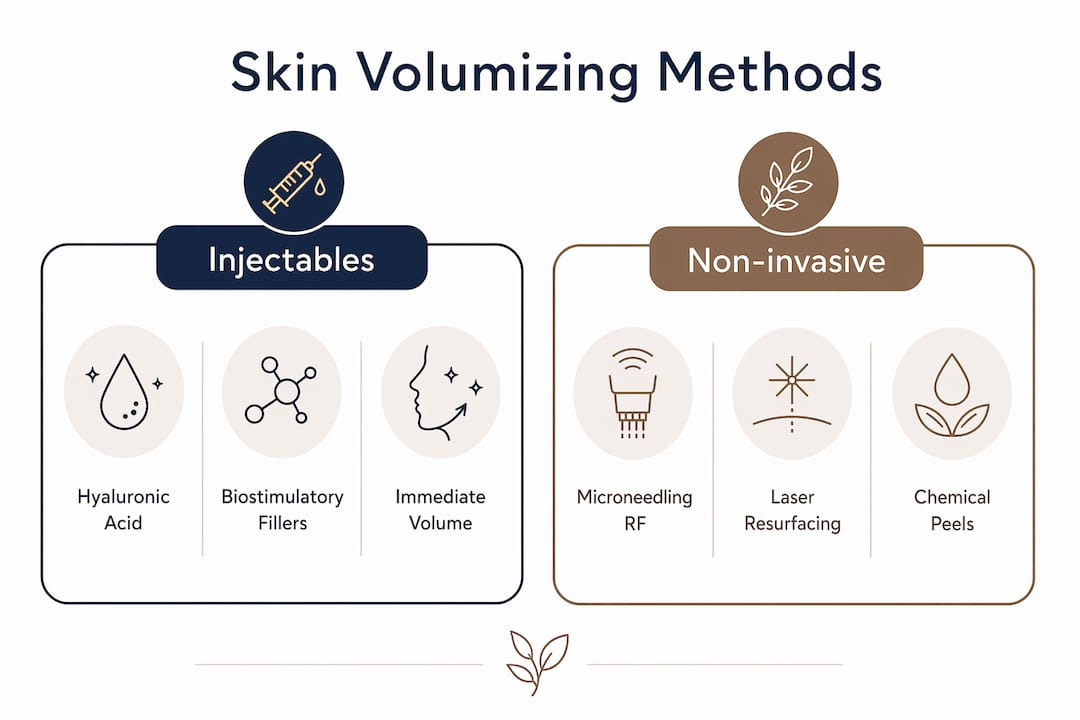
Professional skin rejuvenation methods fall into two broad categories: injectable treatments and energy-based or topical therapies. Each works at a different depth and produces results on a different timeline.
Injectable treatments
Injectable hyaluronic acid fillers are the most widely used volumizing option. They last 6–12 months and work by physically replacing lost volume in areas like the cheeks, temples, and lips. The results are immediate and reversible, which makes them a practical starting point for people new to volumizing treatments.
Biostimulatory fillers, such as Sculptra, take a different approach. Rather than adding physical volume directly, they stimulate collagen production and can maintain results for up to two years. This makes them better suited for people who want gradual, longer-lasting improvement rather than an immediate change.
Non-invasive options
Non-invasive skin plumping techniques include radiofrequency microneedling, laser resurfacing, and chemical peels. These treatments work by triggering the skin’s repair response, which drives new collagen and elastin production over weeks and months. They do not add volume directly but improve the skin’s structure and firmness, which complements injectable treatments well.
| Treatment type | Mechanism | Typical duration |
|---|---|---|
| Hyaluronic acid filler | Direct volume replacement | 6–12 months |
| Biostimulatory filler (Sculptra) | Collagen stimulation | Up to 2 years |
| RF microneedling | Skin remodeling via heat | Ongoing with sessions |
| Laser resurfacing | Collagen induction | Ongoing with sessions |
| Topical volumizing cream | Hydration and elasticity support | Continuous use |
Pro Tip: Combining an injectable filler for immediate volume with RF microneedling for skin tightening produces more natural results than either treatment alone. Ask your provider about staging these across separate sessions rather than doing both on the same day.
How to balance skin volumizing with firmness and avoid the overfilled look
Replacing volume without addressing laxity leads to an overfilled appearance. Tightening without volumizing creates a gaunt look. Natural results require both, applied in the right sequence and proportion.
The overfilled look became common when practitioners focused exclusively on adding filler to areas of visible hollowing. The problem is that adding volume to loose skin pushes it outward rather than lifting it. The face looks heavier, not younger.
Skilled practitioners now use a multi-layered volumization approach that considers bone support, deep fat pads, superficial fat compartments, and the skin itself. Each layer is assessed and treated separately. This is what separates modern facial rejuvenation from the older model of simply filling wrinkles.
Best practices for balanced volumizing include:
- Assess laxity first. Skin that has lost significant elasticity needs tightening before or alongside volume restoration.
- Stage treatments across sessions. Adding too much volume at once increases the risk of overcorrection. Gradual treatment allows for adjustment.
- Treat the cause, not just the symptom. Nasolabial folds, for example, are often caused by midface volume loss. Filling the fold directly without addressing the cheek above it produces a temporary and unnatural result.
- Use energy-based treatments to prepare the skin. RF microneedling or laser resurfacing before injectables improves skin quality and helps the tissue respond better to filler.
Expert practitioners recommend staged volumizing treatments with patient-specific assessment at each step. There is no universal formula. The right balance depends on the individual’s bone structure, fat distribution, and skin quality.
What role do topical volumizing products play and how effective are they?
Topical volumizing products work through a different mechanism than injectables. They improve skin hydration, firmness, and elasticity at the surface level, which creates a plumping effect and supports the skin’s structural integrity over time. They do not replace lost fat or bone, but they do measurably improve the skin layer itself.
The clinical evidence for topical products has strengthened considerably. A 2026 study showed that a multi-ingredient topical cream improved skin thickness, reduced wrinkles by 20.7%, and increased firmness by 22.5% after 12 weeks. Participants also showed a 23.2% increase in net elasticity. These results were validated by clinical ultrasound measurements of skin thickness, not just self-reported perception.
How to incorporate topical volumizing products into a daily routine:
- Apply a hyaluronic acid serum to damp skin. Hyaluronic acid draws water into the skin and holds it there, creating immediate plumping. It works best when applied before moisturizer while the skin is still slightly wet.
- Layer a peptide-rich cream on top. Peptides signal the skin to produce more collagen and elastin. Consistent use over weeks produces measurable changes in firmness. Cellure’s regenerative skincare ingredients guide covers the specific peptide types with the strongest clinical backing.
- Use consistently for at least 12 weeks. Topical products require sustained use to show structural improvement. Sporadic application produces hydration benefits but not the deeper elasticity changes seen in clinical studies.
- Treat topical products as maintenance, not replacement. For people who have already had injectable treatments, topical volumizing creams extend and support those results. For people not yet ready for injectables, they provide a measurable improvement in skin quality that makes future treatments more effective.
The realistic expectation for topical products is meaningful improvement in skin quality, not the structural volume replacement that injectables provide. The two approaches work best together. Topical volumizing products serve as both a maintenance tool and a preparatory step for clinical procedures.
Key Takeaways
Skin volumizing produces the most natural results when it targets multiple structural layers and balances volume restoration with skin tightening in a staged, patient-specific approach.
| Point | Details |
|---|---|
| Volume loss is structural | Fat redistribution, bone resorption, and collagen decline all contribute and must be addressed together. |
| Injectable options vary by duration | Hyaluronic acid fillers last 6–12 months; biostimulatory fillers like Sculptra last up to 2 years. |
| Topical creams show real results | A 2026 study confirmed a 22.5% firmness increase and 20.7% wrinkle reduction after 12 weeks of consistent use. |
| Balance volume and laxity | Treating volume alone without addressing skin laxity leads to an overfilled, unnatural appearance. |
| Stage treatments over sessions | Gradual treatment reduces overcorrection risk and allows for adjustment based on individual response. |
Why I think most people approach skin volumizing in the wrong order
Most people I see start with the most visible problem. They notice a fold, a hollow, or a sag, and they want that specific thing fixed. That instinct is understandable, but it almost always leads to suboptimal results.
The right starting point is skin quality, not volume. If the skin itself is thin, dehydrated, and low in elasticity, adding volume beneath it is like inflating a balloon that has already lost its stretch. The result looks full but not firm. It does not look young.
What I have found actually works is building from the inside out, and from the bottom up. That means addressing bone-level support first, then deep fat compartments, then the superficial layers, and finally the skin surface with topical treatments. A 2025 systematic review confirmed that regenerative medicine therapies increased skin elasticity by over 27% with no serious adverse events. That kind of result comes from treating the biology of the skin, not just its appearance.
The emerging science is moving toward cellular and metabolic modulation, including approaches that remodel the skin’s microenvironment at a gene expression level. That is not science fiction. It is where the most credible research is pointing right now. For people seeking natural results without an overfilled look, the practical takeaway is this: invest in skin quality first, then layer in volume restoration. The sequence matters more than most people realize.
— Sara
Cellure’s approach to cellular skin volumizing
Restoring facial volume is not just about what goes into the skin. It is about how the skin responds at a cellular level.
Cellure formulates its products around regenerative science, using bioactive ingredients like peptides, polynucleotides, and tranexamic acid to support collagen production, improve elasticity, and restore skin thickness over time. The Complete Skin Repair Kit combines targeted serums designed to address volume loss, firmness, and uneven tone in a single, structured routine. For people who want a science-backed starting point for skin volumizing without immediately committing to injectables, Cellure offers a clear, evidence-grounded path forward. Learn more at cellure.co.
FAQ
What is skin volumizing exactly?
Skin volumizing is the process of restoring lost facial fullness by targeting multiple structural layers, including fat pads, collagen, and the skin itself. It goes beyond filling wrinkles to address the underlying causes of an aged appearance.
How long do skin volumizing treatments last?
Duration depends on the method. Injectable hyaluronic acid fillers last 6–12 months, while biostimulatory fillers like Sculptra can last up to two years. Topical volumizing creams require continuous use to maintain results.
Can topical creams actually volumize skin?
Yes, within limits. A 2026 clinical study confirmed that a multi-ingredient topical volumizing cream improved skin firmness by 22.5% and reduced wrinkles by 20.7% after 12 weeks. Topical products improve skin quality but do not replace structural volume the way injectables do.
What is the difference between skin laxity and volume loss?
Volume loss refers to the deflation of fat pads and structural tissue beneath the skin. Skin laxity refers to the skin’s reduced elasticity and ability to stay firm. Both occur with aging and both need to be addressed for natural-looking rejuvenation.
What ingredients support skin volumizing in topical products?
Hyaluronic acid is the most studied volumizing ingredient in topical skincare, as it draws and holds water in the skin to create a plumping effect. Peptides support collagen and elastin production, which improves firmness and skin thickness over time with consistent use.
Recommended
Share