


10 Evidence-Based Tips to Boost Collagen Production
The fastest, evidence-backed ways to preserve and increase collagen are straightforward: protect your skin from UV daily, supply the right nutritional building blocks, use proven topical actives, and consider clinical treatments when lifestyle steps alone aren’t enough.
Here’s what to prioritize right now:
- Wear broad-spectrum SPF 30+ sunscreen every morning, including cloudy days. UV exposure is the single largest external driver of collagen breakdown.
- Eat adequate protein at every meal — fish, poultry, eggs, legumes — alongside vitamin C–rich foods like bell peppers or citrus.
- Quit smoking. Smoking reduces blood flow to the dermis and raises matrix metalloproteinases (MMPs), enzymes that actively degrade collagen.
- Start a topical retinoid or stabilized vitamin C serum. These are the two most evidence-backed topical actives for stimulating fibroblast activity.
- Consider hydrolyzed collagen peptides (typically 2.5–10 g daily) if your dietary protein intake is low or you’re over 50.
- Limit added sugar and excess alcohol, both of which accelerate collagen glycation and oxidative damage.
- Book a dermatologist consult if you want in-office options like microneedling, radiofrequency, or laser resurfacing.
Pro Tip: Apply your retinoid at night on clean, dry skin — waiting 20–30 minutes after washing reduces irritation significantly. Pair your morning vitamin C serum with SPF, since ascorbic acid and UV protection work synergistically to reduce photooxidative collagen damage.
Key Takeaways
Protecting skin from UV daily, supplying adequate protein and vitamin C, and using a proven topical active like a retinoid or peptide serum are the three highest-impact steps most adults can take to support collagen production.
| Point | Details |
|---|---|
| UV protection is non-negotiable | Daily SPF 30+ is the single most effective habit for preventing collagen breakdown. |
| Diet before supplements | Adequate protein and vitamin C from food supports collagen synthesis more reliably than supplements alone. |
| Retinoids and peptides lead topicals | These two categories have the strongest evidence for stimulating fibroblast collagen production. |
| Results take 8–12 weeks minimum | Collagen remodeling is slow; consistent use for three to six months shows the clearest changes. |
| Cellure’s repair kit | The Complete Skin Repair Kit combines peptides, PDRN, and hyaluronic acid in a structured regimen for cellular collagen support. |
Table of Contents
- Why collagen matters more than most people realize
- What to eat to support collagen synthesis
- Do collagen supplements actually work?
- Which topical ingredients actually stimulate collagen?
- Clinic procedures that rebuild collagen
- Daily habits that protect the collagen you already have
- How to build a realistic collagen-support routine
- When to see a dermatologist and what to watch for
- Advanced actives and the science behind collagen signaling
- What I’d actually tell you to try first
- Cellure’s approach to collagen-supporting skincare
- Sources
Why collagen matters more than most people realize
Collagen is the most abundant structural protein in the human body, making up a significant portion of the dry weight of skin. It’s produced by fibroblasts in the dermis through a multi-step process: fibroblasts first synthesize pro-collagen, which is then cleaved and cross-linked into the triple-helix collagen fibers that give skin its firmness and bounce. Two enzymes — prolyl hydroxylase and lysyl hydroxylase — are critical at this stage, and both require vitamin C as an essential cofactor. Without adequate vitamin C, hydroxylation stalls and collagen formation drops sharply.
The practical consequence of declining collagen is visible: thinner dermis, reduced elasticity, and deeper wrinkles. Natural synthesis slows with age, and UV exposure compounds that loss by triggering MMP activity that breaks down existing fibers. The result is the structural deflation most adults start noticing in their 30s and 40s.
What to eat to support collagen synthesis
The body cannot use dietary collagen intact. As Harvard’s Nutrition Source explains, collagen consumed in food or supplements is digested into amino acids and peptides, which are then redistributed wherever the body needs them most. The goal of eating for collagen isn’t to deliver it directly to skin — it’s to supply the raw materials and cofactors that fibroblasts need to build it.
The key building blocks
Collagen is rich in glycine, proline, and hydroxyproline. Getting enough of these amino acids means eating adequate total protein: roughly 0.7–1 gram per pound of body weight daily covers most adults, though needs vary. Practical sources include:
- Fish and shellfish (especially salmon and shrimp, which contain both protein and some natural peptides)
- Poultry and eggs (egg whites are particularly high in glycine and proline)
- Dairy (Greek yogurt, cottage cheese)
- Legumes and soy for plant-based eaters
Vitamin C is non-negotiable. A single serving of red bell pepper, one orange, or a cup of strawberries covers the daily reference intake and then some. Zinc and copper act as additional cofactors — pumpkin seeds, cashews, and shellfish cover both. Garlic and tomatoes contribute sulfur compounds and lycopene that may protect collagen from oxidative degradation.
Bone broth gets a lot of attention, but its collagen content varies widely depending on preparation and source. Cleveland Clinic clinicians note that protein-rich whole foods are a more reliable foundation than broth alone.
Pro Tip: Pair your protein source with a vitamin C–rich food at the same meal — a chicken breast with roasted red peppers, or Greek yogurt with strawberries. Vitamin C availability at the moment of synthesis matters, not just daily totals.
Hydration and omega-3 fatty acids (from salmon, walnuts, or flaxseed) round out the picture. Omega-3s reduce systemic inflammation, which otherwise accelerates collagen breakdown. Polyphenol-rich foods — berries, green tea, dark chocolate — add antioxidant protection that may shield existing collagen from UV and oxidative stress, according to a review of flavonoids and collagen biosynthesis.

Do collagen supplements actually work?
The short answer: modestly, for some people, under specific conditions. A 2025 meta-analysis on PubMed found that hydrolyzed collagen peptides showed improvements in skin elasticity and hydration in several randomized controlled trials, but the overall body of evidence remains limited and heterogeneous — meaning results vary across studies, populations, and products.
Hydrolyzed collagen is digested into small peptides that may signal fibroblasts to ramp up collagen production, rather than being incorporated directly. That mechanism is plausible and supported by cell studies, but the clinical effect size in humans is modest. Supplements are most reasonable when dietary protein intake is genuinely low, or for adults over 50 whose synthesis efficiency has declined.
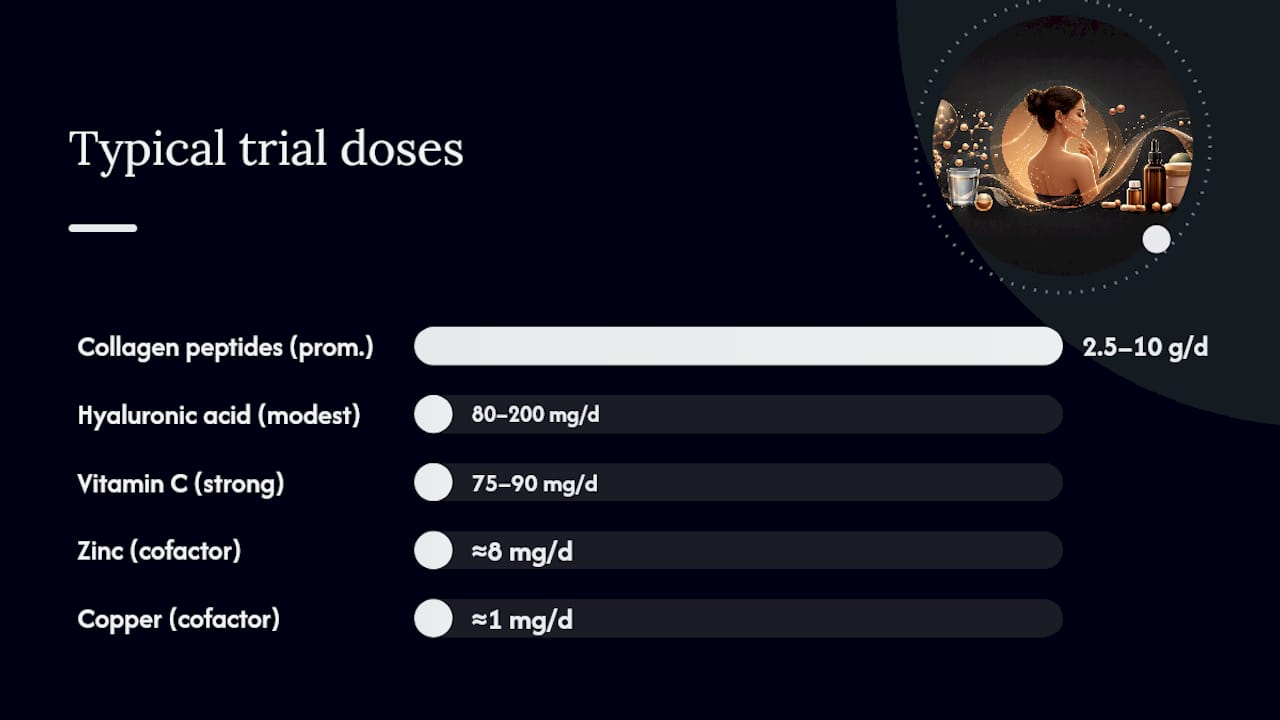
| Supplement | Typical trial dose | Evidence level | Key safety note |
|---|---|---|---|
| Hydrolyzed collagen peptides | 2.5–10 g/day | Promising but limited/heterogeneous | Avoid if allergic to fish, shellfish, or eggs (source-dependent) |
| Vitamin C | 75–90 mg/day (RDI); up to 500 mg in some trials | Strong for synthesis support | high doses may cause gastrointestinal upset |
| Zinc | around 8 mg/day (RDI) | Cofactor; deficiency impairs synthesis | Excess zinc can interfere with copper absorption |
| Copper | about 1 mg/day (RDI) | Cofactor for cross-linking | Rarely deficient in typical diets |
| Hyaluronic acid | 80–200 mg/day in trials | Modest hydration support | Generally well tolerated |
Because dietary supplements are regulated differently from drugs, the FDA does not verify their efficacy or purity before they reach store shelves. Look for products with third-party testing (NSF International or USP verification). Check with a clinician before starting any supplement if you’re pregnant, breastfeeding, on blood thinners, or managing a chronic condition.
Which topical ingredients actually stimulate collagen?
Three categories have the strongest evidence for stimulating collagen at the skin level: retinoids, stabilized vitamin C, and peptides. Hyaluronic acid supports the process indirectly through hydration.
- Retinoids (retinol, retinaldehyde, prescription tretinoin) bind to nuclear receptors in fibroblasts and directly increase collagen gene expression while inhibiting MMPs. They’re the most studied topical actives for skin remodeling. Start at a low concentration two to three nights per week and build tolerance over four to six weeks.
- Stabilized vitamin C (L-ascorbic acid at 10–20%, or more stable derivatives like ascorbyl glucoside) is required for collagen hydroxylation and also neutralizes free radicals generated by UV. Apply in the morning under SPF.
- Peptides (signal peptides like palmitoyl pentapeptide-4, carrier peptides like copper peptides) communicate with fibroblasts to trigger repair responses. They’re gentler than retinoids and well suited for sensitive skin or daytime use.
- Hyaluronic acid doesn’t directly stimulate collagen but maintains the hydrated environment fibroblasts need to function. A lightweight serum applied to damp skin before moisturizer maximizes its effect.
Simple layering order
AM: Cleanser → vitamin C serum → moisturizer → SPF
PM: Cleanser → hyaluronic acid (optional) → peptide serum or retinoid → moisturizer
Don’t layer retinoids and vitamin C in the same step — pH incompatibility reduces both actives’ effectiveness. Alternate nights if your skin is reactive, and always patch-test a new active on the inner arm for 48 hours before applying to your face.
Clinic procedures that rebuild collagen
In-office treatments work by creating controlled injury or delivering targeted energy that triggers the skin’s wound-healing response, specifically the fibroblast proliferation phase that produces new collagen.
Microneedling uses fine needles to create micro-channels in the dermis, prompting collagen remodeling over the following weeks. Most people need three to six sessions spaced four to six weeks apart, with visible improvement typically appearing at the eight to twelve-week mark. Downtime is minimal — redness for one to two days.
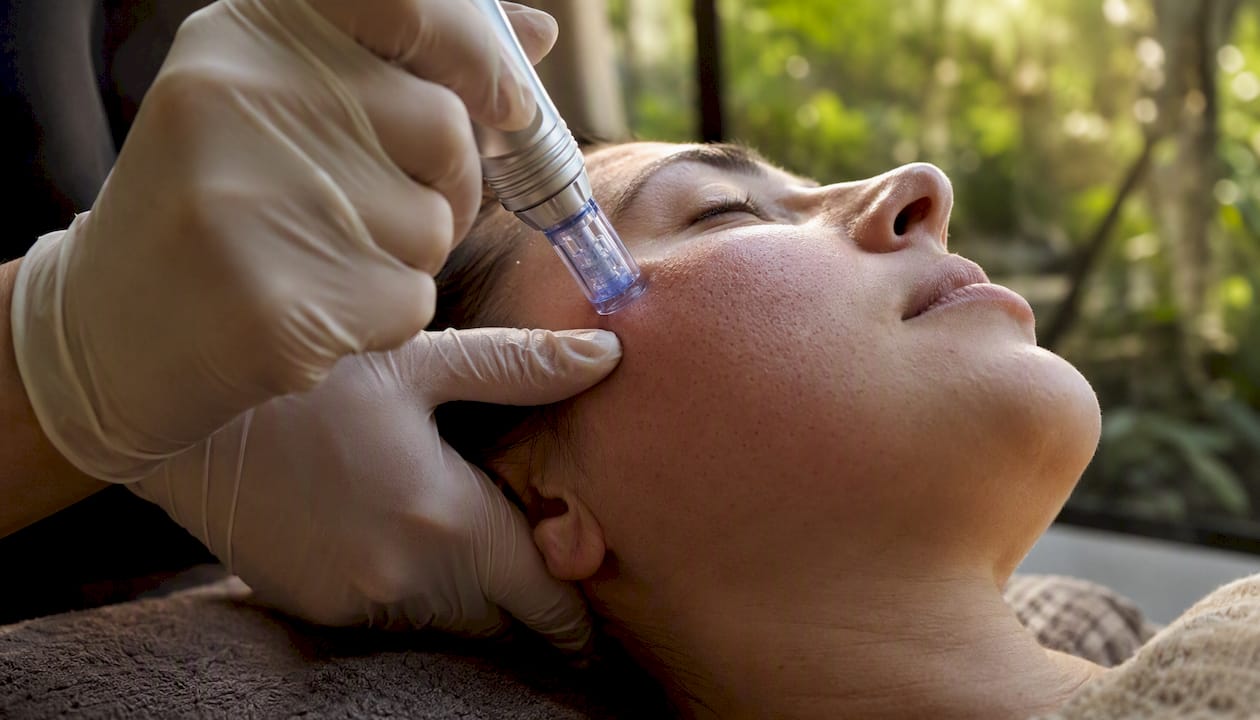
Radiofrequency (RF) delivers heat energy to the deep dermis without breaking the skin surface. It’s particularly useful for laxity and is often combined with microneedling (RF microneedling) for deeper collagen stimulation. Expect gradual tightening over three to six months.
Ablative and non-ablative lasers cover a wide spectrum. Non-ablative options (like 1540 nm fractional lasers) have minimal downtime; ablative CO2 lasers produce more dramatic remodeling but require a week or more of recovery. A board-certified dermatologist can match the device to your skin tone and concern.
Red and near-infrared (NIR) light therapy (photobiomodulation) has clinical evidence for increasing dermal collagen content when delivered consistently over multiple sessions. At-home LED panels are a lower-intensity option; results are modest compared to professional devices but accumulate with regular use.
PRP (platelet-rich plasma) and injectables (like biostimulators) are typically adjuncts, not standalone collagen builders. Consult a board-certified dermatologist or plastic surgeon before any procedure if you have a history of keloid scarring, are on isotretinoin, or have autoimmune conditions.
Pro Tip: Schedule clinic procedures in fall or winter when UV exposure is lower — post-procedure skin is more photosensitive, and minimizing sun exposure during healing protects your results.
Daily habits that protect the collagen you already have
Preventing collagen breakdown is often more impactful than any single supplement or treatment. UV exposure and smoking are the two biggest modifiable drivers of collagen loss, both through MMP upregulation that actively degrades existing fibers.
- Daily SPF 30+ sunscreen, reapplied every two hours outdoors, is the single highest-return collagen-preservation habit. Research confirms UV as a dominant driver of photoaging and collagen degradation.
- Quit smoking. Nicotine constricts blood vessels, reducing oxygen and nutrient delivery to the dermis. Smoking also directly increases MMP activity.
- Limit added sugar. Excess glucose triggers glycation, where sugar molecules bind to collagen fibers and make them stiff and brittle — a process called advanced glycation end-product (AGE) formation.
- Moderate alcohol. Alcohol dehydrates skin and generates oxidative stress that accelerates collagen breakdown.
- Prioritize sleep. Growth hormone, released primarily during deep sleep, supports tissue repair and collagen synthesis. Seven to nine hours is the standard recommendation.
- Exercise regularly. Resistance training and aerobic exercise both support collagen synthesis through mechanical loading and improved circulation.
- Manage stress. Chronic cortisol elevation suppresses fibroblast activity and accelerates skin aging.
Pro Tip: The easiest way to build a sunscreen habit is to keep SPF next to your toothbrush. Apply it as the last step of your morning routine, every day, regardless of season.
How to build a realistic collagen-support routine
Consistency over months matters more than any single product or session. Here’s a practical framework:
- AM routine: Cleanser, vitamin C serum (10–20% L-ascorbic acid or a stable derivative), lightweight moisturizer, SPF 30+.
- PM routine: Cleanser, hyaluronic acid serum on damp skin, peptide serum or retinoid (start two to three nights per week), moisturizer.
- Daily nutrition: Protein at every meal, one vitamin C–rich food per day, adequate hydration (roughly eight cups of water).
- Weekly habits: Two to three resistance or aerobic exercise sessions; meal prep to include fish, legumes, and colorful vegetables.
- Optional supplement: Hydrolyzed collagen peptides (2.5–10 g) in the morning if dietary protein is consistently low.
- Monthly check-in: Photograph skin in consistent lighting to track changes. Adjust retinoid frequency as tolerance builds.
Timeline: Hydration improvements and reduced surface dryness often appear within two to four weeks. Collagen remodeling is slower — most people notice meaningful changes in firmness and fine lines at the eight to twelve-week mark, with continued improvement through six months of consistent use. In-office procedures follow their own timelines, typically three to six months for full results.
For sensitive skin, swap the retinoid for a peptide-only PM routine initially, then introduce retinol at the lowest available concentration every third night before building frequency.
When to see a dermatologist and what to watch for
Self-directed collagen support is safe for most adults, but certain situations call for professional guidance before you start.
- Consult a clinician before supplementing if you’re pregnant, breastfeeding, immunosuppressed, or taking anticoagulants (blood thinners). Vitamin C at high doses and some herbal collagen supplements can interact with medications.
- Patch-test all new topicals and stop use immediately if you develop hives, significant swelling, or blistering — these are signs of an allergic reaction, not normal adjustment.
- Seek immediate care after any cosmetic procedure if you notice signs of infection: increasing redness, warmth, pus, or fever beyond 48 hours post-treatment.
- Avoid retinoids during pregnancy; tretinoin is a known teratogen. Switch to peptide-based alternatives and confirm any topical with your OB.
- Disclose all supplements to your dermatologist before in-office procedures — some (fish oil, vitamin E, certain herbal extracts) increase bleeding risk.
Questions worth bringing to a dermatology appointment: Which in-office procedure fits my skin tone and concern? Is my retinoid strength appropriate? Are my supplements interacting with anything? What’s a realistic outcome for my age and skin type?
Advanced actives and the science behind collagen signaling
Understanding why certain ingredients work requires a brief look at the signaling pathways fibroblasts use to decide when to produce collagen. Two are particularly relevant: TGF-β (transforming growth factor-beta) and PPARδ (peroxisome proliferator-activated receptor delta). TGF-β is the primary pro-collagen signal — it activates fibroblasts and drives collagen gene expression. PPARδ modulates the inflammatory environment around fibroblasts, influencing how efficiently they synthesize collagen under stress. The PI3K/Akt pathway connects growth factor signaling to fibroblast survival and proliferation.
A systematic PMC review of collagen synthesis strategies identifies these pathways as central targets for both natural compounds and pharmaceutical actives. Peptides, polynucleotides (PDRN), and EGF (epidermal growth factor) all interact with these pathways at different points.
Polynucleotides (PDRN) are fragments of DNA that bind to adenosine receptors on fibroblasts, stimulating TGF-β release and downstream collagen synthesis. Early clinical data is encouraging, but large-scale randomized trials are still limited. They represent one of the more scientifically grounded frontiers in regenerative skincare — alongside copper peptides, which act as carrier molecules that deliver copper ions directly to lysyl oxidase, the enzyme responsible for collagen cross-linking.
Antioxidant polyphenols — found in green tea, resveratrol, and quercetin — protect existing collagen by neutralizing the reactive oxygen species that activate MMPs. The MDPI antioxidant review notes that while preclinical evidence is strong, larger human trials are still needed to confirm effect sizes. Tranexamic acid, better known for brightening, also shows anti-inflammatory effects that may indirectly support a healthier fibroblast environment.
For readers who want to go deeper on how these pathways connect to cellular repair science and ingredient selection, Cellure’s research content covers the mechanisms in detail. The top ingredients for cellular repair article is a useful companion read.
What I’d actually tell you to try first
Most adults trying to improve collagen production get lost in the supplement aisle when the highest-impact steps are free or nearly free. Sun protection and diet come before any serum or procedure — not because they’re boring, but because UV damage and nutritional gaps actively undo everything else you do.
My honest priority list:
For younger adults (20s–30s): Daily SPF, adequate protein and vitamin C, and a stabilized vitamin C serum in the morning. That combination addresses the two biggest collagen threats (UV and oxidative stress) and supplies the synthesis cofactors your fibroblasts need. You don’t need a retinoid yet, but starting one in your early 30s is smart prevention.
For adults with visible aging (40s+): Add a retinoid to your PM routine and consider hydrolyzed collagen peptides if your protein intake is inconsistent. A dermatologist consult for microneedling or RF is worth it if topicals alone feel insufficient after three to four months.
For sensitive skin: Peptide serums are your retinoid alternative. They’re gentler, well tolerated, and have genuine fibroblast-signaling evidence. Build from there.
The one thing most articles understate: lifestyle factors like smoking, sugar, and poor sleep can outpace any topical or supplement you add. Fix the foundations first.
Cellure’s approach to collagen-supporting skincare
If you’ve worked through the dietary and lifestyle foundations and want topicals that go further, Cellure’s formulations are built around the same actives this article covers — peptides, polynucleotides, hyaluronic acid, and EGF — in concentrations designed for real cellular impact, not just label appeal.
The Complete Skin Repair Kit brings together a targeted serum stack that addresses firmness, hydration, and barrier recovery in one regimen. Every formula is designed for sensitive skin and backed by the ingredient science discussed here: signal peptides to activate fibroblasts, PDRN to support TGF-β signaling, and stabilized actives that stay effective through the full product life. If you’re ready to move from individual steps to a structured, science-backed routine, that’s the place to start.
Sources
This article provides general educational information and is not a substitute for professional medical or dermatological advice. Confirm any supplement, topical, or procedure with a qualified clinician before starting, particularly if you have a medical condition or take prescription medications.