


Repair Ingredients and Skin Bounce: Your 2026 Guide
TL;DR:
- Skin bounce primarily depends on elastin integrity rather than collagen. Repair ingredients like peptides, ceramides, and enzymatic inhibitors work together to restore elastic fibers and improve skin resilience. A multi-target routine that includes barrier repair and protection delivers visible improvements over several weeks of consistent use.
Skin bounce is defined as the skin’s ability to spring back after compression, and it depends primarily on elastin integrity rather than collagen alone. The role of repair ingredients in skin bounce goes beyond surface hydration. Peptides, ceramides, free fatty acids, and enzymatic inhibitors each target a different layer of the skin’s structural system. When these ingredients work together, they restore the extracellular matrix, reduce transepidermal water loss (TEWL), and rebuild the elastic fiber network that gives skin its visible firmness and resilience. Understanding which ingredients do what, and in what order, is the difference between a routine that looks good on paper and one that actually changes how your skin feels.
How repair ingredients restore skin bounce and elasticity
Skin bounce depends on elastin, not just collagen. Collagen provides structure and volume, but elastin provides the “spring.” When elastin fibers degrade or stop regenerating, skin loses its ability to rebound. That loss shows up as sagging, fine lines, and a dull, flat texture.
The challenge is that elastin has limited natural turnover. Your body produces most of its elastin before adulthood, and repair after that point requires active stimulation. This is where skin repair ingredients enter the picture. Peptides signal fibroblasts to produce more elastin. Lipids restore the barrier that keeps moisture locked in. Enzymatic inhibitors block the enzymes that break elastin down. Each category addresses a different failure point in the skin’s elastic system.
A multi-target approach is the most effective strategy for improving skin bounce. Targeting only one pathway, such as hydration alone, leaves the other failure points unaddressed and limits visible results.
How do peptides restore skin’s elastic resilience?
Peptides are short chains of amino acids that act as signaling molecules inside the skin. Peptides mimic natural collagen fragments, telling fibroblasts to ramp up production of both collagen and elastin. The result is gradual, structural rebuilding without the irritation that comes from aggressive chemical exfoliants.
Copper Tripeptide-1 is one of the most studied peptides for elasticity. Copper Tripeptide-1 improves elastin gene expression and secretion in dermal fibroblasts, making it a direct driver of elastic fiber renewal. This is not a surface-level effect. It works at the cellular level, encouraging the skin’s own repair machinery to produce more of the proteins that create bounce.
Different peptides serve different functions in a repair routine:
- Signal peptides (like Copper Tripeptide-1) stimulate elastin and collagen synthesis directly.
- Carrier peptides deliver trace minerals to the dermis, supporting enzymatic activity needed for fiber assembly.
- Inhibitor peptides block muscle contractions that deepen expression lines over time.
- Matrix peptides support the scaffolding around fibroblasts, giving new fibers a structure to grow into.
Combining peptide types produces better results than using a single peptide in isolation. Each type targets a different step in the rebuilding process.
Pro Tip: Apply peptide serums to slightly damp skin immediately after cleansing. Peptides absorb more effectively before the skin’s surface dries out, which improves their signaling reach into the dermis.
What barrier lipids do for skin bounce
The skin barrier is the outermost layer of the epidermis, and it functions like mortar between bricks. Without the right lipid ratio, that mortar crumbles. Water escapes, irritants enter, and the structural integrity of the skin weakens. Effective barrier repair requires ceramides at roughly 50%, cholesterol at 25%, and free fatty acids at 10–15%. This specific ratio mirrors the skin’s natural lipid composition and is what allows barrier repair to actually work.
Niacinamide adds another layer of support. Niacinamide at 4–5% concentration stimulates endogenous ceramide production, meaning it encourages the skin to make its own ceramides rather than just relying on topical replacement. That distinction matters because self-produced ceramides integrate more naturally into the barrier structure.
Occlusives seal everything in. Petrolatum-based occlusives reduce TEWL by approximately 99%, making them the most effective single ingredient for locking in hydration. That near-complete moisture retention gives the skin the hydrated environment it needs to carry out cellular repair.
Humectants like glycerin and hyaluronic acid pull water into the skin and support barrier recovery. However, humectants alone cannot restore barrier lipids. They reduce secondary stress and keep the skin comfortable, but they do not replace the structural lipid mortar. Pairing humectants with ceramides and occlusives is what produces lasting improvement in skin hydration and bounce.
Pro Tip: Layer your products thinnest to thickest. Apply humectant serums first, then ceramide moisturizers, then an occlusive as the final step. This sequence locks in each layer and prevents moisture from escaping overnight.
The skin lipid barrier is not a passive shield. It actively participates in the repair process by controlling what enters and exits the skin at a cellular level.
How do enzymatic inhibitors protect elastic fibers?
Elastase is an enzyme that breaks down elastin fibers. As skin ages and UV exposure accumulates, elastase activity increases. The result is accelerated degradation of the elastic fiber network, which directly reduces skin bounce. Blocking elastase is therefore as important as stimulating new elastin production.
Ethyl ferulate is one of the most effective elastase inhibitors identified in current research. Ethyl ferulate inhibits elastase activity, protecting existing elastic fibers from enzymatic breakdown in UV-damaged skin. This protective action preserves the fibers that are already present while peptides work to generate new ones.
Antioxidants support this protection from a different angle. UV radiation generates free radicals that damage elastic fibers directly. Antioxidants like vitamin C, vitamin E, and ferulic acid neutralize those free radicals before they can degrade the fiber network. The combination of elastase inhibition and antioxidant protection creates a two-sided defense for elastic fiber integrity.
Key ingredients that protect elastic fibers include:
- Ethyl ferulate: Directly inhibits elastase, reducing enzymatic fiber degradation.
- Vitamin C: Neutralizes UV-generated free radicals and supports collagen crosslinking.
- Vitamin E: Stabilizes cell membranes and works synergistically with vitamin C.
- Ferulic acid: Amplifies the antioxidant activity of vitamins C and E when combined.
Protection and stimulation must work together. Stimulating new elastin production while leaving existing fibers unprotected is like filling a leaking bucket.
How to combine repair ingredients for better skin elasticity
A well-structured repair routine layers ingredients by function, not just by product type. A synergistic combination of peptides, lipids, humectants, and elastase inhibitors produces the best results for skin bounce because each ingredient class addresses a different failure point in the elastic system.
There is also a useful distinction between “rescue” ingredients and “maintenance” ingredients. Copper peptides act as rescue molecules that rapidly stimulate repair after damage or procedures. Pro-Xylane, by contrast, acts as a matrix organizer for long-term skin density and barrier resilience. Using both in sequence, rather than choosing one over the other, produces more complete results.
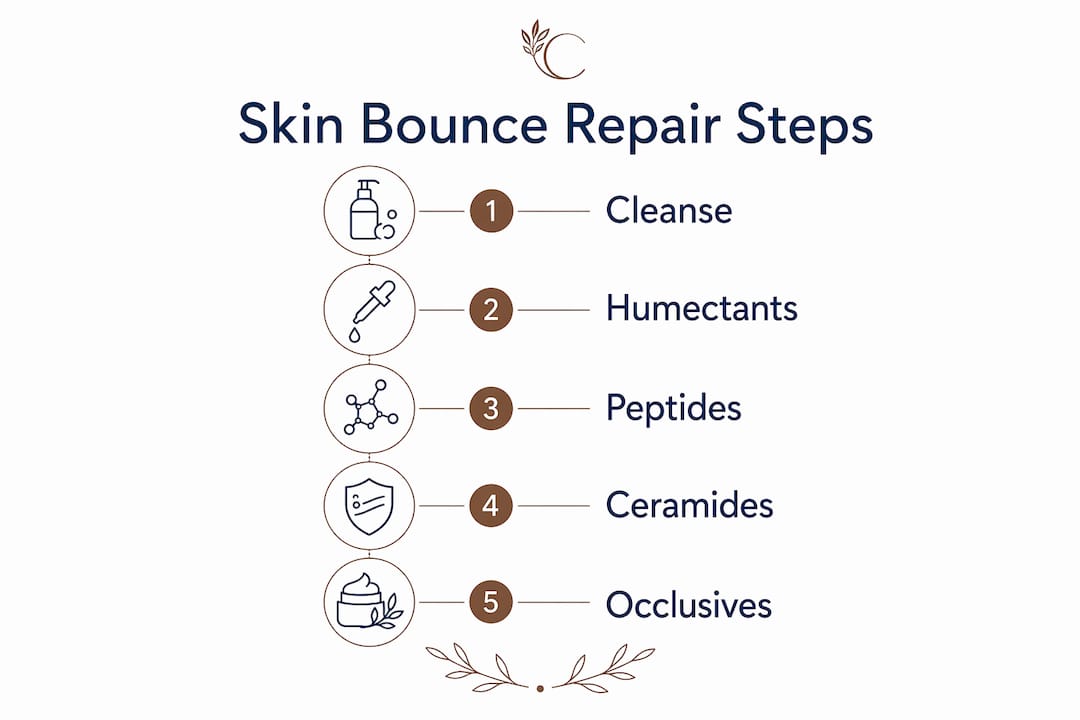
A practical daily routine for improving skin elasticity follows this order:
- Gentle cleanse: Use a low-pH, non-stripping cleanser to preserve existing barrier lipids.
- Humectant serum: Apply glycerin or hyaluronic acid to damp skin to draw in moisture.
- Peptide serum: Layer signal and matrix peptides to stimulate elastin and collagen synthesis.
- Antioxidant layer: Apply vitamin C or a ferulic acid blend in the morning to protect elastic fibers from UV damage.
- Ceramide moisturizer: Apply a moisturizer with the correct ceramide, cholesterol, and fatty acid ratio to restore barrier lipids.
- Occlusive finish: Seal with a petrolatum-based product at night to lock in hydration and support overnight repair.
- Sunscreen (AM only): Broad-spectrum SPF 30 or higher prevents UV-driven elastase activation and free radical damage.
Expected timelines are realistic but require patience. Noticeable improvements in skin texture and hydration typically appear within 2–4 weeks. Full structural improvements in firmness and elasticity take 8–12 weeks of consistent use. Skipping days resets the signaling process and delays results.
Common mistakes that undermine skin bounce
The most common mistake in repair routines is focusing on collagen while ignoring elastin. Collagen adds volume and structure, but it does not provide the spring that defines skin bounce. A routine built entirely around collagen-stimulating ingredients will improve skin density without restoring its ability to rebound.
A second major pitfall is relying on humectants without replenishing barrier lipids. Glycerin and hyaluronic acid keep skin feeling soft, but a compromised barrier blocks active ingredient effectiveness. If the lipid mortar is missing, even well-formulated actives cannot penetrate properly. Barrier repair must come before aggressive actives, not after.
Other common errors include:
- Using too many actives at once: Overloading the skin with retinoids, acids, and peptides simultaneously disrupts the barrier before it can repair.
- Ignoring ingredient stability: Peptides degrade when combined with certain acids or high-temperature formulations. Check compatibility before layering.
- Expecting fast results: Structural skin repair is measured in weeks, not days. Switching products before the 8-week mark prevents any ingredient from completing its repair cycle.
Pro Tip: If your skin feels tight, stings, or looks red after applying actives, your barrier is compromised. Pause all actives, focus on ceramide moisturizers and occlusives for two weeks, then reintroduce one active at a time.
The role of peptides in skin repair is well-documented, but their effectiveness depends entirely on the barrier being intact enough to let them through.
Key Takeaways
Skin bounce is restored by targeting elastin integrity, barrier lipids, and enzymatic protection together, not by any single ingredient working alone.
| Point | Details |
|---|---|
| Elastin drives bounce | Skin’s spring comes from elastin, not collagen; target elastin synthesis directly with peptides. |
| Lipid ratio matters | Barrier repair requires ceramides at ~50%, cholesterol at ~25%, and fatty acids at 10–15%. |
| Protect existing fibers | Ethyl ferulate inhibits elastase; antioxidants block UV-driven fiber degradation. |
| Layer by function | Apply humectants, then peptides, then ceramide moisturizers, then occlusives for best absorption. |
| Patience is required | Noticeable results appear in 2–4 weeks; full elasticity restoration takes 8–12 weeks of consistency. |
What I’ve learned about repair ingredients after years of watching routines fail
Most people come to skin repair after something goes wrong. Their skin feels flat, tight, or suddenly older. They reach for the most talked-about ingredient, usually collagen or hyaluronic acid, and wonder why nothing changes after a month.
What I’ve found is that the failure almost always comes down to sequencing. People add the right ingredients in the wrong order, or they skip barrier repair entirely and wonder why their expensive peptide serum isn’t working. A compromised barrier is not just a comfort issue. It is a delivery issue. Actives that cannot penetrate do nothing.
The other thing I’ve noticed is that people underestimate elastin. Collagen gets all the attention because it’s easier to market. But elastin is what makes skin feel alive. You can have dense, collagen-rich skin that still looks tired and flat if the elastic fibers are gone. Copper Tripeptide-1 and ethyl ferulate are not glamorous ingredients, but they are the ones that actually move the needle on bounce.
My honest advice: fix the barrier first, add peptides second, and protect with antioxidants every single morning. Give it 10–12 weeks before you judge the results. The science is solid. The only variable is consistency.
— Sara
Cellure’s approach to skin bounce and repair
Cellure formulates its repair products around the same multi-target principle that the research supports: peptides for elastin stimulation, barrier lipids for structural repair, and antioxidant protection for fiber preservation.
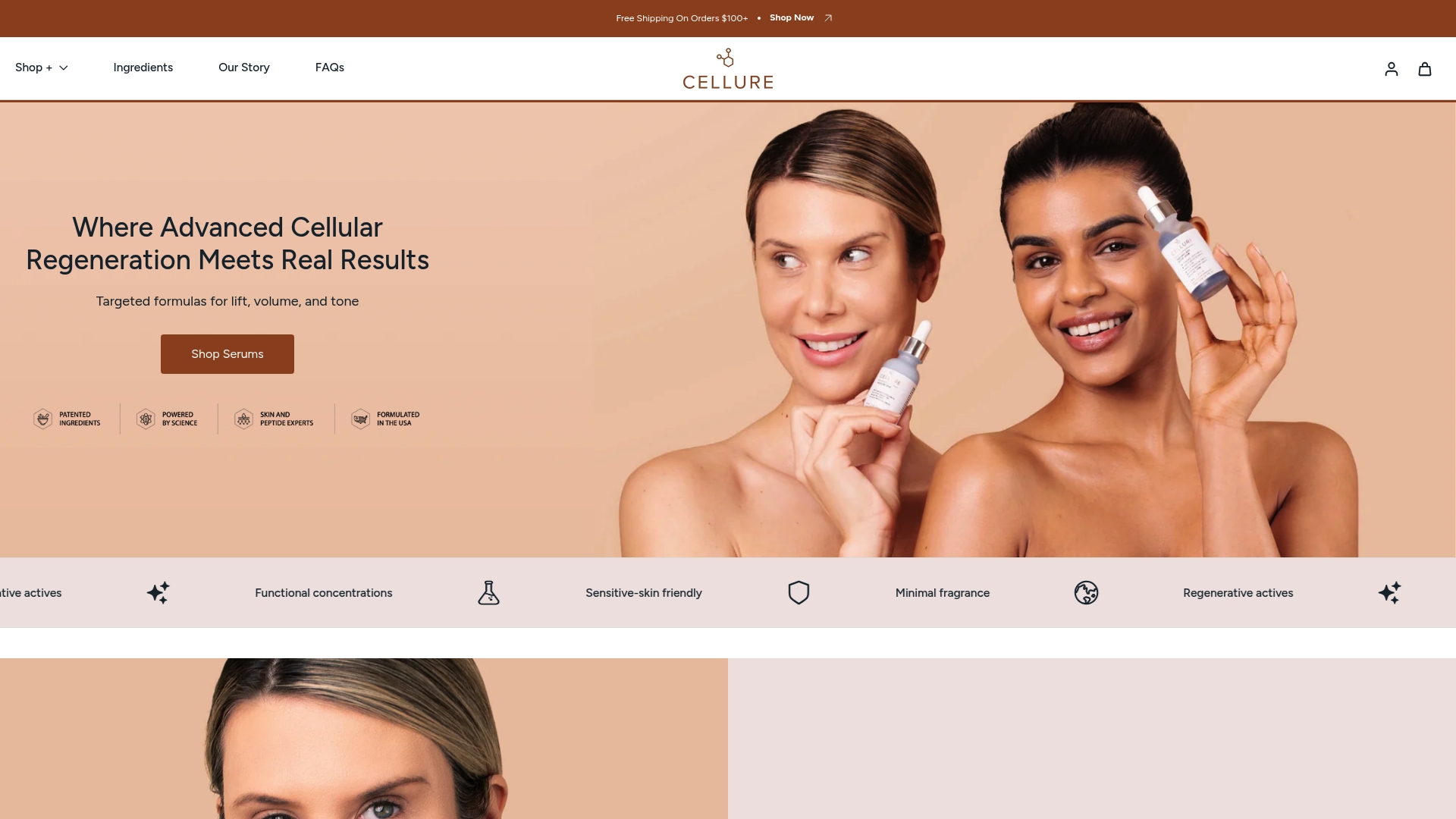
The Complete Skin Repair Kit from Cellure brings these ingredient categories together in a single, sequenced system. Each product in the kit is formulated for stability and ingredient compatibility, so peptides reach the dermis intact and lipids are delivered in the correct ratio for barrier repair. For anyone working through the routine steps outlined above, the kit removes the guesswork of sourcing and layering compatible products separately. Cellure’s formulations are designed for all skin types, including sensitive skin that cannot tolerate aggressive actives.
FAQ
What is the main ingredient that improves skin bounce?
Elastin is the primary structural protein behind skin bounce, and Copper Tripeptide-1 is one of the most effective ingredients for stimulating its production. Ethyl ferulate complements this by blocking the enzyme that breaks elastin down.
How long does it take for repair ingredients to improve skin elasticity?
Most people notice improved texture and hydration within 2–4 weeks. Full improvements in firmness and elasticity typically require 8–12 weeks of consistent daily use.
Can humectants alone restore skin bounce?
Humectants like glycerin and hyaluronic acid support hydration but cannot restore barrier lipids or rebuild elastic fibers. Lasting improvement in skin bounce requires ceramides, peptides, and enzymatic protection alongside humectants.
What is the correct order to apply repair ingredients?
Apply humectants first, then peptide serums, then ceramide moisturizers, then an occlusive at night. In the morning, add an antioxidant layer and finish with broad-spectrum sunscreen.
Why does skin lose its bounce as it ages?
Aging reduces elastin gene expression and increases elastase activity, which degrades existing elastic fibers faster than the skin can replace them. UV exposure accelerates this process by generating free radicals that damage the fiber network directly.